The best conditioner for cowboy boots keeps leather soft, rich, flexible, and ready for hard miles.
A dry pair of boots can feel stiff, look dull, and crack near the toe or bend. I have seen good boots lose years of life because owners used the wrong oil or waited too long to treat them. The right conditioner helps replace lost oils, guard against moisture, and bring back a clean finish without hiding the leather’s grain. In this guide, I review nine practical choices for daily boots, work boots, smooth leather, and exotic skins. I also explain what each formula does best, where it falls short, and how to use it safely.
Bick 4 Leather Conditioner and Cleaner

Bick 4 remains one of the safest all-around picks for smooth leather cowboy boots. Its main appeal is simple: it cleans light dirt while adding moisture without making the leather feel greasy. I like it for boots that already fit well and only need regular care. The formula is also made to avoid darkening many leather colors, though I still advise a hidden-spot test first.
This 8-ounce bottle offers a good balance of size and control. A small amount spreads far, so it works well for a pair of boots, a belt, or a leather jacket. It will not turn a heavily dried boot into new leather overnight, but steady use can help stop dry grain from getting worse. For owners who want the best conditioner for cowboy boots without a strong oil finish, Bick 4 is an easy place to start.
Pros:
- Conditions and cleans in one simple step
- Usually leaves a light, natural finish
- Designed to help avoid major color change
- Works on many smooth leather items
- Easy to apply with a soft cloth
- Good size for routine home care
Cons:
- May not be rich enough for very dry leather
- Needs more than one treatment for deep wear
- Should not be used on suede or unfinished leather
Awaydol 11-Piece Leather Care Kit

The Awaydol kit is aimed at people who want more than one bottle of conditioner. It includes cleaning tools, brushes, cloths, saddle soap, wax, and mink oil in one set. That makes it useful for a new boot owner who does not yet have a care bench. I find kits like this helpful because the right brush and cloth can matter as much as the conditioner itself.
This set gives you several ways to care for smooth leather cowboy boots. Use the brush to lift dust, saddle soap for a careful clean, and conditioner after the surface dries. The wax can add a layer of shine and some water resistance, but it may change the feel or look of softer leather. If you enjoy hands-on boot care or need supplies for more than one pair, this kit offers broad value.
Pros:
- Includes many useful boot care tools
- Helps handle cleaning, conditioning, and polishing
- Horsehair brush can remove dry surface dust
- Useful for boots, shoes, bags, and tack
- Good starter option for first-time boot care
- Can serve several leather items at home
Cons:
- More parts require extra storage and setup
- Mink oil may darken some light leather
- New users must learn which product to use first
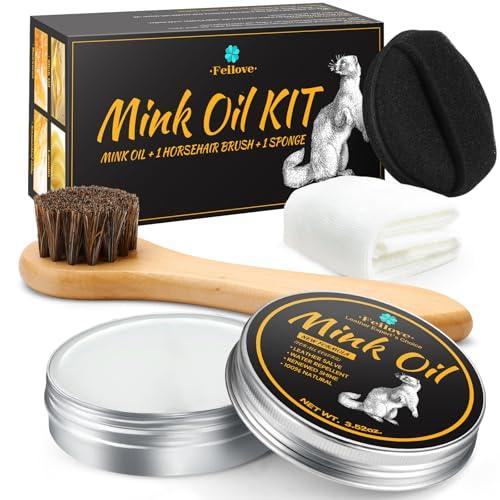
Leather Boot Care Kit With Mink Oil

This leather boot care kit focuses on the basic items most cowboy boot owners need. It pairs mink oil with saddle soap, applicators, and polishing cloths. The oil can soften leather that feels dry after long days outside. I see this type of kit as a practical choice for work boots, riding boots, and older pairs that need deeper treatment.
Mink oil usually gives a more noticeable conditioning effect than a light lotion-style cleaner. It can also help leather resist some moisture, but no conditioner makes boots fully waterproof. Apply a thin coat and allow the leather to absorb it before adding more. The kit is best for darker, sturdy leather where a slightly deeper tone and softer feel are welcome.
Pros:
- Offers a rich treatment for dry leather
- Includes soap and tools for a full care routine
- Can soften stiff work and riding boots
- Useful for boots, shoes, and leather tack
- Provides cloths for wiping away extra oil
- Good choice for seasonal boot maintenance
Cons:
- May darken tan, pale, or distressed leather
- Too much oil can leave a heavy or tacky feel
- Requires careful testing before full use
Exotic Leather Conditioner for Cowboy Boots

Exotic skins need a more careful touch than common smooth cowhide. Ostrich, python, lizard, caiman, and snakeskin can have raised scales, pores, or natural texture that heavy oils may harm. This three-in-one product is made for cleaning, conditioning, and protecting exotic leather. I would place it high on the list for anyone who owns valuable exotic cowboy boots.
The biggest benefit is control. A product made for exotic leather can help preserve the surface without flooding small scales with thick oil. It may restore a dull look and improve the feel of boots that have lost moisture. Still, exotic leather varies by finish, so I recommend following the boot maker’s care advice and testing a hidden area first. For rare or costly boots, gentle care is far better than a quick shine.
Pros:
- Made for several types of exotic leather
- Combines cleaning, conditioning, and protection
- Helps support the natural look of textured skins
- Better suited to scales and raised patterns than basic oil
- Useful for premium cowboy boots and accessories
- Made in the United States according to the listing
Cons:
- Costs more than basic leather conditioners
- Not the best match for every smooth leather boot
- Still needs a patch test on rare or dyed skins
NQUBG Mink Oil Leather Boot Care Kit

NQUBG is a compact boot care set built around mink oil. The formula is positioned as an all-natural conditioner that can soften, restore, and help protect leather. It suits owners who want a focused kit rather than a large collection of tools. I would consider it for work boots, ranch boots, and everyday cowboy boots with a dry surface.
Mink oil can sink into firm leather and make it feel less brittle. It may also deepen the color, which can be a welcome change on dark brown boots but a surprise on light leather. I suggest cleaning the boot first, letting it dry, and applying a very thin coat with the included applicator. This is a useful value pick when deep conditioning matters more than keeping the original shade exact.
Pros:
- Focused formula for dry and stiff leather
- Includes basic tools for direct application
- Can help improve flexibility around boot bends
- May add some moisture resistance to leather
- Works for work boots and cowboy boots
- Simple kit for occasional home use
Cons:
- Can darken leather after the first treatment
- May feel oily if applied too heavily
- Not intended for suede, nubuck, or delicate exotic skins
Bick 1 and Bick 4 Leather Care Kit

This two-step Bick kit makes the cleaning order easy to understand. Bick 1 handles surface cleaning, while Bick 4 follows as a light conditioner. That pairing is useful because dirt can block conditioner from reaching the leather. I like this kit for owners who want a clear routine instead of guessing whether one product can do every job.
The included cloths make the set ready for use right away. Start with a small amount of cleaner and avoid soaking the boot. Once the leather dries, add a thin layer of conditioner and buff away any extra residue. This kit may not be enough for badly cracked leather, but it is one of the better choices for regular upkeep and clean-looking boots.
Pros:
- Provides a clear clean-then-condition routine
- Includes both cleaning and conditioning products
- Helps remove light dirt before treatment
- Two cloths make the kit ready to use
- Good for routine care of smooth leather
- May help preserve the original boot finish
Cons:
- Light conditioner may not repair severe dryness
- Requires two steps and extra drying time
- Not designed for suede or absorbent unfinished leather
Eagle Leather Boot Oil With Applicator
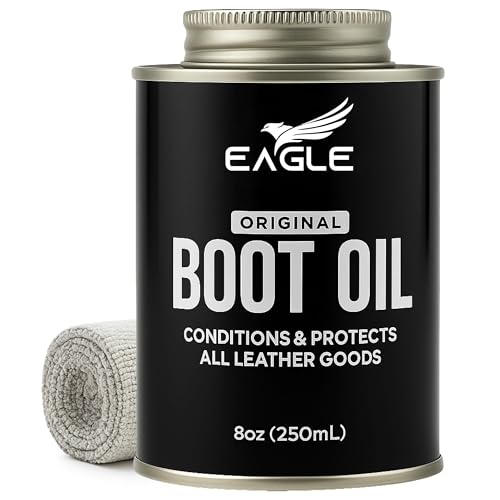
Eagle Leather Boot Oil is made for people who need a deeper treatment than a thin cream. The bottle contains 8.45 ounces and comes with an applicator and towel. That setup helps spread oil across the shaft, vamp, heel counter, and other large sections of a boot. It is a strong match for leather that sees dust, mud, sun, and long work days.
Boot oil can bring back a softer feel when leather starts to lose its natural oils. It may also help reduce the look of dry grain, although it cannot reverse deep cracks or structural damage. I would use this product in small amounts and give the boots time to rest before wearing them. It is especially useful when durability and softness matter more than a bright showroom finish.
Pros:
- Deep treatment for dry and worn leather
- Large 8.45-ounce size suits regular users
- Includes an applicator and premium towel
- Useful for work boots and cowboy boots
- Can improve the feel of stiff leather
- Good choice for harsh outdoor conditions
Cons:
- May darken some leather colors
- Can soften leather too much if overused
- Oil may take time to absorb fully
Bick 4 Leather Conditioner 16-Ounce Bottle

The 16-ounce Bick 4 bottle is the practical choice for people who condition often. It offers the same light-care style as the smaller bottle, but the larger size reduces the need to reorder. I would choose it for a household with several leather items or for someone who maintains boots for family members. It spreads easily and does not demand a long list of tools.
This conditioner works best as part of a steady routine. Wipe away dust, apply a small amount, let the leather absorb it, and buff the surface with a clean cloth. It can help boots stay supple without leaving the thick feel that some oils create. If you want the best conditioner for cowboy boots for frequent use and fair cost per ounce, this larger Bick 4 option makes strong sense.
Pros:
- Large size offers better value for frequent care
- Light formula suits routine conditioning
- Can help maintain a natural leather appearance
- Useful for several pairs of boots and bags
- Easy to spread with a cloth
- Good fit for families and boot collectors
Cons:
- Takes more storage space than a small bottle
- May not satisfy boots that need heavy oil
- Patch testing remains important on finished leather
Bick 4 Leather Conditioner 2-Ounce Travel Size
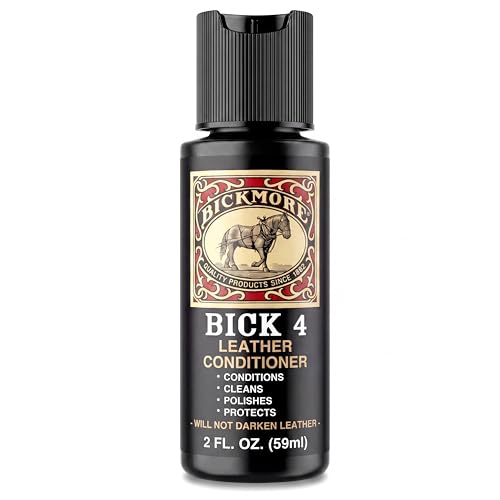
The 2-ounce Bick 4 bottle is made for small jobs, travel, and first-time testing. It gives you a way to try a light conditioner before buying a larger size. I find this useful for new boots, dress boots, or anyone who wants a bottle in a saddlebag or travel case. The compact size also limits waste when you care for only one pair.
Do not mistake the small bottle for a weak product. Bick 4 still offers the same kind of light conditioning and cleaning support, but the amount will not cover a large collection. Use it on clean, dry leather and work in thin layers. It is a smart pick for careful shoppers who want to test a product on one pair before choosing the best conditioner for cowboy boots for their full collection.
Pros:
- Compact size fits travel and small storage areas
- Good way to test the formula first
- Light conditioning helps preserve smooth leather
- Easy to apply with a basic cloth
- Useful for one pair or occasional care
- Usually costs less at the first purchase
Cons:
- Not enough for many pairs of boots
- May cost more per ounce than a large bottle
- Not intended for deep restoration work
Leather Boot Oil Care Kit With Cloth

This leather boot oil kit targets dry, cracked, or tired-looking boots. It includes a deep-conditioning oil, an applicator, and a polishing cloth. That combination removes the need to buy separate tools for the first treatment. I would look at this option when ordinary lotion-style conditioner no longer gives a dry pair enough softness.
The oil can help restore a smoother feel and improve the look of dull leather. It is not a repair compound, so it cannot close deep cuts or rebuild worn seams. Apply a thin coat, wait for absorption, and repeat only if the leather still feels dry. For ranch work, outdoor chores, and older boots, this kit provides a direct and useful care plan.
Pros:
- Designed for deep conditioning of dry leather
- Includes both an applicator and polishing cloth
- Can help soften boots that feel stiff
- Useful for work boots and cowboy boots
- Simple three-part care setup
- May improve the look of dull leather
Cons:
- Oil may change the color of light boots
- Heavy use can make leather feel too soft
- Needs extra drying time before wear
My Recommendation
After comparing the formulas, sizes, and intended uses, I would choose Bick 4 in the 8-ounce bottle for most smooth leather cowboy boots. It gives balanced cleaning and conditioning without the heavy feel of mink oil. The 16-ounce bottle is the better value for several pairs, while the 2-ounce size suits travel or a first test. For very dry work boots, I would move to Eagle oil or a mink oil kit.
The exotic leather formula is the clear choice for ostrich, python, lizard, caiman, and snakeskin. Awaydol is best for a complete starter setup, and the Bick 1 and Bick 4 kit is best for a simple two-step routine. No single product fits every boot. Always read the boot maker’s care instructions, check the leather type, and test any conditioner in a hidden spot before treating the full pair.
| Best for | Why |
|---|---|
| Best for most smooth leather boots | Bick 4 offers light cleaning, soft conditioning, and a natural finish. |
| Best for dry work or ranch boots | Eagle oil and mink oil kits provide a deeper treatment for firm leather. |
| Best for exotic cowboy boots | The exotic leather formula is made for textured skins and premium finishes. |
How to Choose the Best Conditioner for Cowboy Boots
Start with the leather, not the brand name. Smooth cowhide, full-grain leather, suede, nubuck, and exotic skins all react in different ways. A product that works well on a rugged brown work boot may darken a pale dress boot or damage a delicate scale pattern. The best conditioner for cowboy boots is always the one that matches the leather and the boot’s finish.
Match the Conditioner to the Leather
Most classic cowboy boots use smooth finished leather. These boots can often handle a cream conditioner, leather lotion, or a mild oil. Exotic skins need a product made for that type of surface. Suede and nubuck need special cleaners and brushes, not standard mink oil or thick boot oil.
Look at the care label or the maker’s guide before you apply anything. If the leather has a painted finish, a light conditioner may be safer than a dark oil. If the leather feels stiff and dry, a richer oil may work better. When the leather type is unclear, test a hidden part of the shaft and wait until it dries.
Conditioner, Oil, and Wax Do Different Jobs
A conditioner adds moisture and helps leather stay flexible. Oil gives a deeper treatment and may soften firm leather more than a light cream. Wax mainly helps add shine and a surface barrier, though it can reduce the leather’s natural feel if you apply too much.
I do not treat these products as interchangeable. A clean pair may only need conditioner. A dry work boot may need oil. A show boot may need a small amount of wax after conditioning. Think of boot care like skin care: clean first, moisturize next, and protect last.
Watch for Color Change
Nearly every liquid treatment can change leather in some way. Mink oil and boot oil often make leather darker or richer. Some cream conditioners aim to keep the original shade, but results still depend on the finish, age, and porosity of the boot.
Use a white cloth and apply a tiny amount to an unseen section. Let it dry for a full day if the color matters. This small test can save a pale pair from an unwanted brown or glossy look. It is one of the most important steps in finding the best conditioner for cowboy boots.
Think About the Boot’s Main Job
Work boots face sweat, dust, mud, and repeated flexing. They often need a deep conditioner and more frequent cleaning. Dress cowboy boots may need a lighter product that keeps the finish neat and does not soften the shaft too much.
Riding boots can benefit from flexible leather around the ankle and vamp, but avoid coating areas that must grip a stirrup. Boots worn only on special days need less product than boots worn every day. Your use pattern should guide your care schedule.
How I Apply Conditioner to Cowboy Boots
I begin by removing the laces, inserts, and loose dirt. A dry horsehair brush works well for dust, while a soft cloth can wipe the vamp and shaft. If the boot has mud on it, I let the mud dry first and brush it away rather than rubbing wet grit into the grain.
Next, I place a small amount of product on a cloth or applicator. I work in thin, even circles and pay close attention to the toe, vamp, heel counter, and flex points. I avoid soaking the leather because excess product can sit in seams, leave a greasy film, or make the boot too soft.
After application, I let the pair rest at room temperature. I never place leather boots next to a heater, fireplace, or hot vent. Fast heat can pull moisture from the leather and cause hardening or shrinkage. Once the product absorbs, I buff the boot with a clean cloth and remove any residue.
How Often Should You Condition Cowboy Boots?
There is no perfect calendar for every pair. Boots worn daily in dry or harsh weather may need care every few months. A pair worn indoors or only on weekends may need treatment once or twice a year. The leather itself gives the best clues.
Condition the boots when they look dull, feel stiff, or show dry lines at the bend. Do not wait for deep cracks. At the same time, avoid conditioning every week unless the boot maker tells you to do so. Too much product can soften the structure, clog the grain, attract dust, and make the surface feel oily.
Common Boot Care Mistakes to Avoid
The most common mistake is applying conditioner over heavy dirt. Dirt can act like fine sandpaper when you rub it into the leather. Clean the surface first, then let it dry before conditioning.
Another mistake is using too much oil. More product does not mean more protection. A thin coat often works better than a thick coat because it absorbs with less residue. I also avoid household oils, cooking oils, and random lotions because they may go rancid, leave stains, or weaken the finish.
Many people also skip the patch test. Even a trusted leather product can produce a different result on a new dye, a worn finish, or a pale leather. Test first, wait, and then treat the full boot. Finally, store boots upright in a cool, dry place and use boot trees or clean paper to help hold their shape.
What Makes a Good Cowboy Boot Conditioner?
A good conditioner should spread with little effort and leave the leather flexible, not wet or sticky. It should suit the boot’s finish and give you enough working time to cover the surface evenly. Clear instructions also matter, especially when the product contains oil or wax.
I look for a useful balance between moisture, protection, color control, and ease of use. A light conditioner often wins for expensive dress boots. A rich oil may win for dry work boots. A complete kit wins when the buyer needs brushes, soap, and cloths as well as conditioner.
Packaging and size affect value too. A small bottle is convenient for travel but may cost more per ounce. A large bottle saves money for regular users but needs proper storage. The best conditioner for cowboy boots should fit both your leather and your care habits.
FAQs Of Best Conditioner for Cowboy Boots
What is the best conditioner for cowboy boots?
For most smooth leather cowboy boots, Bick 4 is a balanced choice. It offers light cleaning and conditioning and usually keeps a natural look. For very dry boots, consider a mink oil or boot oil formula. For exotic skins, use a conditioner made for exotic leather.
Will conditioner darken my cowboy boots?
It can. Mink oil and boot oil often deepen leather color, while lighter conditioners may cause less change. Always test the product on a hidden area before full use. Let the test spot dry before you decide.
Can I use mink oil on all cowboy boots?
No. Mink oil can work on sturdy smooth leather, but it may darken light leather and soften the boot too much. Do not use it on suede, nubuck, or many delicate exotic skins unless the maker approves it. Check the boot’s care instructions first.
How often should I condition leather cowboy boots?
Most boots need conditioning every few months or when the leather looks dry and feels stiff. Boots worn in harsh weather may need more care. Boots worn rarely may need it only once or twice each year. Apply thin coats instead of heavy treatments.
Should I clean cowboy boots before conditioning them?
Yes. Brush off loose dust and remove dirt before applying conditioner. Let damp boots dry at room temperature first. Conditioner works more evenly on a clean, dry surface.
Final Verdict: Which Should You Buy?
For most smooth leather pairs, Bick 4 is the best conditioner for cowboy boots because it cleans lightly, conditions well, and avoids a heavy oil feel. Choose Eagle or mink oil for very dry work boots, and the exotic formula for textured skins.
The right boot conditioner protects comfort, color, and leather life. Test first, apply thin coats, and follow the maker’s care guide for lasting cowboy boot care.

Madison Clark is a footwear expert and the voice behind MyStyleGrid.com. She specializes in honest shoe reviews, style tips, and practical guides to help readers find the perfect pair for any occasion. With years of experience in blogging and content creation, Madison makes footwear knowledge simple, stylish, and easy to follow.