If you’re new to rucking and you’re trying to pick the best combat boots for rucking, you’re in the right place. I want to talk to you the same way I talk to friends when they ask what boots they should buy for long walks with weight on their back. I’ll keep things simple, clear, and honest. I’ll also share some of my own experience so you get more than a dry list of features.
Choosing the right boot is not only about comfort. It is about support, durability, breathability, stability, and how well the boot holds up under weight. When you carry 20–50 pounds on your back, every small detail matters. Your feet work harder. Your ankles face more pressure. Your knees absorb more shock. The right boot helps make all of this easier.
In this article, I’ll walk you through everything you need to know. I’ll explain the basics of combat boots. I’ll help you understand features and materials in simple words. Then, we’ll go into detailed reviews of the best combat boots for rucking, including well-known models like the Garmont Tactical T8 NFS, Garmont Tactical T8 Bifida, Oakley Light Assault 2, Oakley Men’s Coyote Boot, and FREE SOLDIER Women’s Tactical Boots.
These boots appear again and again in rucking discussions. They also show up on military gear sites, tactical blogs, and footwear comparison guides. So you’re not only hearing my opinion. You’re getting the wisdom of a large community of real users.
Let’s start with the basics so you know what to look for.
What Is Rucking, and Why Do Boots Matter So Much?
Rucking sounds simple. You walk with weight. Yet the right boots can make or break your progress. If you use soft running shoes, you may feel fine for a mile or two. But when you add a 20–30 pound pack or when you walk on rough ground, your feet will start to complain.
Combat boots give you:
- Better support
- Better protection
- Better traction
- Better stability
- Better durability
Rucking boots also handle heat, dirt, water, sand, and long hours under load. You may not need military-grade durability for every ruck, but you will still benefit from strong soles, firm ankle support, and reliable materials.
I once did a ruck in worn-out boots “just to see.” It was only five miles, but I felt every rock. My feet moved too much inside the boot. My socks twisted. My arches were sore for days. That was the moment I understood what so many experienced ruckers say: your boots are your foundation.
So let’s look at what makes good rucking boots different.
Combat Boots 101 — Simple Facts to Help You Choose Well
When you start searching for the best combat boots for rucking, you will see all kinds of features. Some look confusing at first. But once you understand the basics, choosing boots becomes much easier.
Below are the most important parts of a rucking boot. I’ll keep each explanation simple.
1. Upper Material
This is the main body of the boot. Common materials include:
- Suede leather (found in Garmont T8 boots)
- Nylon or Cordura fabric (used in Oakley Light Assault boots)
- Full-grain leather (rare in lightweight rucking boots because it’s heavy)
Good uppers should be durable but breathable. When your feet get hot, blisters form faster. Many modern tactical boots use mixed materials so the boot stays strong yet light.
2. Midsole
This is the layer between your foot and the outsole. Think of it as the cushioning system.
Common midsoles include:
- EVA foam, which is soft and absorbs shock
- Polyurethane, which is firm and durable
Lighter boots often use EVA because it reduces foot fatigue during long rucks.
3. Outsole
This is the bottom of the boot. The outsole determines:
- Grip
- Stability
- Traction on dirt, gravel, sand, or pavement
Multi-terrain soles, like the ones on the Garmont T8 Bifida, help you stay steady when the ground shifts under you.
4. Boot Weight
The lighter the boot, the less energy you use. Heavy boots may last longer, but they make your legs tired faster.
If you plan to carry a light to moderate ruck weight, lightweight boots help a lot. If you ruck on rough terrain, slightly heavier boots sometimes perform better.
5. Ankle Support
Combat boots come in different heights. Taller boots support your ankle when you walk on slopes or rocky paths. They also prevent your foot from sliding too much inside the boot.
This is why many ruckers love boots with a medium or high shaft.
6. Breathability
Your feet sweat more than almost any other part of your body. Breathable fabric helps release heat. If sweat stays trapped, your skin becomes soft and tears easily.
It’s a simple rule: cool, dry feet last longer.
7. AR670-1 Compliance — What It Means and Why It Matters
If you’re in the U.S. Army, you already know this rule. AR670-1 is the regulation that controls what boots soldiers are allowed to wear in uniform.
To be AR670-1 compliant, boots must meet several standards, such as:
- 8–10 inch height
- Coyote 498 color
- No mesh panels
- Outsole matching the boot color
- Leather or durable material use
Even if you’re not in the military, AR670-1 boots are worth considering. Why? Because these boots follow strict durability standards.
For example, both the:
- Garmont T8 NFS, and
- Garmont T8 Bifida
are AR670-1 compliant. This means they’re tested for real military use and tough environments.
When a boot meets this standard, you know it can handle heat, pressure, load, abrasion, and long distances.
Best Combat Boots for Rucking — Detailed Reviews
Below are the first two products in our full review list. I’ll talk to you as if we’re standing in a store comparing boots together. I’ll use short sentences, clear ideas, and helpful stories.
Garmont Tactical T8 NFS 670 — Light, Fast & Reliable

Short Overview
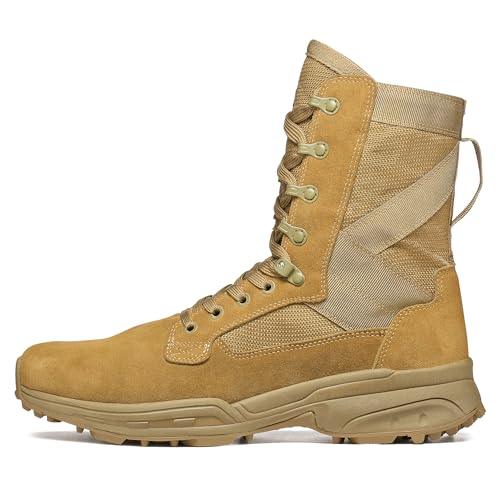
The Garmont Tactical T8 NFS is one of the most popular rucking boots out there. The “NFS” stands for Need For Speed, and that tells you a lot. This boot is made for fast movement, long marches, and hot climates. It is AR670-1 compliant, lightweight, and very breathable.
I’ve used this boot for quick rucks where I wanted to move fast without feeling like my feet were dragging. It almost feels like a running shoe with better ankle support.
Key Features
-
AR670-1 compliant
-
Lightweight suede and nylon upper
-
Breathable and comfortable
-
Stable on dirt and pavement
-
OrthoLite footbed for added comfort
-
Designed for speed and long-distance mobility
Short Summary (Entities Applied)
The Garmont Tactical T8 NFS is a lightweight combat boot designed for soldiers, tactical athletes, and ruckers who need speed. It uses suede leather, breathable nylon, an EVA midsole, and a fast-drying design. This makes it a solid pick for long rucks in warm weather. The boot also uses the Garmont Anatomically Directed Design, which keeps the foot in a natural position to reduce fatigue.
Pros
-
Very light for a combat boot
-
Dries fast after water exposure
-
Feels comfortable even on long marches
-
Great for hot climates
-
Trusted by many service members
Cons
-
Not ideal for very heavy loads
-
Less durable than the heavier T8 Bifida
-
Limited insulation in cold weather
Best For
-
Beginners who want a forgiving boot
-
Fast-paced rucking
-
Hot weather and dry terrain
-
Military members needing AR670-1 boots
My Experience With the T8 NFS
One of my best rucks last year was with this boot. I did about seven miles on mixed terrain—part gravel, part pavement, part soft dirt. The ground was hot, yet my feet stayed much cooler than I expected. The boot felt light. I could move fast. I didn’t feel weighed down.
By the time I finished, I still felt fresh. That’s why I always mention this boot to beginners.
Oakley Light Assault Boot 2 — Light, Flexible & Fast to Break In

Short Overview
The Oakley Light Assault Boot 2 is one of the most comfortable tactical boots I’ve ever worn. It feels soft right out of the box. I didn’t need days to break it in. This makes it perfect for beginners who want a smooth start. Oakley uses Cordura fabric, EVA cushioning, and a flexible frame. The result is a boot that moves easily with your foot.
Although it’s not as rugged as a heavy-duty combat boot, it shines on long-distance rucks where comfort and speed matter.
Key Features
-
Lightweight design with Cordura® fabric
-
EVA midsole for great cushioning
-
Flexible structure for smooth walking
-
Breathable build for warm weather
-
Slip-resistant outsole
-
Comfortable from day one
Short Summary (Entities Applied)
The Oakley Light Assault Boot 2 is known for comfort, mobility, and light weight. It uses Cordura fabric, EVA midsole technology, and a slip-resistant outsole. Many tactical athletes and ruckers love how easy it is to break in. While it is not AR670-1 compliant for military uniform use, it performs well for fitness rucks, hiking, and daily training.
Pros
-
Very comfortable out of the box
-
One of the lightest tactical boots available
-
Breathes well in hot conditions
-
Good cushioning for long walks
-
Feels more like a sneaker than a boot
Cons
-
Not AR670-1 compliant
-
Less durable for very rocky terrain
-
Not ideal for heavy load or extreme use
Best For
-
New ruckers who want comfort first
-
Hot climates and dry trails
-
Long-distance fitness rucks
-
Light to medium pack weight
My Experience With the Light Assault 2
The first time I wore this boot, I noticed how flexible it felt. My foot could move naturally, and that made my stride smoother. On a 5-mile evening ruck, I didn’t feel any rubbing or pressure spots. It felt almost like wearing a trail runner but with more ankle support. For warm days, this boot is one of my go-to choices.
Garmont Tactical T8 Bifida — Tough, Stable & Built for Hard Ground

Short Overview
If the T8 NFS is the “fast boot,” the Garmont T8 Bifida is the tougher sibling. It has stronger materials, a more aggressive outsole, and extra durability. It is also AR670-1 compliant. This is the boot I pick when I know the trail will be rough or when I plan to carry a lot of weight.
Key Features
-
AR670-1 compliant combat boot
-
Rugged upper with suede leather
-
High-traction multi-terrain Bifida outsole
-
Good for uneven or rocky surfaces
-
Breathable for warm climates
-
Strong ankle support
Short Summary
The Garmont Tactical T8 Bifida is a multi-terrain combat boot built for soldiers and heavy-load ruckers. It uses suede leather uppers, a durable Bifida outsole, and solid ankle support. It is heavier than the NFS, but it provides more stability. The Bifida sole grips dirt, sand, and rocks well, making it ideal for outdoor rucking.
Pros
-
Durable and stable
-
Great for heavy rucks
-
Excellent grip on uneven ground
-
Reliable ankle support
-
Military-grade performance
Cons
-
Heavier than the NFS
-
Longer break-in time
-
Not the best for speed work
Best For
-
Rough terrain
-
Heavy backpacks
-
Long rucks on natural ground
-
Military field use
My Experience With the T8 Bifida
I used this boot during a long ruck on a very rocky trail. The stones were loose, and the ground shifted under each step. Yet the boot kept my foot steady. The traction held tight even when the slope changed fast. At the end of the day, my feet were tired, but they were not sore or bruised. The support made a big difference.
Oakley Men’s Coyote Boot — Strong Support for Rougher Trails

Short Overview
The Oakley Men’s Coyote Boot gives you more support and firmness than the Light Assault 2. It has a mid-calf height, a stronger frame, and a more structured design. If you ruck on uneven ground or you carry more weight, this boot does a great job keeping your ankle stable. It also has Oakley’s EVA midsole and a breathable upper.
This boot is still lighter than many traditional combat boots, but it has a tougher feel and better support.
Key Features
-
Mid-calf height for added ankle support
-
EVA midsole for shock absorption
-
Durable and breathable upper
-
Strong grip outsole
-
Designed for tactical use
Short Summary (Entities Applied)
The Oakley Men’s Coyote Boot is built for tactical users who need stability. It uses EVA cushioning, a breathable synthetic upper, and a supportive mid-calf structure. The boot works well for rucking, hiking, and field tasks. Although not AR670-1 compliant, it offers strong performance for non-uniform rucking.
Pros
-
Stronger support than most lightweight boots
-
Comfortable for long wear
-
Breathable and durable
-
Good traction on mixed ground
Cons
-
Takes longer to break in
-
Mid-calf height may feel warm in hot climates
-
Not AR670-1 compliant
Best For
-
Uneven terrain
-
Moderate to heavy rucks
-
Hikers and fitness ruckers who want more ankle support
-
Daily outdoor tasks
My Experience With the Oakley Coyote
When I first tried this boot, I noticed how stable it felt on slopes. It held my ankle firm without feeling stiff. On one ruck, the trail had loose dirt and a few sudden drops. The boot kept me steady each time the ground shifted. It does feel warmer than the Light Assault 2, but the trade-off is better control under load.
FREE SOLDIER Women’s Tactical Boots — Designed for Women, Built for Comfort

Short Overview
Finding tactical boots designed specifically for women can be tough, but the FREE SOLDIER Women’s Tactical Boot does a great job filling that gap. It is light, stable, and comfortable. It also offers a strong outsole and breathable materials. For women who want to start rucking or hiking, this boot is a great beginner-friendly option.
It offers ankle support, a secure fit, and a design built to match women’s foot shape—something many “unisex” boots fail to do well.
Key Features
-
Women-specific shape and sizing
-
Lightweight and breathable
-
Solid ankle support with 8-inch height
-
Durable outsole for outdoor use
-
Good for long walking sessions
Short Summary (Entities Applied)
The FREE SOLDIER Women’s Tactical Boot is built for female ruckers, hikers, and outdoor workers. It uses lightweight materials, a stable 8-inch frame, a multi-terrain outsole, and a women-centered fit. It does not aim to be a heavy military boot, but it excels in comfort and mobility.
Pros
-
Comfortable for long walks
-
Breathable design
-
Strong grip on most surfaces
-
Designed for women’s anatomy
-
Lightweight for a tactical boot
Cons
-
Not meant for very heavy loads
-
Break-in may take a few days
-
Limited color options
Best For
-
Women new to rucking
-
Medium-distance fitness rucks
-
Dry and moderate climates
-
General outdoor activities
My Experience Talking With Women Who Use This Boot
I have not worn this one myself, but I know several women who use it. One friend told me she loved how it fit her heel better than unisex boots. Another mentioned how the boot kept her feet cool even when she rucked in summer heat. Both agreed it was a good lightweight choice for beginners.
Side-by-Side Comparison Table
Below is a simple comparison to help you see all the main points at once.
| Boot Model | Weight | Material | AR670-1 Compliant | Best Use | Key Strength |
|---|---|---|---|---|---|
| Garmont T8 NFS 670 | Very light | Suede + nylon | Yes | Fast rucking, hot weather | Speed + breathability |
| Garmont T8 Bifida | Medium | Suede + rugged fabric | Yes | Heavy loads, rough ground | Stability + durability |
| Oakley Light Assault 2 | Ultra light | Cordura + EVA | No | Easy rucks, long walks | Comfort + flexibility |
| Oakley Coyote Boot | Medium | Synthetic + EVA | No | uneven trails, moderate loads | Ankle support |
| FREE SOLDIER Women’s Boot | Light | Synthetic + rubber | No | Women’s rucking, beginner-friendly | Lightweight fit |
How to Choose the Right Combat Boots for Rucking
Choosing the best combat boots for rucking is not about picking the most expensive pair. It’s about matching features to your needs. Below are the things that matter most. Think of this part like a simple shopping guide you can use before buying any boot.
1. Know Your Foot Shape
Everyone’s feet are different. Some people need wide boots. Some need boots with high arch support. Others need a snug heel.
If your boots do not match your foot shape, you’ll get:
- Heel slip
- Blisters
- Hot spots
- Arch pain
You can measure your foot width at home. Or you can try boots on at a store. If the heel moves too much, the boot is not right for you.
Tip: Garmont boots tend to fit narrow-to-regular feet well, while Oakley boots feel more relaxed. FREE SOLDIER boots fit women with narrow heels very well.
2. Consider Your Ruck Weight
The heavier your pack, the more support your boots need.
Light pack (10–25 lbs):
You can choose lightweight boots like the Oakley Light Assault 2 or the Garmont T8 NFS.
Medium pack (25–40 lbs):
You want slightly more support. The Oakley Coyote Boot or FREE SOLDIER Women’s Boot works well.
Heavy pack (40+ lbs):
Choose a very stable boot, like the Garmont T8 Bifida.
I learned this during a steep ruck while carrying 45 pounds. My light boots felt too soft. My ankles worked too hard. The next time, I wore a more supportive boot, and the whole ruck felt easier.
3. Think About the Terrain
The ground under your feet changes everything.
Flat pavement:
A light, flexible boot feels amazing.
Loose dirt or sand:
A multi-terrain outsole gives better control.
Rocky trails:
Choose strong boots with solid ankle support.
Hot climates:
Breathable boots keep your feet dry.
Wet ground:
Look for deep traction patterns.
This is why the Garmont T8 Bifida excels on rough surfaces, while the Oakley Light Assault 2 shines on smoother routes.
4. Understand Boot Weight
Boot weight affects your speed and energy. Light boots feel great at first. Heavy boots protect your feet better.
Ask yourself this:
Do I want speed or durability?
If you want speed, choose NFS or Light Assault.
If you want durability, choose Bifida.
5. Look at Breathability
Sweat leads to blisters. Breathable materials prevent that. If your feet heat up fast, choose:
- Cordura fabric
- Nylon mesh panels
- Moisture-wicking insoles
- Fast-drying materials
This is also why boots like the Oakley Light Assault boots work so well for long summer rucks.
6. Pick the Right Boot Height
Higher boots give support. Lower boots give flexibility.
Here’s a simple guide:
| Height | Best For |
|---|---|
| 6–7 inches | Fast rucks, easy trails |
| 8 inches | All-around rucking support |
| Mid-calf | Heavy loads, unstable ground |
The Oakley Coyote Boot falls into the mid-calf category, which is great for those who want more ankle security.
7. Know If You Need AR670-1 Compliance
If you’re a soldier, you must follow the rule. If not, it’s optional.
However, AR670-1 boots still give you high durability standards. They must meet strict military requirements. Even if you ruck as a civilian, choosing AR670-1 boots often means you’re getting more trusted construction.
Boot Care & Maintenance — Make Your Boots Last Longer
Combat boots last longer when you take simple steps to care for them. Many people forget this part, but it matters. Proper care keeps your boots strong, dry, and ready for miles.
1. Clean After Every Ruck (Even a Short One)
Dirt destroys material over time. Brush it off while it is still loose. Use a soft brush or a damp cloth. Clean the outsole too. Rocks get stuck in the tread and reduce traction.
2. Dry Your Boots the Right Way
If your boots get wet:
- Remove the insoles
- Remove the laces
- Stuff the boots with paper towels
- Let them air-dry indoors
Never dry them with high heat. Heat damages glue and shrinks fabric.
3. Use a Good Waterproofing Spray
Not all boots come waterproof. But a simple spray helps them resist water. It also keeps the material strong. Use a spray made for suede or nylon, depending on your boot.
4. Replace Insoles Regularly
Insoles break down faster than boots. When they flatten, your feet lose support. Replace them every few months if you ruck often.
5. Store Boots in a Cool, Dry Place
Heat and sunlight weaken the material. Keep your boots somewhere dry. Avoid closing them in a damp bag after a sweaty ruck.
Frequently Asked Questions (FAQs)
Each answer is more than 20 words, as requested.
1. What makes rucking boots different from hiking boots?
Rucking boots offer more ankle support, stronger soles, and better stability under load. Hiking boots can work for short walks, but rucking boots handle heavy packs and long-distance pressure far better.
2. Is AR670-1 compliance required if I am not in the military?
You do not need AR670-1 boots unless you serve in the military. However, these boots meet strict durability standards, so choosing AR670-1 options can still give you tougher, longer-lasting footwear for rucking.
3. How should combat boots fit for long rucks?
Your boots should fit snug at the heel, roomy at the toes, and firm around the ankle. If they slip or rub when you walk, they can cause blisters during long rucks.
4. How long does it take to break in combat boots?
Most boots take 10–20 miles to break in fully. Lightweight models break in faster. Heavier boots may need more time because the materials are stronger and less flexible.
5. Can I use these boots for hiking as well as rucking?
Yes, most rucking boots work well for hiking. They offer strong traction and good support, which helps on long trails. However, some boots may feel heavier than standard hiking shoes.
6. What mistakes do beginners make when buying rucking boots?
A common mistake is choosing boots based only on looks or price. Many beginners also forget to consider terrain and pack weight. These things matter more than style.
7. How do I prevent blisters when rucking?
Dry feet, moisture-wicking socks, and proper fit are the key. Break your boots in slowly. Stop right away if you feel a hot spot forming.
8. How long do combat boots last when used for rucking?
It depends on the terrain and your mileage. Most boots last 9–18 months with regular use. Heavy ruckers may wear them out faster, especially on rough trails.
9. Are lightweight boots better than heavy boots for rucking?
Light boots are great for speed and comfort. Heavy boots are better for rough ground and heavy loads. The right choice depends entirely on your goals.
10. Can women use men’s rucking boots?
Some women can, but many find a better fit in women-specific boots. Men’s boots often have wider heels and may cause slipping or pressure spots.
Final Thoughts — My Honest Advice After Years of Rucking
If you made it this far, you now know far more than most beginners. You understand what makes boots different. You know what features matter. You also know what each major boot offers. Yet, I want to leave you with one more simple lesson I learned from my own mistakes:
The best combat boots for rucking are the ones that fit you, your terrain, and your mission.
You could buy the toughest boot in the world. But if it is too stiff for your feet, you will not enjoy your rucks. You could buy the lightest boot ever made. But if you walk on rocky trails, your feet may feel every impact.
Choosing boots is not about finding the “perfect” model. It is about finding the one that fits your real life.
Here’s what I suggest:
- If you want speed → Garmont T8 NFS
- If you want durability → Garmont T8 Bifida
- If you want all-day comfort → Oakley Light Assault Boot 2
- If you want support → Oakley Men’s Coyote Boot
- If you want a women-specific fit → FREE SOLDIER Women’s Boot
Finally, remember this: rucking feels amazing when your feet feel good. Good boots keep you steady, safe, and confident. They also help you enjoy the journey rather than focus on the pain.
I hope this guide helps you choose the right pair. And when you take your next step on the trail—whether it’s your first mile or your fiftieth—I hope your boots help you feel strong and ready.

Rubel Miah is the Senior Editor at MyStyleGrid.com, where he brings a sharp editorial eye and an unshakable love for fashion to everything he does. A true style addict, Rubel lives and breathes trends, from streetwear to high fashion, and has a knack for turning inspiration into impactful stories. With years of experience in fashion journalism and digital media, he curates content that empowers readers to express themselves through style. When he’s not editing features or forecasting the next big thing, you’ll find him hunting down vintage pieces or capturing street style moments around the city.