The best diabetic sandals for women combine a roomy fit, gentle support, adjustability, and breathable comfort.
If your feet swell by afternoon, rub against straps, or ache after a short walk, the right sandal can feel like a small daily rescue. I focused on wide designs, soft footbeds, adjustable closures, arch support, and stable soles in this 2026 buying guide. These features matter for women with diabetes, bunions, plantar fasciitis, flat feet, or sensitive skin. Still, sandals cannot treat nerve damage or foot wounds. The American Diabetes Association and CDC both stress daily foot checks and proper medical care. Use this review as a shopping guide, not a substitute for advice from your podiatrist.
FitVille Women’s Orthopedic Wide Sandals

The FitVille Women’s Orthopedic Wide Sandals are a strong starting point for women who need more room than a standard sandal provides. The open design helps air move around the foot during warm weather. Its orthopedic focus also makes it appealing for shoppers who want arch support without a bulky athletic shoe. I like this style for casual errands, light walks, and relaxed summer wear.
The wide shape may help reduce side pressure around bunions and broad forefeet. The flat profile feels easy to wear with jeans, shorts, or a simple dress. Still, every foot is different, so check the size chart and compare it with your measured foot length. Women with diabetes should inspect the straps and footbed before each use to make sure no rough edge causes friction.
Pros:
- Wide shape gives toes more space
- Arch support helps improve underfoot comfort
- Open design allows better airflow
- Flat style suits daily casual outfits
- Useful option for broad feet and mild bunion pressure
- Light feel works well for short walks and errands
Cons:
- Open sandals offer less protection than closed shoes
- Fit may feel loose on narrow feet
- Not designed for wet trails or rough outdoor use
FitVille Women’s Strappy Wide Sandals

This strappy FitVille sandal targets several common comfort needs at once. It has a wide shape, arch support, and an adjustable ankle strap. That combination can help women who find slip-on sandals too unstable or too tight across the top. The white finish also looks clean and fresh for spring and summer outfits.
I see the adjustable ankle closure as the main benefit here. You can fine-tune the hold instead of forcing your foot into one fixed position. That matters when feet swell during the day, although you should loosen the strap if it leaves a mark. The sandal may suit plantar fasciitis sufferers, but support needs vary, and severe pain calls for professional assessment.
Pros:
- Adjustable ankle strap improves the fit
- Wide design accommodates swollen feet
- Arch support may reduce daily foot fatigue
- Strappy upper adds a more polished look
- Open toe promotes summer airflow
- Flat sole feels stable for casual use
Cons:
- White material may show dirt quickly
- Several straps may take longer to adjust
- Not the best choice for deep water or heavy hiking
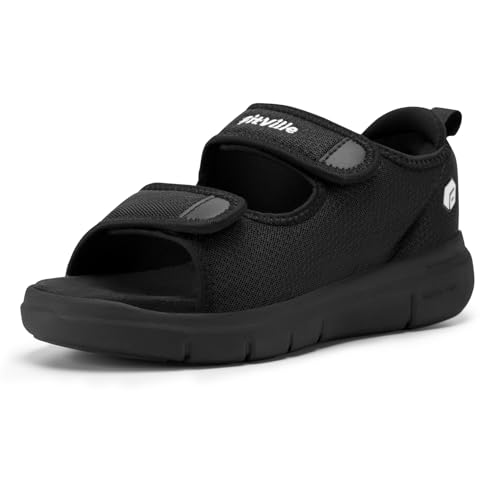
FitVille Diabetic Sandals With Dual Straps

This FitVille diabetic sandal is built around a practical two-strap design. The dual closures let you adjust the front and top of the foot separately. That is useful for women whose feet change size during the day or who need extra room near the toes. The black color hides everyday marks and pairs easily with most clothes.
The wide fit and arch support make this one of the more targeted options in the group. I would consider it for indoor use, neighborhood walks, shopping, and other low-impact activities. It is not a medical device, and the word “diabetic” does not mean it is safe for every person with diabetes. Look closely for seams, pressure points, and trapped moisture, especially if you have reduced sensation.
Pros:
- Two adjustable straps allow a more personal fit
- Wide width gives the forefoot extra room
- Arch support helps cushion everyday steps
- Black color is easy to maintain
- Good choice for feet that swell during the day
- Simple design works for indoor and outdoor casual wear
Cons:
- Open construction leaves toes exposed
- May feel less secure during fast walking
- People with very narrow feet may need a tighter fit
FitVille Women’s Strappy Sandals in Brown

The brown version of FitVille’s strappy orthopedic sandal offers the same comfort-first idea with a warmer look. Brown is often easier to match with neutral clothing, denim, and casual work outfits. The wide design may give bunions and swollen feet more breathing space. An adjustable ankle strap adds useful control over the fit.
This model makes sense for women who want a sandal that looks less sporty. Its arch support may help spread pressure across the foot during simple daily tasks. I would wear it for a lunch outing, light shopping, or a short walk rather than a long trail. As with all open footwear, check your skin after wearing it and stop if you notice redness that lasts.
Pros:
- Brown color blends with many casual outfits
- Wide fit supports a roomier toe area
- Ankle strap helps prevent unwanted movement
- Arch support adds comfort on hard floors
- Open upper helps reduce heat buildup
- Helpful for women who dislike narrow fashion sandals
Cons:
- Brown shade may not suit every wardrobe
- Straps can rub if adjusted too tightly
- Limited protection from rocks and sharp objects
XIHALOOK Wide Zero-Drop Walking Sandals

XIHALOOK takes a different path with a wide, zero-drop, barefoot-style design. Zero drop means the heel and forefoot sit at a similar height. Some women enjoy that level feel because it allows a more natural stance. The breathable upper and open shape also make this sandal attractive for hot days and easy walks.
This is a better match for women who already like minimalist footwear. It may not provide the structured arch support that some people need for plantar fasciitis or flat feet. Anyone new to zero-drop shoes should increase wear time slowly, since a sudden change can tire the calves and feet. Women with diabetes should place comfort and protection above the barefoot trend.
Pros:
- Wide toe area supports natural toe spread
- Zero-drop profile offers a level platform
- Breathable design suits warm weather
- Light style feels flexible for casual walking
- Black finish hides daily wear
- Useful for shoppers who prefer minimalist footwear
Cons:
- Less structured arch support than orthopedic styles
- May require a gradual break-in period
- Not ideal for people who need strong heel cushioning
- Minimalist construction may expose the foot more
L.CNTOYK Women’s Diabetic Slippers With Memory Foam

The L.CNTOYK open-toe slipper brings a soft, home-friendly feel to this list. It combines an adjustable design with arch support and a memory foam footbed. That setup may feel pleasant for women who spend much of the day indoors. The open toe also gives the foot a little more room than a closed house shoe.
I would view this as a comfort slipper for light indoor movement, not as a replacement for a protective walking sandal. Memory foam can feel soft, but softness alone does not equal good support or proper pressure control. Check that the foot does not slide forward or press against the toe edge. If you have neuropathy, inspect the foot after use because reduced feeling can hide rubbing.
Pros:
- Memory foam offers a soft step-in feel
- Adjustable opening helps fit changing foot volume
- Arch support suits indoor comfort needs
- Open toe gives the forefoot more space
- Convenient for home wear and short indoor tasks
- Helpful for women who dislike rigid footwear
Cons:
- Less protective than a closed walking shoe
- Memory foam may compress with extended use
- Not intended for demanding outdoor activity
- Open toe can allow dust and debris inside
FitVille Wide Open-Toe Sandals With Back Strap

This FitVille open-toe sandal adds a back strap for a more secure feel. That small detail can make a big difference when a loose slide slips off with each step. The wide shape gives swollen feet and bunions extra space, while the orthopedic build aims to support the arch. It looks like a practical everyday sandal rather than a delicate dress shoe.
The back strap makes this style more suitable for errands and short walks than a simple slip-on. You can adjust it to hold the heel without squeezing it. I would still avoid wearing any sandal for long periods until you know how your skin responds. For diabetes, a secure fit is helpful, but regular inspection remains essential.
Pros:
- Adjustable back strap improves heel security
- Wide toe area helps reduce side pressure
- Open toe supports airflow in warm weather
- Arch support may reduce foot tiredness
- Useful for errands and casual daily wear
- Orthopedic styling favors comfort over a narrow fashion fit
Cons:
- Back strap may need frequent adjustment
- Open toe does not protect against impact
- May look too casual for formal events
FitVille Wide Diabetic Open-Toe Sandals

This FitVille model focuses directly on wide-width diabetic footwear needs. Its open-toe design and adjustable straps may help women manage bunions, plantar fasciitis, and swollen feet. Instead of forcing the foot into a fixed upper, the straps give you room to tune the fit. That makes it one of the most flexible choices in this review.
I especially like this style for women who need extra volume around the forefoot. The arch support can add a steadier base, while the open build keeps the foot cooler than a closed shoe. It still needs careful use if you have poor circulation, neuropathy, or a history of sores. Make sure the sandal does not slide, pinch, or create a hot spot.
Pros:
- Wide design helps accommodate swollen feet
- Adjustable straps allow a more flexible fit
- Open toe provides extra room near the digits
- Arch support helps stabilize casual steps
- Good match for bunions and broad forefeet
- Designed with diabetic comfort needs in mind
Cons:
- Open style offers limited protection
- Too much strap adjustment may feel fussy
- People with narrow feet may not get a snug fit
FitVille Extra-Wide Diabetic Walking Sandals

Women who need an extra-wide fit should look closely at this FitVille diabetic walking sandal. The roomier shape can help when regular wide shoes still feel tight. Adjustable closures let you change the fit as swelling rises and falls. Its walking-focused design also makes it more appealing for daily movement than a basic indoor slipper.
This may be the most practical option for women with very broad feet, flat feet, heel pain, or plantar fasciitis. The arch support is intended to add structure, while the soft, open build keeps the sandal suitable for warm weather. I recommend wearing it for short periods at first. A larger shoe should never allow the foot to slide, since movement can create friction and reduce stability.
Pros:
- Extra-wide shape helps fit very broad feet
- Adjustable closures handle daily swelling changes
- Arch support adds structure for walking
- Useful for flat feet and heel discomfort
- Walking design suits errands and light outdoor use
- Roomy build may help reduce pressure on bunions
Cons:
- Extra width may overwhelm narrow feet
- Open upper gives less protection from debris
- May feel larger and heavier than a minimalist sandal
FitVille Diabetic Sandals With Dual Straps in Brown

This brown FitVille diabetic sandal offers the same useful dual-strap concept in a versatile color. Separate adjustment points can help you control pressure over the toes and instep. That is valuable for women whose feet do not fit one simple width shape. The brown finish gives it a softer, more everyday look than black.
I consider this a good middle ground between a basic slide and a highly structured walking shoe. It gives more control than a fixed strap, but it remains easy to wear in warm weather. The arch support may help during chores, shopping, and brief walks. As always, measure both feet, choose the larger measurement, and check the sandal for rubbing after use.
Pros:
- Dual straps give separate fit control
- Wide width helps make room for swelling
- Brown color works with many outfits
- Arch support adds comfort on firm surfaces
- Open toe keeps the foot cooler
- Good daily option for women who need adjustability
Cons:
- Straps may need adjustment during the day
- Not suitable for rugged terrain
- Open construction leaves the toes exposed
How I Chose the Best Diabetic Sandals for Women
I did not rank these sandals by appearance alone. A pretty sandal is not useful if it pinches the forefoot or lets the heel slide. I looked at the features that matter most for diabetic foot comfort: space, support, adjustability, stability, breathability, and ease of inspection.
Diabetes can raise the risk of nerve damage and poor blood flow in the feet. Neuropathy may reduce the ability to feel heat, pain, or friction. That is why a sandal must fit well from the first wear. A “break-in” period should never involve blisters, cuts, or lasting red marks.
Roomy fit matters
A wide or extra-wide toe box gives the toes space to rest without being squeezed together. It can also help women with bunions, hammertoes, edema, or broad feet. However, extra room should not mean a sloppy fit. Your foot should sit flat on the footbed, with the heel and toes staying inside the sandal as you walk.
Adjustable straps add control
Feet may swell after standing, walking, or sitting for a long time. Adjustable straps let you respond to those changes. I prefer closures that adjust without pressing a hard buckle into the skin. A strap should hold the foot gently. It should not leave a deep mark or cause numbness.
Arch support should feel steady
Arch support can reduce the feeling of fatigue for some women. It may also help spread pressure across the foot. The best level depends on your arch and gait. Too little support may feel tiring, while an aggressive arch bump may feel like a stone under the foot.
Soft materials are helpful, but not enough
Soft straps can reduce rubbing. A cushioned footbed can make hard floors feel kinder. Yet a soft sandal can still cause harm if it bends in the wrong place or lets the foot slide forward. I always balance cushioning with stability and a smooth interior.
Open toes require extra care
Open-toe sandals provide airflow, but they expose the toes to bumps, sun, dirt, and small objects. Women with reduced sensation should ask a clinician if open sandals suit their condition. Never wear a sandal over a cut, blister, ulcer, or irritated patch without medical advice.
What to Look for Before Buying
Start by measuring your feet at the end of the day. That is when swelling may be greatest. Measure both feet while standing, and use the larger foot when choosing a size. Do not assume that a familiar size will fit the same across every brand.
Next, check the width label. “Wide” and “extra wide” are not identical. Read the product chart and review customer comments about length, toe room, and strap placement. Product listings can change, so confirm the current size options, color, and return policy before ordering.
Look at the sole, too. A flat sole may feel natural, but it should still resist unwanted twisting. A slight tread can help on smooth indoor floors. Avoid worn soles, loose straps, rough seams, and footbeds that hold moisture.
Finally, think about where you will wear the sandals. A house slipper, a shopping sandal, and a travel sandal have different jobs. The L.CNTOYK model leans toward indoor comfort. The extra-wide FitVille model offers a better starting point for walking and very broad feet. XIHALOOK suits a minimalist preference, but it may not satisfy someone seeking firm orthopedic support.
How to Test New Sandals Safely
Try new sandals at home for a short time. Wear clean, dry feet and check the skin when you remove them. Look between the toes, around the heel, and under every strap. If you see redness, swelling, a blister, or a sore spot, stop wearing the sandals until you understand the cause.
Keep toenails trimmed straight across. Check inside the sandal before each use. A pebble, sharp seam, or folded strap can cause damage before you notice it. This simple habit matters even more when neuropathy affects sensation.
Do not use sandals as a reason to skip a foot exam. The CDC recommends regular foot care for people with diabetes, and medical groups advise prompt attention to foot wounds. Call your health professional if a sore does not improve, or if you notice warmth, drainage, unusual color, or increasing pain.
A good sandal should feel boring in the best way. You should not think about the strap every few steps. Your toes should not grip the footbed to keep the shoe on. Comfort should remain steady from the first minute to the last.
Best Uses for Each Sandal
For general casual wear, the first FitVille orthopedic wide sandal is a sensible choice. It offers a roomy shape and a simple look. For ankle control, choose one of the strappy FitVille designs or the open-toe model with a back strap.
For very broad feet, the extra-wide FitVille sandal stands out. For a minimalist feel, XIHALOOK is the clear alternative. For home use, L.CNTOYK offers a soft slipper-like approach, but I would not use it for long outdoor walks.
Color can also guide your choice. Black is easy to pair and tends to hide marks. Brown looks relaxed with denim and neutral clothing. White feels bright, but it may need more cleaning. These details do not replace fit, yet they can make you more likely to wear the sandal consistently.
My Recommendation
The best diabetic sandals for women depend on foot width, swelling, support needs, and where you plan to wear them. If I had to choose one broad starting point, I would pick the FitVille Diabetic Sandals with Adjustable Dual Straps. The two adjustment zones, wide shape, arch support, and simple black color give it a well-rounded profile for daily use.
Women with very wide feet should consider the FitVille extra-wide walking sandals. Women who need stronger heel control may prefer the FitVille open-toe style with a back strap. Those who want soft indoor footwear can try L.CNTOYK, while minimalist fans may prefer XIHALOOK. Check the fit often, and remember that “diabetic” on a product page does not replace a professional foot assessment.
| Best for | Why |
|---|---|
| Daily wide-fit comfort | FitVille dual-strap sandals offer room, arch support, and useful adjustment. |
| Very broad or swollen feet | The FitVille extra-wide model gives more space and supports light walking. |
| Indoor softness or minimalist feel | L.CNTOYK favors cushioned home wear, while XIHALOOK offers a flexible zero-drop profile. |
FAQs Of Best Diabetic Sandals for Women
What makes sandals suitable for women with diabetes?
Look for a roomy fit, smooth inner surfaces, adjustable straps, stable soles, and gentle cushioning. The sandal should not pinch, slide, or create pressure spots. Ask your podiatrist before wearing open footwear if you have neuropathy, poor circulation, or a current foot problem.
Are open-toe sandals safe for diabetic feet?
They may be suitable for some women, but they expose the toes to injury and debris. Women with reduced sensation should get medical guidance first. Inspect your feet after wearing them and never wear open sandals over a sore or blister without advice.
Should diabetic sandals feel loose?
No. They should feel roomy but secure. Your toes need space, while the heel should remain stable. A loose sandal can cause sliding, friction, and falls.
How should I deal with swollen feet?
Choose adjustable straps and shop later in the day, when swelling may be greater. Do not tighten straps enough to leave deep marks. Sudden or severe swelling needs medical attention.
Can these sandals help plantar fasciitis?
Arch support and cushioning may improve comfort for some people. They do not cure plantar fasciitis. Choose a stable fit, increase wear time slowly, and seek professional care if pain continues.
Final Verdict: Which Should You Buy?
For most women, the FitVille diabetic sandals with dual adjustable straps offer the best balance of width, support, and daily comfort. Choose the extra-wide FitVille model for very broad feet, L.CNTOYK for home wear, or XIHALOOK for a minimalist feel.
The best diabetic sandals for women should fit gently, stay secure, and let you inspect your feet with ease. Measure carefully, check your skin often, and follow your clinician’s advice for safer summer walking.

Madison Clark is a footwear expert and the voice behind MyStyleGrid.com. She specializes in honest shoe reviews, style tips, and practical guides to help readers find the perfect pair for any occasion. With years of experience in blogging and content creation, Madison makes footwear knowledge simple, stylish, and easy to follow.