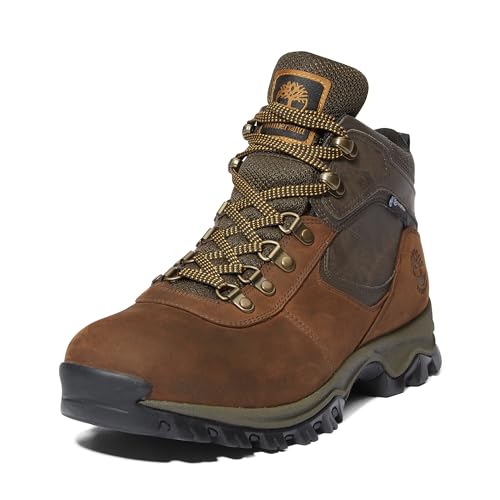
The best hiking boots for neuropathy combine soft cushioning, stable support, a wide fit, and dependable traction.
A rocky trail feels very different when your feet feel numb, hot, or unsteady. I understand the worry: one loose seam, hard insole, or wet sock can turn a good hike into a painful day. The right boot cannot treat neuropathy, but it can reduce pressure, improve balance, and help protect sensitive feet. I reviewed these hiking boots with comfort, fit, grip, weather protection, and daily walking in mind. As of 2026, these are strong options for hikers who need more support than a standard trail shoe can provide.
Men’s Orthopedic Waterproof Hiking Boots

This orthopedic hiking boot is built for men who want trail support without a stiff, heavy feel. Its design focuses on arch support, a roomy comfort fit, and cushioning for feet that tire easily. The waterproof build can help keep rain and damp grass away from the foot during short hikes. I especially like the ankle height because it gives the foot a more secure feel on uneven paths.
The boot may suit people who deal with plantar fasciitis, high arches, or neuropathy-related sensitivity. A supportive footbed can spread pressure more evenly instead of placing it all under the heel or ball of the foot. Still, no boot should feel tight, hot, or numb after a short indoor test. Wear the socks you plan to hike in, and check your feet after every outing because reduced sensation can hide rubbing.
Pros:
- Waterproof upper helps block light rain and wet ground
- Orthopedic arch support may reduce foot strain
- Ankle design adds a stable feel on rough paths
- Cushioned fit works well for long walks and errands
- Useful option for high arches and plantar fascia discomfort
- Trail-ready outsole supports everyday outdoor use
Cons:
- May feel warmer than a low-cut mesh hiking shoe
- Arch shape may not match every foot
- Waterproof materials need time to dry after deep water exposure
Men’s Orthopedic Hiking Boots for Wide Feet
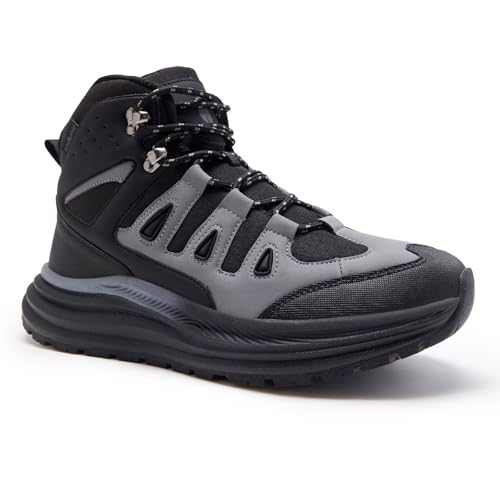
This casual orthopedic boot takes a softer approach to hiking comfort. It is made for walking, light trails, travel, and daily wear rather than highly technical mountain routes. The arch-support design may help reduce strain for people with flat feet, high arches, or sore heels. Its elastic-style fit also looks convenient for anyone who dislikes a hard, restrictive boot collar.
I see this as a practical choice for neighborhood trails and mixed-use trips. The massage-style footbed language suggests a comfort focus, but shoppers should still judge the boot by actual fit and pressure points. Neuropathy can affect balance, so the sole should feel firm and secure rather than overly soft. Break these in slowly, and never depend on the boot alone if a medical condition affects your gait.
Pros:
- Comfort-focused design suits walking and casual trail use
- Arch support may help spread pressure across the foot
- Elastic details can make the boot easier to put on
- Higher ankle shape gives a supported, covered feel
- Versatile look works for travel and daily outfits
- Helpful for hikers who want a less rugged boot
Cons:
- Not the best match for deep mud or technical rock
- Casual styling may offer less structure than a hard trail boot
- Some users may need an extra-wide size or different insole
Women’s Orthopedic Trekking Hiking Boots

This women’s trekking boot aims to balance outdoor style with orthopedic comfort. The design highlights arch support, heel comfort, and a footbed that may work for both flat feet and higher arches. That range is useful because neuropathy often appears alongside other foot problems. The gray color also gives it a cleaner, lighter look than many traditional hiking boots.
The boot is a good candidate for walking trails, park paths, travel, and moderate day hikes. I would pair it with smooth, moisture-wicking socks and avoid thick seams that can press into less-sensitive areas. A stable sole matters just as much as cushioning, especially when the trail slopes or has loose gravel. Before a long hike, walk indoors for several short sessions and look for redness, blisters, or swelling afterward.
Pros:
- Women’s fit and lighter styling suit everyday outdoor wear
- Arch support addresses several common foot shapes
- Heel cushioning may improve comfort on hard paths
- Good choice for day hikes and travel walking
- Covered ankle design offers more protection than a sneaker
- Neutral gray color pairs well with casual clothing
Cons:
- May not provide enough protection for very steep terrain
- Orthotic shape can feel unusual during the first few wears
- Water resistance and traction should be checked for the planned trail
Orthofeet Dalton Men’s Orthopedic Hiking Boots
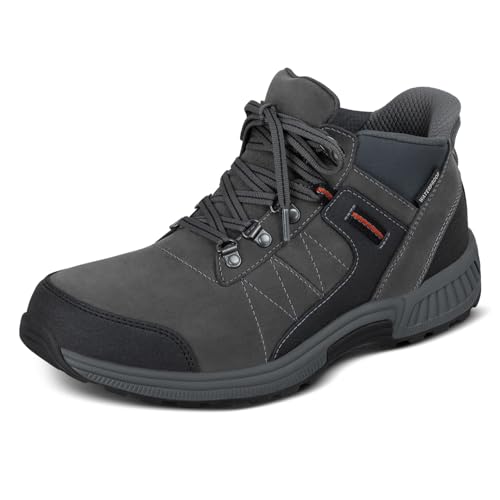
The Orthofeet Dalton stands out for shoppers who place foot comfort above a low price. Orthofeet is known for orthopedic footwear features such as roomy toe space, supportive insoles, and comfort-focused construction. A wide toe area is especially important when neuropathy, swelling, hammertoes, or bunions make tight shoes painful. The gray finish keeps this boot fairly easy to wear beyond the trail.
This model may be a strong fit for men who need a more structured orthopedic boot for walking and light hiking. The extra room can let the toes move instead of forcing them together on descents. I still recommend checking the size chart and trying the boot with any prescribed orthotic. A roomy boot is helpful, but excessive movement can cause rubbing and make balance worse.
Pros:
- Roomy toe area helps reduce crowding and pressure
- Orthopedic construction suits sensitive feet
- Useful for hammertoes, bunions, and swelling concerns
- Supportive insole may improve walking comfort
- More polished look works for travel and daily use
- Strong option for men who need generous sizing
Cons:
- May cost more than basic hiking boots
- Roomy construction may feel loose on narrow feet
- The larger size shown may not suit every shopper
NORTIV 8 Women’s Waterproof Hiking Boots

The NORTIV 8 women’s boot is a sensible pick for hikers who want a classic waterproof trail boot. Its ankle-high shape can help keep the foot covered from brush, dirt, and shallow puddles. Waterproofing is useful for neuropathy because wet socks can increase friction and make skin problems harder to notice. The gray and blue color scheme also gives the boot a sporty outdoor look.
This boot is better suited to normal day hikes than to people seeking a deeply cushioned medical shoe. I would use a supportive insert if the stock footbed does not match your arch. The sole should give useful grip on common dirt, grass, and gravel, but every outsole can slip on smooth wet rock. If you have major loss of feeling, test the boots close to home before visiting a remote trail.
Pros:
- Waterproof design helps protect feet in damp conditions
- Ankle height offers coverage and a secure hiking feel
- Sporty women’s styling suits outdoor trips
- Good fit for day hikes and weekend walks
- Room for hiking socks in the right size
- Versatile choice for rain, dirt, and light snow use
Cons:
- May need an aftermarket insole for strong arch needs
- Waterproof boots can feel warm in summer
- Not designed as a medical treatment for neuropathy
NORTIV 8 Men’s Ankle-High Waterproof Boots

This men’s NORTIV 8 boot is a traditional hiking option with a practical ankle-high design. It is aimed at shoppers who want waterproof coverage, trail traction, and a familiar boot shape. The brown, black, and tan color mix looks rugged and hides trail dust well. For people with neuropathy, the ankle support and firm sole may help create a more confident base.
I would choose this model for parks, woodland trails, hunting paths, and general outdoor work. It may feel more protective than a soft walking shoe, though it can also require more break-in time. Make sure the heel stays in place while the toes have room to move. If the boot feels heavy or creates pressure near the ankle, that is a warning to stop and reassess the fit.
Pros:
- Waterproof coverage supports use in wet trail conditions
- Traditional ankle height promotes a secure fit
- Rugged styling suits hiking and outdoor work
- Firm outsole can feel stable on uneven ground
- Protective upper helps shield the foot from trail debris
- Works for men seeking one boot for many outdoor tasks
Cons:
- May feel heavier than a lightweight trail runner
- Could need a longer break-in period
- Firm construction may not suit people wanting plush cushioning
OrthoComfoot Men’s 4E Wide Waterproof Boots
The OrthoComfoot boot deserves attention from men who need a genuinely wide fit. Its 4E width can give swollen feet, broad feet, or sensitive toes more breathing room than a standard boot. The waterproof build adds useful protection for wet trails, while the orthopedic footbed focuses on arch support. This combination makes it one of the more targeted choices in this group.
A wide boot can be a relief, but only when the length and heel fit are also correct. I would not size up several sizes just to gain width because extra length can make downhill walking less safe. Use a thin, smooth sock first, then add thickness only if the fit allows it. For the right foot shape, this boot may feel like opening a window after wearing a cramped shoe.
Pros:
- 4E width gives extra space for broad or swollen feet
- Waterproof construction supports wet-weather hiking
- Orthopedic arch support helps target pressure concerns
- Non-slip design may improve confidence on common trails
- Protective ankle build suits outdoor walking
- Useful for men who cannot tolerate narrow footwear
Cons:
- Extra-wide fit may feel loose on narrow feet
- May look bulky compared with a standard hiking sneaker
- Wide sizing does not replace a custom medical orthotic
NORTIV 8 Men’s Waterproof Lightweight Hiking Boots

This lightweight NORTIV 8 boot is for hikers who dislike the drag of a heavy leather-style boot. The army green color gives it a trail-ready appearance, while the waterproof design adds protection for changing weather. Lower weight can matter when neuropathy, leg weakness, or general fatigue makes each step feel harder. It may also work well for travel because it can move from a trail to a casual setting.
I like lightweight footwear for short and moderate hikes, but I always check whether it bends in a controlled way. A boot that is too soft may not provide enough stability on loose ground. The best hiking boots for neuropathy should feel supportive without making the foot fight the shoe. Try this pair with your normal socks, and inspect the sole after use for wear or trapped stones.
Pros:
- Lightweight design may reduce leg and foot fatigue
- Waterproof upper helps handle rain and damp paths
- Outdoor color hides dirt from regular trail use
- Suitable for day hikes, travel, and casual walking
- Ankle coverage gives more protection than a low shoe
- Good choice for hikers who prefer flexible footwear
Cons:
- May offer less rigid support than a heavy hiking boot
- Army green style may not suit every wardrobe
- Lightweight materials may need careful trail use
Propét Ridge Walker Men’s X-Wide Boot
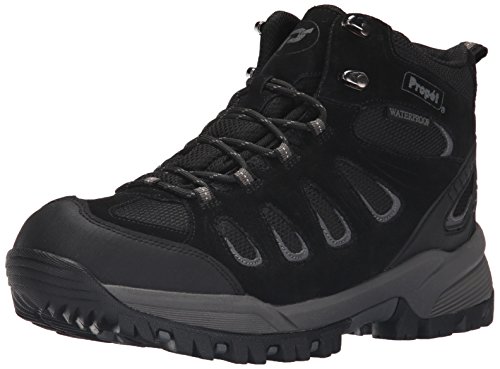
The Propét Ridge Walker is a strong comfort-first choice for men who need an X-Wide fit. Extra width can be important when socks, swelling, or foot deformities make standard hiking boots feel like clamps. Propét has a long history in comfort footwear, and this model has the practical shape of a walking boot rather than a fashion shoe. Its black finish is simple and easy to maintain.
This boot may work best for paved paths, park trails, and moderate walks where fit matters more than extreme mountain performance. I would pay close attention to heel hold because an extra-wide front does not guarantee a secure rear fit. If you use an orthotic, remove the factory insole first when possible and check the resulting volume. For many users, the right width can do more for comfort than adding another layer of foam.
Pros:
- X-Wide shape helps accommodate broad feet
- Comfort-focused design suits daily walking
- Useful for swelling and toe crowding concerns
- Black finish looks practical and understated
- Can work with some removable orthotic inserts
- Supportive boot profile offers more coverage than sneakers
Cons:
- May not have the aggressive grip of a technical boot
- X-Wide sizing can feel loose without the right foot shape
- Black material may feel warm in strong sun
Men’s Orthopedic Waterproof Ankle Hiking Boots

This orthopedic waterproof boot is designed around arch support and general pain relief. It may appeal to men with high arches, plantar fasciitis, or feet that become sore during travel and outdoor walks. The ankle profile adds a sense of structure without the look of a tall work boot. Its black finish also makes it easy to wear for errands after a hike.
For neuropathy, comfort is only half the decision. I also look for a secure heel, a stable sole, a smooth interior, and enough toe room for natural movement. This boot checks several of those boxes on paper, but each foot responds differently to arch height. Start with short walks, and stop if you notice rubbing, pressure, heat, or a change in skin color.
Pros:
- Waterproof design supports outdoor use in wet weather
- Orthotic arch support may reduce strain while walking
- High-arch focus helps a specific comfort need
- Ankle height offers a stable, covered fit
- Black styling works for travel and daily wear
- Suitable for light trekking and training walks
Cons:
- Arch height may feel too strong for some users
- May need careful sizing when worn with thick socks
- Not a substitute for professional treatment of neuropathy
My Recommendation
After comparing these models, I would start with the OrthoComfoot 4E Wide Waterproof Boot for men who need generous room, or the Orthofeet Dalton for a more orthopedic, comfort-led fit. The women’s orthopedic trekking boot is the most targeted women’s choice in this group. If you prefer a lighter, more traditional hiking style, the NORTIV 8 models are practical alternatives.
The best hiking boots for neuropathy should never pinch, slide, or create hot spots. I recommend trying them late in the day, when feet are often slightly larger, and wearing your usual hiking socks. Walk on a clean indoor floor first. Check both feet after each test, since reduced feeling may prevent you from noticing a small injury.
| Best for | Why |
|---|---|
| Wide or swollen feet | The OrthoComfoot 4E and Propét X-Wide boots provide extra room for toes and forefeet. |
| Orthopedic arch support | The Orthofeet Dalton and orthopedic ankle boots focus on support for sensitive, tired feet. |
| Lightweight wet-weather hiking | The NORTIV 8 lightweight and women’s waterproof boots balance lower weight with trail coverage. |
How I Evaluated the Best Hiking Boots for Neuropathy
I did not judge these boots by appearance alone. Neuropathy changes the way a person feels pressure, heat, and impact. A boot can look rugged yet still fail if its toe box is narrow or its seams press against the foot. I focused on fit, cushioning, support, traction, weight, weather protection, and the ability to work with socks or orthotics.
I also considered daily use. Many people do not need a mountaineering boot. They need one pair for a park trail, a trip, a dog walk, or a long day on their feet. In that setting, comfort and safe fit often matter more than extreme stiffness. The best hiking boots for neuropathy should support the foot while still allowing a natural step.
Why Neuropathy Changes Your Hiking Boot Choice
Peripheral neuropathy may cause tingling, burning, pain, weakness, or reduced feeling in the feet. Diabetes is one possible cause, but nerve symptoms can have many causes. Because sensation may be reduced, a person might not feel a blister, stone, seam, or hot spot right away. That makes regular foot checks a key part of safe hiking.
A good boot cannot restore nerve feeling. It can, however, lower some common sources of trouble. A wide toe box can reduce crowding. A smooth lining can limit rubbing. Cushioning can soften impact, while a stable sole can help with balance. I view the boot as one part of a safety plan, not a cure.
If you have an open sore, a new foot wound, a sudden change in color, serious swelling, or worsening weakness, pause hiking and contact a qualified health professional. People with diabetes should follow their clinician’s foot-care plan. A podiatrist or physical therapist can also help assess gait, balance, and the right type of insert.
Key Features to Look For
A roomy toe box
Your toes should lie flat and move freely. They should not touch the front of the boot when you walk downhill. A wide toe box can also help accommodate swelling, hammertoes, or bunions. Do not confuse extra toe space with a boot that is too long. The heel should stay secure while the forefoot has room.
Gentle, useful cushioning
Cushioning can make hard paths feel less harsh. Yet a very soft sole may reduce stability for some hikers. I prefer a boot that cushions the heel but still gives a firm, steady platform. If you use a custom insert, check whether the boot has enough interior space for it.
Arch support that matches your foot
Arch support is not one-size-fits-all. A high arch may need a different shape than a flat foot. Too much pressure in one small area can be a problem when sensation is reduced. Walk indoors before committing to a long hike, and make sure the support feels broad and even.
A secure heel and ankle
Heel movement can cause blisters and make uneven ground feel less safe. Lace the boot firmly around the ankle, but do not create pressure or numbness. Ankle-high boots may offer more coverage, although they can feel warm or restrictive. The right height depends on your trail, balance, and personal comfort.
Reliable traction
Look for a sole with clear tread and a stable base. Traction helps on dirt, gravel, grass, and mild slopes. No outsole can make wet roots or smooth rock risk-free. Step slowly in questionable areas, and use a trekking pole if a clinician or trained professional recommends one for balance.
Breathability and moisture control
Waterproof boots keep water out, but they may hold heat in. Breathable boots feel better in dry summer weather, but they offer less protection in rain. Either way, change damp socks as soon as possible. Moist skin can rub more easily, and people with neuropathy may not notice the damage at first.
How to Get the Right Hiking Boot Fit
Measure both feet. One foot may be longer or wider than the other. Shop later in the day, since feet often swell after hours of standing and walking. Wear the socks and inserts you plan to use outside.
Stand up while testing the boots. You should have a small amount of space in front of the longest toe. Walk down a gentle indoor slope if possible. Your toes should not jam forward, and your heel should not lift with every step.
Run your hand inside the boot. Feel for hard seams, bumps, loose threads, or rough patches. This simple check matters when your feet cannot clearly report pressure. I also suggest checking the tongue and collar because those areas can create narrow bands of pressure.
Do not break in a questionable fit by forcing yourself through pain. A boot may soften slightly, but it will not grow wider in the places that matter. If the fit is wrong indoors, it will usually feel worse after miles on a trail.
Safe Hiking Tips for People With Neuropathy
Start with a short, familiar route. Keep the first hike close to home or near an easy exit. Tell a friend where you are going, especially if balance or foot feeling is poor. A phone, water, basic first-aid items, and spare socks are simple but useful supplies.
Check your feet before and after every hike. Look between the toes, around the heel, and along the sides of the foot. Watch for redness, blisters, cuts, swelling, or skin that feels unusually warm. A mirror can help you see the bottom of each foot.
Trim nails with care, keep socks smooth, and avoid hiking barefoot. Remove small stones as soon as you notice them. If you cannot feel a problem, set a timer to remind you to stop and check. A short pause can prevent a small issue from becoming a major one.
Choose a trail that matches your current balance and strength. Flat ground may be a better starting point than steep, rocky terrain. Trekking poles can add a second point of contact, but learn to use them before the hike. When in doubt, ask your health care team about safe activity limits.
Common Mistakes to Avoid
The first mistake is choosing a boot only because it feels soft in the store. Softness matters, but support and stability matter too. A very flexible shoe may fold under the foot on uneven ground. Try several steps and notice how your whole body feels.
The second mistake is buying a boot that is too large to gain width. Extra length lets the foot slide forward and may cause toe impact. Seek a true wide or extra-wide model instead. Use lacing to fine-tune the heel, not to force a poor shape into place.
The third mistake is wearing new boots on a long hike. Even the best hiking boots for neuropathy need a careful test period. Wear them at home, then on short walks. Inspect your skin each time.
The fourth mistake is assuming waterproof means fully safe in deep water. Water can enter over the collar, through the tongue, or through a damaged seam. Wet boots also need time to dry. Carry spare socks and avoid storing damp boots in a closed bag.
Are Orthotic Insoles Worth Using?
Orthotic insoles can help when the factory footbed does not match your arch or pressure pattern. Some hikers need extra heel cushioning, while others need a firmer platform. A custom orthotic may be useful for a specific medical issue. A store-bought insert can work for general comfort, but it should not create new pressure.
Check whether the boot has a removable insole. If you add an insert without removing the original, the shoe may become too tight over the top of the foot. That pressure can be hard to notice with neuropathy. Make sure the heel still sits down and the toes still have room.
Never assume an insert will fix an unstable boot. It can improve the footbed, but it cannot replace a secure heel, a good outsole, or the correct width. Use it as part of a complete fit, not as a shortcut.
FAQs Of Best Hiking Boots for Neuropathy
What are the best hiking boots for neuropathy?
The best pair depends on your foot shape and trail. Look for a wide toe box, smooth lining, stable traction, cushioning, and a secure heel. Orthofeet and OrthoComfoot are strong comfort-led choices, while NORTIV 8 offers more traditional outdoor styling.
Should hiking boots for neuropathy be tight?
No. The boot should feel secure, but it should not pinch or cause numbness. Your toes need room to move, and your heel should stay in place. Test the fit late in the day with your normal socks.
Are waterproof boots good for neuropathy?
They can be useful in rain and wet grass. However, waterproof boots may feel warm and can take longer to dry. Change damp socks and check your feet after hiking. Choose breathability over waterproofing in hot, dry conditions if that feels safer for you.
Can hiking boots cure neuropathy?
No. Hiking boots cannot cure nerve damage or restore sensation. They may reduce rubbing, pressure, and instability. Talk with a qualified health professional about symptoms, foot wounds, and safe exercise.
How should I break in new hiking boots?
Wear them indoors for short periods first. Then take several brief walks on easy ground. Check both feet after every test. Stop if you find redness, blisters, heat, swelling, or pressure.
Final Verdict: Which Should You Buy?
For maximum room, I would choose the OrthoComfoot 4E Wide Waterproof Boot. For broad orthopedic comfort, the Orthofeet Dalton is compelling. The NORTIV 8 models suit hikers who prefer traditional, lighter outdoor boots.
The best hiking boots for neuropathy should fit gently, grip well, and support steady steps. Pair the right boot with careful foot checks and professional advice when needed.

Madison Clark is a footwear expert and the voice behind MyStyleGrid.com. She specializes in honest shoe reviews, style tips, and practical guides to help readers find the perfect pair for any occasion. With years of experience in blogging and content creation, Madison makes footwear knowledge simple, stylish, and easy to follow.