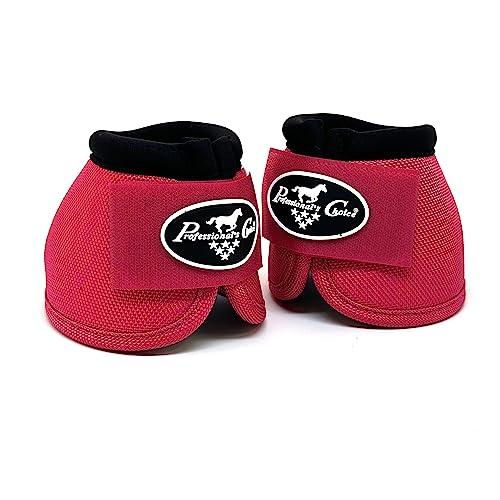
The best bell boots for turnout shield heels from overreach injuries, mud, stones, and daily pasture wear.
A horse can step on its own heel while grazing, running, or playing, especially on soft ground or in a lively herd. One small strike can cause a painful cut, lost shoe, or torn hoof wall. The right overreach boot acts like a simple bumper around the hoof. I looked at fit, closure strength, rubber thickness, comfort, cleaning, and value to help you choose the best bell boots for turnout in 2026.
Shires Arma Overreach Bell Boots

The Shires Arma Overreach Bell Boots use a tough rubber shell to help cover the heel bulbs and coronary area. This design suits horses that overreach during turnout, exercise, or play. The broad shape gives useful coverage without adding a bulky brace above the hoof. I also like the simple black finish because it hides mud and is easy to match with other gear.
The touch-close fastening makes fitting quick at the gate. You can open the boot wide, place it around the pastern, and secure it with a firm overlap. As with any bell boot, the fit should stay snug without pinching or trapping grit. This is a strong everyday choice for owners who want practical hoof protection at a reasonable price.
Pros:
- Durable rubber helps absorb hoof strikes
- Wide coverage protects the heel area
- Touch-close fastening allows quick fitting
- Simple design is easy to wash
- Black color helps hide pasture dirt
- Useful for turnout, training, and riding
Cons:
- Rubber may feel firm on horses that prefer soft trim
- Touch-close straps need regular cleaning to keep a firm grip
- Some horses may need a larger size for full coverage
My Recommendation
I recommend this model for riders who want a dependable, no-fuss boot for daily pasture use. It works especially well for a horse that clips its front heels but does not need extra fleece padding. The thick rubber offers a good balance of protection and movement. For many owners, this Shires model is a practical contender for the best bell boots for turnout because it is simple, washable, and built for routine use.
Shires Arma Fleece Bell Boots

This Shires Arma version combines a durable gum-rubber body with SupaFleece trim. The soft edge helps reduce rubbing around the pastern, which can matter for horses with sensitive skin or fine hair. The boot still provides a firm barrier against overreach strikes. Its full shape makes it suitable for turnout when a horse moves fast, bucks, or plays.
Double touch-close straps help the boot stay in place when the horse walks through wet grass or uneven ground. The fleece edge adds comfort, but it also needs a little more care than a plain rubber boot. I would rinse away sand and let the trim dry fully before storage. When comfort is the main concern, this design feels more forgiving than a basic pull-on boot.
Pros:
- Fleece trim helps limit rubbing
- Gum rubber protects against hoof impact
- Double closure offers a secure fit
- Good option for sensitive-skinned horses
- Useful for wet and active turnout
- Soft edge adds comfort during long wear
Cons:
- Fleece can hold mud and moisture
- Trim takes longer to clean and dry
- May cost more than a plain rubber design
My Recommendation
I would choose these boots for a horse that needs heel protection but often develops rub marks. They are also a smart pick for long turnout periods, when a hard edge can become irritating. Check the fleece after each use and remove any packed grit. If your horse has delicate skin, this model may be among the best bell boots for turnout because it puts comfort beside impact protection.
Abbylike Ballistic Rubber Bell Boots, Large

These Abbylike bell boots use a ballistic-style rubber body for everyday overreach protection. The large size is aimed at horses with broader hooves or larger pasterns. Its no-rub shape is designed to leave room around the sensitive skin above the heel. That makes it worth considering for horses that need more space than a narrow bell boot provides.
The wrap hook-and-loop closure makes installation easier than a tight pull-on style. It also lets you adjust the overlap as the horse changes condition or grows more winter coat. I would inspect the closure after turnout because loose straps can collect mud or catch on rough material. For a large horse that needs broad coverage, this is a useful and flexible option.
Pros:
- Large size suits bigger horses
- Ballistic-style rubber offers impact resistance
- No-rub shape supports better skin comfort
- Wrap closure makes fitting simple
- Easy to remove for hoof checks
- Useful for pasture, training, and light work
Cons:
- Large sizing may be too loose on narrow hooves
- Hook-and-loop closures can collect grass and mud
- Rubber may need softening with regular use
My Recommendation
This pair is best for owners of larger horses that need more room around the hoof. I also like it for horses that dislike narrow pull-on boots. Measure the hoof and pastern before ordering, since generous coverage only helps when the boot stays centered. For a broad-footed horse, these Abbylike boots can be a strong candidate for the best bell boots for turnout at an affordable level.
Abbylike Wrap Bell Boots, Extra Large

The extra-large Abbylike wrap boot is built for horses that need a roomy overreach barrier. Its rubber construction helps guard the back of the hoof from a front foot strike. The wrap design gives the owner more control over the fit than a fixed pull-on boot. This can be helpful when a horse has a wide hoof, a fuller pastern, or a different shape on each front foot.
The hook-and-loop closure opens quickly and does not require stretching the rubber over the hoof. That saves time when a horse becomes impatient at turnout. A correct fit should cover the heel bulbs while leaving enough space to move freely. I suggest checking the boots during the first few wear sessions to confirm that they do not twist or rub.
Pros:
- Extra-large shape provides generous coverage
- Wrap style fits a range of hoof shapes
- Rubber helps guard against overreach injuries
- Easy to put on and remove
- Adjustable closure supports a customized fit
- Black finish conceals everyday dirt
Cons:
- Extra-large size may shift on smaller horses
- Wrap closures require careful tightening
- May feel heavy compared with thin rubber boots
My Recommendation
I would select this pair for a large horse or one with an unusually wide hoof shape. It is also useful when you want adjustable boots rather than a tight pull-on fit. Owners should not use extra room as a substitute for correct sizing. If the boot rotates, reduce the size or try another shape. For the right horse, this is one of the best bell boots for turnout when broad, adjustable coverage matters most.
Shires Arma 6mm Bell Boots
The Shires Arma 6mm bell boots stand out for their thick rubber construction. That added material gives the boot a shock-absorbing feel when a hind toe reaches the front heel. This model uses a double touch-close system to help maintain its position during movement. It is a sensible design for horses that damage thin boots or strike hard.
The rubber surface is simple to rinse after a muddy turnout. The double closure also makes it easier to keep the boot secure without relying on a narrow strap. However, thicker rubber can feel less flexible at first, so I would allow a short break-in period. Check for trapped dirt each time you remove the boots, especially after wet weather.
Pros:
- 6mm rubber offers strong impact protection
- Shock-absorbing construction suits active horses
- Double touch-close fastening improves security
- Easy-care surface rinses clean
- Available in several sizes
- Good choice for horses that destroy thin boots
Cons:
- Thick rubber may feel stiff when new
- Can be warmer and heavier than a light boot
- Fit must be precise to prevent twisting
My Recommendation
This is my pick for hard users and horses that need extra impact protection. It suits turnout in a busy herd, active training, and horses with a history of overreach cuts. I would not choose it only because it is thick; correct shape and fit still come first. Among the best bell boots for turnout, this Shires model is a convincing choice for durability and shock control.
Professional’s Choice Pull-On Bell Boots

Professional’s Choice Pull-On Bell Boots offer a clean, simple design with no closure to snag or open. The rubber shell slips over the hoof and sits around the heel area. This style can stay smooth against the leg when the size is correct. It is a classic option for owners who prefer fewer parts and a neat profile.
Pull-on boots often work well for horses that remove standard strap boots. They can also offer a smooth fit under other equipment because no tab sticks out. The trade-off is that you must stretch the boot over the hoof, which can be harder with a wide foot or a horse that dislikes handling. I recommend checking the edge for hair loss after the first few uses.
Pros:
- No straps can come undone in the field
- Smooth profile reduces snag points
- Simple rubber design is easy to clean
- Good for horses that pull off strap boots
- Light and practical for daily use
- Works for turnout and riding
Cons:
- Can be hard to pull on over a broad hoof
- Fit is less adjustable than a touch-close model
- May rub if the size or shape is wrong
My Recommendation
Choose these boots if your horse repeatedly defeats hook-and-loop closures. They are also a good match for a neat, low-maintenance setup. I would use a pull-on model only when I can fit it without forcing the hoof or twisting the rubber. For the right hoof shape, Professional’s Choice offers one of the best bell boots for turnout for simple, secure coverage.
Abbylike Ballistic Rubber Bell Boots, XL
This XL Abbylike model shares the protective ballistic-style rubber design but targets an extra-large fit. The wide body helps cover the heel bulbs and rear hoof wall during movement. It is made for owners who want a no-rub profile with a little more room. The black finish gives it a practical look for dusty paddocks and muddy fields.
The boot uses a wrap closure, so you can place it around the pastern without pulling the whole shell over the hoof. That makes daily use easier for many handlers. I would still measure carefully because a loose XL boot can slide, turn, or catch on the ground. When fitted well, it gives good coverage without needing a complicated setup.
Pros:
- XL size supports larger hoof dimensions
- Protective rubber helps reduce heel trauma
- No-rub shape may improve long-wear comfort
- Wrap closure makes application fast
- Easy to remove for cleaning and inspection
- Useful for turnout and active horses
Cons:
- May be too large for average horses
- Hook-and-loop material needs frequent cleaning
- Large rubber boots can retain some heat
My Recommendation
This model is best for owners who need XL coverage but want an adjustable boot. It may suit draft crosses, larger warmbloods, or horses with broad front feet. Always compare the seller’s size chart with actual hoof measurements. If the dimensions match, this Abbylike pair is a useful option for the best bell boots for turnout on big horses.
Abbylike Blue Wrap Bell Boots, Large

The Abbylike blue wrap bell boots provide the same basic job as a black rubber overreach boot while adding a brighter color. The large size gives useful room for horses that do not fit narrow designs. Its rubber shell helps protect the heel area from accidental contact. The color can also make the boots easier to spot during a quick pasture check.
The wrap hook-and-loop fastening supports quick fitting and removal. It is a practical feature when you need to put boots on before turnout and take them off before stall time. The closure should lie flat, with no loose end hanging near the ground. I like this style for owners who want visible gear, adjustable fit, and a reasonable daily-care routine.
Pros:
- Bright blue color makes field checks easier
- Large size offers broad hoof coverage
- Rubber helps protect against overreach strikes
- Adjustable wrap closure fits varied shapes
- Quick to put on before turnout
- Simple surface is easy to rinse
Cons:
- Color may show mud more than black
- Large sizing may shift on smaller feet
- Hook-and-loop closures can wear with heavy dirt
My Recommendation
I recommend this version for owners who want a visible, adjustable boot for a large horse. The blue color is helpful when checking several horses in a field. It is also a nice choice for riders who want practical protection without an all-black look. For everyday use, this model can be one of the best bell boots for turnout when visibility and easy handling matter.
Jeffers Equine No-Turn Bell Boots

Jeffers Equine No-Turn Bell Boots focus on keeping the protective shell centered around the hoof. A no-turn design can help prevent the boot from rotating away from the heel bulbs. This matters when a horse moves through deep footing or plays hard in turnout. The shock-absorbing construction adds another layer between the hoof and an accidental strike.
The double hook-and-loop closure gives the handler two contact points instead of one. That can help maintain a secure fit through regular movement. The purple color adds a clear visual cue during daily checks, which is handy in a busy barn. I would inspect the inside and closure for grit after every wet or sandy turnout session.
Pros:
- No-turn design helps keep coverage in place
- Shock-absorbing material cushions hoof impacts
- Double closure supports a secure fit
- Medium size suits many average horses
- Bright purple finish is easy to identify
- Useful for travel, turnout, training, and riding
Cons:
- Medium size may not fit very small or large hooves
- Bright color may show dirt quickly
- Closures need regular checks in rough turnout
My Recommendation
This is my choice for a horse that twists ordinary bell boots out of position. It is also a strong option for owners who want one pair for turnout, training, and travel. The no-turn feature can save time because you spend less effort repositioning the boot. For active horses, Jeffers Equine deserves attention among the best bell boots for turnout.
Harrison Howard Rubber Bell Boots

Harrison Howard’s two-pack uses rubber boots with extra-thick construction for hoof overreach protection. The pull-on format creates a smooth, clean outline around the foot. Upgraded leather touch-close tape adds adjustability and may feel more substantial than a thin fabric tab. Getting two boots in the pack makes this a convenient choice for replacing worn pairs or keeping a spare.
The boot is designed for owners who want a blend of pull-on coverage and fastening support. The rubber helps block strikes, while the closure helps hold the boot in place. Because the fit is less open than a fully wrap-style model, measure the hoof before buying. Clean the leather-style fastening and allow the rubber to dry away from direct heat.
Pros:
- Two-pack provides a useful spare
- Extra-thick rubber supports durability
- Leather touch-close tape adds secure fastening
- Smooth pull-on profile limits snag points
- Suitable for turnout and daily work
- Black finish looks neat and hides light dirt
Cons:
- Pull-on design may be difficult on wide hooves
- Leather-style tape needs more care than plain plastic
- Thicker rubber may feel less flexible at first
My Recommendation
I would choose this pair for owners who value a spare boot and a sturdy rubber shell. It suits horses that need more than a thin, soft boot but do not require a fleece edge. The added fastening tape gives useful security when the size is right. For value-minded buyers, this two-pack is a strong entry in the best bell boots for turnout category.
How Bell Boots Protect Horses During Turnout
Bell boots, also called overreach boots, cover the front hoof and heel bulbs. They help reduce damage when a hind hoof lands on the back of a front hoof. This can happen while a horse walks, trots, bucks, turns sharply, or plays with a pasture mate.
The boot does not correct the cause of overreach. It simply adds a protective layer. A horse may overreach because of conformation, speed, fatigue, a long toe, poor balance, or a loose shoe. If your horse has repeated injuries, ask your veterinarian and farrier to review the hoof shape, trim, shoe fit, and movement.
A good turnout bell boot should cover the heel bulbs and extend low enough to protect the hoof wall. It should not press tightly into the pastern. It should also stay in place when the horse moves across grass, mud, gravel, and uneven ground.
What I Look For in the Best Bell Boots for Turnout
Correct fit
Fit comes before brand. A boot that slips can expose the heel. A boot that is too tight can rub, trap dirt, or restrict movement. Place the boot on a clean hoof and check the space around the pastern. You should see full heel coverage without a sharp edge pressing into the skin.
The bottom edge should sit near the ground without dragging. The horse should walk freely. Watch the horse for several minutes after fitting. Then check again after turnout because a boot can move as the horse crosses wet or deep ground.
Strong material
Rubber remains a popular choice because it can absorb contact and handle outdoor use. Thick rubber often lasts longer, but it can weigh more and feel stiff when new. Thin rubber feels light but may not suit a horse that strikes hard or destroys boots.
I favor a material that bends enough for natural movement but still resists tearing. For wet turnout, the boot should also rinse clean. Mud and manure can hide small cuts, so clean the pair often.
Closure security
Touch-close straps make fitting fast. Double closures can help the boot stay centered. Pull-on boots remove the risk of a strap opening, but they require a closer size match. No-turn designs help horses that spin ordinary boots around the hoof.
No closure is completely maintenance-free. Remove hair, grass, and mud from the fastening area. Check for worn hooks, weak tape, torn rubber, and stretched edges. Replace the boot before it fails in the field.
Comfort and skin care
A soft trim may help a sensitive horse. Fleece can reduce friction, but it can also hold moisture and grit. A plain rubber edge may work well for a horse with tough skin and a good fit.
Never put a dirty boot on a wet, scraped, or swollen pastern. Clean the hoof and skin first. If you see heat, swelling, hair loss, scabs, or an open wound, stop using the boot and seek veterinary advice.
Turnout conditions
The best bell boots for turnout depend on the field. A dry grass paddock may need a light boot. A muddy field can call for a secure closure and a design that does not fill with debris. A rocky track demands careful inspection because stones can sit under the edge.
For winter, check that the rubber stays flexible in cold weather. For summer, watch for sweat and rubbing. In every season, remove the boots at least once a day when possible and inspect the hoof.
How to Choose the Right Bell Boot Size
Start with the manufacturer’s chart. Product labels such as cob, full, large, and extra large are not identical across brands. Measure both front hooves if they differ. A farrier or experienced tack fitter can help when the horse falls between sizes.
Place the boot around the hoof and check four points:
- The heel bulbs remain fully covered.
- The boot does not press into the pastern.
- The horse can flex and walk without restriction.
- The shell does not twist when the horse steps.
A boot that is slightly roomy may still work if the design stays centered. A loose boot that rotates is not protective. A boot that leaves deep marks is too tight or poorly shaped.
Do not judge size by appearance alone. A large boot may look secure while moving with each step. Walk the horse on firm ground, then watch a few turns. If possible, test the boot in a clean, safe area before using it for a full day in the field.
Turnout Bell Boot Care and Safety Tips
I recommend a simple care routine. Remove the boots after turnout and rinse away mud, sand, and manure. Use a soft brush around the closure and inside edge. Let the boots dry fully before putting them away.
Look for cracks, tears, stretched rubber, loose stitching, and damaged touch-close material. Replace a boot when the shell no longer covers the heel or the closure cannot hold. A worn boot may look usable in the tack room but fail when the horse runs.
Do not leave boots on for longer than needed without checking the skin. Some horses tolerate all-day turnout better than others. A wet or dirty boot can rub quickly. In hot weather, inspect more often because sweat can turn fine grit into sandpaper.
Avoid using a bell boot as a cover for an untreated wound. The boot can hold moisture against the injury and hide changes. Follow your veterinarian’s care plan for cuts, swelling, hoof abscesses, or sensitive heel bulbs.
If the horse wears shoes, check that the boot does not catch the shoe or interfere with a clip. Ask your farrier to check the fit after a new shoeing. A change in hoof balance can alter how the horse overreaches and how the boot sits.
Best-for Comparison Table
| Best for | Why |
|---|---|
| Maximum impact protection | Shires Arma 6mm Bell Boots use thick rubber and a double closure. |
| Sensitive skin | Shires Arma Fleece Bell Boots add a soft SupaFleece edge. |
| Large or hard-to-fit hooves | Abbylike Large, Abbylike XL, and Harrison Howard options offer broad or adjustable coverage. |
FAQs Of Best Bell Boots for Turnout
Should my horse wear bell boots during turnout?
A horse should wear them when it overreaches, pulls shoes, or injures its heel bulbs. They are not required for every horse. Ask your farrier or veterinarian for advice if the horse has repeated hoof injuries.
Can a horse wear bell boots all day?
Many horses can wear them during a turnout period, but you should check the skin and hoof often. Remove the boots when practical. Clean away mud and grit, and stop use if you see rubs, swelling, heat, or sores.
Are pull-on or strap bell boots better?
Neither style is best for every horse. Pull-on boots resist accidental opening and have a smooth profile. Strap boots are easier to fit and remove. Choose the style that stays centered without rubbing.
How should bell boots fit?
The boot should cover the heel bulbs and back of the hoof. It should sit snugly but not pinch the pastern. The horse should walk, turn, and flex freely without the boot twisting.
What material is best for muddy turnout?
Rubber is usually easy to rinse and can handle wet outdoor use. A secure closure matters more than material alone. Check the inside after muddy turnout because grit can still collect under any boot.
Final Verdict: Which Should You Buy?
For most horses, I recommend the Shires Arma Overreach Bell Boots for their durable rubber, simple fit, and daily value. Choose the fleece model for sensitive skin, the 6mm model for hard impact, and the Abbylike or Harrison Howard options for larger hooves.
The best bell boots for turnout are the ones that fit snugly, stay centered, and remain clean. Measure first, inspect often, and replace worn boots before they fail.

Madison Clark is a footwear expert and the voice behind MyStyleGrid.com. She specializes in honest shoe reviews, style tips, and practical guides to help readers find the perfect pair for any occasion. With years of experience in blogging and content creation, Madison makes footwear knowledge simple, stylish, and easy to follow.