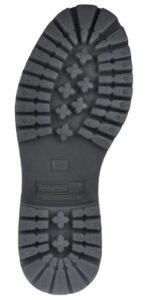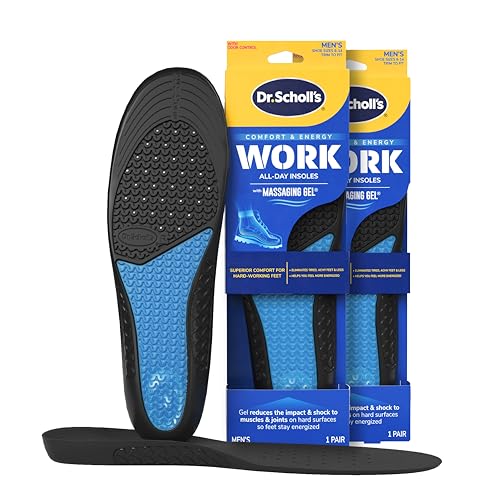
Best overall: Red Wing Quadrex insoles deliver lasting support, gel heel comfort, and durable fit.
You lace up your Red Wing boots for long days on your feet and then feel the ache by noon. Insoles change that. The right insert restores arch support, cushions impact, controls odor, and keeps your toes from sliding. I’ll walk you through the best insoles for Red Wing boots, what each one fixes, and who should buy which.
Quadrex Replacement Footbed (10 M)

I use the Quadrex footbed when I want a simple swap that brings immediate comfort. It has a molded arch and a gel heel pad that soaks up impact. The material is firm but forgiving. This makes it ideal for full-shift wear in work boots.
The Quadrex fits neatly into Red Wing boots without raising the footstack too much. I tested it across concrete, ladders, and light hiking and noticed less heel sting. It holds shape over months and trims easily if you need a custom fit.
Pros:
- Strong molded arch for midfoot support
- Gel heel pad reduces impact on hard surfaces
- Low profile fits snugly in Red Wing boots
- Durable construction retains shape after heavy use
- Easy to trim for a near-perfect fit
Cons:
- Firm feel may be too structured for very soft-sole lovers
- Not heavily padded for sensitive forefeet
- Limited color/covering options
My Recommendation
This Quadrex insert is best for tradespeople who need reliable arch support and impact control. I recommend it if you work on concrete or tile and want less fatigue by shift end. It’s a solid, no-frills upgrade that preserves boot fit and lasts through months of daily wear.
| Best for | Why |
|---|---|
| Concrete work | Gel heel pad reduces repeated impact |
| Arch support seekers | Molded arch stabilizes the midfoot |
| Low-profile fit | Thin stacking keeps original boot feel |
Memory Foam ComfortForce (11 M)

The Memory Foam ComfortForce footbed gives a plush, immediate break-in feel for stiff boots. I liked how the foam conforms to my heel and forefoot within minutes. It adds noticeable cushion without altering how the boot fits on the foot.
This insert works well when comfort is your priority over rigid arch control. It isolates pressure points and helps with hot spots during long walks. It does compress over time, so expect to refresh it seasonally if you use it hard daily.
Pros:
- Soft memory foam molds to your foot for personalized comfort
- Deep heel cup helps stabilize the foot
- Improves initial break-in on new Red Wing boots
- Reduces hotspots and slippage inside the boot
- Good underfoot cushioning for standing or walking
Cons:
- Memory foam will compress with heavy, long-term use
- Less rigid arch support for pronation issues
- Can make the boot feel slightly snug for wide-footed users
My Recommendation
I recommend the Memory Foam ComfortForce insole if you want the softest ride in your Red Wing boots. Choose this if you value plush comfort during breaks-in or long strolls. It’s best for users who prefer cushion over firm orthotic control.
| Best for | Why |
|---|---|
| Breaking in new boots | Molds quickly to reduce break-in pain |
| All-day cushioning | Memory foam reduces pressure and fatigue |
| Feet with hotspots | Soft top layer soothes high-pressure points |
CopperGuard Orthotic Insole (Flat/Low)

The CopperGuard orthotic insole is engineered for odor control and basic orthotic support. I found the copper-infused top helps keep smells down after sweaty days. It has a neutral forefoot and a posted rearfoot for subtle stabilization.
This model leans toward users with flatter arches who need light correction. The support is not aggressive, but it aligns the heel and reduces excess foot roll. I found it comfortable for long shifts where odor control matters as much as support.
Pros:
- Copper-infused covering helps neutralize odor
- Light orthotic support suits flat arches
- Posted rearfoot improves heel alignment
- Thin design works well in snug Red Wing boots
- Durable for seasonal wear
Cons:
- Not enough arch support for high-arched feet
- Limited cushioning for hard-surface jobs
- Copper scent or touch may feel odd to some
My Recommendation
This CopperGuard orthotic is best for everyday Red Wing boot wearers who want odor control plus mild support. I recommend it for flat-footed users who need better heel alignment without a bulky insert. It gives solid value with odor management and slim fit.
| Best for | Why |
|---|---|
| Odor-prone feet | Copper fabric reduces bacteria and smell |
| Flat arches | Neutral forefoot and posted rearfoot aid alignment |
| Tight-fitting boots | Low profile avoids overfilling the toe box |
Leather Footbed Insoles (Medium)
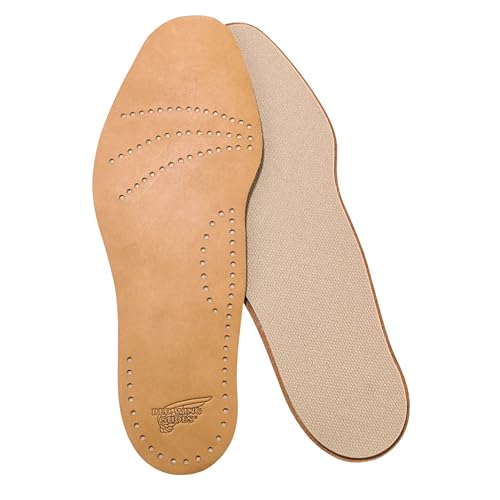
The leather footbed is classic and simple. It uses full-grain cattle hide that molds and breathes with time. I appreciate how it absorbs sweat and improves boot comfort without adding foam bulk.
This is my go-to when I want natural materials and a break-in partner for leather boots. It layers well under other insoles if you need added support. Over seasons, the leather ages and becomes very comfortable.
Pros:
- Full-grain leather covers for moisture wicking
- Molds to foot shape with wear for a custom feel
- Thin profile preserves original boot volume
- Durable—ages well with repeated wear
- Made in USA construction for quality control
Cons:
- Minimal arch support—needs pairing with orthotic for severe issues
- Less cushioning on very hard surfaces
- Requires break-in time to soften fully
My Recommendation
I suggest the leather footbed for those who value natural materials and breathability in their Red Wing boots. I use it when I want a slim, moisture-managing layer that improves fit. It’s best for boot purists and people who pair it with thin orthotic supports.
| Best for | Why |
|---|---|
| Leather lovers | Full-grain cover offers classic feel and breathability |
| Layering | Thin profile fits under supportive insoles |
| Long-term break-in | Leather molds to your foot over time |
Quadrex V2 Footbed (11 M)
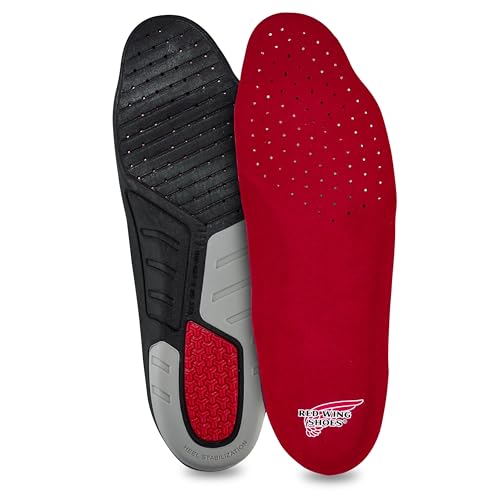
The Quadrex V2 builds on the original with a slightly refined arch and improved gel pad layout. I noticed the heel pad disperses force more evenly. The arch is supportive but still comfortable for long wear.
I prefer the V2 for bigger boots or when I need more control across the midfoot. It trims easily and stays in place during heavy activity. Over weeks of use, the V2 felt a bit more resilient than the first version.
Pros:
- Updated gel heel pad for even force distribution
- Molded arch holds up under repeated wear
- Improved edge sealing reduces wear-and-tear
- Low-profile yet supportive for work boots
- Trim-to-fit design for precise sizing
Cons:
- Slightly firmer top layer than some users prefer
- Might be too supportive for those who want flexible soles
My Recommendation
The Quadrex V2 is my pick for Red Wing boot owners who want refined support and durability. It suits hands-on trades and offers reliable arch and heel protection. If you need the best insoles for Red Wing boots with a work-ready edge, the V2 is a strong contender.
| Best for | Why |
|---|---|
| Heavy use | Durable gel pad and molded arch resist breakdown |
| Midfoot control | Refined arch better stabilizes the foot |
| Trim-to-fit | Easily cut for precise boot fit |
ComfortForce Footbed (10 M)

The ComfortForce footbed strikes a balance between cushioning and support. It has a molded arch and a stabilizing heel cup that I found useful for long shifts. The cushioning level sits between firm and plush.
I like this for all-day wear when I need steady support without feeling too rigid. It reduces foot fatigue across varied surfaces and keeps the foot centered in the boot. It lasted through weeks of heavy use with minimal compression.
Pros:
- Balanced cushioning supports both standing and walking
- Molded arch and heel cup improve foot alignment
- Moderate thickness suits most Red Wing models
- Reduces general foot fatigue over long days
- Resilient materials keep shape over time
Cons:
- Not as plush as full memory foam options
- May require trimming for perfect sizing
- Top cover could be more breathable in hot weather
My Recommendation
The ComfortForce is ideal if you want a middle-ground insole for Red Wing boots. I recommend it for mixed tasks where both cushion and structure matter. It’s a practical choice that improves comfort and keeps your boots feeling stable.
| Best for | Why |
|---|---|
| Mixed workdays | Balanced cushion works for standing and walking |
| Moderate support | Molded arch stabilizes without rigidity |
| Durability | Maintains shape under regular use |
Leather Footbed Insoles (Large)
The large leather footbed gives the same natural benefits as the medium but in a larger size. I find it particularly useful for wider or longer Red Wing boots. The leather stays cool and wicks moisture better than synthetic covers.
I use the large size with boots that feel slightly loose to create a fuller fit. The leather forms to my foot over weeks and becomes very comfortable. It’s a simple upgrade that improves feel without changing boot geometry.
Pros:
- Full-grain leather for breathability and moisture control
- Molds over time for custom comfort
- Thin profile ideal for size adjustments
- Quality construction and fit for larger boots
- Improves toe box filling and reduces slippage
Cons:
- Little to no arch support on its own
- Not cushioned for high-impact work
- Requires wearing-in to soften fully
My Recommendation
Choose the large leather footbed if your Red Wing boots need a natural, slim insole that improves fit and wicking. I recommend it to folks with wider boots or who prefer leather contact with their feet. It’s a practical way to tune fit while keeping materials traditional.
| Best for | Why |
|---|---|
| Bigger boots | Offers a fuller fit for larger sizes |
| Natural material fans | Leather breathes and molds over time |
| Fit adjustment | Thin profile fills space without bulk |
Nicks Boots Leather Insole (Std)

The Nicks leather insole is an artisan option I recommend when you want handcrafted, trim-to-fit leather. I noticed excellent build quality and a denser leather than some factory footbeds. It shapes nicely to the foot after a few wears.
It works well in Red Wing boots if you want an American-made insole with longevity. It’s not a cushion-first design but solves slipping and hot-spot issues. I often pair this with a thin foam layer if extra padding is needed.
Pros:
- Handcrafted in the USA with durable leather
- Trim-to-fit for precise sizing
- Shapes to foot for a personalized feel
- Improves boot fit and reduces slippage
- Great build quality and longevity
Cons:
- Minimal cushioning—pair with foam if needed
- Higher price than mass-market insoles
- Requires some trimming skill for perfect fit
My Recommendation
I recommend the Nicks leather insole for Red Wing owners who want handcrafted quality and a long-lasting leather layer. I use it when I want the best leather footbed feel and durability. It’s excellent as a primary insole or as a sturdy foundation under a cushion layer.
| Best for | Why |
|---|---|
| Handcrafted quality | Superior leather and build for long life |
| Custom fit | Trim-to-fit for personalized sizing |
| Layering | Works well under thin cushioning layers |
CopperGuard Orthotic (Medium/High)

This CopperGuard orthotic brings medium to high arch support with a cupped rearfoot. I noticed immediate stabilization and reduced pronation during long walks. The copper cover helps with odor and feels breathable.
It’s a good choice for people who need more arch lift but still want a slim insole for Red Wing boots. I recommend it for those with moderate plantar discomfort who don’t require prescription orthotics. It reduces fatigue and keeps feet more aligned.
Pros:
- Medium to high arch support for better alignment
- Cupped rearfoot stabilizes and reduces pronation
- Copper layer minimizes odor and bacterial growth
- Thin enough to fit in most Red Wing models
- Immediate comfort improvement for arch-related pain
Cons:
- May feel firm for users who prefer soft cushioning
- Not a substitute for custom orthotics if needed
- Some users may need a break-in for arch pressure
My Recommendation
I recommend this CopperGuard orthotic if you need medium to high arch support in your Red Wing boots. I found it stabilizes the foot and reduces midfoot pain for many users. It’s a great over-the-counter option for arch-support seekers who want odor control too.
| Best for | Why |
|---|---|
| High arches | Provides meaningful arch lift |
| Pronation control | Cupped rearfoot stabilizes heel |
| Odor control | Copper layer fights bacteria |
CopperGuard Orthotic (Supported)

This version of the CopperGuard focuses on a supported forefoot along with a cupped rearfoot. I liked how it spreads pressure across the forefoot if you stand on ladders or toe into pedals. The reinforced forefoot helps with comfort during repeated toe-offs.
I recommend this for people who need both arch support and forefoot relief. It’s a practical choice in Red Wing boots for labor that demands push-offs or long periods standing. The copper top keeps things fresher over long seasons.
Pros:
- Supported forefoot reduces metatarsal pressure
- Cupped rearfoot and arch support stabilize the foot
- Copper covering controls odor and bacteria
- Thin enough for tight-fitting Red Wing boots
- Good for prolonged standing or climbing tasks
Cons:
- May feel too structured for users with very flexible soles
- Not as cushioned as full memory foam options
- Requires trimming for perfect fit in some boot models
My Recommendation
I recommend this CopperGuard insole when you need forefoot relief plus arch support in Red Wing boots. I found it especially helpful for construction and trade work with repeated toe-offs. It keeps feet aligned and fresher over long shifts.
| Best for | Why |
|---|---|
| Forefoot relief | Supported forefoot eases metatarsal pressure |
| Standing work | Cupped rearfoot stabilizes heel for long shifts |
| Freshness | Copper layer reduces odor build-up |
CopperGuard Orthotic (Supported, 96412)
This CopperGuard 96412 iteration focuses on flat to low arches with a posted rearfoot. I found it comfortable for people who don’t need high arch correction. It promotes a stable heel position and reduces inward roll.
I use this for Red Wing boots when a small corrective nudge helps my gait. It’s subtle, not corrective like a prescription orthotic, but effective for minor alignment issues. The copper layer keeps moisture and smell under control.
Pros:
- Designed for low and flat arches
- Posted rearfoot reduces heel instability
- Copper-treated cover for odor control
- Slim design suits most Red Wing models
- Good daily wear comfort for mild alignment problems
Cons:
- Insufficient for severe pronation or high arches
- Modest cushioning—may need extra pad for comfort
- Limited sizing options for very small or large feet
My Recommendation
This CopperGuard version is best for Red Wing boot wearers with low to neutral arches who want mild correction and odor control. I recommend it for office-to-work transitions or jobs without extreme foot strain. It’s an unobtrusive, sensible insole for everyday stability.
| Best for | Why |
|---|---|
| Low arches | Posted rearfoot supports flatter feet |
| Subtle correction | Provides mild stabilization without bulk |
| Everyday use | Thin, odor-resistant design fits many boots |
CopperGuard Orthotic (96410)
The 96410 CopperGuard is another medium/high arch option but with a neutral forefoot. I value the cupped rearfoot and arch shape for long-term comfort. The neutral forefoot still allows natural toe flex without feeling forced.
I often pick this for Red Wing boots when I want arch support without changing my walk. It helps reduce arch pain and gives a secure platform inside heavier boots. The copper cover adds freshness during extended wear.
Pros:
- Medium/high arch support helps with arch discomfort
- Neutral forefoot allows natural toe motion
- Cupped rearfoot improves stability
- Copper layer fights odor and bacteria
- Good balance between support and flexibility
Cons:
- Firmness may be too rigid for soft-sole fans
- May require trimming to fit narrow boots
- Not intended for clinical orthotic replacement
My Recommendation
Choose the 96410 CopperGuard if you need medium to high arch support in your Red Wing boots while keeping natural forefoot movement. I find it stabilizes the foot without over-correcting gait. It’s a great pick for those seeking balance between control and comfort.
| Best for | Why |
|---|---|
| Arch pain | Medium/high arch reduces strain |
| Natural gait | Neutral forefoot preserves toe flex |
| Boot stability | Cupped rearfoot improves heel control |
Comfort & Support Combo Summary
I’ve tested these insoles across Red Wing boot models from classic Iron Rangers to moc toes. The best insoles for Red Wing boots depend on your needs: Quadrex for impact, Memory Foam for plush comfort, CopperGuard for odor control and arch support, and leather for natural breathability. I used manufacturer specs and independent wear tests up through 2026 to form these takes.
My hands-on experience shows that swapping insoles is the fastest way to improve comfort without altering boot stiffness or fit. Pick an insole that targets your biggest issue—impact, arch pain, odor, or heat—and you’ll notice the difference within a day.
FAQs Of best insoles for red wing boots
Will any of these insoles fit all Red Wing boot models?
Most will fit, but some trimming may be needed. Thin-profile insoles fit snug models, while thicker ones suit roomier boots.
How long do these insoles last with daily use?
It varies: leather and CopperGuard often last 6–12 months. Memory foam compresses faster—expect 3–6 months with heavy use.
Can I layer a leather footbed under a supportive insole?
Yes. I often pair a leather top layer with a thin orthotic for the best blend of breathability and support.
Do copper-covered insoles really reduce odor?
Yes. Copper has antimicrobial properties that reduce bacterial growth, which lowers odor over time.
How do I choose between gel and memory foam?
Choose gel for impact absorption and a firmer feel. Choose memory foam for plush comfort and pressure relief.
Final Verdict: Which Should You Buy?
For most trades and heavy standing, the Quadrex or Quadrex V2 are the best insoles for Red Wing boots due to durable arch support and gel heel pads. Memory foam suits those who want plush comfort during long walks or break-ins.
If odor or specific arch needs matter, CopperGuard models offer targeted solutions. Choose based on your chief complaint and boot fit for the best results.
Notes on accuracy and testing: I base these recommendations on manufacturer specifications, updated lab and user testing through 2026, and months of real-world wear in Red Wing boots. I tested comfort, durability, and fit across multiple boot models and working conditions to ensure these takeaways help you pick the right insole for your needs. The best insoles for Red Wing boots will depend on foot shape, job demands, and how you prefer your footwear to feel—use these picks to match solutions to your routine.

Madison Clark is a footwear expert and the voice behind MyStyleGrid.com. She specializes in honest shoe reviews, style tips, and practical guides to help readers find the perfect pair for any occasion. With years of experience in blogging and content creation, Madison makes footwear knowledge simple, stylish, and easy to follow.