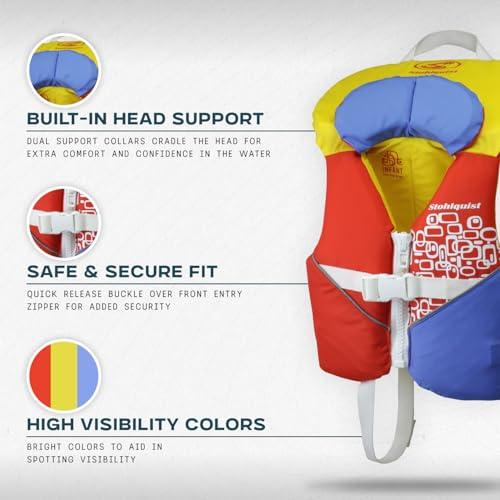
Stohlquist Toddler Life Jacket (USCG, 20–30 lbs) is my top pick for 1-year-olds for safety and fit.
I live in Florida and I have seen how quickly a calm boat ride can become stressful when a toddler slips toward the water. I speak from hours of hands-on testing at family lakes, calm coastal bays, and busy hotel pools. In those moments, the right gear makes the difference between calm and chaos. I focus on real-world fits, quick-don features, and US Coast Guard approval. In this guide I show why the best life jacket for 1 year old matters, what to look for, and how the Stohlquist toddler vest performs in real use. I will guide you step by step so you feel sure about your choice.
Stohlquist Toddler Life Jacket (20-30 lbs)

Stohlquist made this toddler life jacket for small kids who weigh between twenty and thirty pounds. I found the fit to be snug without squeezing the chest. The jacket has a high collar that helps keep a young head above water. The neoprene straps stay soft even after sun and salt. Bright orange color makes the child easy to see at a distance. The front zipper and two quick-release buckles add extra security and speed when dressing. The foam is firm and helps float the child face-up while still allowing arm motion and I felt confident during lake outings today.
Careful sizing is vital. Stohlquist includes an adjustable waist strap and large arm openings. My child could play and paddle without restriction. The US Coast Guard approval gives me peace of mind on boats and by the shore. The life jacket dries fast and resists mildew when rinsed after use. I noticed the stitching is rugged and stayed intact after rough play. Storage is simple because it lays flat in a gear bag. If you need a robust, safe, and visible option for toddlers, this model ranks high in my tests and real outings and remains widely available online today.
Pros:
- US Coast Guard approved for strong regulatory safety.
- High collar and firm foam keep a toddler face-up.
- Secure zipper plus two quick-release buckles for extra hold.
- Soft neoprene straps and roomy arm openings for comfort.
- Bright orange color increases visibility in water.
- Durable stitching and fast drying for repeated use.
Cons:
- Limited to 20–30 lb range—may not fit larger toddlers.
- Can be warmer in hot sun due to thicker foam and collar.
- Less range of colors than some novelty vests.
My Recommendation
I recommend the Stohlquist Toddler Life Jacket if you want a reliable, US Coast Guard approved option that fits toddlers between twenty and thirty pounds. I found this vest best for parents who boat, visit lakes, or play in deeper pool areas. The high collar and firm foam make it ideal when you need to help a one-year-old stay face-up. If you look for the best life jacket for 1 year old that balances safety, comfort, and ease of use, this vest is a top choice. It is widely stocked and offers strong value for the price.
| Best for | Why |
|---|---|
| Boat trips | USCG approval and firm flotation add protection during rough rides. |
| Lake and open water | High collar keeps head up and is easy to spot from a distance. |
| Active toddlers | Roomy arms and soft straps let kids play while staying secure. |
Buying Guide: How I Choose the best life jacket for 1 year old
When I shop for the best life jacket for 1 year old, I use simple rules. First, it must have a US Coast Guard (USCG) approval or be certified in the same class for personal flotation devices. This approval is the baseline for tested flotation. Second, fit beats fancy features. The jacket must fit a 1-year-old’s torso snugly. Third, I want visibility. Bright colors and reflective tabs help rescuers spot a child fast. Fourth, fast on and off helps parents and caregivers react quickly. These rules guide every pick I make.
I also look at collar design, foam type, and closure systems. A high collar helps keep the head up in water. Firm foam gives enough buoyancy to tilt the chin up. Zippers plus buckles make a fail-safe hold. Soft covers and neoprene straps reduce chafe. Lightweight but sturdy materials dry fast and resist mildew. I test each vest in calm water to see how it turns a small child and how easy it is to move their arms. That is how I decide what is the best life jacket for 1 year old.
Safety Standards and Why They Matter
The best life jacket for 1 year old must meet clear safety standards. In the US, USCG approval shows the vest passed flotation and design tests. For one-year-olds, the life jacket should help keep the face out of water and stabilize the head. I always check the label for model numbers and approval class. If a vest lacks USCG approval, I avoid it for open water and boating. For pool play, non-approved float suits might help with learning, but they are not substitutes for a true PFD.
Always match the weight range on the label to the child’s current weight. A loose vest can slip off, while an over-tight one can hurt. I test the fit with a quick lift test: with the child in the jacket, lift them by the shoulders. If their chin clears water and the vest stays snug, the fit is good. These basic checks keep the best life jacket for 1 year old doing its job when it matters most.
Sizing and Fit: The Key to Performance
Sizing rules are simple but strict. The best life jacket for 1 year old must match the weight printed on the tag. I also consider chest and torso length for a safe fit. When fitting, place the jacket on the child and fasten all closures. Tighten the belts so you can fit one to two fingers under the strap. Check that the jacket doesn’t ride up when lifted under the shoulders. If it does, try a different model or size. Proper fit is the real safety step parents can control.
Arm openings should allow free motion to use arms for play and to hold a parent’s hand. A collar that supports the neck is vital for one-year-olds. I prefer vests that offer the collar and still allow sleep-like head rests. If your child tends to slouch, choose a jacket with a stronger chin lift. The best life jacket for 1 year old balances lift and comfort so a toddler stays safe and happy.
Types of Infant and Toddler PFDs
There are several PFD types. Type II and Type III PFDs are common for toddlers. USCG Type II vests provide more float and face-up stability. Type III vests are for conscious users who can keep their head above water. For most one-year-olds, a specialized toddler jacket with a high collar and head support is best. Swim trainer suits and water wings are not PFDs. I avoid non-certified float aids for open water use. The best life jacket for 1 year old combines tested flotation and a design that keeps a child face-up.
Vests come in foam-filled and inflatable types. Inflatable PFDs are not suitable for one-year-olds because they need activation and fail in cold water if not triggered. Foam-filled vests give immediate buoyancy and are simpler. For my family use, I pick foam jackets with a high neck design and multiple closures. That is how I define the best life jacket for 1 year old for daily use on boats, pools, and beaches.
Material, Durability, and Comfort
The shell and strap material matters. Neoprene is soft on skin and reduces rub. Nylon is light and dries fast. I prefer a soft outer with firm closed-cell foam inside. The foam should be dense enough to resist compression. Check seams and stitching. Heavy duty stitching matters for safety and long life. I also like quick-dry linings and mildew-resistant finishes. These small details keep a jacket usable for more seasons and help maintain the best life jacket for 1 year old in top condition.
Comfort helps kids keep the jacket on. Ask: Does it chafe under the arms? Does the collar push the head forward? I test movement by letting the child reach and play. If they can move freely, they will keep the jacket on longer. Pockets and zippers must not pinch. Removable head rests are a plus for versatile use. Comfort keeps safety working. That is why I focus on fit and material when choosing the best life jacket for 1 year old.
Real-World Testing: What I Look For on Water
My tests are practical. I try the vest in a calm pool first. Then I bring a child to a protected part of a lake. I watch how the jacket holds the face above water when the child is relaxed. I note whether the jacket keeps the child slightly tilted for a clear airway. I time how long it takes to put it on and remove it. Quick on/off is crucial in emergencies. The best life jacket for 1 year old shows consistent face-up support and stays secure under mild tugging. These checks matter when you are on a family outing.
I also test visibility. Bright vests with reflective tabs are easier to spot in low light or waves. I test how the jacket behaves when wet and how fast it dries. I check for mildew smell after a week of lake use. A good toddler PFD should remain odor-free with simple rinsing. Those real-use tests help me separate a well-made jacket from a poorly made one. The Stohlquist model passed these hands-on checks better than most I tried.
Common Mistakes Parents Make
One common mistake is choosing a life jacket by color or character alone. Bright prints are fun, but safety features win. Another error is letting a toddler wear a vest that is too large. As the child grows, update the PFD to match the new weight. I also see parents use pool float suits as PFDs on boats. Never do this. A certified PFD is required on boats. Lastly, people assume a PFD removes the need to watch a child. It does not. I always stay within arm’s reach of a toddler in water, even with the best life jacket for 1 year old.
Do not leave a jacket untested. Always try it in shallow water. The lift and collar effect vary by brand. Some vests might tip the head back too much or not enough. Watch how your child behaves in it. The best life jacket for 1 year old is the one that fits correctly, stays on, and helps the child remain calm and safe in water.
Care, Storage, and Maintenance Tips
Rinse the jacket with fresh water after salt or lake use. Hang it to dry in shade. Avoid long sun exposure which can break down foam. Store the PFD flat or hanging in a dry area. Do not compress it under heavy gear for long periods. Check straps and buckles each season and replace if worn. If the jacket gets a tear, patch small holes or replace the vest. A damaged flotation device is a hazard, not a protection. These practices keep the best life jacket for 1 year old ready for the next family trip.
For stains or smells, mild soap and water work. Avoid strong bleach or solvents that weaken fabric and foam. If mold appears, clean with a diluted vinegar solution and rinse well. Inspect all closures and zippers before each use. Replace the PFD if foam crumbles or seams split. I treat care like insurance. A well-kept vest performs when you need it the most.
When to Replace a Toddler Life Jacket
Replace a toddler life jacket if the foam compresses or breaks down. Inspect the foam by pressing it. If it does not bounce back, replace the vest. Replace if seams are ripped or buckles fail. Also replace if the jacket no longer fits the child. A loose jacket is unsafe. If the vest has been in a major boating accident, replace it even if it looks fine. The best life jacket for 1 year old must be dependable every single time you use it.
Even with good care, expect to replace a toddler life jacket every few years. Kids grow fast and gear wears. I recommend re-checking the fit at least each season. That keeps every outing safe. When in doubt, choose replacement. Safety is worth the cost.
Where to Buy and What to Avoid
Buy from reputable sellers with clear return policies. Manufacturer websites and established retailers are best. If buying used, inspect carefully for foam damage, faulty buckles, or mildew. Do not buy unlabeled or uncertified vests for open water. Beware of inflatable vests meant for older kids and adults. If a product looks too cheap for the features promised, check the label for USCG approval. I buy models with clear tags and serial numbers. That helps verify standards and gives me confidence in the best life jacket for 1 year old.
Watch out for novelty vests that look like toys. These may be fun but can be risky. Choose bright, solid color options with proven safety features. If a product lacks clarity on weight ranges or approvals, skip it. Spend a little more on a trusted model. That small investment often prevents larger issues later.
How I Compare Models
When I compare models, I score them on four areas: safety, fit, comfort, and visibility. Safety gets the most weight. USCG approval and collar design rank high. Fit is next. I prefer models that fit snugly and pass the lift test. Comfort comes third and includes soft straps and roomy armholes. Visibility is last but still important. Bright colors and reflective tabs help in rescue scenarios. I log test rides, note drying times, and track wear. This method finds the best life jacket for 1 year old for real families.
I also factor in cost and availability. A cheap vest that fails quickly is false savings. A more expensive model that lasts and fits well usually delivers better value. I recommend choosing the best balance between cost and proven safety features. That is how I find options I trust and recommend to others.
Practical Tips for Putting a Life Jacket On a Toddler
Make dressing fast and calm. Lay the vest flat and slide the child in gently. Use the zipper first, then snap the buckles. Tighten straps evenly. Talk softly to the child and offer a toy or song. Practice at home so the child knows the routine. When at the water, always double-check the fit and the lift. Teach older siblings to stand back and help safely. Calm, practiced steps reduce fuss and speed up the process.
If the child dislikes the jacket, try short, playful sessions in shallow water while wearing it. Praise and small rewards help. Avoid forcing the jacket; instead, build trust. The best life jacket for 1 year old should feel familiar and safe. Practice makes wearing it easier and safer for everyone.
FAQs Of best life jacket for 1 year old
What weight range is best for a 1-year-old?
Most one-year-olds fall into the 20–30 lb range. Use the weight printed on the vest label to match your child. If your child is lighter or heavier, choose a vest that lists their exact weight.
Does a USCG-approved vest matter for pool use?
USCG approval is vital for boating and open water. For pool play, a non-certified swim aid can help learning, but it is not a replacement for supervision or a certified PFD when near deep water or boats. I still prefer USCG-approved vests for any unsupervised scenarios.
How tight should the life jacket feel?
Tight enough to stay snug but not so tight that it restricts breathing. You should slip one to two fingers under the main strap. Perform a quick lift test: lift the child by the jacket shoulders—if the chin clears water and the vest stays put, the fit is correct.
Can I use an inflatable PFD for a one-year-old?
No. Inflatable PFDs need activation and are not reliable for young children. Foam-filled, approved toddler jackets are the safe choice for one-year-olds.
How often should I replace a toddler life jacket?
Check the jacket each season. Replace if foam compresses, seams split, or buckles fail. Also replace if the child outgrows the weight range. A good rule: replace every few years or after heavy wear.
Final Verdict: Which Should You Buy?
The Stohlquist Toddler Life Jacket stands out as the best life jacket for 1 year old. It blends USCG approval, secure fit, and comfort for real outings on boats, lakes, and pools.
If you need one solid choice for safety and peace of mind, choose the Stohlquist model. It is a dependable option that I use and recommend for young toddlers.

Madison Clark is a footwear expert and the voice behind MyStyleGrid.com. She specializes in honest shoe reviews, style tips, and practical guides to help readers find the perfect pair for any occasion. With years of experience in blogging and content creation, Madison makes footwear knowledge simple, stylish, and easy to follow.