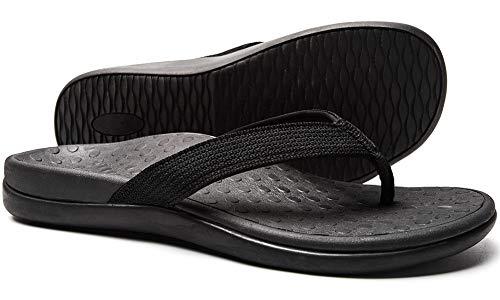
The best sandals for Achilles tendonitis and plantar fasciitis offer firm arch support, soft cushioning, and a stable heel.
If each morning starts with sharp heel pain, or your Achilles feels tight after a short walk, the wrong sandal can make the day much harder. I look for sandals that support the arch, soften heel impact, and keep the foot from sliding. I also check fit, tread, strap comfort, and heel stability because small details can change how a sore foot feels. The picks below cover sandals, recovery slides, flip-flops, heel cups, and compression socks for different needs and budgets.
Vilanva Orthopedic Platform Walking Sandals

The Vilanva orthopedic sandal is a strong choice for shoppers who want more support than a flat summer sandal can give. Its raised platform design helps create a cushioned step, while the contoured footbed aims to support the arch. The adjustable buckle lets you set the fit instead of forcing your foot into a loose or tight upper.
I like this style for errands, travel, and casual walks when I want a sandal that feels more secure. The open design can also help keep feet cool in warm weather. Still, a platform sandal may feel less natural at first, so I would start with short walks and increase wear slowly.
Pros:
- Built-in arch support for daily walking
- Cushioned midsole helps soften hard steps
- Adjustable buckle allows a more personal fit
- Platform sole adds useful ground protection
- Open design suits warm-weather wear
- Versatile look works with casual outfits
Cons:
- Platform height may not suit every walker
- Needs a short break-in period for some feet
- May feel too structured for people who prefer thin sandals
Welnove Gel Heel Protector Cups

Welnove gel heel cups are not sandals, but they can add comfort when your footwear has enough room. The soft cup sits around the heel and may help reduce the feel of repeated impact. This makes them useful for people who alternate between sandals, sneakers, and roomy casual shoes.
I see heel cups as a simple add-on rather than a full treatment for Achilles tendonitis or plantar fasciitis. They cannot correct poor sandal fit, and they should not crowd the heel or push it too high. Check your shoe space first, then wear them for a short test period to make sure they stay in place.
Pros:
- Can cushion the heel during daily activity
- Works with roomy shoes and some open footwear
- Useful for both men and women
- Easy to remove and move between shoes
- May help protect dry or sensitive heel skin
- Lightweight design adds little bulk
Cons:
- Needs enough shoe space to fit well
- May shift inside loose footwear
- Does not provide arch support by itself
COFACE Orthopedic Walking Arch Support Sandals

COFACE orthopedic sandals focus on the features I want in a walking sandal: arch support, cushioning, and a secure upper. The footbed is shaped to give the middle of the foot more contact, which may help reduce strain from a completely flat sole. The black and khaki color options also make this pair easy to wear with simple summer clothes.
This pair may suit someone who spends several hours on their feet but still wants an open sandal. A supportive footbed can feel like a bridge between a casual flip-flop and a walking shoe. Fit matters most here, so I would check the size chart and make sure the straps hold the foot without pressing sore areas.
Pros:
- Supportive footbed for everyday walking
- Cushioning helps improve step comfort
- More secure than a basic thong flip-flop
- Open upper helps airflow in hot weather
- Neutral colors suit many outfits
- Useful for errands, travel, and casual use
Cons:
- Arch shape may not match every foot
- Limited adjustability may affect some fits
- Not a substitute for prescribed orthotics
PAPLUS Compression Socks for Plantar Fasciitis

PAPLUS compression socks provide a different kind of support from sandals. They cover the foot and lower leg, which may feel helpful during long days, travel, or light activity. The multi-pair set also gives you a clean pair for regular rotation.
I would use these socks with roomy shoes rather than tight sandals. They may offer a snug, held-together feeling, but they do not replace a stable sole or a supportive footbed. Anyone with circulation concerns should ask a health professional before using compression wear.
Pros:
- Provides snug support around the foot and lower leg
- Six-pair set supports frequent use
- Useful for work, travel, and daily activity
- Can be worn with walking shoes
- May help reduce the tired feeling after long standing
- Easy to wash and rotate
Cons:
- Cannot be worn with most open sandals
- May feel tight for people new to compression socks
- Fit depends on accurate size selection
Odrix Gel Heel Cups for Heel Pain

Odrix gel heel cups are a compact option for people who want extra heel cushioning. The two-pack format lets you place one cup in each shoe and keep a spare pair ready. Gel can make hard floors feel less harsh, especially when your normal footwear has little heel padding.
These cups work best in shoes that hold them in place. I would not depend on them inside a loose slide during brisk walking because movement can reduce comfort. They are a useful companion to supportive sandals, but they do not supply the arch control or firm heel counter that a good walking shoe can provide.
Pros:
- Adds cushioning under the heel
- Two-pack supports use in multiple shoes
- Small design is easy to carry
- May reduce the feel of hard-floor impact
- Useful for heel spurs and general heel soreness
- Simple design needs no special setup
Cons:
- Requires a shoe with enough interior room
- May move in sandals without a heel strap
- Does not address arch support needs
LLSOARSS Orthotic Flip-Flops for Women
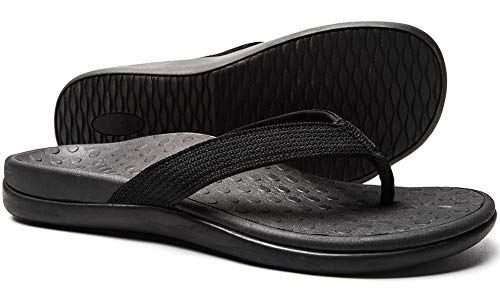
LLSOARSS orthotic flip-flops are made for people who like the ease of a thong sandal but need more structure. The arch support gives the foot more shape than a flat foam flip-flop. A cushioned base may also make short walks and indoor use more pleasant.
I think this style fits relaxed summer use, poolside trips, and quick errands. It is less suitable for long hikes because a thong strap does not hold the foot as firmly as a sandal with multiple straps. If your plantar fascia feels sore after flat flip-flop use, this design may feel like a kinder step.
Pros:
- Arch support helps avoid a completely flat footbed
- Easy slip-on design saves time
- Cushioned sole supports casual walking
- Good option for indoor and outdoor use
- Black color offers a simple, classic look
- Comfortable alternative to basic flat flip-flops
Cons:
- Thong design offers less foot security
- May not suit long-distance walking
- Arch height may feel strong at first
PIMIO Arch Support Recovery Slides

PIMIO recovery slides are aimed at easy comfort after work, exercise, or a long day on your feet. The thick cushioned sole helps create a soft landing, while the raised arch area gives the foot more support than a flat house slipper. The slip-on shape makes them practical for quick trips around the home.
These slides may be especially useful when hard floors trigger heel pain. I would still use care on stairs or wet surfaces, since a loose slide can move more than a strapped sandal. For the best result, choose a size that lets your heel sit inside the footbed without hanging over the edge.
Pros:
- Thick cushioning helps soften each step
- Arch support suits recovery and home wear
- Slip-on shape is quick and convenient
- Lightweight build feels easy to wear
- Non-slip outsole adds useful traction
- Good choice for hard indoor floors
Cons:
- Loose slide fit may not suit fast walking
- Thick sole can feel less flexible
- May need a short adjustment period
shevalues Orthopedic Slide Sandals

shevalues orthopedic slides offer a simple way to add arch support to daily routines. The open-back design makes them easy to put on, which is helpful when bending down feels uncomfortable. Their purpose is comfort first, so I see them as a practical choice for home use, short errands, and recovery days.
A supportive slide can be a major improvement over walking barefoot on tile or wood. However, the open heel does not lock the foot in place, so I would not choose this style for uneven trails or quick sports. People with mild heel pain may appreciate the balance of cushioning, easy wear, and a casual look.
Pros:
- Arch support helps guide the foot during easy walking
- Open-back design makes them easy to wear
- Comfortable option for indoor use
- Lightweight style reduces foot fatigue
- Works well as a recovery slide
- Casual design fits everyday clothing
Cons:
- Open heel provides limited stability
- Not ideal for uneven or fast-paced walking
- May not offer enough adjustment for narrow feet
KuaiLu Orthotic Flip-Flops with Arch Support

KuaiLu orthotic flip-flops combine the freedom of a summer thong sandal with a more supportive footbed. The built-in arch shape may help people who find flat flip-flops too harsh. Cushioning under the foot also gives these sandals a softer feel for relaxed daily wear.
This pair is a good match for beach walks, casual outings, and time around the house. I would keep the first few wears short because any new arch support can feel unusual. As with any flip-flop, the toe post and loose heel mean that this is not the most secure choice for long or demanding walks.
Pros:
- More supportive than a flat flip-flop
- Cushioning helps improve casual comfort
- Easy slip-on design suits busy mornings
- Open construction keeps feet cool
- Useful for summer and indoor wear
- Recovery-style footbed may ease tired feet
Cons:
- Toe-post style may bother sensitive toes
- Less stable than a sandal with a heel strap
- Not designed for demanding terrain
KuaiLu Wide Orthotic Flip-Flops

This KuaiLu model is designed for women who want a roomy summer sandal with an orthotic-style footbed. The wider shape may give the toes more space to spread, which can feel better than a narrow fashion sandal. Its arch support and cushioning are useful features for relaxed walking and everyday use.
I would consider this pair when a tight toe box adds to foot discomfort. A roomy fit should not mean that the foot slides around, so I would confirm the length and width before ordering. It is best for low-impact activities, while a secure walking sandal remains a better choice for long distances.
Pros:
- Roomier shape may suit wider feet
- Arch support helps add structure
- Cushioned footbed supports relaxed walking
- Easy slip-on design is convenient
- Open upper promotes airflow
- Suitable for indoor and outdoor summer wear
Cons:
- Wide fit may feel loose on narrow feet
- Flip-flop design gives limited heel control
- Not the best choice for rough terrain
How I Chose These Supportive Sandals
When I compare sandals for foot pain, I do not judge them by softness alone. A soft sole can feel nice for a few minutes, yet it may lack the structure needed for steady walking. I look for a balance of arch support, heel cushioning, stable traction, and a fit that keeps the foot aligned without squeezing it.
I also consider the type of pain. Plantar fasciitis often causes pain under or near the heel, especially with the first steps after rest. Achilles tendon pain usually sits at the back of the heel and may worsen with repeated loading. The right sandal cannot diagnose or cure either condition, but it can reduce common comfort problems linked to hard, flat, or unstable footwear.
For this reason, the list includes more than one type of product. A strapped walking sandal may suit outdoor use, while a recovery slide may work better around the home. Heel cups and compression socks can support a wider footwear plan, but they should not replace professional care when pain lasts or worsens.
What to Look for in Sandals for Heel Pain
Arch Support
Arch support is one of the first features I check. A flat sole may let the foot roll or stretch more than feels comfortable. A shaped footbed can spread pressure across more of the foot, though the support should feel firm rather than sharp.
There is no single arch shape for everyone. A high arch, low arch, or neutral arch may need a different feel. If a sandal causes a strong pressure point, numbness, or rising pain, stop using it and try another design.
Heel Cushioning
Heel cushioning can reduce the hard feel of concrete, tile, and pavement. It acts like a small buffer between the heel and the ground. Still, extra softness is not always better if it makes the foot wobble.
I prefer cushioning that sits on a stable base. This combination gives the heel comfort without making each step feel like standing on a pillow. Gel heel cups can add more cushion, but the shoe must have enough room for them.
Heel Stability
A heel strap or secure upper can help keep the foot from sliding. This matters during longer walks because gripping with the toes may increase foot fatigue. Flip-flops are easy to wear, but they usually provide less control than multi-strap sandals.
For Achilles tendon pain, pay close attention to the back edge of the sandal. A hard strap that rubs the tendon can make an otherwise supportive pair uncomfortable. A soft, well-placed strap or an open-back design may work better, depending on the person.
Adjustable Straps
Adjustable straps are valuable because feet swell during the day. They also help people with wide feet, narrow feet, or mild swelling find a closer fit. I like straps that hold the foot without leaving red marks after use.
Do not tighten straps to force a poor size to work. The sandal should fit the foot from the start. Leave enough space at the toes and heel, but avoid a footbed so long that the foot slides forward.
Outsole Traction
Good traction is easy to overlook until a wet floor becomes a risk. Look for a sole with a clear tread pattern and enough grip for the places you plan to walk. A smooth sole may work indoors but can feel unsafe outdoors.
Traction also supports a more natural step. When a sandal slips, the body may change its movement to stay balanced. That extra tension can make tired feet feel worse by the end of the day.
How Plantar Fasciitis and Achilles Tendonitis Affect Footwear Choice
Plantar fasciitis involves irritation and pain in the plantar fascia, a strong band of tissue under the foot. Many people feel the worst pain near the heel after getting out of bed or standing after rest. A supportive sandal may help by reducing strain from a flat, flexible sole.
Achilles tendonitis affects the tendon that connects the calf muscles to the heel bone. Pain may appear at the back of the ankle, with stiffness after rest or activity. A sandal that rubs the tendon or lets the heel move too much can feel irritating.
These conditions can have many causes. Activity changes, training errors, tight calf muscles, body weight, foot structure, and poor footwear may all play a role. I recommend seeing a clinician or podiatrist if pain is severe, lasts for several weeks, causes swelling, or changes the way you walk.
Sudden pain after an injury needs prompt attention. A pop, major swelling, bruising, or trouble pushing off the foot may signal a more serious problem. No sandal should be used to mask those signs.
Tips for Breaking In New Supportive Sandals
Even the best sandals for Achilles tendonitis and plantar fasciitis may feel different on the first day. Start by wearing them at home for 15 to 30 minutes. Check your feet for hot spots, rubbing, or unusual pressure before taking a long walk.
Increase wear in small steps. Try a short, flat walk on day two, then add time only if your feet feel calm later that day and the next morning. Pain that keeps building is a clear sign to reduce use or choose another pair.
Wear the sandals as directed by the design. A walking sandal with adjustable straps can handle more movement than a loose slide. Keep a trusted pair of shoes nearby during the break-in period so you do not have to push through discomfort.
Common Buying Mistakes to Avoid
The first mistake is choosing a sandal because it feels soft in the hand. Soft foam may compress quickly or provide little support. I also avoid very thin soles when I expect to walk on hard ground.
The second mistake is ignoring width. Toes should not hang over the edge, and the sides should not bulge over the footbed. A sandal that is too narrow can create pressure, while one that is too wide may let the heel slide.
The third mistake is wearing a new pair all day right away. Supportive footwear changes how the foot works. A gradual start gives your muscles and tendons time to adjust.
Finally, do not assume a product labeled “orthopedic” will suit every foot. Marketing terms are not a personal fitting. Comfort, stable movement, and proper size matter more than a label.
Best Sandals for Achilles Tendonitis And Plantar Fasciitis by Need
Best for Daily Outdoor Walking
The Vilanva and COFACE sandals are the strongest choices in this group for everyday outdoor use. Both focus on a supportive footbed and cushioning rather than a paper-thin sole. Their more structured shape can feel steadier than a basic flip-flop.
Best for Home Recovery
PIMIO and shevalues slides are convenient for home floors and short trips. They are easy to put on and offer more support than walking barefoot. I would still use a strapped shoe when I need to move quickly or walk over uneven ground.
Best for Flip-Flop Fans
LLSOARSS and both KuaiLu styles offer an option for people who dislike closed shoes. They provide more footbed shape than many ordinary flip-flops. Their thong design remains less secure, so I would reserve them for easy walking.
Best Add-On Support
Welnove and Odrix heel cups can add cushioning to compatible footwear. PAPLUS compression socks may suit people who want snug support during long days in shoes. These products work best as part of a larger comfort plan, not as a complete solution.
My Recommendation
For most shoppers, I would start with the Vilanva orthopedic walking sandal. Its adjustable buckle, cushioned midsole, and raised design make it a well-rounded choice for casual walking. The COFACE sandal is another strong option if you prefer a more traditional walking-sandal shape.
Choose PIMIO or shevalues for home recovery and easy slip-on use. Select LLSOARSS or KuaiLu if you want an orthotic-style flip-flop for light summer activity. Add Welnove or Odrix heel cups only when your footwear has enough room, and consider PAPLUS socks for shoe-based support.
The best sandals for Achilles tendonitis and plantar fasciitis should feel stable, not simply soft. Start slowly, watch for rubbing, and stop if pain increases. Product availability, colors, and sizes can change, so check the current Amazon listing before ordering.
| Best for | Why |
|---|---|
| Daily outdoor walking | Vilanva offers adjustable support, cushioning, and a more secure platform design. |
| Home recovery | PIMIO provides easy slip-on wear, thick cushioning, and arch support for hard floors. |
| Light summer wear | LLSOARSS and KuaiLu offer supportive footbeds in familiar flip-flop styles. |
How to Wear Sandals Safely With Heel Pain
Wear supportive sandals on level ground first. Avoid long walks, steep hills, and fast turns until you know how the sandal feels. Keep your steps easy and let the foot settle into the footbed.
Stretching may help some people, but do not force a painful stretch. Gentle calf work, rest, and a gradual return to activity can be useful. A medical professional can suggest exercises that match your condition and fitness level.
Replace sandals when the footbed becomes flat or the tread wears smooth. A sandal can look fine on top while the sole loses its support underneath. I check for uneven wear, cracks, loose straps, and a heel that tilts to one side.
FAQs Of Best Sandals for Achilles Tendonitis And Plantar Fasciitis
Are sandals good for plantar fasciitis?
Supportive sandals may feel better than flat sandals or bare feet. Look for arch support, cushioning, a stable base, and a secure fit. Comfort varies, so start with short wear periods.
What sandal features help Achilles tendonitis?
Choose a sandal that does not rub the back of the heel. A cushioned sole, secure fit, and soft or open heel area may help improve comfort. Severe or sudden Achilles pain needs medical evaluation.
Are flip-flops safe for heel pain?
Orthotic-style flip-flops may suit short, easy walks. However, the thong design usually gives less stability than adjustable walking sandals. Avoid using them for long walks or uneven terrain if they make you grip with your toes.
Should I use heel cups with supportive sandals?
You can try heel cups if the sandal or shoe has enough room and holds the cup in place. Do not use them if they crowd the foot or raise the heel into a painful strap. They add heel cushioning but do not replace arch support.
When should I see a doctor for heel or Achilles pain?
See a health professional if pain is severe, lasts for several weeks, or affects your walking. Seek prompt care after a pop, major swelling, bruising, or sudden loss of strength. A proper diagnosis helps guide safe treatment.
Final Verdict: Which Should You Buy?
For most users, I recommend the Vilanva as the best sandals for Achilles tendonitis and plantar fasciitis because it combines arch support, cushioning, and adjustability. COFACE is a close alternative for daily walking.
Choose slides or flip-flops for light use, and use heel cups only when they fit safely. The right supportive sandals can make summer steps easier while you address the cause of heel pain.

Madison Clark is a footwear expert and the voice behind MyStyleGrid.com. She specializes in honest shoe reviews, style tips, and practical guides to help readers find the perfect pair for any occasion. With years of experience in blogging and content creation, Madison makes footwear knowledge simple, stylish, and easy to follow.