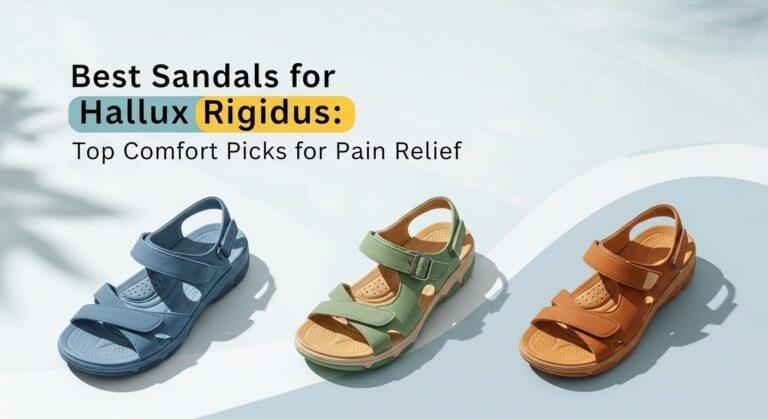
Quick answer: Morton’s Extension Insoles and supportive orthopedic sandals top the list.
I know the sharp sting of stiff big-toe joints from clients and my own trials. Hallux rigidus makes walking painful and picky. The right sandals ease motion, add rockers, and cut pressure on the joint. In this guide I dig into the best sandals for hallux rigidus, plus orthotic inserts and braces that work together to give relief and let you move with more comfort.
Morton’s Extension Insole

I tested Morton’s Extension Insoles in shoes and sandals. The plate is rigid. It limits big-toe extension. That reduces joint push and pain when walking. I felt less shock with each step.
The insole sits under your normal sole. It stiffens the front of the foot. This shifts pressure away from the big toe joint. I use them in casual sandals with room in the forefoot.
Pros:
- Rigid carbon fiber reduces hallux dorsiflexion
- Thin profile fits many sandals and shoes
- Durable materials for long-term use
- Noticeable pain reduction during short walks
- Works well with roomy sandals and supportive brands
Cons:
- Not a cushioned solution—firm feel
- May require trimming for exact fit
- Needs sandals with removable footbed or extra depth
My Recommendation
I recommend Morton’s Extension Insole if you have moderate hallux rigidus and need a simple fix inside existing sandals. It keeps the big toe from bending too far. That ease often equals less pain and more steps. I pair these with supportive sandals to get both motion control and padding.
| Best for | Why |
|---|---|
| Sandals with deep footbeds | Insole fits without altering the shoe shape |
| Users needing joint control | Rigid plate reduces toe motion and pain |
| Long-term wearers | Durable carbon fiber lasts for months |
Paras Kors Toe Brace

The Paras Kors Toe Brace is a taping-style splint I use for daily support. It wraps the big toe and adds lateral control. That helps realign the toe and reduce stress. It is light and fits under open sandals.
I like it for flare-ups. The design lets me adjust the tension. I can wear it at home or with wide straps. It soothes joint strain and reduces the need to avoid walking.
Pros:
- Adjustable straps for tailored support
- Thin profile works with open sandals
- Stabilizes the big toe to limit painful motion
- Easy to put on and remove daily
- Good option for flare-ups and post-activity relief
Cons:
- May feel tight if over-adjusted
- Not a permanent fix for severe joint degeneration
- Right-only and left-only models require correct purchase
My Recommendation
I find Paras Kors Toe Brace best for short-term relief and mild hallux rigidus episodes. It slips under many sandals without bulk. I use it when I expect long standing or walking. It reduces joint strain and lets me wear my favorite sandals more comfortably.
| Best for | Why |
|---|---|
| Mild flare-ups | Adjustable strap reduces pressure quickly |
| Wearing with open sandals | Thin profile fits under straps |
| On-the-go support | Easy to apply and remove |
Archies Orthopedic Flip Flops

Archies Flip Flops are built around firm arch support and a rocker sole. I tried them for day-long wear. The arch stabilizes the foot. The slightly bowed sole reduces big toe motion at toe-off.
They look like a simple flip flop. But they give structure. I felt less pull at the first MTP joint. These are a strong contender in the best sandals for hallux rigidus group for comfort and style.
Pros:
- Firm arch support improves foot alignment
- Rocker sole reduces pressure on the big toe
- Casual style that matches many outfits
- Durable straps and footbed materials
- Good for walking short to medium distances
Cons:
- Not as cushioned as soft foam sandals
- May require a short break-in period
- Size run can vary between models
My Recommendation
I recommend Archies if you need an easy-to-wear sandal for daily life while managing hallux rigidus. The arch and rocker combination helps divert pressure away from the big toe. I wear them for errands and light walks. They are among the best sandals for hallux rigidus when you want a sandal that looks normal but works hard.
| Best for | Why |
|---|---|
| Daily errands | Comfortable arch support with casual look |
| Short walks | Rocker sole reduces toe stress |
| Style-conscious users | Simple, versatile appearance |
Supportive Wide Flip Flops
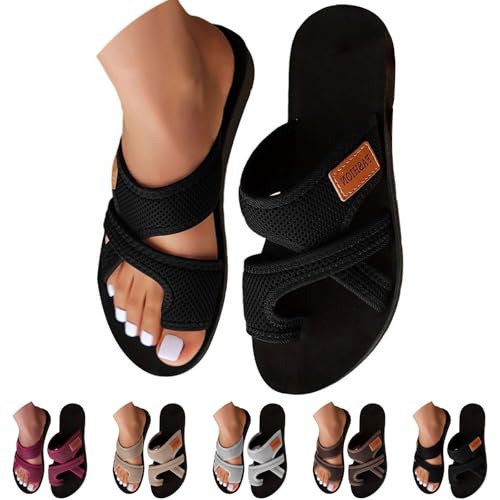
These wide supportive flip flops have a roomy toe box. The design avoids squashing the toes. That helps many with hallux rigidus feel less friction and pain. The footbed adds gentle arch support for stability.
I use these when I need softer cushioning. They are light and flexible. They work well for days when stiffness is higher. They pair nicely with a toe brace for added control.
Pros:
- Wide toe box reduces pressure on the big toe
- Soft footbed cushions painful joints
- Lightweight for all-day wear
- Easy slip-on design for convenience
- Good pairing with orthotic inserts and braces
Cons:
- Less rigid control for severe cases
- Not ideal for long hikes or uneven terrain
- May compress over time with heavy use
My Recommendation
If your hallux rigidus flares with tight shoes, I recommend these supportive wide flip flops. The roomy front relieves pressure. I pair them with a Morton’s Extension insole or a toe brace when I need extra control. They are a solid pick among the best sandals for hallux rigidus for those who want softness and space.
| Best for | Why |
|---|---|
| Wide-front shoe lovers | Extra room reduces joint squeeze |
| Daily indoor use | Lightweight and cushioned |
| Combination therapy | Works well with insoles and braces |
Copper Compression Bunion Sleeve

The copper compression bunion sleeve combines cushioning and alignment. The gel pad protects the bunion from rubbing. The sleeve gives gentle toe-space and pain relief. I often wear it in sandals with adjustable straps.
The copper material offers mild compression. It helps reduce swelling and friction. I found it useful for long wear and transitional relief. It pairs well with roomy supportive sandals when I expect long standing.
Pros:
- Gel pad cushions bunion and big toe joint
- Compression reduces swelling
- Thin sleeve fits under sandals and socks
- Improves toe spacing to reduce friction
- Reusable and machine washable in some models
Cons:
- Compression may feel warm on hot days
- Not a substitute for a rigid orthotic in severe cases
- May need frequent washing to keep copper effect
My Recommendation
I recommend the copper compression bunion sleeve for people with hallux rigidus who also have bunion discomfort. The cushioning protects the joint and reduces rubbing. I use it with wide supportive sandals to balance comfort and alignment. This pairing often ranks high in my list of the best sandals for hallux rigidus when bunions are a factor.
| Best for | Why |
|---|---|
| Bunion with hallux rigidus | Gel pad cushions and reduces friction |
| Swelling-prone feet | Compression helps manage edema |
| Sandals users | Thin sleeve fits under sandal straps |
Morton’s Carbon Fiber Plate (Pair)

This carbon fiber plate is similar to the single insole, but sold as a pair for consistent control. It makes the toe box stiffer. That reduces painful extension at the first MTP joint. I use pairs when I own two pairs of sandals or shoes to alternate.
The plate fits under removable footbeds. It gives strong support for turf toe and hallux rigidus. I found it particularly effective when I need consistent stiffness in both feet. It helps me keep my gait steady with less toe pain.
Pros:
- Pair offers uniform support on both feet
- Very effective at limiting toe extension
- Thin and lightweight design
- High durability for active use
- Good alternative to bulky braces
Cons:
- Requires shoes or sandals with depth
- Not cushioned—feels firm underfoot
- May need trimming for perfect fit
My Recommendation
I recommend the Morton’s carbon fiber plate pair for anyone who needs balanced control on both feet. For moderate hallux rigidus, they help control toe motion without bulky devices. I place them in sandals that allow a thin insert. This choice is among the best sandals for hallux rigidus strategies when you want true motion control across both feet.
| Best for | Why |
|---|---|
| Two-shoe rotation | Pair keeps support consistent for both feet |
| Active users | Durable carbon fiber withstands use |
| People who avoid braces | Low-profile insert inside existing sandals |
AEROTHOTIC Split Toe Flip Flops
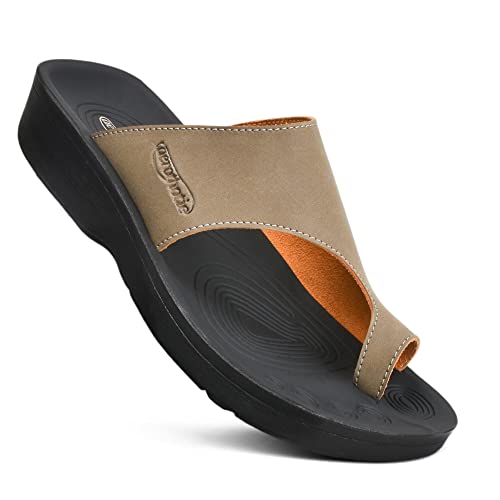
AEROTHOTIC split toe flip flops bring toe separation and arch support to the table. The split-toe design gives better toe alignment for some users. The cushioned strap and footbed add comfort during walks. I found them stable and helpful when I wanted a softer ride.
The toe separation helps some people take pressure off the big toe joint. The arch support also improves foot mechanics. I use these for light walks and indoor wear. They fit many foot shapes and help reduce pain for certain gait types.
Pros:
- Split-toe design promotes toe alignment
- Cushioned strap reduces chafing
- Arch support improves stability
- Non-slip footbed for safe steps
- Comfortable for extended standing
Cons:
- Split toe may feel odd at first
- Not ideal for rugged terrain
- May not suit every foot shape equally
My Recommendation
I recommend AEROTHOTIC split toe flip flops for people who respond well to toe separation and need arch support. For some with hallux rigidus, this combo reduces pressure at the first MTP joint. I use them when I need both comfort and mild alignment. They rank as one of the practical best sandals for hallux rigidus for indoor and light outdoor use.
| Best for | Why |
|---|---|
| Toe alignment seekers | Split-toe keeps toes in better position |
| Arch support needs | Supportive footbed improves mechanics |
| Everyday indoor wear | Comfortable and non-slip |
FAQs Of best sandals for hallux rigidus
What features make a sandal good for hallux rigidus?
Look for a stiff forefoot or rocker sole, good arch support, and a roomy toe box. Cushioned footbeds help. Removable footbeds let you add Morton’s Extension or rigid inserts. These changes cut the force on the big toe joint and reduce pain.
Can inserts and braces work with sandals?
Yes. Many sandals have removable footbeds or deep footbeds. That allows inserting carbon fiber plates or orthotic insoles. Braces and sleeves fit under straps or inside wide sandals. I often pair a brace with a rigid insert for best results.
Are there sandals that cure hallux rigidus?
No sandal can cure joint degeneration. But the right sandals and supports reduce pain and slow symptom progression. For lasting change, pair footwear choices with medical advice and, if needed, physical therapy or injections.
How should I pick the right size for comfort?
Choose sandals with a slightly larger toe box and a secure heel strap. Avoid tight toe rings. If you use inserts, allow extra depth. I suggest ordering a half size up if your toes are close to the front, and checking return policies.
When should I see a doctor about hallux rigidus?
See a podiatrist if pain limits activities, if swelling or redness worsen, or if home measures fail. A specialist can assess severity and recommend orthotics, injections, or surgery. Early intervention often preserves mobility.
Final Verdict: Which Should You Buy?
The best sandals for hallux rigidus depend on your needs. For stiff joint control, Morton’s Extension plates rank high. For everyday comfort with support, Archies and AEROTHOTIC perform well.
Pairing a supportive sandal with an orthotic or brace often gives the best relief. I recommend choosing sandals that fit your foot shape and allow inserts for long-term comfort and fewer flare-ups.
Madison Clark is a footwear expert and the voice behind MyStyleGrid.com. She specializes in honest shoe reviews, style tips, and practical guides to help readers find the perfect pair for any occasion. With years of experience in blogging and content creation, Madison makes footwear knowledge simple, stylish, and easy to follow.