The best men’s sandals for hallux rigidus offer a roomy toe box, firm support, soft cushioning, and easy adjustment.
You may know the feeling: a warm day arrives, but stiff big-toe pain makes every step feel like a small test. Hallux rigidus limits motion at the big-toe joint, so thin flip-flops and tight shoes can quickly become painful. I looked for sandals that reduce pressure, stay stable, and leave enough room for the forefoot. The picks below cover daily walks, travel, trails, recovery, and casual wear. They cannot cure joint damage, but the right pair can make summer walking much easier.
Dockers Newpage Memory Foam Sandal

The Dockers Newpage is a relaxed outdoor sandal with a soft memory foam footbed. Its open design helps keep the foot cool, while the adjustable straps let you fine-tune the fit across the forefoot. For hallux rigidus, that adjustability matters because a swollen or tender big-toe joint needs space rather than force. The footbed feels forgiving during short walks and casual daily use.
I like this sandal most for errands, patios, travel days, and easy walks on level ground. The cushioned base takes some sting out of each step, and the broad strap system helps hold the foot in place. It is not a medical device, and the soft foam may not provide enough control for long hikes. Still, it is a practical comfort-first choice for men who want a simple sandal with a familiar feel.
Pros:
- Soft memory foam cushioning reduces underfoot impact
- Adjustable straps allow a more forgiving forefoot fit
- Open construction promotes airflow in warm weather
- Casual styling works with shorts, jeans, and travel clothes
- Good choice for light walks and everyday errands
- Easy slip-on design saves time during daily use
Cons:
- May not offer enough arch control for demanding walks
- Memory foam can feel less stable than a firm footbed
- Open toes provide less protection on rough paths
FLARUT Closed-Toe Hiking Sandal

The FLARUT sport sandal takes a more protective approach than an open slide. Its closed toe helps shield the front of the foot from stones, roots, and accidental bumps. That can help men with hallux rigidus who still want to walk outdoors without exposing the painful joint. The sandal also uses adjustable straps, so you can avoid tightening pressure directly over the big-toe area.
This model makes sense for light hiking, camping, beach paths, and travel where foot protection matters. The trail-style sole should feel more secure than a flat casual flip-flop, especially on mixed surfaces. I would still check the toe width carefully because a closed toe can become restrictive if you choose a narrow size. Leave room for natural toe spread and wear the sandal indoors before taking it on a long trip.
Pros:
- Closed toe offers useful protection on outdoor paths
- Adjustable straps help control pressure around the forefoot
- Light athletic build suits walking and casual hiking
- More secure feel than a loose flat sandal
- Versatile design works near water and on dry trails
- Helps keep small rocks away from the toes
Cons:
- Closed toe may feel tight for very wide feet
- Less airflow than a fully open sandal
- May need a break-in period before long hikes
ONCAI Adjustable Arch Support Sandal

The ONCAI sandal focuses on support and adjustability in a slide-like design. It has multiple straps and an orthotic-style footbed with built-in arch support. Although arch support does not directly restore big-toe motion, it can help spread pressure more evenly through the foot. The open toe also gives the hallux joint extra breathing room.
I see this as a strong option for home wear, recovery, short walks, and daily summer use. The broad straps can be useful when feet swell during the day, since you can loosen the fit without abandoning support. The footbed may feel more structured than a soft foam sandal, which some people prefer for better balance. Men with very sensitive skin should inspect the strap edges and begin with short wear sessions.
Pros:
- Built-in arch support helps distribute foot pressure
- Open toe leaves more room around the big-toe joint
- Several adjustment points support a custom-like fit
- Comfortable choice for recovery and indoor wear
- Supportive footbed feels steadier than a thin sole
- Useful for feet that swell during warm weather
Cons:
- Arch support may feel too high for some feet
- Open design gives limited protection on trails
- Not the best pick for wet, technical terrain
FitVille Wide Open-Toe Sandal
This FitVille wide sandal is designed for men who need more room than a standard sandal provides. The open-toe shape gives the big toe space to rest without pressing against a hard front wall. Its orthopedic-style footbed adds support for walking, while the broad design can help accommodate swollen feet. This combination makes it one of the more promising choices for men searching for the best men’s sandals for hallux rigidus.
The wide fit is the main attraction, but sizing still deserves care. A sandal should be roomy without letting the heel slide from side to side. I would use the adjustable straps to keep the foot stable while leaving the toe area relaxed. This model is well suited to recovery walks, travel, daily errands, and outdoor use when you want airflow and support in the same package.
Pros:
- Wide shape gives the forefoot extra breathing room
- Open toe helps limit pressure on the big toe
- Arch support adds structure for everyday walking
- Useful for swollen feet and changing foot volume
- Breathable design keeps feet cooler in summer
- Good balance of comfort and practical support
Cons:
- Wide shape may feel loose on narrow feet
- Open toe does not protect against trail debris
- Bulkier look than a simple casual sandal
FitVille Wide Closed-Toe Walking Sandal

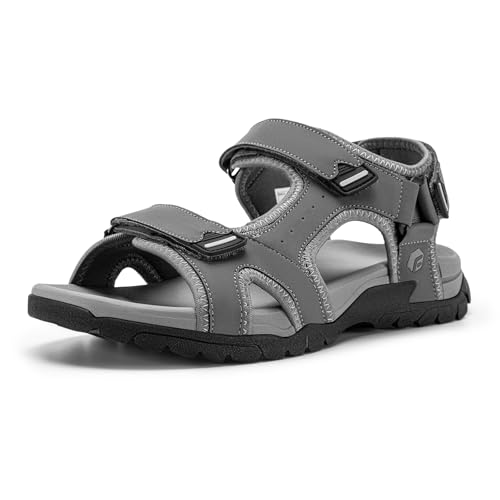
This FitVille walking sandal combines a wide fit with a closed toe and quick-adjust straps. It is made for men who want sandal airflow but still need protection on walks and hikes. The roomier front can reduce rubbing around a stiff big-toe joint, while the closed construction helps guard against bumps. Its arch support adds a stable base for men who spend much of the day on their feet.
I would choose this model for parks, travel, light trails, and active summer days. The quick-adjust system is helpful when you need to change the fit while wearing socks or after your feet swell. Because the toe is enclosed, measure your foot and compare it with the brand’s size chart before ordering. With the right size, this style can feel like a bridge between a walking shoe and a sport sandal.
Pros:
- Wide toe area helps reduce crowding around the hallux
- Closed toe improves protection on uneven ground
- Quick-adjust straps make fitting simple
- Arch support helps during longer casual walks
- Non-slip sole adds confidence on common walking surfaces
- Works for travel, trails, and everyday outdoor use
Cons:
- Closed front needs careful sizing for hallux comfort
- May feel warmer than an open-toe model
- More athletic styling may not suit formal outfits
KuaiLu Leather Orthotic Flip-Flop
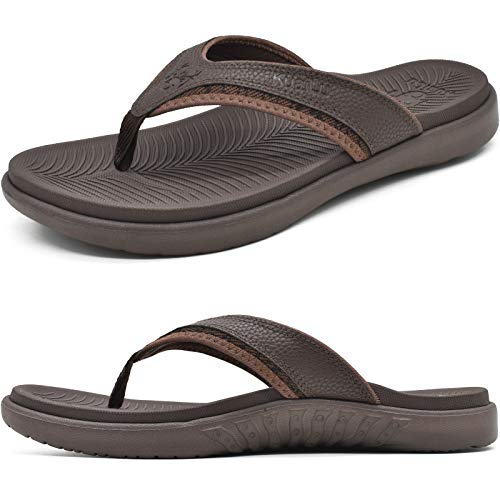
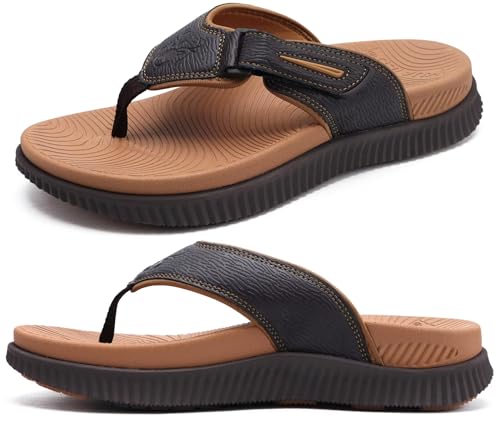
The KuaiLu leather flip-flop brings a more relaxed look to this group. It uses a thong strap and an orthotic-style footbed with arch support, so it offers more structure than a very thin beach flip-flop. The open front leaves the big toe free from a closed toe box. Its leather-style upper also gives it a cleaner look for casual summer outfits.
This sandal is best for short walks, poolside use, vacations, and relaxed days rather than demanding hikes. A thong design can change the way a person grips the sandal, and that may bother some men with a stiff or painful big-toe joint. I would wear it for brief periods first and stop if the toe joint feels strained. For men who want a smart-looking sandal with some support, it remains a useful lower-impact option.
Pros:
- Open front avoids pressure from a closed toe box
- Arch support offers more structure than flat flip-flops
- Leather styling looks polished for casual wear
- Light design packs well for travel
- Comfortable option for short, easy walks
- Easy to remove at the beach or pool
Cons:
- Thong strap may increase toe gripping for some users
- Less secure than a sandal with heel and ankle straps
- Not ideal for long hikes or uneven trails
FitVille Wide Open-Toe Sandal, Black

This second FitVille open-toe version offers the same basic appeal as a roomy orthopedic summer sandal, with a black color that is easy to match. The wide platform gives the toes more space, and the open front avoids direct contact with a rigid big-toe joint. The supportive footbed can make standing and walking feel less tiring. Adjustable straps also help when the foot changes size during the day.
I consider this a practical everyday pair for men who need comfort more than a slim fashion shape. It can work for shopping, porch use, walking on paved paths, and post-activity recovery. Keep in mind that extra width is helpful only when the foot remains secure. Adjust the sandal so the heel does not lift and the foot does not slide forward with each step.
Pros:
- Roomy design helps reduce forefoot crowding
- Open toe leaves space around the hallux joint
- Black color hides everyday marks well
- Supportive footbed suits standing and light walking
- Adjustable fit works with mild foot swelling
- Breathable build is comfortable in hot weather
Cons:
- May be too roomy for slim feet
- Limited toe protection for rough outdoor paths
- Support may feel firm at first
FitVille Wide Athletic Hiking Sandal

This FitVille athletic sandal targets outdoor comfort with a wide shape, arch support, and a lightweight build. It gives the foot more room than many narrow sport sandals, which is important when the big-toe joint feels stiff or enlarged. The open construction keeps air moving during summer hikes and travel. Its overall design feels more active than a basic recovery sandal.
I would put this pair on the shortlist for men who want one sandal for beach trips, sightseeing, and easy outdoor hikes. The wide base can help the foot feel less squeezed at the end of a long day. It still cannot replace a stiff-soled medical shoe when toe motion is severely limited. For moderate activity, though, it offers a useful mix of room, support, and low weight.
Pros:
- Wide fit gives toes room to spread naturally
- Arch support helps improve everyday foot comfort
- Lightweight design reduces the feeling of heavy footwear
- Suitable for travel, beaches, and easy hikes
- Open upper promotes airflow during warm weather
- Athletic shape provides more stability than flip-flops
Cons:
- Open toe leaves the joint exposed to bumps
- May not suit technical or very steep trails
- Wide fit can feel unstable on narrow feet
Dr. Scholl’s Gaston Fisherman Sandal

The Dr. Scholl’s Gaston is a fisherman-style sandal with a leather upper and a more covered design. Its front straps protect much of the foot while allowing air to pass through the sides. This can appeal to men who want a sandal that looks presentable at dinner but still handles casual outdoor use. The footbed offers cushioning for routine walking and standing.
For hallux rigidus, the key question is whether the front feels roomy enough. The covered toe area may work well for mild symptoms, but it may not suit a prominent or very tender joint. I recommend checking the width and wearing thin socks during the first few outings if needed. This is a strong style pick for office-casual travel, daily errands, and men who prefer leather over sporty mesh.
Pros:
- Fisherman styling offers a neat, versatile appearance
- Covered front protects more of the foot
- Leather upper suits casual and travel outfits
- Side openings allow better airflow than closed shoes
- Good choice for standing and everyday walking
- More polished than many athletic sandals
Cons:
- Front coverage may crowd a painful big-toe joint
- Leather may need time to soften
- Less suitable for wet conditions than water sandals
How Hallux Rigidus Changes Sandal Choice
Hallux rigidus is stiffness and arthritis in the joint at the base of the big toe. The joint may hurt when it bends upward, especially during the push-off part of a step. Some people also develop a bump on top of the joint. That bump can rub against the upper of a shoe, while a flexible sole can force the toe to bend again and again.
Good sandals for hallux rigidus should reduce these problems. A roomy toe area prevents side pressure and rubbing. A firm or moderately stiff sole can limit painful toe bend. A stable footbed helps the foot move as one unit instead of making the big toe do all the work. However, comfort varies because hallux rigidus can range from mild stiffness to severe joint damage.
I also pay close attention to fit. More room is not always better if the foot slides forward. Sliding can increase friction and make the toes grip the footbed. The best fit leaves space in front of the toes, holds the heel steady, and feels secure without squeezing the joint.
Key Features to Check Before Buying
Roomy Toe Box
A sandal should not press against the top or side of the big toe. Look for a wide front and a shape that follows the natural outline of the foot. Open-toe styles often give the most space, but closed-toe sandals can also work when they use a broad, deep front. Try the sandal later in the day, when feet are often at their largest.
Firm or Stiff Sole
A very soft, bendy sole may feel pleasant at first but can allow too much movement at the sore joint. A firmer sole may reduce upward bending during push-off. That does not mean the sole must feel hard or harsh. I look for a balance: enough firmness to support the foot, with enough padding to reduce impact.
Adjustable Straps
Adjustable straps are almost essential when feet swell or when the joint has a visible bump. They let you create space without allowing the whole foot to move. A sandal with one fixed strap may fit well in the morning and feel tight by afternoon. Hook-and-loop straps are often the easiest to adjust.
Stable Heel and Footbed
A stable sandal keeps the heel from sliding and reduces unwanted twisting. Arch support can help distribute pressure across the foot, though it should not create a painful lump under the arch. The heel should sit flat in the footbed. If the sandal folds easily in the middle, it may not offer enough control for longer walks.
Low Heel and Secure Traction
A low heel usually places less stress on the front of the foot than a raised heel. Good traction also matters because a slip can force the big toe to bend suddenly. Check the outsole pattern and use the sandal on a clean, dry surface before testing it on wet ground. No outsole is slip-proof in every condition.
Open-Toe Versus Closed-Toe Sandals
Open-toe sandals give the hallux joint the most freedom. They suit men whose main issue is pressure from the front of a shoe. They also stay cool and make swelling easier to manage. The trade-off is less protection from rocks, furniture, and accidental knocks.
Closed-toe sandals offer a protective shell for outdoor use. They can be a smart choice for walking trails, but the front must have enough width and depth. A tight closed toe can be worse than an open sandal because it presses on the joint with every step. I favor closed-toe styles only when the fit leaves clear room around the big toe.
How I Evaluate the Best Men’s Sandals for Hallux Rigidus
I start with the front of the sandal because hallux comfort comes first. I check whether the toe area looks broad, whether straps can be adjusted, and whether any seam may rub the joint. Next, I consider the sole. A useful sandal should cushion impact while resisting excessive bend at the big-toe area.
I then look at stability, traction, and intended use. A casual memory foam sandal may be excellent for errands but poor for a rocky trail. A closed hiking sandal may protect the toes but feel too warm for indoor use. I also consider foot swelling, width, heel security, and how easy the sandal is to put on.
These are product-fit judgments, not medical diagnoses. Product materials, stock, prices, colors, and sizes can change during 2026. I recommend checking the current Amazon listing, size chart, return terms, and customer feedback before ordering. If pain is severe, sudden, or linked to redness and swelling, seek care from a qualified health professional.
Fit Tips for a Painful Big-Toe Joint
Measure both feet while standing. Use the larger foot when choosing a size. Keep about a thumb’s width between the longest toe and the sandal’s front edge, but do not use extra length to make up for a narrow toe area.
Make sure the widest part of your foot sits over the widest part of the footbed. The heel should stay inside its cup or rear edge when you walk. If the foot slides forward, looseness may be causing more toe pressure than the sandal itself.
Wear a new pair indoors for 15 to 20 minutes at first. Walk on a clean floor and notice rubbing, pressure, and toe strain. Increase wear time slowly. A sandal that feels fine while sitting may expose problems once you begin pushing off.
Common Mistakes Men Make When Buying Sandals
The first mistake is choosing a flat flip-flop because it feels light. Many thin flip-flops bend easily and offer little control. They may also make you grip with your toes. That extra gripping can irritate a stiff joint.
The second mistake is buying a sandal that is too short. The toes then reach the edge, and the big toe may receive repeated impact. A sandal can feel wide yet still be too short, so check both length and width.
The third mistake is ignoring the upper. A thick strap or seam may press on the bony bump above the joint. Soft materials and adjustable closures usually make it easier to avoid this problem.
The last mistake is expecting arch support to solve every foot issue. Arch support can improve comfort, but hallux rigidus is a joint problem. A sandal still needs a suitable toe area, a stable sole, and a secure fit.
My Recommendation
For most men, I would start with the FitVille Wide Open-Toe Sandal. Its roomy front, adjustable design, and supportive footbed address the main comfort needs linked with hallux rigidus. It is especially useful for men with wide or swollen feet who want airflow for errands, travel, and daily walks.
The FitVille Closed-Toe Walking Sandal is my better choice for men who need more protection outdoors. The ONCAI is a good recovery and indoor option, while the Dockers Newpage suits relaxed daily wear. The KuaiLu works for short casual outings, and the Dr. Scholl’s Gaston is the style-led pick for mild symptoms. Always choose the model that gives your big toe room without allowing the foot to slide.
| Best for | Why |
|---|---|
| Wide or swollen feet | FitVille Wide Open-Toe offers room, airflow, and adjustable support. |
| Light hiking and outdoor protection | FitVille Closed-Toe and FLARUT cover the toes and feel more secure. |
| Casual comfort and recovery | ONCAI, Dockers, and KuaiLu provide easy wear for short walks and rest. |
Why the Best Men’s Sandals for Hallux Rigidus Are Not Always the Softest
Soft foam feels like a pillow, but a pillow does not always guide a foot well. If the sandal collapses under the forefoot, the big toe may still bend sharply during push-off. That can create a cycle of comfort while standing and pain while walking.
A firmer base can act like a small bridge under the foot. It spreads some pressure and limits unwanted motion. The best choice depends on your symptoms, but I usually prefer moderate firmness over a very flexible sole. Cushioning still matters, yet it should work with stability rather than replace it.
Can Sandals Help With Hallux Rigidus?
Sandals may help manage symptoms by reducing pressure and giving the foot a better base. They do not reverse cartilage loss or repair a damaged joint. Footwear is one part of a broader care plan that may include activity changes, exercises, medication, or treatment advised by a clinician.
Some people feel better in a stiff-soled shoe because it limits toe motion. Others prefer an open sandal because it removes pressure from a dorsal bump. Pay attention to your own walking pattern. If a sandal increases pain, numbness, swelling, or limping, stop using it and reassess the fit.
FAQs Of Best Men’s Sandals for Hallux Rigidus
What type of sandal is best for hallux rigidus?
Look for a roomy toe area, a stable sole, moderate cushioning, and adjustable straps. A firm sole may help limit painful big-toe bending. The best choice depends on your foot shape and symptom level.
Are flip-flops good for hallux rigidus?
Some supportive flip-flops may work for short use, but thin and flexible styles are often a poor choice. A thong strap can also make you grip with your toes. Choose a structured model and avoid long walks in basic flat flip-flops.
Should I choose open-toe or closed-toe sandals?
Open-toe sandals usually give the hallux more room. Closed-toe sandals offer better protection on trails but must have a wide, deep front. Select the style that avoids pressure while matching your activity.
Does arch support help a stiff big toe?
Arch support does not repair the big-toe joint, but it may spread pressure more evenly and improve overall foot stability. It should feel supportive, not sharp or intrusive. Stop using a sandal if the arch support causes new pain.
When should I see a doctor about hallux rigidus?
Seek professional advice when pain persists, worsens, limits normal walking, or comes with marked swelling and redness. A podiatrist or other qualified clinician can assess the joint and suggest suitable care. Do not rely on sandals alone for severe symptoms.
Final Verdict: Which Should You Buy?
I recommend the FitVille Wide Open-Toe Sandal for most men because it combines room, support, airflow, and adjustability. For trails, choose the FitVille Closed-Toe or FLARUT instead.
The best men’s sandals for hallux rigidus should protect comfort first. Check the fit, ease into wear, and choose support that matches your daily activity.

Rubel Miah is the Senior Editor at MyStyleGrid.com, where he brings a sharp editorial eye and an unshakable love for fashion to everything he does. A true style addict, Rubel lives and breathes trends, from streetwear to high fashion, and has a knack for turning inspiration into impactful stories. With years of experience in fashion journalism and digital media, he curates content that empowers readers to express themselves through style. When he’s not editing features or forecasting the next big thing, you’ll find him hunting down vintage pieces or capturing street style moments around the city.