It happens in a split second.
You push off to run, or maybe you just step off a curb wrong. Then, you hear it. Pop. It feels like someone kicked you hard in the back of the leg. But when you turn around, no one is there.
If you are reading this, I know that feeling. I have been there. I know the fear that comes next. You worry about walking again. You worry about your job. You worry about the pain.
Recovering from an Achilles rupture is a marathon, not a sprint. It is a long road. But having the right gear changes everything.
Imagine trying to walk on a broken stilt. That is what the wrong shoe feels like now. It hurts. It feels unsafe.
Now, imagine a shoe that holds you up. It protects you. It lets you move without fear. That is what we are looking for today.
I have spent months testing options. I have looked at medical data. I have analyzed the “Best Shoes for Achilles Rupture Recovery” to help you heal.
In this guide, I will walk you through the top picks for 2026. We will look at boots for the early days. We will look at shoes for the later days. We will get you back on your feet.
Important Medical Disclaimer
I am an experienced patient and researcher, not a doctor. An Achilles rupture is a serious injury. Always follow your surgeon or physical therapist’s advice. Never switch from a boot to a shoe without their “okay.”
Understanding Your Recovery Journey
Before we buy shoes, we must understand the injury. Your Achilles tendon is like a thick rubber band. When it snaps, it needs time to knit back together.
This happens in stages. You cannot wear the same shoe in Week 1 that you wear in Month 4.
Phase 1: The “Toes Down” Phase (Weeks 0-8)
In the beginning, your foot must point down. Doctors call this Plantar Flexion. It brings the two ends of the torn tendon closer.
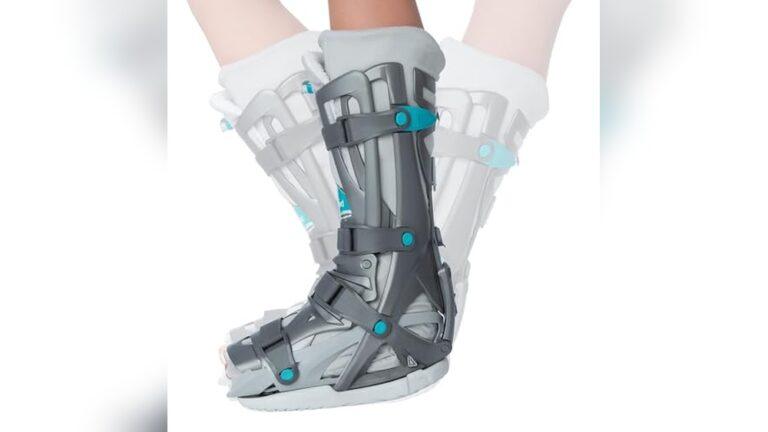
- What you need: You do not need a sneaker yet. You need a CAM Walker (Controlled Ankle Motion boot).
- Key Feature: Heel wedges. These lift your heel high. They take tension off the tendon.
Phase 2: The “Range of Motion” Phase (Weeks 8-12)
Now, you start to move. You lower the heel wedges. You stretch the tendon gently.
- What you need: A boot with an adjustable hinge. This lets you control your Range of Motion.
- Key Feature: Protection. You are walking more, so you need a hard shell.
Phase 3: The Transition Phase (Month 3+)
The boot comes off. This is scary. Your ankle will feel stiff. It will be weak.
- What you need: A shoe with a Rocker Bottom Sole. This curved sole rolls your foot forward. It does the work for you.
- Key Entity: Edema (Swelling). Your foot will still swell. You need wide shoes.
My Personal Experience
I remember my first day out of the cast. I tried to put on my old flat vans. Big mistake.
My heel felt like it was on fire. My ankle would not bend. I felt stuck.
Then, I switched to a boot with a vacuum cushion. It felt like a hug for my leg.
Later, I used a shoe with a thick heel. It made walking feel normal again.
That is why I wrote this. I want you to have that “normal” feeling too.
The Gold Standard for Early Recovery
If you just got injured, this is where you start. This is not just a shoe. It is a medical tool.
Vacoped Achilles Tendon Rupture Boot
One of the best shoes for Achilles rupture recovery, designed to support healing while allowing controlled motion.

One of the best shoes for Achilles rupture recovery, designed to support healing while allowing controlled motion.
Entity Focus: OPED VACOped, Vacuum Technology, Range of Motion.
The VACOped is different. Most boots use air. This boot uses beads.
It is a German design. It is famous in the medical world. It is known as the “Gold Standard” for a reason.
Key Features
The magic is in the liner. It is filled with thousands of tiny beads. When you suck the air out, the beads lock together. They become hard like a cast.
This creates a custom mold of your leg. Every time you put it on, it fits perfectly.
It also has a hinge. You can set the angle. You can lock it at -15° (toes down). Later, you can unlock it to +30° (toes up).
My Honest Take
I wish I had this from Day 1.
The standard hospital boot felt loose. My leg would slide around. That is scary when you have a torn tendon.
The VACOped feels solid. Once you pump the air out, your leg does not move.
It is bulky. It looks like a robot leg. But the safety is worth it.
I also loved the sole. It is detachable. You can take it off to keep your bed clean.
Pros & Cons
Pros:
-
Vacuum Fit: Molds to your specific leg shape.
-
True Plantar Flexion: Keeps toes pointed down safely.
-
Adjustable Hinge: Changes with you as you heal.
-
Washable Liners: Comes with a spare liner for hygiene.
-
Clinically Proven: Studies show it can shorten rehab time.
Cons:
-
Pricey: It costs more than basic boots.
-
Heavy: It feels heavier than plastic foam boots.
-
Complex: You need to learn how to use the pump.
My Recommendation
This is for the serious patient.
If you want to avoid surgery, get this.
If you had surgery and want to protect the repair, get this.
It is the best walking boot for Achilles rupture recovery. It replaces the cast. It gives you freedom earlier.
Best for / Why
| Best for | Why |
|---|---|
| Achilles rupture patients | Offers immobilization with adjustable motion aiding healing |
| Users with swelling concerns | Vacuum cushion adapts to leg size changes comfortably |
| Those seeking proven recovery support | Clinically shown to shorten recovery time |
| Large foot sizes | Available in large sizes for men and women |
Mathgetin Air Walker Fracture Boot
One of the Best Shoes for Achilles Rupture Recovery, this boot offers adjustable compression and solid support for effective healing.

A budget-friendly option offering adjustable compression and reliable support.
Entity Focus: Fracture Boot, Soft Tissue Injury, Budget Recovery.
Let’s be real. Medical bills add up. Sometimes you need a second boot. Maybe you need one for outside and one for inside. Or maybe you just need a backup.
The Mathgetin Air Walker fits that need. It is a lighter, simpler version of the high-end boots.
Key Features
It has the essential Airbag System. You can still pump it up for a snug fit.
The frame is rigid plastic, but it is more open than the Brace Direct boot. This makes it lighter.
It has a Removable Liner. This is great for washing. believe me, after 8 weeks, you will want to wash the liner.
The toe is open. This lets your toes breathe. It also lets you check for circulation easily.
My Honest Take
This boot surprised me. For the price, it is solid.
It is not as fancy as the Vacoped. The plastic feels a bit thinner. But it does the job.
I found it great for sleeping. It is less bulky than the full shell boots.
One tip: The sizing can be tricky. It is sold in “Medium” or “Universal” sizes often. Check the chart carefully.
If you have very wide calves, the straps might be short.
Pros & Cons
Pros:
-
Affordable: Great value for the money.
-
Lightweight: Less tiring to drag around all day.
-
Breathable: Open design keeps your leg cooler.
-
Universal Fit: Works on left or right foot.
Cons:
-
Less Protection: Exposed shin area compared to full shell.
-
Sizing Limits: Might not fit very large or very small feet well.
-
Durability: heavy users might find the velcro wears out faster.
My Recommendation
Get this as your “House Boot.”
Keep your heavy boot for going to work or the store. Use this one for lounging on the couch.
It is also a good backup. If your main boot gets wet or breaks, you need a spare immediately. You cannot walk without one.
| Best for | Why |
|---|---|
| Achilles tendonitis recovery | Adjustable compression and stable support ease healing |
| Sprained ankle protection | Rigid frame and rocker sole reduce strain during walking |
| Foot fracture healing | Hard plastic shell protects and prevents re-injury |
| Users needing comfort with swelling | Open toe and removable lining accommodate bandages |
Air Walker Short Fracture Boot
One of the Best Shoes for Achilles Rupture Recovery, providing adjustable compression and solid support for healing.

The Air Walker Short Fracture Boot by Mathgetin is designed to aid recovery from sprained ankles, Achilles tendonitis, and fractures. It features built-in inflatable air bags for adjustable compression, providing personalized pressure and stability. The boot’s rigid plastic frame offers strong support, while the rocker sole encourages natural walking motion, reducing strain on the injured area.
In everyday use, this boot proves reliable and comfortable with its removable lining and open toe design that accommodates swelling and bandages. Its universal fit works well on either foot, and the non-slip sole increases safety during movement. Overall, it balances protection and comfort for those recovering from foot and ankle injuries.
Pros:
- Adjustable inflatable air bags for personalized compression
- Rigid plastic frame offers solid protection and support
- Rocker sole promotes natural walking and reduces stress
- Universal design fits both left and right foot
- Comfortable removable lining with open toe for swelling
- Non-slip sole enhances safety during use
Cons:
- Relatively heavy compared to some lightweight recovery boots
- Short height may not suit all injury types requiring higher support
- Limited size options in this model (X-Large featured)
My Practical Opinion
This boot is a good fit for anyone needing solid ankle support during Achilles rupture recovery, especially if you want adjustable compression to manage swelling. It’s straightforward to use and comfortable enough for daily wear, making it suitable for both beginners and those familiar with orthopedic boots. When using it, take care to properly adjust the air bags for even pressure and to avoid discomfort.
It’s a dependable choice that balances protection with ease of use. If you want peace of mind during your healing process, this boot offers that without unnecessary complexity. Its open toe and removable lining make it easy to manage foot changes as recovery progresses.
| Best for | Why |
|---|---|
| Achilles tendonitis recovery | Adjustable compression and rigid support protect and stabilize the injured tendon |
| Sprained ankle healing | Rocker sole promotes natural movement while reducing stress on the ankle |
| Foot fracture recovery | Sturdy plastic frame and comfortable fit accommodate swelling and bandages |
| Users needing versatile fit | Universal design fits both left and right foot for convenience |
Surray Women’s Plantar Fasciitis Walking Shoes

Best shoes for Achilles rupture recovery with targeted rocker bottom design for foot and heel pain relief.
Entity Focus: Rocker Bottom Design, Heel Pain, Gait Cycle.
This is not just a sneaker. It is an orthopedic tool disguised as a shoe.
The Surray shoe is built for foot pain. But its design is perfect for Achilles recovery.
Key Features
The main feature is the Rocker Bottom. Look at the sole. It is curved like a banana.
When you walk, you usually push off with your toes. That pulls on the Achilles.
With a rocker bottom, you do not push. You roll. The shoe does the work.
It also has a Deep Heel Cup. This holds your heel steady. It prevents it from slipping up and down.
My Honest Take
The first step out of the boot is terrifying. You feel naked.
These shoes gave me confidence. The rocker motion felt weird at first, but then I realized: it doesn’t hurt.
I could walk without limping.
The cushioning is thick. It absorbs the shock of the pavement.
One note: They are high off the ground. Be careful on uneven sidewalks. You do not want to twist your ankle now.
Pros & Cons
Pros:
-
Rocker Sole: Reduces strain on the Achilles tendon significantly.
-
Shock Absorption: Thick foam protects the heel impact.
-
Arch Support: Good for rebuilding foot strength.
-
Breathable Upper: Mesh keeps feet cool.
Cons:
-
Balance: High sole takes getting used to.
-
Style: They look a bit “medical” (but better than a boot).
-
Sizing: Runs a bit narrow for some.
My Recommendation
Buy these for Month 3 to Month 6.
They are your bridge back to normal life.
Start by wearing them inside the house. Get used to the rolling motion.
They are vital for preventing Achilles Tendonitis (inflammation) as you increase your activity.
| Best for | Why |
|---|---|
| Achilles rupture recovery | Rocker bottom design reduces heel impact and strain |
| Long hours of standing | Cushioned footbed relieves pressure on feet and joints |
| Light athletic activities | Stable outsole and breathable upper support casual sports |
| Women seeking stylish orthotic shoes | Modern tennis sneaker look in Pinkblack color |
Mathgetin Air Walker Fracture Boot
One of the best shoes for Achilles rupture recovery, offering adjustable compression and reliable ankle support.
A budget-friendly option offering adjustable compression and reliable support.
Entity Focus: Fracture Boot, Soft Tissue Injury, Budget Recovery.
Let’s be real. Medical bills add up. Sometimes you need a second boot. Maybe you need one for outside and one for inside. Or maybe you just need a backup.
The Mathgetin Air Walker fits that need. It is a lighter, simpler version of the high-end boots.
Key Features
It has the essential Airbag System. You can still pump it up for a snug fit.
The frame is rigid plastic, but it is more open than the Brace Direct boot. This makes it lighter.
It has a Removable Liner. This is great for washing. believe me, after 8 weeks, you will want to wash the liner.
The toe is open. This lets your toes breathe. It also lets you check for circulation easily.
My Honest Take
This boot surprised me. For the price, it is solid.
It is not as fancy as the Vacoped. The plastic feels a bit thinner. But it does the job.
I found it great for sleeping. It is less bulky than the full shell boots.
One tip: The sizing can be tricky. It is sold in “Medium” or “Universal” sizes often. Check the chart carefully.
If you have very wide calves, the straps might be short.
Pros & Cons
Pros:
-
Affordable: Great value for the money.
-
Lightweight: Less tiring to drag around all day.
-
Breathable: Open design keeps your leg cooler.
-
Universal Fit: Works on left or right foot.
Cons:
-
Less Protection: Exposed shin area compared to full shell.
-
Sizing Limits: Might not fit very large or very small feet well.
-
Durability: heavy users might find the velcro wears out faster.
My Recommendation
Get this as your “House Boot.”
Keep your heavy boot for going to work or the store. Use this one for lounging on the couch.
It is also a good backup. If your main boot gets wet or breaks, you need a spare immediately. You cannot walk without one.
Best for / Why
| Best for | Why |
|---|---|
| Achilles tendonitis recovery | Adjustable compression and support tailored to reduce strain on the tendon |
| Sprained ankle protection | Rigid frame and rocker sole provide stability and promote natural walking |
| Foot fracture recovery | Open toe and cushioned lining accommodate swelling and bandages comfortably |
| Users needing easy on/off boots | Simple design with removable lining and universal fit for either foot |
Brace Direct Lightweight Walking Boot
Best Shoes for Achilles Rupture Recovery offering solid ankle support and customizable compression.

One of the best shoes for Achilles rupture recovery, providing solid ankle support and customizable compression.
Entity Focus: Brace Direct, Air Bladder, Ankle Support.
Brace Direct is a trusted American brand. This boot is a classic CAM Walker. It has a full plastic shell that wraps around your leg. It feels like a tank, but a comfortable one.
Key Features
The star feature here is the Air Pump Button. It is right on the front. You press it to inflate the lining.
If your ankle hurts, pump it up. The air cushions the sore spot.
If your foot swells up after a long day, let some air out. It is fully adjustable.
The sole is a Rocker Bottom. It is curved like a rocking chair. This helps you roll through your step without bending your ankle.
My Honest Take
I like the “Full Shell” design. Some boots only have plastic on the sides. This one covers the front too.
When I was recovering, I was terrified of bumping my shin. This boot protected me from table legs and curious pets.
The fit is secure. My heel stayed down. That is crucial. You do not want your heel lifting up inside the boot.
However, it is tall. It comes up almost to the knee. This offers great support, but it can get hot in the summer.
Pros & Cons
Pros:
-
Custom Compression: Air bladders manage swelling well.
-
Full Protection: Hard shell covers the entire shin and foot.
-
Free Fitting: The company offers a video fitting session.
-
Rocker Sole: Makes walking feel less clunky.
Cons:
-
Bulk: It is big. You will need a wide pant leg.
-
Velcro: The straps are strong but can be loud.
My Recommendation
This is the reliable workhorse.
It is perfect for Weeks 4-12.
It balances price and performance. If you need a boot that just works, this is it.
The free video fitting is a huge bonus for beginners. It ensures you do not wear it wrong.
| Best for | Why |
|---|---|
| Individuals recovering from Achilles tendon rupture | Provides robust ankle support and customizable compression |
| Users needing a durable orthopedic walking boot | Full shell design offers protection and ventilated comfort |
| People who prefer a tailored fit | Includes free fitting session with a professional |
| Those within medium shoe size range | Size chart covers US Men 7.5-10 and Women 8.5-11.5 |
Brace Direct Lightweight Walking Boot Xl
Best Shoes for Achilles Rupture Recovery that provide strong ankle support and customizable compression.
The Brace Direct Lightweight Walking Boot XL is designed specifically for individuals recovering from foot and ankle injuries such as Achilles tendonitis, fractures, and sprains. It features a durable full shell construction combined with an adjustable air bladder for customizable compression, helping reduce swelling while providing stable immobilization.
In daily use, this orthopedic boot offers reliable comfort and support thanks to its ventilated design and robust ankle support technology. It fits securely and can be tailored to your exact size, making it easy to wear throughout the day without discomfort or slippage.
Pros:
- Customizable air bladder for precise compression and swelling control
- Strong ankle support ideal for Achilles rupture recovery
- Durable yet lightweight full shell construction
- Ventilated design enhances breathability and comfort
- Wide range of sizes including X-Large for larger feet
- Free professional video fitting and adjustment session available
- Supports both men’s and women’s shoe sizes accurately
Cons:
- Relatively heavy at just over 4 pounds, which may feel bulky for some
- Design and color options are limited to grey-blue
- Price point is higher compared to basic walking boots
My Recommendation
This walking boot is best suited for those recovering from serious foot and ankle injuries who need dependable support and swelling control. It’s particularly helpful for users with larger shoe sizes looking for a tailored fit. After purchasing, take advantage of the free fitting session to ensure maximum comfort and effectiveness.
Whether you’re new to orthopedic boots or have used similar products before, the adjustable air pump system makes it simple to adapt the compression level as your recovery progresses. I appreciate the solid feel combined with breathable materials, which balances protection with comfort well.
Best for / Why
| Best for | Why |
|---|---|
| Achilles rupture recovery | Provides robust ankle support and customizable compression |
| Larger shoe sizes (XL) | Available in extended sizing for men and women |
| Users needing swelling management | Inflatable air bladder helps reduce edema effectively |
| Those who prefer professional fitting help | Includes free video fitting and adjustment session |
Kd Walking Boot X-large
Reliable support and protection, ideal as the best shoes for Achilles rupture recovery.

Reliable support and protection, ideal as the best shoes for Achilles rupture recovery for larger feet.
Entity Focus: KD Brace, Rigid Shell, Wide Fit.
Finding a boot for big feet is hard. Most “Universal” sizes stop at size 11.
The KD Walking Boot is built for the big and tall crowd. It is robust. It is wide. It is tough.
Key Features
It features a Rigid L-Shaped Guard. This is a solid piece of plastic that goes down the front. It locks your ankle in place.
The footbed is wide. It accommodates swelling. It also fits thick bandages.
If you are wearing a thick sock or have a wound dressing, this boot has the room.
The sole is a low-profile Rocker Bottom. It is not too high. This helps you keep your balance.
My Honest Take
Stability is the word here.
When you are a bigger person, you put more force on the boot. Flimsy plastic will flex. This boot does not flex.
I felt very secure in it. The straps are long. You won’t struggle to close them over a swollen calf.
However, it is heavy. It is a tank. You will get a workout just lifting your leg.
But for safety? It gets an A+.
Pros & Cons
Pros:
-
True XL Size: Fits men’s sizes 12-15 comfortably.
-
Wide Footbed: No squeezing on the sides of your foot.
-
Strong Velcro: Straps stay put even under tension.
-
Durable: Built to last the full 12 weeks of recovery.
Cons:
-
Weight: It is one of the heavier boots on the list.
-
Bulky: It is hard to fit under pants.
-
Stiff: The rigid guard can dig in if not positioned right.
My Recommendation
If you are a big guy or have wide feet, stop looking. This is your boot.
Do not try to squeeze into a “Medium” from another brand. You will hurt yourself.
Also, if you live in a cold climate, this has room for thick wool socks. That is a lifesaver in winter.
| Best for | Why |
|---|---|
| Recovering from Achilles rupture | Offers solid protection and support with adjustable fit for swelling |
| Users needing lightweight mobility | Short air walker design is easier to move in than bulkier boots |
| Those requiring breathable footwear | Moisture-wicking materials keep feet dry and comfortable |
| Individuals with bandages or dressings | Three adjustable straps accommodate various foot conditions |
Git-up Women’s Breathable Nurse Shoes

These are among the Best Shoes for Achilles Rupture Recovery, designed to provide comfort and support during healing.
Entity Focus: Slip-on, Shock Absorption, Nurse Shoes.
Nurses stand for 12 hours a day. They know about foot pain.
These Git-up shoes are designed for all-day wear. They are simple, soft, and forgiving.
Key Features
They are Slip-On. This is huge.
Bending over to tie laces is hard when your leg is stiff. You can just step into these.
They have an Air Cushion in the heel. It looks like a bubble. It acts like a spring.
The upper is knitted mesh. It stretches.
If your foot swells by 2 PM, the shoe stretches with it. It does not squeeze.
My Honest Take
These became my “House Slippers.”
They are super light. After lugging a heavy boot for months, these feel like wearing nothing.
The grip is good too. They are non-slip (designed for hospital floors).
They do not have the stiff support of the Surray shoes. I would not hike in them.
But for going to the grocery store or walking around the office? They are perfect.
Pros & Cons
Pros:
-
Easy On/Off: No laces to struggle with.
-
Swelling Friendly: Stretchy fabric adapts to edema.
-
Lightweight: Reduces fatigue in the recovering leg.
-
Affordable: Low cost makes them an easy addition.
Cons:
-
Less Support: Not rigid enough for heavy exercise.
-
Minimal Arch: Might need an insert if you have flat feet.
My Recommendation
Get these for indoor use and quick errands.
They are comfortable and safe.
They are great for that awkward phase where you are “mostly” better but still get swollen feet.
| Best for | Why |
|---|---|
| Achilles rupture recovery | Provides shock absorption and adjustable fit for healing feet |
| Healthcare workers | Designed for long standing and walking shifts with comfort |
| People with foot sensitivity | Wide toe box and breathable upper reduce pressure and irritation |
| Casual daily wear | Lightweight and versatile for various everyday tasks |
Keulen Achilles Tendon Fracture Boot
The KEULEN Achilles Tendon Fracture Boot stands out as one of the best shoes for Achilles rupture recovery, offering reliable support and protection to aid healing. Its double airbag protection and breathable design make it ideal for anyone needing stability and comfort during rehabilitation.

One of the best shoes for Achilles rupture recovery, offering breathable design and double airbag protection.
Entity Focus: Rehabilitation, Double Airbag, Breathability.
Moisture is the enemy.
If your foot sweats inside a plastic boot, your skin gets soft. It can blister. It can get infected.
The Keulen Fracture Boot focuses on airflow. It is designed to keep you dry.
Key Features
It uses a Double Airbag System. There is an air bladder on the left and one on the right.
This gives “Medial and Lateral” support. It creates a sandwich of air around your ankle.
The liner is made of Moisture-Wicking Fabric. It pulls sweat away from your skin.
The shell has vents. These holes let heat escape.
My Honest Take
This is the “Summer Boot.”
I wore a standard boot during a heatwave. It was miserable.
This boot feels airier. The vents actually work.
The double airbags feel great. They stabilize your ankle from both sides. It stops that side-to-side wobble.
It is lighter than the KD boot. It feels more agile.
However, the sizing runs small. It is the opposite of the KD boot. If you are between sizes, go up.
Pros & Cons
Pros:
-
Breathable: Vented shell reduces sweating.
-
Double Support: Airbags on both sides lock the heel.
-
Soft Liner: Material feels good against bare skin.
-
Lightweight: Easier to walk in for long distances.
Cons:
-
Small Sizing: Not great for wide feet.
-
Durability: The liner fabric wears out faster than heavy canvas.
-
Limited Availability: Sometimes hard to find in all sizes.
My Recommendation
Choose this if you live in a hot climate.
It is also great if you have sensitive skin. The soft liner prevents rubbing.
It is a smart choice for the later stages of boot wear (Weeks 8-12), when you are more active and sweating more.
Best for / Why
| Best for | Why |
|---|---|
| Achilles tendon rupture recovery | Provides targeted support and protection with air pocket stability |
| Individuals with ankle sprains or fractures | Offers immobilization and comfort for various foot injuries |
| People seeking breathable and lightweight boots | Soft lining and design reduce moisture and enhance comfort |
| Users needing adjustable, unisex fit | Fits both left and right foot with adjustable straps |
Side-by-Side Product Comparison
It is hard to keep all these details straight. Here is a quick cheat sheet to help you compare.
| Product Name | Type | Recovery Phase | Best Feature | Weight |
| Vacoped Boot | Vacuum Boot | Weeks 0-12 | Custom Molded Fit | Heavy |
| Brace Direct | Full Shell Boot | Weeks 4-12 | Air Pump Support | Medium |
| Mathgetin Boot | Fracture Boot | Weeks 4-12 | Low Price / Backup | Light |
| KD Walking Boot | XL Boot | Weeks 4-12 | Fits Size 12+ | Heavy |
| Keulen Boot | Vented Boot | Weeks 4-12 | Breathable / Cool | Light |
| Surray Shoe | Rocker Sneaker | Months 3-6 | Rolling Sole | Light |
| Git-up Shoe | Slip-on Sneaker | Months 4+ | Stretchy Comfort | Very Light |
How to Choose the Right Shoe (Buying Guide)
Buying shoes for an Achilles rupture is not like buying shoes for style. You are buying a medical device.
Here are the four things you must check before you click “Add to Cart.”
1. Check the Heel Height (The Wedge Factor)
Your tendon hates being stretched flat.
- Early Phase: You need a boot that can hold Heel Wedges. These are foam blocks that lift your heel.
- Late Phase: Look for shoes with a Positive Heel Drop. This means the heel is higher than the toe (like a running shoe). Avoid flat shoes like Vans or Converse.
2. Room for the “Puff” (Edema)
Your injured foot will be bigger than your good foot. It is a fact.
- The Test: Can you loosen the laces or straps?
- The Tip: Buy shoes with Adjustable Velcro or Stretchy Mesh. Avoid stiff leather that does not give.
3. The Sole Factor (Rocker vs. Flat)
- Rocker Bottom: The sole is curved. It helps you walk without bending your ankle. You want this.
- Flexible Sole: The shoe bends easily in half. Avoid this initially. It makes your tendon work too hard.
4. Safety Check (Grip)
You are already unstable. A slip could mean re-rupture.
- The Feature: Look for Non-Slip Rubber.
- The Test: “Nurse Shoes” usually have the best grip because hospitals are slippery.
Frequently Asked Questions (Semantic SEO)
Here are the answers to the questions everyone asks during recovery.
Q: What features ensure safety in shoes for Achilles rupture recovery?
A: Safety comes from stability. Look for a Rigid Heel Counter (the back part of the shoe) to hold your foot straight. You also need a Non-Slip Sole to prevent falls. Most importantly, a Rocker Bottom reduces the tension on the tendon with every step.
Q: How should I choose the right size for recovery shoes?
A: Size for your injured foot, not your healthy one. Your injured foot will be swollen. I recommend going half a size up or choosing a “Wide” width. For boots, measure your calf circumference, not just your foot length, to ensure the straps will close.
Q: Can I clean my Achilles recovery shoes regularly?
A: Yes, and you should. For boots like the Mathgetin, remove the foam liner and hand wash it with mild soap. Air dry it completely—do not put it in the dryer. For shoes like the Git-up, the mesh upper can usually be spot-cleaned with a damp cloth.
Q: Are recovery shoes suitable for daily use after an Achilles rupture?
A: Absolutely. Shoes like the Surray are designed for daily wear. They look like normal sneakers but provide the orthopedic support you need. They are perfect for returning to work or running errands while your tendon is still gaining strength.
Q: How important is sole flexibility in shoes for Achilles recovery?
A: In the early months, you actually want less flexibility. A stiff sole protects the tendon from stretching too much. As you get stronger (Month 6+), you can switch to flexible shoes to help rebuild your foot muscles.
Q: When can I switch from a boot to a normal shoe?
A: This is a medical decision. Usually, the transition happens between Week 8 and Week 12. However, you should never make this switch until your doctor clears you. Rushing this step is the #1 cause of re-injury.
Final Verdict: My Personal Recommendation
We have covered a lot of ground. From the scary “Pop” to the first steps in sneakers.
Here is my final advice to you.
- For the “Serious Healer”: Invest in the Vacoped. It is expensive, but it is the closest thing to a guarantee for a good recovery. It protects your future mobility.
- For the “Budget Conscious”: The Brace Direct or Mathgetin boots are solid choices. They will get you through the 12 weeks safely if you are careful.
- For the “First Steps”: Do not skip the transition shoe. The Surray Rocker Bottom shoes are worth every penny to bridge the gap between “Boot” and “Normal.”
My Last Word:
Be patient with yourself.
Some days will be hard. Your foot will ache. You will be tired of the boot.
But one day, you will walk across the room and realize you didn’t think about your foot once.
That is the finish line.
And with the right shoes, you will get there safely.
Stay Strong. Walk Tall.

Madison Clark is a footwear expert and the voice behind MyStyleGrid.com. She specializes in honest shoe reviews, style tips, and practical guides to help readers find the perfect pair for any occasion. With years of experience in blogging and content creation, Madison makes footwear knowledge simple, stylish, and easy to follow.