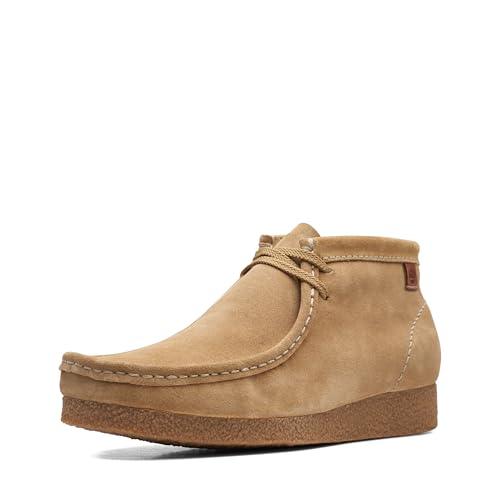
The best chukka boots for wide feet blend a roomy toe box, soft leather, stable soles, and easy all-day comfort.
If your toes feel squeezed by most boots, you know the pain of finding a pair that looks sharp and still lets your feet breathe. A good chukka boot should feel like a firm handshake, not a clamp. I reviewed these five styles for shape, cushioning, support, outsole grip, materials, and daily use. Some offer wide sizes, while others have naturally forgiving uppers that may work well for broader feet. Always check the current size chart and width options before ordering, since fit can change by color, material, and seller.
Lugz Convoy Classic Chukka Boot

The Lugz Convoy Classic brings a work-boot look to the classic chukka shape. Its 6-inch design gives the ankle more coverage than a low dress chukka, which can help people who want a more secure feel. The golden wheat color also hides small marks better than a pale suede boot. For shoppers with wide feet, the key benefit is the casual upper, which may feel less restrictive than a stiff formal boot.
I like this pair for jeans, cargo pants, and cool-weather errands. The raised collar adds a bit of structure, while the lace system lets you adjust the fit across the instep. It is not a true substitute for a certified wide-width boot unless the selected listing says so. Still, the style offers a practical mix of room, grip, and street-ready design at a budget-friendly price.
Pros:
- Casual upper may feel more forgiving on broad feet
- 6-inch height gives useful ankle coverage
- Lace-up design allows a more custom fit
- Golden wheat color works well with denim
- Rugged styling suits daily outdoor wear
- Higher shaft helps keep the foot feeling secure
- Usually costs less than premium leather boots
Cons:
- Not every size or color is offered in a wide width
- Higher shaft may feel warm in mild weather
- Break-in time can vary with foot shape
Thursday Boot Company Captain

The Thursday Boot Company Captain is the most polished option in this group. It uses a cap-toe profile that looks at home with dark denim, chinos, or a casual blazer. The Arizona Adobe finish gives the boot a broken-in look without making it seem worn out. Its structured build offers good support, but shoppers with wide feet should pay close attention to the available width and size guidance.
This boot suits someone who wants one pair for work, travel, and evenings out. The lace-up front helps you control pressure over the instep, and the cap toe adds visual detail without looking too dressy. A firm leather boot often needs patience at first, so I would not wear it for a full day before testing it around the house. Once fitted well, it can become a strong long-term choice for a smart casual wardrobe.
Pros:
- Refined cap-toe design works with many outfits
- Adjustable laces help manage instep pressure
- Rugged leather look gains character with wear
- Good choice for office-to-weekend dressing
- Ankle-height design offers useful stability
- More polished than a typical work-style chukka
- Durable construction can support regular use
Cons:
- Structured leather may feel narrow before break-in
- Wide-foot shoppers must confirm the current width options
- Less casual and less flexible than a sneaker boot
Vostey Casual Chukka Boots

Vostey’s casual chukka boot targets shoppers who want a simple, low-cost everyday boot. The brown finish is easy to pair with jeans, khakis, and relaxed work clothes. Its mid-top shape gives more coverage than a shoe while staying less bulky than a tall work boot. That balance can be useful for wide feet because the boot does not feel as heavily built around the ankle.
I see this as a practical entry point for someone who wants chukka style without a premium price. The lace-up design gives you room to loosen the upper over the forefoot, though laces cannot fix a truly narrow toe box. The boot may work best with medium-weight socks rather than thick winter socks. Before buying, measure your foot late in the day, when feet are often at their largest, and compare that measurement with the listing.
Pros:
- Accessible price for casual daily wear
- Brown color matches jeans and chinos
- Mid-top profile feels less bulky than a work boot
- Laces allow simple fit adjustment
- Versatile shape works for travel and errands
- Light styling suits relaxed wardrobes
- Good option for testing the chukka look
Cons:
- Width consistency may vary by size
- Lower-cost materials may not age like full-grain leather
- May offer less cushioning for long standing
Rockport Rugged Bucks Waterproof Chukka

The Rockport Rugged Bucks is the practical weather option in this review. Its waterproof design can help keep feet dry during wet commutes, light rain, and damp sidewalks. The tan color gives it a classic outdoor look that still works with casual clothing. For wide-foot shoppers, the roomy feel will depend on the exact version and size, so I recommend checking the listing for width choices before placing an order.
Rockport has long focused on comfort-minded footwear, and this boot follows that useful direction. It is a strong choice for people who spend time walking but do not want a running shoe look. Waterproof boots can feel warmer than unlined shoes, so I would pair them with moisture-managing socks. Also remember that waterproof does not mean the boot should stay submerged or skip regular care.
Pros:
- Waterproof build helps in wet daily conditions
- Useful for rainy commutes and damp sidewalks
- Classic tan color is easy to style
- Chukka shape looks cleaner than many rain boots
- Comfort-focused brand background supports daily walking
- Good balance of outdoor function and casual design
- Protects the foot better than a low canvas shoe
Cons:
- Waterproof construction may feel warm indoors
- Wide sizing must be confirmed for the selected listing
- May need more care to keep the outer finish looking clean
Bruno Marc Mid-Top Chukka Dress Boot

The Bruno Marc Mid-Top Chukka Dress Boot is made for shoppers who want a clean black boot at a modest price. Its smooth dark look can fit office outfits, dinners, and smart casual events. The mid-top design adds more support than a standard dress shoe while keeping the silhouette neat. Since black uppers can show pressure creases, getting the width right matters from the first wear.
This pair makes sense for someone who needs an affordable dress boot for occasional use. It may feel more comfortable for broad feet when you select a size with enough forefoot space and avoid overly thick socks. I would not treat it as a heavy outdoor boot, because its main strength is appearance and easy outfit matching. For short commutes, indoor work, and social events, it offers useful value.
Pros:
- Clean black finish suits formal and casual outfits
- Affordable way to add a dress boot
- Mid-top shape gives more coverage than a dress shoe
- Easy to pair with trousers, chinos, and dark jeans
- Lace-up front supports basic fit control
- Good choice for occasional office or event wear
- Simple style does not overpower an outfit
Cons:
- Not designed for severe weather or rough trails
- Black finish can reveal scuffs and creases
- May not provide enough room without careful sizing
My Recommendation
After comparing these five boots, I would match each one to a different type of buyer. The Lugz Convoy is best for casual wear, jeans, and shoppers who want a rugged look with a more relaxed upper. The Thursday Captain is my pick for a polished wardrobe, provided the fit works for your foot and the selected size offers enough room. The Vostey is best for low-cost everyday use, while the Rockport stands out for wet weather.
The Bruno Marc is the simplest choice for black dress-casual outfits. For the best chukka boots for wide feet, I would focus first on toe room, then on width, heel hold, and sock space. A boot that looks wide from the outside can still taper sharply inside. Check the return policy, read recent fit comments, and test the boots indoors before wearing them outside.
| Best for | Why |
|---|---|
| Everyday casual wear | Lugz Convoy offers rugged styling, ankle coverage, and an easy lace-up fit. |
| Work, travel, and smart outfits | Thursday Captain gives a refined cap-toe look with supportive boot structure. |
| Rainy commutes and damp streets | Rockport Rugged Bucks adds waterproof protection without looking like a rain boot. |
How to Choose the Best Chukka Boots for Wide Feet
Buying a wide boot is not only about finding a larger number on the size label. Width can change across brands, lasts, toe shapes, and materials. One company’s regular width may feel roomier than another company’s wide width. I always look at the inner shape of the boot, not just the outer design.
Your toes should spread naturally when you stand. They should not touch the front, press against one another, or feel trapped at the sides. The widest part of your foot should sit over the widest part of the boot. If the boot bends behind your toes, the fit may create pressure across the ball of the foot.
Start With an Accurate Foot Measurement
Measure both feet while standing. Feet often swell during the day, so an evening measurement can give a more useful result. Wear the socks you expect to use with the boots. Record the longer foot and use that measurement when choosing a size.
You can trace each foot on paper, but do not pull the pencil inward around the toes. Keep the pencil upright for a more honest outline. Measure the length and the widest point. Then compare those numbers with the brand’s current chart instead of assuming your usual size will fit.
Look for a Rounded or Almond Toe
Toe shape has a major effect on comfort. A sharply pointed chukka can look sleek, but it often steals space from the toes. A rounded or gently squared toe usually gives the forefoot more usable room. That does not mean the boot should feel loose everywhere.
The best chukka boots for wide feet should hold the heel while giving the toes space. This is the key difference between a supportive fit and an oversized fit. If the heel slips badly, your foot may slide forward and create even more pressure at the toe.
Check the Width Label and the Fit Notes
Look for labels such as Wide, W, 2E, or 4E when the brand uses them. Some listings show only standard widths, even when the boot shape feels somewhat roomy. Product pages can also change, so check the exact color and size you plan to buy.
Customer reviews can help, but read them with care. A person may call a boot wide because it is larger than a sneaker, while another shopper may find the same boot narrow. Focus on comments about toe space, ball-of-foot pressure, heel movement, and whether the boot stretches with wear.
Choose Laces Over Slip-On Styling
Laces give you more control than elastic panels or a simple slip-on opening. You can loosen the lower eyelets for a broad forefoot and keep the upper eyelets snug around the ankle. This small adjustment can make a large difference during a long day.
Do not overtighten the laces to stop heel movement. That can create pressure over the top of the foot. Instead, try a heel-lock method, use a thinner sock, or choose a different size and width. Comfort should come from the boot’s shape, not from forcing the foot into place.
Pay Attention to the Insole
A removable insole can help if you use custom orthotics or need more volume inside the boot. Removing a thick insole may create extra room, but it can also reduce cushioning. If you need an insert, check that the boot has enough depth and that the heel still stays secure.
Soft foam may feel great during the first few minutes. Yet long-term comfort also depends on support, flex, and pressure control. A slightly firm footbed can feel better after several hours than a soft one that lets the foot spread without support.
Consider the Upper Material
Leather can soften and mold with use, but it does not reliably add a full width size. A tight boot may become less stiff, yet it will not always become truly wide. Synthetic materials can offer a lower price and lighter feel, though their stretch and durability vary.
Suede often feels flexible and casual. Smooth leather usually looks more formal and may need a longer break-in. Textile panels can improve comfort but may reduce weather protection. Choose the upper based on your climate, work needs, and how often you plan to wear the boots.
Do Not Ignore the Heel and Ankle
A wide forefoot needs room, but the heel still needs to sit in place. Too much heel movement can cause blisters and make the boot feel unstable. A well-fitted chukka should allow slight movement during the first wears, but it should not lift dramatically with every step.
The ankle opening should feel secure without cutting into the leg. If the collar rubs, try a taller sock during break-in. If the boot still creates a hot spot after several short wears, the shape may not match your ankle.
Fit Tips for Broad Feet and High Instep
Many shoppers describe their feet as wide when the real issue is a high instep. The instep is the top section of the foot. A boot can have a roomy toe area but still feel tight across the top. Laces help here because you can change the pressure zone by zone.
Start lacing from the bottom and leave the first one or two sections slightly loose. Tighten the upper sections only enough to keep the ankle stable. This method can create space without making the whole boot sloppy.
If you wear thick socks, bring them when trying on boots. Winter socks can use much more internal space than thin cotton socks. Make sure you can wiggle your toes and that the boot does not press when you bend your knees or walk down a slope.
Try both boots. Feet are rarely identical, and the larger foot decides the fit. Walk on a clean indoor floor for at least ten minutes. Test stairs if possible, because downhill steps show whether your toes slide into the front.
Leather, Suede, or Synthetic Chukka Boots?
Leather remains popular because it can last for years with proper care. It also develops a personal look as it creases and darkens. However, leather boots can feel firm at first and may cost more. A leather upper needs time, conditioner, and protection from excess water.
Suede gives a soft texture and relaxed style. It can feel less rigid around a broad foot, but it needs protection from stains and heavy rain. A suede brush and suitable spray can help maintain the nap. Never soak suede and then use high heat to dry it.
Synthetic boots often provide the lowest entry price. They may feel comfortable right away and need less care. Their weakness is that they may not shape to the foot like quality leather, and the outer finish can show wear sooner. For occasional use, synthetic materials can still offer good value.
Are Chukka Boots Good for Wide Feet?
They can be, but the answer depends on the last and width options. A chukka boot often has a simple lace-up front and an open ankle, which gives useful adjustment. Some designs use a narrow dress toe, while others use a broad casual shape.
The best chukka boots for wide feet should offer room at the ball of the foot and enough depth above the toes. They should not squeeze the little toe or push the big toe inward. They should also let you adjust the instep without creating a hard ridge.
Chukka boots can work well for wide feet when the shape matches your foot. They are not automatically wide just because they have a round look. Check the full fit, including the heel, instep, toe box, sole, and sock space.
Break-In Advice for New Chukka Boots
Do not plan a full-day trip in a brand-new pair. Wear the boots at home for 20 to 30 minutes at first. Look for rubbing, numbness, pressure, or toe contact. Small stiffness can improve, but sharp pain is a warning sign.
Use ordinary socks during the first few wears. Thick socks may stretch the upper too fast and hide a poor fit. If the boots feel good, increase wear time slowly. This gives your feet and the boot a chance to adjust.
Never rely on painful break-in as proof of quality. A firm heel counter or stiff leather can be normal. Numb toes, burning at the ball of the foot, and side pressure are not signs that you should simply wait longer. A better width or a different toe shape is often the smarter answer.
Care Tips That Help Chukka Boots Last
Brush away dirt after each outdoor wear. Let damp boots dry at room temperature, away from heaters and direct sunlight. Heat can dry leather, weaken adhesives, and change the shape of the upper. Remove the laces when cleaning around the eyelets.
Use care products made for the material. Leather may need conditioner and water protection, while suede needs a suede brush and suede-safe spray. Synthetic uppers often need only a damp cloth, but always follow the brand’s care guidance.
Give boots a rest between wears when possible. A cedar shoe tree can help manage moisture and preserve the shape, though it should not stretch a tight boot aggressively. Clean socks also matter. They reduce odor and help the lining stay fresh.
Chukka Boot Soles and Traction
The sole affects comfort as much as the upper. A rubber outsole usually offers better wet-weather grip than a smooth leather sole. A lug pattern can help on loose ground, but deep lugs may feel clumsy on polished floors. Choose the tread based on where you walk most.
For office use, a moderate tread gives a good balance. For rainy streets, look for rubber coverage and visible grooves. For trails, a chukka boot may not replace a hiking boot, even when it has a rugged outsole. Ankle height alone does not provide full trail support.
Wide feet benefit from a stable base. A very narrow sole can make the foot feel perched on the edge. When you inspect a boot, look at the outsole from below. The forefoot should provide enough platform for your foot without hanging over the sides.
How I Compared These Boots
I focused on the details that matter most in real use. These include forefoot room, lacing control, ankle security, cushioning, sole grip, weather protection, style range, and price. I also considered whether each boot works for daily walking or only short periods of wear.
I did not treat a large-looking boot as a wide boot. Width claims should come from the current listing and the brand’s size information. Because stock, colors, and size runs can change, shoppers should confirm the exact product page before ordering.
My goal is simple: help you avoid the common mistake of choosing a boot by appearance alone. The right pair should support your foot, match your clothing, and stay comfortable after the first hour. That is the standard I used for this Best Chukka Boots for Wide Feet guide.
FAQs Of Best Chukka Boots for Wide Feet
How should chukka boots fit on wide feet?
Your toes should have room to spread, and the widest part of your foot should sit inside the widest part of the boot. The heel should stay mostly secure without painful pressure across the forefoot.
Should I order a size up for wide feet?
Not automatically. A larger size adds length, not always width, and can cause heel slip. Check the brand’s width chart first, then consider a wide size or a roomier toe shape.
Do leather chukka boots stretch enough for wide feet?
Leather can soften and give slightly, but it cannot always turn a narrow boot into a wide boot. If your toes feel compressed, choose a better width instead of counting on stretching.
Can I wear chukka boots all day with wide feet?
Yes, if the boot has enough toe room, good cushioning, and a stable sole. Break them in slowly, wear suitable socks, and stop if you feel numbness or sharp pressure.
Which sole is best for wet weather?
A rubber sole with clear tread is usually the safer choice for wet streets. Waterproof uppers help keep water out, but no boot should be treated as fully waterproof when submerged.
Final Verdict: Which Should You Buy?
For most shoppers, the Thursday Captain is the best all-around choice when its width and toe shape fit correctly. Choose the Lugz for rugged casual wear, Rockport for wet conditions, Vostey for value, and Bruno Marc for black dress-casual style.
The Best Chukka Boots for Wide Feet should feel stable, roomy, and easy to adjust. Measure carefully, confirm the width, and use the return policy for a safer fit.
Madison Clark is a footwear expert and the voice behind MyStyleGrid.com. She specializes in honest shoe reviews, style tips, and practical guides to help readers find the perfect pair for any occasion. With years of experience in blogging and content creation, Madison makes footwear knowledge simple, stylish, and easy to follow.