The best ski boots for wide feet intermediate skiers balance roomy comfort, strong control, and reliable all-day warmth.
If your ski boots leave red marks on your toes, squeeze your forefoot, or make each run feel like a test of pain, you are not alone. Wide feet need more than a larger size. They need the right last, shell shape, liner, and flex. I reviewed these options for comfort, control, ease of use, and value. Some are true alpine boots, while others suit children, beginners, or water skiing, so I will point out the differences clearly before you buy.
Nordica The Cruise S W Women’s Ski Boots

Nordica The Cruise S W is one of the most comfort-focused choices in this group. Its design targets beginner and intermediate women who want a less demanding boot for groomed runs and relaxed all-mountain days. The roomier shape can feel much kinder to a broad forefoot than a narrow race-style shell. I especially like this type of boot for skiers who want to build skill without fighting stiff plastic.
The soft-to-moderate flex helps make turns feel smooth and forgiving. It also makes walking around the lodge less awkward than with a very stiff performance boot. Still, fit matters more than the name on the shell, so try the boot with ski socks and get a proper shell check when possible. For many women, this Nordica model is a strong starting point when searching for the best ski boots for wide feet intermediate skiers.
Pros:
- Comfort-focused shape for recreational skiing
- Forgiving flex for developing technique
- Good choice for beginner and intermediate women
- Supportive enough for groomed and light all-mountain use
- Easy choice for skiers who dislike harsh, rigid boots
- Attractive black, light blue, and white color design
Cons:
- May feel too soft for aggressive or very powerful skiers
- Exact width can vary by foot shape and size
- May need professional fitting for high-volume feet
Roces Idea Up Adjustable Ski Boots

Roces Idea Up is an adjustable ski boot made for smaller feet. The listed size range is 19–22, which usually points to children or very small-footed skiers rather than most adults. Its main appeal is growth room, since one boot can cover several foot lengths. That can help families avoid buying new boots every season.
The adjustable design may also help when two skiers in a family share equipment, although hygiene and fit still matter. I would not place this model ahead of a true adult wide-last boot for an intermediate adult skier. However, for a young skier with a broad foot, the ability to adjust the fit can be useful. Parents should check the child’s actual mondo size, calf fit, and ability to buckle the boot without help.
Pros:
- Adjustable length supports growing feet
- Useful for children and very small-footed skiers
- Can reduce the cost of frequent boot replacement
- Simple option for family ski trips
- Black and silver design hides normal winter wear
- May offer a more forgiving fit than fixed-size junior boots
Cons:
- Size range is not suitable for most adult skiers
- Adjustable boots may not deliver a precise performance fit
- Not the best choice for advanced or aggressive skiing
Rossignol EVO 70 HV+ Ski Boots

The Rossignol EVO 70 HV+ stands out because “HV” signals a high-volume shape. That is important for skiers with wide feet, taller insteps, or fuller lower legs. The 70 flex sits in a friendly middle ground for many progressing skiers. It should feel more supportive than a very soft beginner boot, yet less tiring than a stiff expert model.
This boot makes sense for someone who skis several times each winter and wants more control without giving up comfort. The high-volume build can reduce pressure across the forefoot, but it should not feel loose around the heel. I recommend using the thinnest ski sock that keeps you warm and having the liner molded or adjusted if needed. Among the best ski boots for wide feet intermediate skiers, this is one of the clearest high-volume options.
Pros:
- High-volume shape suits many broad feet
- 70 flex supports improving intermediate technique
- Good balance between comfort and downhill control
- Useful for skiers with a taller instep
- Versatile choice for groomed and light off-piste terrain
- Rossignol design gives the boot a familiar alpine feel
Cons:
- May feel roomy for low-volume feet
- Some skiers may need heel pads or professional fitting
- Not designed for expert-level hard charging
Nordica Sportmachine 3 80 Men’s Ski Boots

The Nordica Sportmachine 3 80 is a well-rounded option for men who need room but still want a confident platform. Its 80 flex gives an intermediate skier more resistance when pressing into a turn. That extra support can help on steeper groomers, firm snow, and faster linked turns. It is a better match for a stronger skier than an ultra-soft comfort boot.
I see this model as a practical bridge between rental boots and serious all-mountain equipment. It should suit men who have learned the basics and now want cleaner edge control. A roomy boot must still hold the heel firmly, and the Sportmachine line is worth considering when your foot needs space through the forefoot and instep. If you prefer a stable, supportive feel, this may be one of the best ski boots for wide feet intermediate skiers in the men’s category.
Pros:
- 80 flex offers useful support for progressing skiers
- Comfortable choice for all-mountain resort skiing
- More performance-oriented than a basic beginner boot
- Good fit direction for men who need extra volume
- Stable feel during faster turns
- Suitable for skiers moving beyond rental equipment
Cons:
- May feel demanding for a first-time skier
- Could be too roomy for narrow heels
- Requires careful sizing to avoid heel lift
K2 BFC 80 Men’s Ski Boots
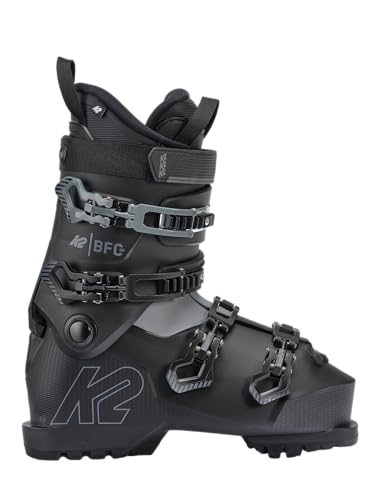
K2 BFC means “Built For Comfort,” and that name tells you where this boot focuses its energy. It is made for skiers who want an easier step-in feel and less pressure around the foot. The 80 flex provides enough structure for many intermediate men without making the boot feel like a brick. This balance works well for long resort days.
The roomy feel can be especially welcome when standard boots pinch the toes or compress a wide forefoot. I would consider the BFC 80 for skiers who value comfort first but still want to improve their turns. It may not offer the sharpest response for an expert, yet most recreational intermediates do not need that level of stiffness. For the 2026 ski season, it remains a sensible style to compare with other best ski boots for wide feet intermediate skiers.
Pros:
- Comfort-first design for broad feet
- 80 flex gives a useful mix of support and ease
- Good option for long days at a resort
- Step-in feel may be friendlier than tight performance boots
- Suitable for many progressing male skiers
- Less likely to feel overly harsh on easy terrain
Cons:
- May not suit narrow heels without fit work
- Less precise than a firm expert boot
- Comfort fit can feel loose if sized too large
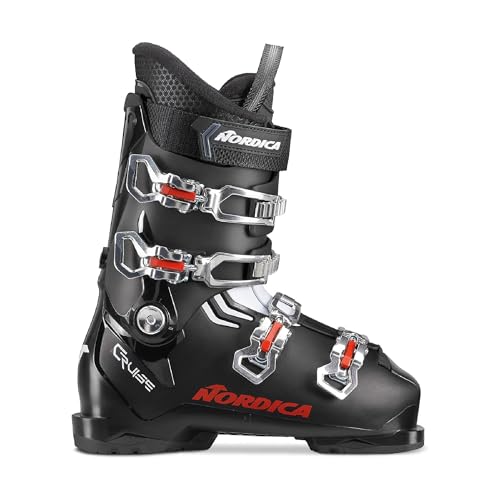
Nordica The Cruise Men’s Comfort Ski Boots

Nordica The Cruise is built around simple comfort and relaxed resort skiing. It is a good fit direction for men who dislike the stiff, narrow feel of race-inspired boots. The shell and liner aim to make the boot easier to wear during a full day. That matters when your goal is to ski more, not spend every break rubbing your feet.
This model can suit a beginner who is becoming an intermediate or an intermediate who skis at a calm pace. Its comfort fit may help skiers with a wider forefoot, but a true bootfitter should still confirm the fit. I would choose it for groomed slopes, casual trips, and skiers who place warmth and ease above maximum power. It is a useful candidate in a search for the best ski boots for wide feet intermediate skiers, especially when comfort is the top concern.
Pros:
- Comfort-oriented fit for recreational use
- Friendly choice for beginners and early intermediates
- Less tiring during casual resort days
- Useful for skiers who find performance boots too tight
- Simple design works well for general downhill skiing
- May be easier to put on than a stiff race boot
Cons:
- May lack response for aggressive skiing
- Comfort fit can be excessive for narrow feet
- Large listed size may not suit average-foot shoppers
Roces Idea Up Adjustable Ski Boots

This second Roces Idea Up version covers a larger adjustable range, listed as 22.5–25.5. That range may fit older children, teens, or adults with smaller feet. Its key feature is the ability to change the boot length as the skier grows. For a family, this can make ski gear planning much easier.
I would treat it as a value and growth option rather than a high-precision intermediate boot. Adjustable shells can solve length changes, but they do not automatically solve heel shape, instep height, or foot width. Parents should watch for movement inside the boot, cold toes, and pressure points after several runs. It can be one of the more practical best ski boots for wide feet intermediate skiers when the skier is young and still growing.
Pros:
- Adjustable range can fit growing feet
- Useful for children, teens, and smaller-footed skiers
- May save money over repeated seasonal purchases
- Easy to consider for shared family equipment
- Good value for recreational snow use
- Black and silver finish looks clean and simple
Cons:
- Not aimed at most full-sized adult feet
- Fit precision may be lower than a fixed alpine boot
- Advanced skiers may want more direct power transfer
Radar Carbitex Vector BOA Water Ski Boot

The Radar Carbitex Vector BOA is not a downhill snow ski boot. It is a water ski boot, so I would not recommend it for alpine skiing, snow, or ski resort use. Its carbon fiber build, aluminum plate, and BOA closure target water-ski performance. I included it because product listings can mix the words “ski boot,” and shoppers need a clear warning before spending money.
The BOA dial can provide fast, even tightening for water use. The rigid materials may also support direct energy transfer on a boat and ski setup. None of those features replace the insulation, walk mode, snow sole, and alpine binding fit required for winter skiing. If you need the best ski boots for wide feet intermediate skiers, keep this product in the water-sports category only.
Pros:
- BOA closure allows quick tightening
- Carbon fiber construction targets direct response
- Designed for water-ski performance
- Aluminum plate may support a firm connection
- Useful for riders who want a technical water boot
- Distinct design for dedicated water-ski setups
Cons:
- Not suitable for downhill snow skiing
- Does not provide alpine boot insulation
- May not fit standard snow ski bindings
Rossignol Kelia 50 Women’s Ski Boots

Rossignol Kelia 50 is a soft, approachable downhill boot for women. A 50 flex is usually aimed at beginners and lighter recreational skiers, so it favors comfort over strong, fast power transfer. That makes it helpful for someone who is still working on balance, stopping, and smooth basic turns. It can also suit a smaller skier who finds an 80-flex boot too tiring.
Wide feet do not always need the stiffest or largest boot. They need space in the right places and a liner that does not crush the toes. The Kelia 50 may work for a woman who skis gently on groomed trails, but stronger intermediates may outgrow its response. I would compare it with Nordica The Cruise S W when building a list of the best ski boots for wide feet intermediate skiers.
Pros:
- Soft flex feels forgiving for new skiers
- Comfortable choice for easy groomed runs
- Good match for lighter or smaller women
- Less demanding than a stiff performance boot
- Simple downhill design for resort skiing
- Rossignol branding offers familiar alpine credibility
Cons:
- 50 flex may be too soft for strong intermediates
- May not offer enough support at higher speeds
- Width still needs to match the individual foot
How I Compared These Ski Boots
I compared these boots by looking at the needs that matter most to wide-footed intermediate skiers. Those needs include forefoot room, instep volume, heel hold, flex, warmth, buckle ease, and the type of skiing the boot supports. A wide boot is not automatically a good boot. If the heel floats, the skier loses control and may tighten the buckles too much.
I also separated true alpine boots from adjustable junior models and the Radar water boot. This step matters because the word “ski” appears in many product names. A snow ski boot must work with the skier’s bindings and provide suitable support for winter conditions. Always confirm compatibility before buying online.
What Wide-Foot Skiers Should Look For
The first number to check is the last width. Ski boot brands often describe a last as low, medium, or high volume. A high-volume boot usually gives more room across the forefoot and around the instep. The exact feel still changes with shell shape, liner thickness, and foot length.
Do not solve a width problem by buying a boot that is too long. A long boot can let the heel slide, reduce edge control, and create painful pressure when you tighten it. Measure both feet in millimeters, then compare the result with the brand’s mondo size chart. Your larger foot should guide the size choice.
Check the heel next. Your heel should stay close to the boot floor when you flex forward. A small amount of movement can be normal before the liner settles, but obvious lifting is a warning sign. A bootfitter can stretch the forefoot while keeping the heel secure.
Pay attention to the instep, too. Some wide feet are not very high, while others need more vertical space. If the top of your foot feels crushed, the problem may be instep height rather than width. A heat-moldable liner or shell adjustment may fix that issue better than going up a size.
Choosing the Right Flex for an Intermediate Skier
Flex describes how much resistance the boot gives when you lean forward. A lower number usually feels softer and more forgiving. A higher number usually feels more supportive and responsive. Brand flex numbers are not perfectly equal, so treat them as a guide rather than a universal scale.
Many adult intermediate men prefer a flex around 80 or higher, depending on body weight, strength, and skiing style. Many women may prefer a softer range, but the best choice depends on the individual. The Rossignol EVO 70 HV+ offers a useful middle point for a comfort-minded skier. The Nordica Sportmachine 3 80 and K2 BFC 80 suit skiers who want more support.
A soft boot can help a new skier learn. Yet a boot that is too soft may fold when you push hard into a turn. A stiff boot can provide power, but it may punish mistakes and cause fatigue. Think of flex like a door spring: it should resist you, then return smoothly, not fight every movement.
Why Proper Ski Boot Fit Matters
Ski boots transfer your movements to the skis. They are the steering wheel, brake pedal, and suspension system in one piece. If your foot moves inside the shell, your skis respond late. You may then tighten the buckles, which can create numb toes and poor blood flow.
Try boots at the end of the day if you can. Feet often swell after walking and skiing. Wear one thin or medium ski sock, not two thick socks. Thick socks can create pressure and make a boot seem smaller than it really is.
When standing upright, your toes may lightly touch the front. When you bend your knees into a ski stance, your toes should pull back slightly. Your heel should remain controlled. A trained bootfitter can check the shell, adjust the liner, and make targeted changes for bunions or wide forefeet.
Are Roomy Boots Always Better for Wide Feet?
No. A boot that feels loose can be just as troublesome as one that feels tight. The right boot gives your forefoot room while keeping the heel and ankle secure. It should feel snug, not painful, during the first fitting.
Linings pack out with use. A boot that feels wonderfully loose in the shop may become too loose after several ski days. I prefer a firm, even fit over a soft, oversized feel. If one area hurts, ask about shell stretching before choosing a larger size.
Best Options by Skier Type
For a woman with a wide forefoot, Nordica The Cruise S W is a comfort-first option. Rossignol Kelia 50 fits a softer, more relaxed style. For women who want more support and high volume, the Rossignol EVO 70 HV+ deserves a closer look.
For men, the K2 BFC 80 and Nordica Sportmachine 3 80 are the strongest choices in this list. The BFC 80 leans toward easy comfort. The Sportmachine 3 80 leans toward stronger support and improved control. Nordica The Cruise Men’s boot makes more sense for casual skiers who place ease above speed.
For young skiers, the two Roces Idea Up boots offer adjustable sizing. They can be practical when feet grow fast. They are not a substitute for a correctly sized adult boot. Finally, the Radar model belongs on a water-ski equipment list, not a snow-ski list.
My Recommendation
For most adult intermediate skiers with wide feet, I would start with the Rossignol EVO 70 HV+ if the high-volume shape matches the foot. It offers a useful blend of room, control, and manageable flex. Men who want firmer support should compare the Nordica Sportmachine 3 80 and K2 BFC 80. Women seeking a gentle, comfortable ride should consider Nordica The Cruise S W.
The best ski boots for wide feet intermediate skiers are not always the most expensive or the stiffest. They are the boots that hold the heel, leave the toes comfortable, and let you ski with a relaxed stance. The Roces models make sense for growing children, while the Radar boot should only serve water skiing. Stock and sizes can change, so check the current Amazon listing before ordering.
| Best for | Why |
|---|---|
| Wide-footed adult intermediates | Rossignol EVO 70 HV+ combines high volume with useful all-mountain support. |
| Comfort-focused men | K2 BFC 80 offers a roomy feel and forgiving 80 flex for long resort days. |
| Growing young skiers | Roces Idea Up models adjust as foot length changes, which can improve value. |
FAQs Of Best Ski Boots for Wide Feet Intermediate Skiers
What makes a ski boot good for wide feet?
A good wide-foot ski boot has enough room across the forefoot and instep without losing heel control. A high-volume last, heat-moldable liner, or professional shell adjustment can help. The boot should feel snug and supportive, not painful or loose.
Should I buy a larger size for my wide feet?
Usually, no. A longer boot may create heel lift and weak edge control. Choose the correct mondo length, then look for a wider last or have the shell adjusted by a bootfitter.
Is an 80-flex boot good for an intermediate skier?
Yes, for many adult skiers. An 80 flex can give a useful mix of support and comfort. Your weight, strength, height, and skiing speed should also guide the choice.
Are soft ski boots better for beginners with wide feet?
Soft boots often feel easier and more forgiving. However, they still need a secure fit. If the boot is too soft or too loose, an improving skier may lose control on firm or steep snow.
Can I use a water ski boot for snow skiing?
No. The Radar Carbitex Vector BOA is made for water skiing. Snow ski boots need winter insulation, alpine binding compatibility, and a design made for downhill snow use.
Final Verdict: Which Should You Buy?
For most adult wide-footed intermediates, I recommend the Rossignol EVO 70 HV+ for its high-volume shape and balanced flex. The K2 BFC 80 is a close comfort-focused choice, while Nordica models suit relaxed skiing.
The best ski boots for wide feet intermediate skiers should fit securely, feel warm, and support steady progress. Confirm size, binding compatibility, and fit before ordering.

Madison Clark is a footwear expert and the voice behind MyStyleGrid.com. She specializes in honest shoe reviews, style tips, and practical guides to help readers find the perfect pair for any occasion. With years of experience in blogging and content creation, Madison makes footwear knowledge simple, stylish, and easy to follow.