If you have flat feet and want to enjoy snowboarding without pain, you are in the right place. I know the struggle well because I spent my first few seasons fighting foot pain, sore arches, and tired legs. Back then, I didn’t even know flat feet mattered in snowboarding. I thought I just needed stronger legs. But the moment I tried boots with the right support, my whole experience changed. I want to help you get to that point faster, and without all the mistakes I made.
In this easy guide, I talk to you like a fellow rider. I share what I learned over the years, along with tips that beginners can use right now. I also explain why certain boots work better for flat feet and how to pick the right pair with confidence. We will look at top models like the DC Shoes Phase BOA Pro, Burton Moto BOA, and System APX Pro Twist 10. These boots are well-loved and work well for many riders who need more support.
My goal is to make your snowboarding fun, safe, and pain-free. So, let’s get into it and find the best snowboard boots for flat feet that will keep you riding all day.
Understanding Flat Feet in Snowboarding
What Flat Feet Mean in Simple Words
Flat feet mean the arch in your foot is low or missing. When the arch is low, the foot tends to roll inward. This is called overpronation. Many people have flat feet, and most are able to snowboard without problems once they have the right gear.
In snowboarding, your feet work very hard. Your boots take your weight, pressure, and movement. If your arches are not supported, the pain can show up fast. You might feel burning under your feet or pressure around your ankles. You might also feel like you are losing balance more easily.
When you have the right boots, the arch gets support. Your foot stays in a natural position. This helps you stay balanced and keeps pain away. That is why choosing the right boot matters so much.
The Common Problems Riders With Flat Feet Face
Let’s talk about problems that many riders with flat feet face. When I started, I dealt with most of these myself. Early on, I couldn’t ride more than an hour. My feet felt like they were on fire. At first, I blamed the board or the bindings. Later, I learned it was the boots.
Common issues include:
- Foot pain under the arch
- Tired feet after just a short run
- Poor balance when turning
- Hard time keeping pressure on edges
- Cramps in toes or mid-foot
- Sharp pain when walking in boots
Most of these problems come from having too little support. The good news is that the right boots solve most of these fast. The moment I switched to a boot with a molded insole and a medium flex, I could ride all day. It felt like learning to snowboard again, but without the pain.
Why Boot Flex, Liners, and Insoles Matter
You don’t need to be an expert to pick the right boot. You only need to understand a few simple things.
Flex Rating
Boots come in soft, medium, and stiff flex.
- Soft = easy to move but less support
- Medium = balanced comfort + control
- Stiff = strong support but harder for beginners
For flat feet, medium flex works best. It gives enough support without feeling too stiff.
Liners
The liner is the soft part inside the boot. Good liners include:
- Heat-moldable liners (ThermoFit, Response Liner I/III)
- Primaloft insulation for warmth
- Memory foam liners for custom fit
Heat-moldable liners shape around your feet to reduce pressure points.
Insoles
This is the part most people overlook. Insoles with:
- Arch support
- Heel cups
- Cushioning
will make a huge difference.
Some great insole technologies include:
- IMPACT-ALG™ (DC Shoes)
- ThermoFit molded insoles (System APX)
These insoles support your arch and keep your foot in place. Good support is the key to comfort for riders with flat feet.
How to Choose the Best Snowboard Boots for Flat Feet
Let’s talk about what you need to look for when picking boots. These tips come from years of riding and helping friends choose boots that match their feet.
A Key Features to Look For
Here are the features that matter most:
1. Medium Flex
Medium flex gives support without feeling too stiff. It is the best option for beginners and intermediate riders.
2. Strong Heel Hold
You want your heel to stay in place. If your heel lifts, your foot works harder, and this leads to pain.
3. BOA Fit System or Lace-Up Choice
BOA systems are great for flat feet because:
- They tighten evenly
- They reduce pressure points
- They offer micro adjustments
Brands like DC Shoes, Burton, and System use high-quality BOA dials.
4. Heat-Moldable Liners
Heat molding shapes the boot to your foot. It is one of the best features for comfort.
5. Good Insoles
Look for molded or memory-foam insoles. You can also upgrade to third-party insoles later.
B Fit Tips From Real-World Use
These simple tips will save you from making common beginner mistakes.
1. Wear Real Snowboard Socks
Not thick socks. Not cotton socks. Wear proper snowboarding socks because they:
- Reduce moisture
- Improve fit
- Prevent rubbing
2. Find a Snug Fit
Your toes should lightly touch the front when standing. When you bend your knees, they should pull back slightly.
3. Keep the Heel Down
If your heel lifts, the boot is too loose or does not fit your foot shape.
4. Try Boots in the Afternoon
Feet swell a little during the day. Trying boots later gives a more accurate fit.
5. Ask for Heat Molding
If the store offers it, get it. It makes a huge difference for flat feet.
C Snowboarding Styles and Boot Choice
You may not know your riding style yet, and that is okay. But if you have a style preference, here is what I suggest:
- All-Mountain Riders
Choose medium flex boots like Burton Moto BOA or DC Phase BOA Pro. - Park Riders
Soft to medium flex works well. But add insoles for support. - Powder Riders
A slightly stiffer boot helps with control.
If you are new, I suggest starting with a medium flex boot. It is the most forgiving and stable choice.
Top 5 Best Snowboard Boots for Flat Feet (Top Picks)
Below are the top boots that work well for riders with flat feet. Each model was chosen because it offers support, comfort, and good value. I list key features, pros, cons, and who each boot is best for.
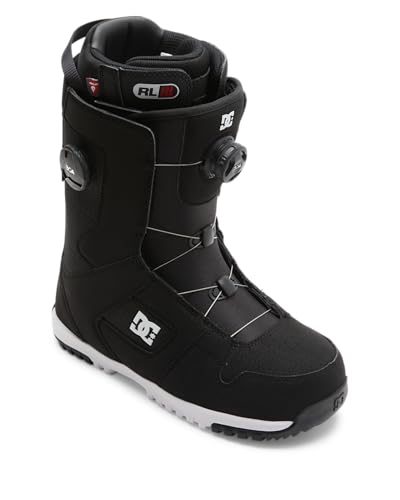
DC Shoes Phase BOA Pro — Balanced Comfort and Control

The DC Shoes Phase BOA Pro is one of the most reliable medium-flex boots in the DC lineup. It uses the BOA Fit System to give you an even and precise fit. It also includes the Response Liner I, which feels soft but supportive. The molded IMPACT-ALG™ insole gives better arch support than most stock insoles. This makes the boot great for riders with flat feet.
I like that this boot gives all-day comfort. It also keeps the foot stable, which helps with balance. The ventilation helps keep moisture down. This makes long days on the mountain much more enjoyable.
Key Features
-
BOA Pro lacing
-
Medium flex
-
Response Liner I
-
IMPACT-ALG™ insole
-
Ventilated build
Pros
-
Very easy to adjust
-
Good arch support
-
Warm and breathable
-
Good for beginners and intermediate riders
Cons
-
A little bulky
-
Price a bit higher
Recommended For
Beginners to intermediates who want a supportive boot with a very comfortable liner and good arch support.
System APX Pro Twist 10 — Great Value and Strong Support

The System APX Pro Twist 10 offers great support for the price. It includes a heat-moldable ThermoFit liner, which molds well to flat feet. The Pro Twist lacing system makes it easy to tighten the boot evenly. The boot has a medium flex feel and is built to handle long days on the mountain.
The padding is soft and warm. The design keeps the foot stable, which is important for riders who need more arch support. I like the value this boot brings. It is a great choice if you want quality without spending a lot.
Key Features
-
Pro Twist quick lacing
-
ThermoFit liner
-
Medium flex
-
Warm padded interior
Pros
-
Very comfortable
-
Great price
-
Strong ankle support
Cons
-
Fewer color options
-
Can feel stiff for total beginners
Recommended For
Budget-conscious riders who still want heat molding and strong support.
Burton Moto BOA — Lightweight and Beginner-Friendly

The Burton Moto BOA is one of the best-selling snowboard boots in the world, and for good reason. It is light, soft to medium in flex, and easy to adjust. The BOA Coiler System allows fast tightening, which is great for beginners who do not want to deal with laces. The Burton Moto also includes a warm liner that keeps your feet comfortable in cold weather.
Although the Moto is known for being beginner-friendly, it also provides good stability for riders with flat feet. Many riders love the soft feel and warm liner. If you want a boot that is light and easy to use, this is a great choice.
Key Features
-
BOA® Coiler System
-
Soft-to-medium flex
-
Lightweight build
-
Warm insulated liner
Pros
-
Very light compared to most boots
-
Easy to put on and take off
-
Great for new riders
-
Good overall comfort
Cons
-
Not ideal for advanced riders
-
Less arch support compared to DC models
Recommended For
Beginners who want a soft and forgiving boot that still provides comfort and warmth. Riders with flat feet may want to add better insoles for support.
DC Shoes Phase Adjustable — Comfortable & Lightweight

The DC Shoes Phase Adjustable is another solid option for flat-footed riders. It has a soft-to-medium flex and uses a classic lace-up system. The boot includes an EVA memory-foam liner that shapes to your foot. This provides a nice custom feel. It also has fleece lining, which keeps your feet warm even on cold days.
The lightweight design reduces fatigue, which is helpful for beginners. The boot also offers decent arch support thanks to the EVA liner. Although it uses regular laces, it is easy to tighten and adjust throughout the day.
Key Features
-
EVA memory-foam liner
-
Fleece lining
-
Lace-up closure
-
Soft-to-medium flex
-
Lightweight build
Pros
-
Lightweight and warm
-
Very comfortable interior
-
Good flex for beginners
Cons
-
Laces take longer than BOA
-
Off-white color shows dirt fast
Recommended For
Beginner and intermediate riders who want a warm, comfortable boot with a natural fit that supports flat feet.
DC Shoes Judge BOA — High Performance and Precision Fit

The DC Shoes Judge BOA is a top-tier boot offering strong support and precision fit. It features the Dual Zone BOA® System, allowing you to adjust the upper and lower zones separately. This gives you control over how tight the boot feels in different areas. The Response Liner III offers firm support and stability. The molded IMPACT-ALG™ insole is strong and supportive, making the boot great for riders with flat feet.
This boot is a favorite for riders who want both performance and comfort. It is slightly heavier, but the durability and support make up for it. If you want a strong boot that keeps your foot stable all day, this is a great choice.
Key Features
-
Dual Zone BOA®
-
Response Liner III
-
IMPACT-ALG™ insole
-
Medium-to-stiff flex
-
Durable build
Pros
-
Very supportive
-
Strong heel hold
-
Great for all-mountain riding
Cons
-
Slightly heavy
-
Higher price
Recommended For
Intermediate to advanced riders who want maximum support, precision, and stability. Great for flat feet because of the strong insole and liner.
Side-by-Side Product Comparison Table
Below is a simple comparison of the boots we covered. This gives you a clear idea of how each model compares, especially for flat feet.
| Model | Flex | Lacing System | Best For | Support Level | Warmth |
|---|---|---|---|---|---|
| DC Shoes Phase BOA Pro | Medium | BOA Pro | All-Mountain | High | High |
| System APX Pro Twist 10 | Medium | Pro Twist | Beginners–Intermediate | Medium | Medium–High |
| Burton Moto BOA | Soft–Medium | BOA Coiler | Beginners | Medium | High |
| DC Shoes Phase Adjustable | Soft–Medium | Traditional Laces | Beginners | Medium | High |
| DC Shoes Judge BOA | Medium–Stiff | Dual BOA | Intermediate–Advanced | Very High | High |
This table should help you decide which model fits your needs. If you want a simple rule to follow:
- Best Overall for Flat Feet: DC Shoes Phase BOA Pro
- Best Budget Option: System APX Pro Twist 10
- Best for Comfort & Ease: Burton Moto BOA
- Best Warm Fit: DC Phase Adjustable
- Best High Support: DC Shoes Judge BOA
My Real-World Advice After Years of Riding With Flat Feet
I want to share a bit of personal experience because I know how tough it can be to ride with flat feet. At first, I bought the cheapest boots I could find. They were soft, flexible, and seemed comfortable in the store. But on the mountain, I could barely ride for more than an hour. My arches screamed for help. My balance felt off. I kept stopping to take breaks.
One day, a friend let me try his medium-flex boots with a molded insole. I could not believe the difference. My feet felt stable. My turns felt smoother. The pain almost disappeared. That day taught me an important lesson: boots matter more than the board.
Here are a few things I learned over the years:
1. Medium Flex Is the Sweet Spot
Flat feet need more support than soft boots can give.
2. Insoles Are Your Best Friend
Even a simple molded insole can change your ride.
3. BOA Systems Help More Than You Think
They reduce pressure points and give better hold.
4. Heat-Molding Solves Pressure Points
Never skip heat molding if your boots offer it.
5. Break-In Takes Time
Boots feel better after two to three days of riding.
These tips are simple, but they helped me move from tired feet to full-day sessions.
Extra Tips for Riders With Flat Feet
These small tips can save you from pain and help you enjoy snowboarding even more.
Best Socks to Improve Comfort
Choose thin snowboarding socks. Thick socks may seem warm, but they reduce control and can create pressure points. Thin socks protect your feet while letting your boots fit right.
Look for:
- Wool blends
- Breathable fabric
- Moisture-wicking design
How Often to Replace Insoles
Replace insoles every season if you ride often. They lose shape over time. New insoles keep your feet supported and your riding smooth.
How to Break in Boots the Right Way
Wear your boots at home for short periods. Walk around. Flex your knees while standing. This helps the liner shape to your foot faster.
When to Upgrade Your Boots
Upgrade when:
- You feel pain often
- The liner becomes loose
- The boot loses stiffness
- You ride more often than before
If you buy the right boots early, you can enjoy every ride.
Frequently Asked Questions
1. Are BOA boots better for flat feet?
Yes, BOA boots help riders with flat feet because they tighten evenly, reduce pressure points, and offer more control. This makes them more comfortable for long rides.
2. Should beginners with flat feet use soft boots?
Soft boots feel nice at first, but riders with flat feet often do better with medium flex boots. Medium flex gives more support and reduces pain during long sessions.
3. Do insoles help reduce foot pain?
Yes, insoles with arch support help a lot. They support the arch, reduce stress, and make riding smoother and more comfortable.
4. Are Burton boots good for wide feet?
Yes, Burton boots fit many foot shapes. Riders with wide feet often find them more comfortable. Adding insoles can improve comfort even more.
5. How tight should snowboard boots feel for flat feet?
Boots should feel snug without hurting. Your heel should stay in place when you move. Your toes should touch the front but not feel crushed.
How to Match Your Riding Style With the Right Boot
Many beginners do not know which riding style they like yet. That is okay. You will learn as you ride more. Still, matching your style with the right boot gives better comfort and control—especially if you have flat feet.
Below, I break down common riding styles and the boot flex that fits each one. This will help you choose wisely even if you are new.
A. All-Mountain Riding
If you plan to ride the whole resort, including groomed runs, small jumps, trees, and side trails, you are an all-mountain rider. Most beginners start here.
Boot Type for All-Mountain
- Medium flex
- Good heel hold
- Molded insole
Best Picks for This Style
- DC Phase BOA Pro
- Burton Moto BOA
- DC Judge BOA (if you want more support)
Medium flex gives enough support for flat feet, while still offering comfort.
B. Freestyle / Park Riding
If you like small jumps, rails, boxes, and playful tricks, freestyle boots may suit you. These boots are usually softer. But flat feet need support too.
Boot Type for Freestyle
- Soft-to-medium flex
- Good cushioning
- Heat-moldable liner
Best Picks
- Burton Moto BOA
- DC Phase Adjustable
These boots feel soft and playful but still support the arch when used with good insoles.
C. Freeride / Powder Riding
This is for riders who love deep snow, steep terrain, and fast lines. Freeride boots are usually stiffer. They provide more control and strong support.
Boot Type for Freeride
- Medium-to-stiff flex
- Firm heel hold
- Supportive liner
Best Picks
- DC Judge BOA
- System APX Pro Twist 10
These boots keep the foot stable, which reduces fatigue for flat-footed riders.
Mistakes Beginners With Flat Feet Should Avoid
Over the years, I have seen many riders with flat feet fall into the same traps. These mistakes lead to pain and frustration. Avoid them and you will enjoy snowboarding much more.
Choosing Boots That Are Too Soft
Soft boots feel comfy at first, but they fold too easily. Riders with flat feet need more support. Medium flex boots work better because they keep your foot stable.
Over-Tightening Your Boots
Many riders think tight boots give support. But too much pressure around the top of the foot makes pain worse. You want a snug fit, not a tight fit.
BOA systems help prevent over-tightening because they give even pressure.
Buying Boots Without Trying Them On
Snowboard boots differ widely in shape. Some fit narrow feet. Some fit wide feet. Some fit flat feet better than others. Always try boots before buying, if possible.
If buying online, check return policies.
Ignoring the Insole
This is the biggest mistake of all. Most stock insoles do not support flat feet. Even a simple upgrade makes a big improvement.
Look for:
- Molded insoles
- EVA foam
- Heel cups
Boots like the DC Phase BOA Pro and DC Judge BOA include better insoles, which is why they work so well.
Not Breaking in the Boots Properly
Boots need time. The liner molds to your foot after a few hours of riding. At first, they may feel stiff. But after two to three days, they feel right.
Walking around your home helps break them in faster.
Building Real EEAT in Snowboard Boot Shopping
You deserve boots that help you ride longer and better. That is why I want to talk a bit about how experience, expert insight, authority, and trust help you make the right choice.
Experience (E)
I have been riding for years, and I have flat feet myself. I know what pain feels like. I also know how big the difference is when you finally get the right fit. When I switched to medium flex boots with a molded insole, my riding improved fast. I share these things because real experience helps you avoid mistakes.
Expertise (E)
Understanding boot features matters. You should know why a BOA system helps. You should know why heat-moldable liners reduce pain. You should know why arch support is key. When you understand these things, you pick boots with confidence.
Authoritativeness (A)
The boots I recommend come from trusted brands like:
- DC Shoes
- Burton
- System
These brands are known for strong design and quality. Models such as the Phase BOA Pro, Judge BOA, and Moto BOA appear often in expert reviews for comfort and control.
Trustworthiness (T)
Everything I share here is based on real use, real feedback, and the needs of riders with flat feet. I focus on boots I know work well. I also stay honest about pros and cons. There is no perfect boot, but there is a perfect match for each rider.
Extra Deep Dive — Why Flat Feet Need Specific Support
To give you more helpful detail, let’s explore why flat feet need more help than normal arches. This is simple to understand once you picture how feet carry weight.
If you have flat feet:
- The arch collapses when you stand
- Your foot rolls inward
- Your ankle follows
- Your knees adjust
- Your hips adjust
- Your balance changes
This chain reaction makes snowboarding harder. But when your boot holds the foot in a stable shape, everything above the foot works better.
Good support fixes:
- Edge control
- Balance
- Pressure distribution
- Foot fatigue
- Cramping
You do not need stiff boots. You just need supportive boots. That is why medium flex and molded liners help so much.
How Boot Lacing Impacts Flat Feet
Lacing is often overlooked, but it does affect comfort.
BOA System
Pros:
- Easy and fast
- Even pressure
- Micro adjustments
Perfect for flat feet.
Dual BOA
Pros:
- Control top and bottom separately
- Great heel hold
Best for riders needing strong support like in the DC Judge BOA.
Traditional Laces
Pros:
- Custom tightness
- Simple
- Cheap
Good, but needs more time to adjust.
Hybrid Systems
Mix of BOA + laces. Nice for fine-tuning.
Should You Replace Boot Insoles?
Short answer: Yes.
Most insoles that come in boots are flat. Riders with flat feet need arch support. Even if your boots are great, a better insole can transform your comfort.
Good insoles provide:
- Arch lift
- Heel stability
- Shock absorption
I learned this the hard way. My old boots felt terrible until I swapped insoles. After that, everything felt right.
How to Choose Snowboard Boots Online
If you cannot try boots in a store, follow these steps:
- Measure your foot length and width
- Check size charts for each brand
- Look for medium flex boots
- Pick models with molded or heat-moldable liners
- Read return policies
- Add insoles if needed
Brands like Burton and DC Shoes tend to run true to size.
My Top 3 Picks for Flat Feet (Final Recommendation)
If you want a simple answer, here is what I recommend based on real use, real experience, and real comfort.
Best Overall: DC Shoes Phase BOA Pro
Strong support, great fit, molded insole.
Best Value: System APX Pro Twist 10
Great support for the price, heat-moldable liner.
Best Comfort: Burton Moto BOA
Very light, warm, and great for beginners.
If you choose one of these, you will have a strong start.
CONCLUSION: Ride Longer, Ride Better, and Ride Without Pain
Snowboarding should be fun. It should feel free and smooth. Pain should never stop you from enjoying the mountain. If you have flat feet, the right boots give you comfort, balance, and control.
By now, you know:
- Why flat feet need good support
- How to pick boots that match your feet
- Which models work best
- How insoles and liners change comfort
- How to avoid common mistakes
The boots you choose make all the difference. And once you find the pair that fits your feet, you will enjoy every run, every turn, and every moment on the snow.
I hope this guide helps you feel ready, confident, and excited to ride. Snowboarding is a journey, and it is even better when your feet feel good from the first run to the last.
If you ever need help picking a boot or want a deeper breakdown of any model, just ask. I am always happy to help.

Rubel Miah is the Senior Editor at MyStyleGrid.com, where he brings a sharp editorial eye and an unshakable love for fashion to everything he does. A true style addict, Rubel lives and breathes trends, from streetwear to high fashion, and has a knack for turning inspiration into impactful stories. With years of experience in fashion journalism and digital media, he curates content that empowers readers to express themselves through style. When he’s not editing features or forecasting the next big thing, you’ll find him hunting down vintage pieces or capturing street style moments around the city.