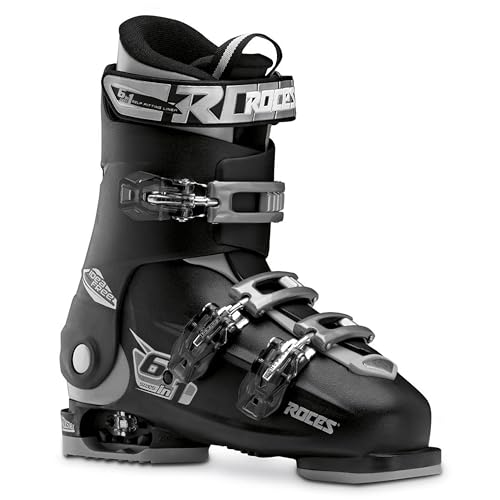
The best women’s ski boots for large calves combine a roomy cuff, easy flex, and secure heel hold.
You know the struggle: the boot fits your foot, yet the upper cuff digs into your calf. Tight buckles can leave numb spots, while an overly loose boot can make every turn feel vague. The right pair should feel like a firm handshake, not a clamp. I look for a high-volume shell, a forgiving flex, useful cuff adjustment, and enough foot control for safe skiing. The models below focus on comfort and fit for women with fuller calves, wider legs, or a preference for relaxed boots. Still, calf shape varies, so try boots with ski socks and have a boot fitter make final adjustments.
Rossignol Kelia 50 Ski Boots

The Rossignol Kelia 50 is a gentle choice for new skiers who want less struggle when putting boots on. Its softer flex helps the boot move with the skier instead of demanding strong, exact input. The women’s shape can feel more natural around the lower leg than a narrow race-style shell. That makes it a useful starting point for shoppers who need comfort around larger calves.
I would pair this model with a thin ski sock and careful cuff adjustment. A thin sock leaves room for the liner and reduces pressure around the calf. The 50 flex rating favors easy cruising, groomed runs, and relaxed resort days rather than hard charging. For many beginners, that trade-off is wise because a comfortable boot encourages better balance and longer time on snow.
Pros:
- Soft flex feels forgiving for beginners
- Women-specific shape supports relaxed resort skiing
- Easy entry reduces the effort of getting ready
- Comfort-focused design suits fuller lower legs
- Good choice for groomed runs and learning turns
- Less demanding than a stiff performance boot
Cons:
- Soft flex may feel limited for advanced skiers
- May not provide enough power for aggressive carving
- Calf fit still depends on leg shape and sock thickness
Rossignol Kelia 50 Alternative Fit
This second Rossignol Kelia 50 listing offers the same general comfort idea in another size or inventory option. That matters because ski boots must match both foot length and calf shape. A model can feel roomy in one size and restrictive in the next. I like this option for women who want a simple, soft boot and need to compare available sizes before ordering.
The Kelia 50 does not try to be a high-speed power tool. Instead, it keeps the ride calm and approachable. The relaxed flex can help a first-season skier bend the knees without fighting the boot. Before skiing, check that the heel stays down and that the cuff closes without forcing the top buckle.
Pros:
- Friendly flex supports early skill building
- Comfortable feel for slow and moderate speeds
- Useful option when size availability matters
- Less intimidating than a stiff alpine boot
- Works well for casual weekend trips
- Simple fit is easy for newer skiers to understand
Cons:
- Limited support for high-speed skiing
- May feel too soft after major skill growth
- Online sizing requires careful foot measurement
Rossignol Kelia 50 Black White
This Kelia 50 version is another practical pick for skiers who value ease over race-level response. Its soft construction can reduce the pinching sensation that often appears when a boot cuff meets a fuller calf. I would consider it for beginners, rental replacements, and occasional skiers who spend most of the day on maintained trails. It is also less likely to punish small mistakes in stance.
Fit remains the deciding factor. The boot should hold the ankle and heel while allowing the calf to sit comfortably inside the cuff. Do not solve a tight calf by buying a boot that is too long or too wide at the foot. A boot fitter can adjust the cuff, move buckles, or shape the liner when the basic shell size is right.
Pros:
- Comfort-first feel suits new skiers
- Soft flex helps reduce leg fatigue
- Suitable for relaxed resort use
- Can feel less restrictive around the cuff
- Easy choice for occasional ski trips
- Forgiving response helps build confidence
Cons:
- Not intended for expert-level power
- May lack support for steep off-piste terrain
- Shell comfort varies with individual calf shape
Nordica Cruise S W Comfort Fit
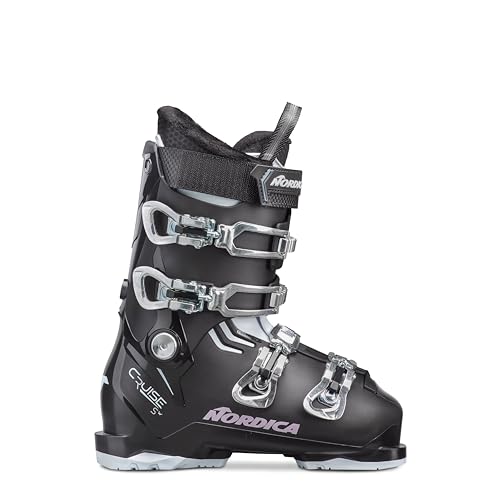
The Nordica Cruise S W is built around a comfort-fit idea, which makes it one of the more appealing choices for women who dislike a narrow shell. Its roomier feel can give the calf and instep more breathing space. I see it as a strong match for beginners and intermediate skiers who want an all-mountain boot without a harsh race fit. The design aims to make long resort days easier.
The boot still needs a snug heel pocket. Room at the calf should not mean a loose ankle. I recommend closing the lower buckles first, then setting the upper cuff with only enough tension to support the leg. The Cruise S W may suit a skier who wants a little more structure than a very soft beginner boot, yet still values comfort over maximum response.
Pros:
- Comfort fit offers extra room through key areas
- Good option for fuller calves and wider feet
- Balanced feel for beginner to intermediate skiing
- Suitable for varied groomed resort terrain
- More supportive than many very soft boots
- Comfort helps reduce pressure during long days
Cons:
- Roomy fit may feel imprecise on narrow feet
- Not the best choice for race-style skiing
- Fixed shell volume may still need professional fitting
Head Edge 65 W HV Ski Boots

The Head Edge 65 W HV stands out because HV means high volume. That is important when a standard women’s ski boot feels tight over the foot or calf. Its 65 flex gives newer skiers a bit more support than a very soft 50-flex model. I would place it near the middle of this list for women who want comfort but plan to improve their turns.
The higher-volume shape can help spread pressure instead of concentrating it at one painful spot. Still, more space is useful only when the foot remains secure. I would check for heel lift, toe curl, and calf pressure during a home fit test before taking the boots to the mountain. This model is a sensible bridge between a beginner boot and a more demanding performance boot.
Pros:
- High-volume design helps with fuller lower legs
- 65 flex adds useful support for progressing skiers
- Roomier fit can reduce pressure over the instep
- Good match for all-mountain resort use
- More control than an ultra-soft beginner boot
- Useful choice for women who need extra shell space
Cons:
- May feel too roomy for slim feet
- Still may need cuff work for very large calves
- Less precise than a narrow performance shell
Rossignol EVO 70 HV+ Ski Boots

The Rossignol EVO 70 HV+ is a unisex high-volume option for skiers who need extra room but do not want a flimsy boot. Its 70 flex offers a useful step up in support for confident beginners and lighter intermediate skiers. The HV+ shape can be helpful when the calf, ankle, or forefoot needs more space than a low-volume women’s shell provides. I especially like this type of boot for broad fit needs.
Because it is a unisex model, women should pay close attention to heel shape and cuff height. A good fit should lock the heel without crushing the shin. The EVO 70 HV+ may work well for a skier who feels trapped in narrow women’s boots, but a professional fitting is smart if the upper cuff still presses on the calf. It offers a practical mix of room, warmth, and control.
Pros:
- High-volume shell supports larger fit needs
- 70 flex gives useful all-mountain support
- Roomy forefoot can improve comfort
- Good alternative to narrow women’s models
- Works for progressing resort skiers
- Balanced design can support longer ski days
Cons:
- Unisex shape may not suit every heel
- Can feel too roomy on narrow feet
- Not designed for expert race performance
Rossignol EVO 70 HV+ Black
This second EVO 70 HV+ listing gives shoppers another size or stock route to the same high-volume boot family. That can be valuable because availability often changes during ski season. The boot offers a firmer feel than the Kelia 50 and enough room for skiers who feel squeezed by standard shells. Its design may suit someone who wants a single boot for easy groomers and moderate all-mountain terrain.
I would not choose a larger size just to gain calf room. That move often creates heel lift and weak control. Instead, select the correct foot length, wear a thin ski sock, and ask a boot fitter about cuff expansion or buckle placement. When sized correctly, this EVO model can act like a roomy doorway with a secure floor beneath the foot.
Pros:
- High-volume construction helps relieve tight fit points
- 70 flex supports skill progression
- Good option for mixed resort terrain
- Useful alternative when women’s shells feel narrow
- More stable than many soft beginner boots
- Extra listing may make size shopping easier
Cons:
- Unisex cuff may need adjustment for some women
- May feel bulky on small or narrow feet
- Advanced skiers may want a stiffer boot
Rossignol Pure Comfort 60 Ski Boots

The Rossignol Pure Comfort 60 is aimed at skiers who put comfort at the top of the list. Its relaxed fit gives the foot and lower leg more room than a tight performance boot. The 60 flex remains friendly, but it can offer a little more support than a 50-flex model. For women with larger calves, this relaxed approach may prevent the boot from feeling like a hard plastic vise.
This boot makes sense for casual skiers, beginners, and anyone who spends more time enjoying the mountain than chasing fast laps. I would use it on groomed trails and easy resort terrain. The relaxed fit must still feel secure at the heel, so buckle the shell with care and avoid thick socks. A warm, comfortable liner can make a major difference on cold chairlift rides.
Pros:
- Relaxed fit favors comfort and easy entry
- 60 flex suits beginners and casual skiers
- Roomy design may help fuller calves
- Comfortable choice for long resort days
- Less tiring than a stiff performance boot
- Good fit concept for recreational skiing
Cons:
- Not ideal for aggressive edge power
- Relaxed volume may reduce precision on narrow feet
- May be outgrown by fast intermediate skiers
K2 BFC 95 Women’s Ski Boots

The K2 BFC 95 Women’s Ski Boots are the most performance-minded option in this group. The BFC name points to a roomier comfort-based fit, while the 95 flex provides much stronger support than the softer beginner models here. I would consider these for an intermediate or advanced skier who needs space but still wants firm control. They can suit larger calves when the cuff and shell shape match the leg.
A 95 flex is not automatically better for every skier. It takes more strength and balance to bend, especially in cold weather. The reward is better power transfer when carving, carrying speed, or skiing firmer snow. I recommend this boot for a strong skier who has already learned good stance habits and wants comfort without giving up a solid platform.
Pros:
- Firm 95 flex supports strong ski control
- Comfort-oriented fit gives more usable space
- Good match for intermediate and advanced resort skiers
- More responsive than soft beginner boots
- Can handle varied all-mountain conditions
- Roomy design may reduce calf and forefoot pressure
Cons:
- Too stiff for many first-time skiers
- Higher flex can increase leg fatigue
- Needs accurate sizing for proper heel hold
K2 BFC 85 Women’s Ski Boots

The K2 BFC 85 offers a middle ground between comfort and response. It is softer and easier to bend than the BFC 95, yet it should feel more supportive than a basic beginner boot. The comfort-focused shell can work well for women who need room around the calf and forefoot. I see it as a strong choice for a growing skier who wants one pair for several seasons.
This model may also help a heavier or stronger beginner who finds a 50 or 60 flex too soft. It gives room to develop without jumping straight into a demanding boot. As with every high-volume design, the heel must stay secure when the knees bend. If the liner feels loose after several days, professional fitting can improve the hold without sacrificing calf comfort.
Pros:
- 85 flex balances comfort and control
- Roomy fit suits many fuller lower legs
- Good step-up boot for progressing skiers
- More forgiving than a 95-flex model
- Useful for groomers and moderate all-mountain terrain
- Comfort design supports longer days on snow
Cons:
- May still feel stiff for a very light beginner
- Less powerful than a dedicated expert boot
- Roomy shell may need footbeds or fitting work
How I Chose These Ski Boots
Finding the Best Women’s Ski Boots for Large Calves takes more than looking for the word “comfort” on a product page. I compare cuff room, shell volume, flex, entry effort, and the way each design should serve a real skier. I also consider what happens after two hours on the mountain. A boot that feels fine for five minutes may create pressure once the liner warms and the leg swells.
I favor boots that let the skier bend the knee without a sharp cuff edge pressing into the calf. I also want the lower buckles to hold the foot without forcing the upper buckles closed. These details matter because a loose heel wastes energy, while a crushed calf can ruin a full ski day. Good boots should support the leg like a steady hand, not squeeze it like a belt.
Product sizes and inventory can change during the 2026 ski season. For that reason, I treat the listed size as a starting point rather than a promise of fit. The same shell may feel different with a different liner, sock, footbed, or buckle setting. Always check the current size chart and return terms before ordering online.
What Makes a Ski Boot Calf-Friendly?
A calf-friendly ski boot usually has a higher-volume cuff, a wider upper opening, or some way to adjust the cuff. The boot does not need to be loose. It needs to give the calf enough room while still holding the shin in a useful position. This distinction separates a truly comfortable boot from one that simply feels oversized.
Flex also affects calf comfort. A very stiff boot can push hard against the shin when the skier moves forward. A softer boot bends more easily and may feel kinder to a fuller calf. However, flex numbers are not identical across brands, so I use them as rough guides only.
Women’s boots often have a lower cuff and a shape that accounts for common women’s foot and leg proportions. Yet not every woman has the same calf. Some shoppers may fit better in a high-volume unisex boot. There is no prize for choosing a women’s label if the shell does not match your leg.
How to Measure Your Calves for Ski Boots
Measure both calves while standing in the socks you plan to ski in. Place a soft tape around the fullest part of each calf without pulling it tight. Write down the larger measurement, since a boot must fit the bigger leg. Also record your foot length and, if possible, your forefoot width.
Next, compare those measurements with the manufacturer’s fit notes. Many listings do not provide a cuff circumference, so an in-person boot shop can be very helpful. A fitter can compare your leg with the shell and identify pressure points before heat molding or other work. This is often safer than guessing from a photograph.
Do not measure over thick leggings or heavy socks. Extra layers can make the result look larger than your normal ski setup. Ski socks should be thin and smooth. Thick socks often create more pressure, not more warmth, because they compress inside the boot.
How a Large-Calf Skier Should Try on Boots
Start with the liner and shell at room temperature. Put on a thin ski sock, slide your foot in, and tap the heel down. Stand upright first, then bend your knees as if skiing. Your toes may lightly touch the front when standing straight, but they should pull back slightly when you bend forward.
Close the lower buckles before setting the cuff. Use only enough force to keep the heel from lifting. Then close the upper buckle and power strap. You should feel even contact over the shin, not a sharp hot spot at the top edge. Walk for at least 15 minutes if the retailer allows it.
Pay attention to warning signs. Numbness, tingling, burning, or a pale foot means the fit needs attention. A little liner pressure can improve as the boot settles, but intense pain is not a break-in plan. Ski boots should feel snug and supportive, never painful.
Why High-Volume Boots Can Help
High-volume boots create more space around the forefoot, instep, ankle, and cuff. That extra room can reduce pressure for women with wide feet or fuller calves. It can also make entry easier on cold mornings when plastic feels less flexible. For many recreational skiers, comfort is the key to better technique.
Still, high volume is not the same as a bigger size. A bigger size increases length and may allow the heel to slide. A high-volume shell adds space in selected areas while keeping the foot length correct. I always prefer the right length with targeted shell space over a long boot that feels loose.
If the shell is close but not perfect, a boot fitter may help. Common adjustments include cuff changes, buckle relocation, liner molding, and shell stretching. These changes can turn a painful boot into a useful one. They cannot fix a shell that is fundamentally too short or too narrow.
Flex Ratings Explained
A flex rating describes how much force a boot needs to bend forward. A lower number usually feels softer and more forgiving. A higher number usually gives stronger support and faster energy transfer. Brand ratings are not a universal scale, so compare models within the same brand with caution.
Most beginners do well with a soft or medium flex. A softer boot can make it easier to find balance and start a turn. Intermediate skiers may prefer a medium flex for better support at speed. Strong skiers often choose a firm boot, but strength alone does not make a stiff boot comfortable.
For large calves, a moderate flex can be a smart compromise. It reduces the chance of a rigid cuff digging into the leg. It also gives enough support for normal resort skiing. The Head Edge 65 W HV, Rossignol EVO 70 HV+, and K2 BFC 85 show this useful middle range.
Tips for Reducing Calf Pressure
- Wear one thin, smooth ski sock.
- Keep base-layer fabric out of the buckle area.
- Close the lower buckles before the upper buckle.
- Use the least upper-buckle tension that still holds the shin.
- Ask a fitter about cuff adjustment or buckle relocation.
- Do not buy a longer boot to solve a cuff problem.
- Take short breaks when testing boots indoors.
- Check both calves because legs may differ in size.
A small fit change can feel like opening a window in a warm room. Many skiers overtighten the top buckle because they fear heel movement. Often, the lower shell or liner needs attention instead. A skilled fitter can separate these problems and protect both comfort and control.
Best for Table
| Best for | Why |
|---|---|
| Beginners and casual skiers | Rossignol Kelia 50 and Pure Comfort 60 offer softer, relaxed comfort. |
| Progressing skiers with fuller legs | Head Edge 65 W HV and K2 BFC 85 balance space with useful support. |
| Strong intermediate skiers | K2 BFC 95 and Rossignol EVO 70 HV+ provide more control in roomy shapes. |
My Recommendation
For most beginners with larger calves, I would start with the Nordica Cruise S W or Head Edge 65 W HV. Both offer a comfort-minded shape, and the Head’s high-volume design gives it an extra edge for shoppers who feel tight in standard boots. The Rossignol Pure Comfort 60 is a gentle option for relaxed skiing and long resort days.
For stronger skiers, the K2 BFC 85 is the best balance of room and response. The K2 BFC 95 is better for experienced skiers who want a firm platform and already know they prefer a stiffer flex. The Rossignol EVO 70 HV+ is a smart alternative for women who need a roomy unisex shell. In the Best Women’s Ski Boots for Large Calves category, the best value is the model that fits your foot length, calf, and skill level without painful pressure.
FAQs Of Best Women’s Ski Boots for Large Calves
What are the best ski boots for women with large calves?
High-volume and comfort-fit boots are usually the best starting points. The Head Edge 65 W HV, Nordica Cruise S W, K2 BFC 85, and Rossignol EVO 70 HV+ offer useful room or a relaxed fit. Your calf shape and foot width still decide the final choice.
Should I buy a larger ski boot to fit my calves?
No. A longer boot can create heel lift, weak control, and cold feet. Choose the correct length first, then look for a high-volume cuff or professional adjustment.
Are softer ski boots better for large calves?
Often, yes. A softer flex may place less force against the shin and calf. However, strong or advanced skiers may need a firmer boot for control. Comfort and skill level should guide the decision together.
Can a boot fitter make ski boots fit larger calves?
In many cases, yes. A fitter may adjust the cuff, move buckles, mold the liner, or modify the shell. These changes work best when the boot has the correct length and a suitable basic shape.
What socks should I wear with ski boots?
Wear one thin ski sock made from wool or a technical blend. Avoid cotton and thick socks. A thin sock reduces bunching and leaves more room around the calf and foot.
Final Verdict: Which Should You Buy?
I recommend the Head Edge 65 W HV for most shoppers seeking the Best Women’s Ski Boots for Large Calves. It offers a useful mix of high-volume comfort, moderate flex, and control. Choose the K2 BFC 85 for stronger skiing or the Rossignol Pure Comfort 60 for easy resort days.
Measure carefully, use thin socks, and seek a professional fit when needed. The right Best Women’s Ski Boots for Large Calves should support every turn without making your legs feel trapped.

Madison Clark is a footwear expert and the voice behind MyStyleGrid.com. She specializes in honest shoe reviews, style tips, and practical guides to help readers find the perfect pair for any occasion. With years of experience in blogging and content creation, Madison makes footwear knowledge simple, stylish, and easy to follow.