The best ski boots for narrow feet combine a snug shell, firm heel hold, and precise control without painful pressure.
If your heel lifts every time you bend your knees, or your foot slides inside a roomy boot, you know how tiring a ski day can feel. A narrow foot needs more than a small size. It needs the right shell shape, low-volume fit, secure ankle support, and enough room for natural toe movement. I reviewed these 2026 options by focusing on fit design, flex, comfort, skill level, and value. The result is a practical guide to the Best Ski Boots for Narrow Feet for men and women.
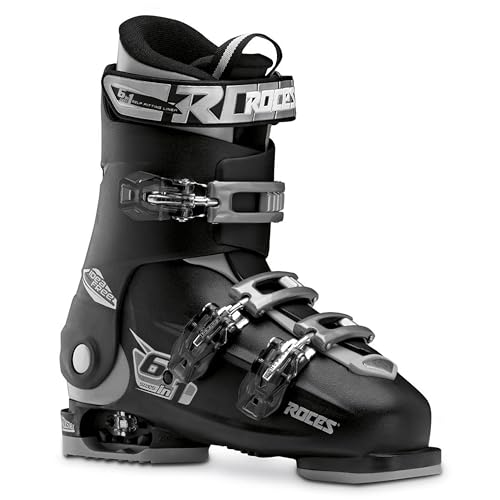
Rossignol EVO 70 HV+ Ski Boots

The Rossignol EVO 70 HV+ is a soft-flex alpine boot aimed at skiers who want easy control and a relaxed ride. Its forgiving flex can suit beginners, casual resort skiers, and lighter riders who do not need a very stiff race-style shell. The EVO shape also uses a roomy entry design, which makes getting in and out less of a wrestling match. For a narrow foot, I would pay close attention to the actual shell fit because the HV label suggests more internal volume than a true narrow boot.
This boot can still work for a narrow foot when paired with a supportive insole and careful buckle adjustment. The 70 flex gives enough support for linked turns while staying friendly during long days. It is not the most precise choice for aggressive carving or high-speed runs. However, its comfort and simple feel make it a sensible option for a new skier who values warmth and ease over race-level response.
Pros:
- Forgiving flex helps new skiers learn basic turns
- Easy entry reduces hassle in cold weather
- Comfort-focused design suits long resort days
- Simple fit works well for casual skiers
- Supportive enough for groomed runs and light all-mountain use
- Good starting price for recreational skiing
Cons:
- HV volume may feel too wide for very narrow feet
- Less precise than a true narrow performance shell
- Soft flex may feel limited for strong or heavy skiers
My Recommendation: I recommend the Rossignol EVO 70 HV+ for beginners with slightly narrow feet who want a comfortable first boot. It becomes a better match when a boot fitter adds a firm footbed or adjusts the liner. If your heel moves even after a snug buckle setting, choose a lower-volume model instead. As one of the more affordable Best Ski Boots for Narrow Feet options, it offers good value for relaxed resort use, but availability and sizing should be checked before purchase.
Rossignol EVO 70 HV+ Ski Boots
This second Rossignol EVO 70 HV+ listing has the same stated model name and image, so its core design should be approached in the same way. It is built around a comfortable recreational fit and moderate flex. That makes it easy to steer at low and medium speeds. It also gives first-time skiers a less demanding platform than a stiff performance boot.
Narrow-footed skiers should remember that comfort fit and narrow fit are not the same thing. A boot can feel pleasant at first but still allow too much heel movement after several runs. I suggest wearing a thin ski sock and checking whether your heel stays down while you flex forward. With a custom footbed, liner adjustment, or carefully placed volume reducer, this model may suit a mildly narrow foot better than its HV name suggests.
Pros:
- Gentle flex supports easy turn learning
- Comfortable entry helps reduce foot fatigue
- Suitable for beginner and intermediate resort use
- Moderate support feels less harsh than race boots
- Works well with basic boot-fitting upgrades
- Useful choice for skiers who value warmth and ease
Cons:
- Not designed as a dedicated low-volume narrow boot
- May need an insole or fit pad for a slim heel
- Too soft for powerful skiers who demand rapid edge response
My Recommendation: I would choose this EVO 70 HV+ listing for a newer skier who wants a forgiving boot and has a narrow-to-average foot rather than an extremely slim foot. It is a practical match for gentle groomers, lessons, and occasional ski trips. It is less suitable for racers or advanced skiers who drive the front of the boot hard. As a budget-minded option among the Best Ski Boots for Narrow Feet, it has value when the shell and liner can be fitted correctly.
Nordica Promachine 120 Narrow Ski Boots
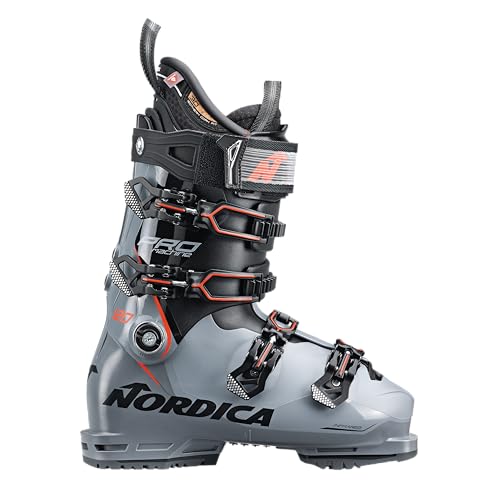
The Nordica Promachine 120 is the strongest narrow-fit option in this guide for advanced male skiers. Its 120 flex targets skiers who want a firm, direct connection to the ski. The narrow shell helps reduce unwanted side-to-side movement, while the high flex rating rewards a strong stance and active technique. This is a very different tool from the soft EVO 70.
I like this kind of boot for fast groomer laps, steep terrain, and skiers who can stay balanced over the center of the ski. A narrow fit can improve edge feel because less energy disappears inside the boot. The trade-off is comfort: a stiff shell may feel demanding during long walks or slow beginner runs. Proper shell sizing matters greatly, since buying a larger size to gain comfort can defeat the purpose of a narrow performance boot.
Pros:
- Narrow fit gives strong heel and ankle control
- 120 flex supports forceful turns and high speeds
- Direct power transfer improves edge response
- Good match for advanced resort and carving skiers
- Performance design suits firm snow and steep runs
- Less internal movement can reduce control loss
Cons:
- Too stiff for many beginners and lighter skiers
- May feel tiring during long walking sections
- Needs careful fitting to avoid shin or instep pressure
My Recommendation: The Promachine 120 is best for advanced men with narrow feet who want power, speed, and a close shell connection. I would not select it for a first-time skier or someone who prefers a soft, warm, relaxed boot. If you ski hard and your heel slips in standard boots, this model deserves serious attention. It is one of the Best Ski Boots for Narrow Feet for performance-focused users, provided the 120 flex matches your strength and skill.
Nordica The Cruise Comfort Ski Boots

Nordica The Cruise is a comfort-first alpine boot for men who spend most of their time on marked runs. Its design focuses on easier entry, a forgiving ride, and less strain on the feet. That approach helps beginners who find traditional ski boots intimidating. It also suits occasional skiers who want dependable support without a highly aggressive shell.
The comfort fit may not naturally hug a very slim foot. Still, a correctly sized shell, a supportive footbed, and a snug upper buckle can improve the hold. I would test heel lift before judging the boot by its first few minutes of comfort. This model makes sense for relaxed skiing, but narrow-footed experts may want a more precise last and firmer flex.
Pros:
- Comfort-focused fit is friendly to new skiers
- Easy entry helps when the plastic is cold
- Relaxed flex supports slow and steady turns
- Good choice for groomed trails and family trips
- Less intimidating than a stiff race-style boot
- Comfort can remain pleasant during casual ski days
Cons:
- Comfort fit may leave extra space around a narrow heel
- Not ideal for aggressive carving or racing
- Large-size fit errors can cause serious heel movement
My Recommendation: I recommend The Cruise for a beginner or casual male skier with a mildly narrow foot who values comfort above maximum precision. It is especially useful for short ski trips, lessons, and low-speed resort skiing. I would avoid it if you already know that you need a low-volume race or performance shell. Among the Best Ski Boots for Narrow Feet, this is a comfort pick that works best with professional sizing and a firm footbed.
K2 BFC 90 Men’s Ski Boots

The K2 BFC 90 is a balanced choice for intermediate men who want more support than a beginner boot but do not need a race-level shell. The 90 flex sits in a useful middle range for resort skiing. It can provide a stable platform for groomers, light bumps, and moderate all-mountain terrain. K2’s BFC family is known for a comfort-led approach, so the boot aims to reduce the usual struggle of getting into ski boots.
For a narrow foot, the key question is volume rather than the flex number. A 90 flex can be useful, but too much room around the heel or midfoot will still reduce control. I would use a supportive insole and keep the lower buckle firm without crushing the foot. This boot is a good bridge for skiers who are improving but still want a forgiving feel.
Pros:
- 90 flex offers a useful blend of support and comfort
- Friendly design suits progressing intermediate skiers
- Good for groomers and moderate all-mountain terrain
- Comfortable entry saves time before and after skiing
- More responsive than many very soft beginner boots
- Works well for skiers who want one versatile resort boot
Cons:
- May feel roomy on an extremely narrow foot
- Not as powerful as the Nordica Promachine 120
- Can require fit accessories for a slim heel
My Recommendation: The K2 BFC 90 is best for an intermediate man with a narrow-to-average foot who wants a supportive but forgiving boot. It makes sense if you are moving beyond beginner slopes but do not want a harsh, demanding flex. I would select it over the BFC 80 for a heavier or more aggressive skier. It offers solid value among the Best Ski Boots for Narrow Feet when comfort and all-day resort use matter.
Rossignol Kelia 50 Women’s Ski Boots

The Rossignol Kelia 50 is a beginner-friendly women’s downhill boot with a soft, approachable flex. It is designed for skiers who want an easy start rather than an intense race feel. The lower flex helps the boot bend more readily when a new skier moves forward into a turn. It can also feel less tiring for occasional use.
Narrow-footed women should check the heel and ankle hold before choosing this model. A soft comfort boot may feel pleasant but can allow movement if the shell is too large. I suggest using the smallest shell size that allows your toes to brush the front while standing and pull back slightly when flexed. With that fit rule, the Kelia 50 can be a simple and affordable learning boot.
Pros:
- Soft flex helps beginners build confidence
- Comfortable feel suits occasional ski trips
- Easy to steer at slower speeds
- Less demanding on developing leg strength
- Good match for lessons and groomed slopes
- Women’s design can provide a more natural lower-leg fit
Cons:
- May not hold a very narrow heel tightly enough
- Too soft for advanced or aggressive skiers
- Limited support for high-speed carving
My Recommendation: I recommend the Kelia 50 for a new female skier with a narrow-to-average foot who wants a gentle learning boot. It is a strong match for first ski trips, beginner lessons, and easy resort terrain. I would not choose it for a powerful skier who wants strong edge pressure. As one of the more approachable Best Ski Boots for Narrow Feet for women, it provides useful value when the size is selected carefully.
Nordica Promachine 85 W Ski Boots

The Nordica Promachine 85 W is one of the clearest narrow-fit choices in this guide. Its 85 flex gives women a useful mix of precision and comfort. The narrow performance shape can help reduce heel lift and improve the feel of small edge movements. It is suitable for intermediate skiers and confident beginners who want to progress.
This boot makes more sense for a narrow foot than a broad comfort model because shell volume is a major part of the design. Still, a narrow label does not replace a proper shell check. Foot length, instep height, calf shape, and ankle width all affect the final fit. I like the 85 flex for women who want a boot that can grow with their technique without feeling like a rigid race shell on day one.
Pros:
- Purpose-built narrow fit improves heel security
- 85 flex balances response with manageable comfort
- Good progression boot for intermediate women
- Supports stronger edging on groomed snow
- Less internal movement can improve confidence
- More precise than many comfort-fit alternatives
Cons:
- May feel firm for a first-time skier
- Requires careful sizing around the instep
- Not as powerful as the Promachine 115 W
My Recommendation: The Promachine 85 W is my preferred all-around pick for women with narrow feet who want control without an extreme flex. It suits intermediate skiers, improving beginners, and resort riders who value accurate turns. I would choose it over a comfort boot when heel slip has already caused problems. For many users, this is among the Best Ski Boots for Narrow Feet because its narrow shape and moderate flex cover a wide range of ability levels.
K2 BFC 80 Men’s Ski Boots

The K2 BFC 80 is a softer men’s boot for beginner and early intermediate skiers. Its flex is easier to manage than a high-performance model, especially for lighter riders. The boot aims to make walking, entry, and basic skiing less stressful. That can matter when a new skier spends as much time learning balance as making turns.
For narrow feet, I would treat this as a comfort-oriented option rather than a true low-volume boot. The 80 flex can work well if the shell holds the heel, but extra space can make the boot feel vague. A quality footbed can support the arch and reduce foot movement, while thin socks help prevent unwanted pressure. This model is a practical choice for relaxed snow days, not a tool for maximum speed.
Pros:
- Forgiving 80 flex helps new skiers learn
- Comfortable for relaxed resort sessions
- Easier to put on than many stiff boots
- Good for lighter men and occasional skiers
- Less tiring during slow-speed practice
- Useful lower-cost choice for basic skiing
Cons:
- Comfort volume may be too broad for slim feet
- Limited power for advanced skiing
- May need a footbed or fit pad to control heel lift
My Recommendation: I recommend the K2 BFC 80 for a beginner man with a narrow-to-average foot who wants an easy, forgiving boot. It is especially suitable for lessons, family ski trips, and short days on groomed runs. I would move to the BFC 90 or a narrow performance boot as your speed and skill improve. In the Best Ski Boots for Narrow Feet category, this is a comfort pick that depends heavily on correct sizing.
Nordica Promachine 115 W Ski Boots

The Nordica Promachine 115 W is the high-performance women’s choice in this lineup. Its narrow fit targets skiers who want close contact around the heel, ankle, and midfoot. The 115 flex rewards strong technique and firm forward pressure. It is made for advanced women who want a fast, direct response from the ski boot.
A stiff boot should never feel like a test of endurance. If the shell is too small or the liner presses on the wrong spot, even a good performance boot becomes painful. I recommend a professional shell check before buying this model, especially for skiers with a high instep or sensitive shins. When fitted well, it can turn small ankle movements into clean edge changes and confident carving.
Pros:
- Narrow shape offers excellent heel and ankle hold
- 115 flex supports powerful advanced skiing
- Strong energy transfer improves edge control
- Good for carving, steep runs, and firm snow
- Stable feel at higher speeds
- Performance design suits experienced female skiers
Cons:
- Too demanding for many beginners
- May create pressure without expert fitting
- Less comfortable for long walks and casual use
My Recommendation: The Promachine 115 W is best for advanced women with narrow feet, strong legs, and a clear need for precision. It is a powerful choice for aggressive resort skiing, race-style turns, and skiers who dislike a loose boot. I would not recommend it simply because the color or price looks attractive. As one of the Best Ski Boots for Narrow Feet, its value appears when the skier can use the stiff flex and has access to proper boot fitting.
Nordica Cruise S W Comfort Ski Boots
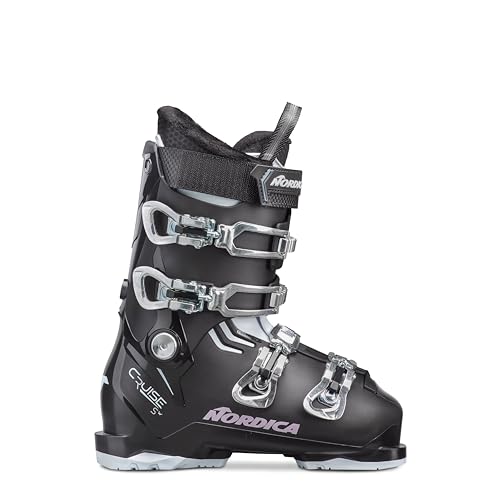
The Nordica Cruise S W is a comfort-focused women’s boot for all-mountain resort use. It favors easy entry, a relaxed feel, and comfort during normal ski days. That makes it appealing to beginners and recreational skiers who do not want a stiff shell. Its women’s design may also provide a better lower-leg match for some body shapes.
Like other comfort-fit boots, it may need extra help to hold a very narrow heel. I would not solve that problem by tightening every buckle as hard as possible. Excess buckle pressure can cause numb toes, poor circulation, and painful pressure points. Instead, start with the correct shell size, use a supportive footbed, and ask a boot fitter about a heel lift or volume pad if needed.
Pros:
- Comfortable design suits beginner women
- Easy entry is helpful for cold mornings
- Relaxed flex supports low-speed control
- Good for groomed trails and casual all-mountain use
- Women’s cuff design may improve lower-leg comfort
- Less demanding for occasional skiers
Cons:
- May feel too roomy around a very narrow heel
- Not intended for aggressive high-speed skiing
- Could require fit accessories for a slim foot
My Recommendation: I recommend the Nordica Cruise S W for a beginner or casual woman with a mildly narrow foot who puts comfort first. It is a good match for lessons, holiday skiing, and relaxed days on marked runs. I would choose the Promachine 85 W instead if you want sharper control and a more secure narrow fit. This model remains a sensible Best Ski Boots for Narrow Feet alternative for comfort-minded skiers who buy the correct size.
How to Choose Ski Boots for Narrow Feet
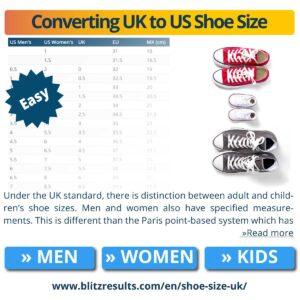
Finding the Best Ski Boots for Narrow Feet starts with shell shape, not color, brand, or street-shoe size. Ski boots use a Mondopoint size system based on foot length in centimeters. Your street shoe size can vary by brand, so it should only serve as a rough guide. I prefer measuring both feet while standing, then checking the shell without the liner when possible.
Width is often described by last width or internal volume. A narrow alpine boot may use a last near 98 millimeters, while comfort models may use a wider shape. Numbers vary by brand and size, so do not compare them as if every manufacturer measures in the same way. A boot with a narrow last may still feel wrong if it does not match your instep, ankle, or calf.
Check Heel Hold First
Heel lift is one of the clearest signs that a boot is too large or too roomy. Stand in the boot with your heel seated and flex forward. Your toes may lightly touch the liner when upright, then pull back slightly as you bend your knees. If your heel rises a lot, the boot may be too large, too wide, or poorly shaped for your foot.
Do not fix major heel lift by cranking the buckles until your foot hurts. That method often creates numbness while leaving the real fit problem untouched. A smaller shell, narrower last, custom footbed, or professional liner adjustment usually works better.
Understand Flex Ratings
Flex describes how much resistance the boot gives when you move forward. A lower number usually feels softer and easier to bend. A higher number usually feels stronger and more direct. These ratings are not perfectly standardized, so a 90 boot from one brand may not feel exactly like a 90 from another.
Beginners often do well with a softer flex because it allows easy movement. Intermediate skiers may prefer a medium flex for balance and control. Advanced skiers can use a stiff boot to transfer more force, but only if their technique and leg strength support it. The Nordica Promachine 120 and Promachine 115 W are not automatically better than the softer choices. They are simply better for a different skier.
Do Not Wear Thick Socks
Many people with narrow feet try to fill space with thick socks. I understand the urge, but thick socks can bunch, create pressure, and reduce warmth by restricting circulation. A thin ski sock usually gives a cleaner fit. The liner should hold the foot, not a bulky sock.
If you still have space, use a proper fit solution. A boot fitter may add a footbed, tongue shim, ankle pad, or liner adjustment. These small changes can make a roomy boot feel far more secure. They work like tightening the frame around a window rather than forcing the glass into place.
Consider Your Skiing Level
The best narrow ski boot for a beginner is not the same as the best narrow ski boot for an expert. Beginners need comfort, warmth, and easy flex. Intermediate skiers often need better heel hold and more edge response. Experts may accept a firm fit and stiff shell to gain speed and precision.
Think about where you ski most. A soft boot can feel pleasant on green and easy blue runs. A medium boot offers more support for mixed resort terrain. A stiff boot makes sense for fast groomer laps, steep lines, and strong carving. Matching the boot to your real habits prevents both under-buying and over-buying.
Best For Comparison
| Best for | Why |
|---|---|
| Best overall narrow fit | Nordica Promachine 85 W combines a narrow shape with a useful medium flex. |
| Best for advanced power | Nordica Promachine 120 offers a firm shell and direct response for strong male skiers. |
| Best comfort value | Rossignol Kelia 50 provides a soft, friendly ride for women who are learning. |
FAQs Of Best Ski Boots for Narrow Feet
How do I know if I have narrow feet?
Your foot may be narrow if your heel lifts, your ankle moves side to side, or you need to over-tighten the buckles in normal boots. A boot fitter can measure your foot width and volume more accurately. Foot shape matters more than a label, so compare both width and shell fit.
Are narrow ski boots supposed to hurt?
No. A performance fit should feel snug, but it should not cause sharp pain, numbness, or poor circulation. Your toes may lightly touch the liner while standing, but pressure should ease when you flex forward. A professional fitter can fix small pressure points through liner work or shell adjustments.
Can I make wide ski boots fit narrow feet?
Sometimes. A supportive footbed, heel pad, tongue shim, or volume reducer can improve a slightly roomy boot. These changes cannot always fix a shell that is much too large. If your heel still lifts after fitting work, choose a narrower model.
What flex is best for narrow-footed beginners?
Most beginners benefit from a soft or moderate flex. Men often start around 70 to 90, while women may prefer about 50 to 85, depending on weight, strength, and ability. The correct flex should bend under your control without folding too easily.
Should I size down for a better narrow fit?
Do not simply size down. Measure your foot in Mondopoint and check the shell fit. A shorter boot can cause toe pain, while the right length with a narrow shell can hold the heel correctly. Fit the length first, then solve width and volume with the proper shell or professional adjustments.
Final Verdict: Which Should You Buy?
For most women with narrow feet, I would choose the Nordica Promachine 85 W. Advanced men should consider the Nordica Promachine 120, while beginners may prefer the softer Rossignol Kelia 50 or EVO 70 HV+.
The Best Ski Boots for Narrow Feet should hold your heel without crushing your toes. Measure carefully, use thin socks, and seek a shell check for the best 2026 fit.

Madison Clark is a footwear expert and the voice behind MyStyleGrid.com. She specializes in honest shoe reviews, style tips, and practical guides to help readers find the perfect pair for any occasion. With years of experience in blogging and content creation, Madison makes footwear knowledge simple, stylish, and easy to follow.