The best work boots for Haglund’s deformity offer a roomy heel, soft collar, stable sole, and low pressure on the Achilles area.
A long shift can turn a small heel bump into a sharp, burning pain. Haglund’s deformity often rubs against stiff boot counters, tight collars, and hard heel seams. I know work boots must do more than look tough. They must protect your feet while letting you walk, climb, kneel, and stand with less stress. In this guide, I review eight work boots with comfort, heel space, traction, water protection, and job-site value in mind. I also explain what to look for before you buy, since no boot can remove the bony bump itself.
AZXPROT Soft Toe Wedge Work Boots

The AZXPROT 6-inch work boot has a soft toe and a wedge-style sole. That shape can feel smoother under the whole foot than a narrow heel block. For people with Haglund’s deformity, the key benefit is the soft boot feel around the rear of the foot. It may create less rubbing than a rigid, sharply molded heel counter.
The waterproof build suits outdoor work, light construction, farm tasks, and wet job sites. The beige color is less common than black or brown, but it gives this boot a clean workwear look. I would pair it with a cushioned heel sock and a thin, supportive insole if the factory footbed feels flat. Always check the heel seam before a full shift.
Pros:
- Soft toe reduces pressure at the front of the foot
- Wedge sole spreads weight across a wider area
- Waterproof design helps in wet work areas
- 6-inch height adds useful ankle coverage
- Work-ready shape suits construction and repair jobs
- Neutral design works with most work pants
Cons:
- Soft toe does not replace a safety toe where one is required
- Wedge soles may collect mud on rough outdoor ground
- Heel room can vary by foot shape and sock thickness
Defencas SureTrack Wedge Work Boots

The Defencas SureTrack is a 6-inch soft-toe boot made for workers who need traction and daily comfort. Its wedge sole gives it a planted feel on flat floors, shop floors, and paved work areas. That can help when your heel needs steady support without a tall, hard heel edge. The soft upper may also be kinder to a sore heel bump during long wear.
This model includes slip-resistant and electrical hazard features listed for the boot. I still advise checking your employer’s safety rules before using it around live circuits or special hazards. The design looks practical rather than bulky. It is a strong choice for indoor trades, warehouse work, delivery work, and general construction where a soft toe is acceptable.
Pros:
- Soft toe helps avoid rigid pressure at the forefoot
- Slip-resistant outsole supports safer steps on smooth floors
- Wedge profile gives stable contact under the foot
- 6-inch shaft offers moderate ankle support
- Electrical hazard feature adds job-site versatility
- Simple work style is easy to wear every day
Cons:
- Soft toe will not protect against heavy falling objects
- May feel less suitable for steep, rocky trails
- Some users may need extra heel cushioning
Orthofeet Granite Orthopedic Work Boots

The Orthofeet Granite is the most orthopedic-focused option in this group. Orthofeet footwear is known for a roomy fit, removable insoles, and extra comfort features. Those details matter when Haglund’s deformity appears with flat feet, high arches, swelling, or heel pain. A removable insole also lets you use a podiatrist-approved insert.
The brown boot has a more structured look than a soft wedge boot. That structure can improve stability, but I would inspect the heel collar carefully before buying. A boot may feel roomy inside while still rubbing the top of the heel. This is a good pick for workers who value foot support and adjustment more than the lowest price.
Pros:
- Orthopedic design targets daily foot comfort
- Roomier fit can help reduce side pressure
- Removable insoles allow custom inserts
- Extra cushioning may help during long shifts
- Stable boot shape supports controlled walking
- Brown leather style works on and off the job
Cons:
- Orthopedic features may raise the purchase price
- A structured heel counter may rub some heel bumps
- It may feel less flexible during the first wears
Men’s Orthopedic Anti-Puncture Work Boots

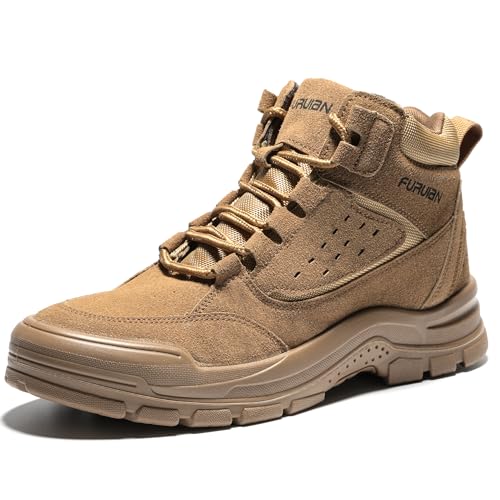
This orthopedic work boot combines a waterproof build with anti-puncture protection and an anti-sprain design. It looks closer to a work hiker or combat boot than a classic wedge boot. That can suit workers who move over uneven ground, gravel, trails, and outdoor sites. The extra structure may help keep the foot steady when the surface shifts below you.
For Haglund’s deformity, I would focus on the collar and heel fit before the protective features. A firm outdoor boot can protect the sole while still irritating the rear of the heel. Wear it indoors for short periods first. If the boot gives your heel room, it can be a useful choice for landscaping, utility work, maintenance, and rough outdoor jobs.
Pros:
- Anti-puncture design adds underfoot protection
- Waterproof construction helps in rain and wet grass
- Anti-sprain structure suits uneven ground
- Hiking shape supports outdoor movement
- Orthopedic design may improve walking comfort
- Good choice for workers who need a rugged sole
Cons:
- More structure may increase heel contact
- It may feel warm during hot summer shifts
- Not every version may offer a certified safety toe
ACDSAF 6-Inch Wedge Work Boots

The ACDSAF boot follows the classic 6-inch wedge work boot style. It has a soft toe, waterproof construction, and a broad sole that can feel stable on level surfaces. This design is popular because it gives the foot a flat platform instead of placing the body on a steep heel. For many workers, that simple platform feels less tiring by the end of a shift.
The brown finish makes this boot easy to match with denim and workwear. I see it as a practical value pick for general construction, carpentry, shop work, and home projects. The soft toe is comfortable, but it does not meet every job-site protection rule. Confirm the required toe type and slip rating before you place an order.
Pros:
- Wedge sole gives broad and steady ground contact
- Soft toe feels less cramped than many safety toes
- Waterproof build helps in damp work areas
- 6-inch height offers useful ankle coverage
- Classic brown style looks like a traditional work boot
- Practical price may suit budget-focused buyers
Cons:
- Soft toe does not provide crush protection
- Wedge tread may be less ideal in deep mud
- Waterproof boots can take longer to dry after soaking
Golden Fox 12-Inch Wellington Wedge Boot

The Golden Fox Wellington is a pull-on boot with a 12-inch shaft and a lightweight wedge outsole. Pull-on boots remove the pressure of laces across the foot and make changes quick. The tall shaft can keep dust, grass, and light debris away from the lower leg. Its wedge outsole gives the boot a work-ready base without making it feel like a heavy logger boot.
This boot may work well for ranching, farming, construction, and yard work. However, the tall shaft does not automatically make it good for Haglund’s deformity. The heel opening and rear seam still matter. I would choose it only if the pull-on fit leaves space around the heel and does not catch the bump with each step.
Pros:
- Pull-on design makes it fast to put on and remove
- 12-inch shaft adds leg and debris coverage
- Lightweight wedge outsole may reduce foot fatigue
- Useful for farming, ranching, and outdoor work
- No laces means fewer pressure points across the instep
- Classic Wellington shape handles messy work well
Cons:
- Pull-on boots offer less fit control than lace-up boots
- Tall shafts may feel warm during summer work
- Heel fit must be checked carefully for a rear heel bump
ARIAT Women’s Rebar Lift Work Boot

The ARIAT Women’s Rebar Lift is a waterproof work boot with a composite toe. It gives women a protective option when a soft-toe boot is not enough for the job. Composite toes are not metal, so they may feel lighter and less cold in some conditions. The boot also has the familiar western-work style that many ARIAT buyers prefer.
The lift and toe protection can help with work demands, but heel comfort remains the deciding factor for Haglund’s deformity. A composite toe does not solve rear heel rubbing. I would look for a gap behind the heel and test the boot with the socks used at work. This is a good fit for women in construction, ranch work, maintenance, and outdoor trades who need certified toe protection.
Pros:
- Composite toe offers protection without a metal toe box
- Waterproof build helps during wet outdoor tasks
- Women’s design may provide a better overall fit
- Work-ready sole supports daily job-site use
- Western style looks polished with work clothes
- Useful for workers who need more than soft-toe coverage
Cons:
- Composite toe can still feel tight in the wrong size
- Lifted heel may not suit every person with heel pain
- The rear collar must be tested for rubbing
EVER BOOTS Tank Soft Toe Work Boots
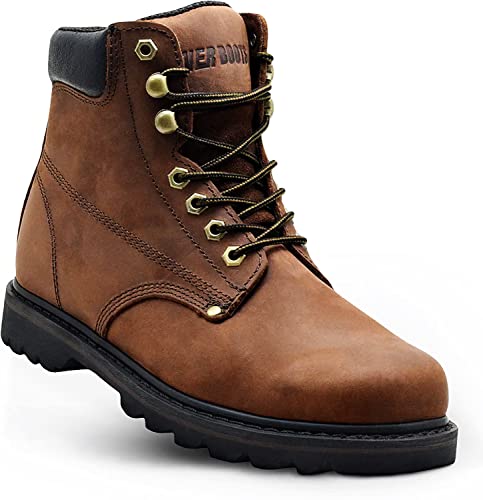
The EVER BOOTS Tank uses oil full-grain leather with a rubber sole and a soft toe. It has the sturdy feel many people want from a traditional construction boot. The leather can soften with wear, which may help the boot feel less harsh around the heel over time. Still, the break-in period may cause trouble if the counter presses directly on the bump.
I like this model for buyers who want a classic boot at a moderate price. It can suit construction, workshop tasks, home repair, and general outdoor work. The soft toe gives more room than many safety-toe styles. Before a long shift, I would wear it for short walks and check for red skin, heat, or a hot spot near the Achilles tendon.
Pros:
- Full-grain leather offers a tough work-ready upper
- Soft toe gives the front of the foot more freedom
- Rubber sole supports daily traction and wear
- Traditional look fits many work settings
- Leather may become more flexible with use
- Good value for general work and home projects
Cons:
- Leather may need a break-in period
- New heel counters can feel firm at first
- Soft toe does not protect against heavy impact
How Haglund’s Deformity Changes Boot Choice
Haglund’s deformity is a bony enlargement at the back of the heel. The bump can irritate the soft tissue near the Achilles tendon. A stiff boot counter may press on that spot like a hard thumb. Friction can lead to pain, swelling, redness, and a thick skin patch often called a pump bump.
The best work boots for Haglund’s deformity should limit direct contact with the bump. A soft or padded collar helps, but padding alone is not enough. The boot also needs enough length and width so your foot does not slide forward. A secure fit keeps the heel from lifting and rubbing with each step.
Medical groups such as the American Academy of Orthopaedic Surgeons and the Mayo Clinic commonly advise reducing irritation, using well-fitting shoes, and seeking care when pain persists. A boot cannot reshape the heel. It can, however, reduce the daily pressure that makes symptoms worse.
What I Look For in the Best Work Boots for Haglund’s Deformity
I start with the heel counter. Many work boots use a stiff rear shell for support. That shell can be useful, but it must sit around the heel rather than on top of the bump. I prefer a boot with a padded collar, a smooth inner seam, and enough depth for natural heel movement.
Next, I check the sole. A flat wedge sole can spread pressure across the foot and feel steady on hard floors. A moderate heel can also work if it does not force the heel into a painful position. The right choice depends on your foot shape, job, and advice from a foot specialist.
I also check the toe box. A soft toe often provides more comfort, but it does not provide impact protection. A composite toe may offer a useful middle ground for some jobs. Always match the boot to the hazard rules at your workplace, not just to comfort.
Heel Fit Matters More Than Boot Height
A tall boot is not always a better boot. A 12-inch Wellington can protect your leg, yet its heel opening may still rub the bump. A 6-inch boot may feel better if its collar clears the sore area. I measure comfort at the exact point where the boot touches the rear of the heel.
When trying a boot, wear your normal work socks. Stand up and walk on a hard floor. Bend your knees, climb a step, and move your ankle. The heel should stay fairly secure, but the collar should not dig into the bump.
Check both feet. Haglund’s deformity may affect one foot more than the other, and feet can differ in size. Try boots late in the day, when feet often swell. If you need two sizes, fit the larger foot and use a suitable insole or heel adjustment for the other side.
Wedge Soles Versus Raised Heels
Wedge soles place more of the outsole on the ground. Many workers like their stable feel on concrete and wood floors. The broad base can also reduce the sense of standing on a small heel. That does not mean every wedge boot will help every case of Haglund’s deformity.
Raised heels can change ankle position and may reduce tension for some people. For others, the lift may increase pressure at the rear of the heel. I would not choose a heel height based on a product photo alone. Try the boot, watch how your heel moves, and ask a clinician if pain continues.
For flat indoor surfaces, the AZXPROT, Defencas, and ACDSAF wedge boots are easy options to consider. For uneven outdoor ground, the orthopedic anti-puncture boot may offer more structure. The best work boots for Haglund’s deformity are the ones that balance heel clearance with job-site stability.
Soft Toe, Composite Toe, or Steel Toe?
A soft toe gives the most flexible feel. It can help when the front of the foot feels crowded. But it offers no real crush protection. I would use a soft-toe boot only when the work hazard assessment allows it.
A composite toe weighs less than steel in many designs. It may also be more comfortable in cold conditions. Yet a composite toe still takes up space, so you need a roomy toe box. Do not size up so much that the heel slips.
Steel toe boots can meet strict safety needs, but they may feel heavier. The toe material does not directly cause Haglund’s deformity. The fit, heel counter, collar, and foot movement matter more. Ask your employer which safety standard the boot must meet before purchase.
Waterproofing and Breathability
Waterproof boots help keep rain and puddles out. They can be valuable for landscaping, farming, utility work, and outdoor construction. Dry feet are less likely to develop soft skin and friction. Still, waterproof membranes can hold heat inside the boot.
Heat and moisture can increase rubbing. Use moisture-wicking socks and let boots dry fully between shifts. Do not dry leather boots on a hot heater. High heat can shrink leather and make the heel area even harder.
If you work indoors, a breathable boot may serve you better than a fully waterproof one. If you work outside, waterproofing may be worth the trade-off. Choose based on your actual work setting instead of a feature list alone.
How to Break In Work Boots Without Hurting Your Heel
Start with 20 to 30 minutes at home. Walk on clean floors so you can return the boots if needed. Look for pain, rubbing, numbness, or a new red mark. These signs mean the boot needs a fit change, not that you must simply “tough it out.”
Increase wear time slowly over several days. Use the same socks and insole that you plan to wear at work. A heel sleeve can protect skin, but it should not make the boot too tight. Avoid thick padding if it pushes the bump harder into the collar.
Leather may soften, but a badly placed seam will not move enough to fix a poor fit. I would never begin a 10-hour shift in a brand-new pair. Keep a proven pair nearby until the new boots pass a full test.
Insoles and Heel Lifts
A removable insole can help you adjust support. Some workers need arch support. Others need a softer footbed or more room around the heel. An insole should hold the foot steady without lifting it into the top of the boot.
Heel lifts require more care. They can change ankle motion and may affect the Achilles tendon. Some people use them under professional guidance, but they are not right for everyone. Speak with a podiatrist or physical therapist before adding a large lift.
If you use custom orthotics, take them when trying on boots. A boot that fits well with its factory insole may become tight with your own insert. Orthofeet Granite is especially useful to consider because its removable footbed allows more fit control.
Socks, Lacing, and Heel Protection
Socks can make or break a work boot. Choose a smooth pair that moves sweat away from the skin. Avoid seams that sit across the heel bump. A padded heel area may reduce friction, but it must not create a tight ring around the ankle.
Lace the lower eyelets firmly and the upper eyelets with less tension if the collar feels hard. This can secure the foot while giving the rear of the heel more breathing room. Do not lace so loosely that your heel lifts with each step.
Some workers use silicone heel cups or gel pads. These may cushion the area, but they can also push the heel upward. Test any insert for a short time. Stop using it if it increases pressure or pain.
Job-Site Safety Still Comes First
Comfort is important, but comfort cannot replace required protection. OSHA advises employers to assess foot hazards and provide suitable protective footwear when needed. Your job may require a safety toe, puncture resistance, electrical hazard protection, slip resistance, or a special sole.
Check the product details and your employer’s rules. A soft-toe boot may be ideal for a clean warehouse but unsafe where heavy tools can fall. A waterproof hiking-style boot may work outdoors but fail a site rule. The best work boots for Haglund’s deformity must also meet the risks of your job.
Look for clear information about the safety rating. Do not rely on a seller’s photo or a vague phrase such as “safety work boot.” If the listing does not explain the protection, ask the manufacturer or choose another model.
Signs That a Boot Is Making Symptoms Worse
Watch for pain that grows during each shift. Redness that remains after you remove the boot is another warning sign. Blisters, swelling, warmth, and a sore spot near the Achilles tendon also matter.
A small amount of new-boot stiffness is normal. Sharp pain is not. If you change boots and the pain still lasts, see a health professional. Seek prompt care for severe swelling, an open wound, sudden weakness, or trouble walking.
A foot specialist can check whether the pain comes from Haglund’s deformity, Achilles irritation, bursitis, or another problem. That matters because each condition may need a different plan. Good boots support care, but they do not replace diagnosis.
Best for Table
| Best for | Why |
|---|---|
| Flat indoor work floors | Wedge soles provide broad, steady contact and may reduce tired feet. |
| Custom orthotic users | Removable footbeds allow more room for a doctor-approved insert. |
| Wet and rough outdoor jobs | Waterproof uppers and stronger outdoor soles help manage changing ground. |
My Recommendation
I recommend the Orthofeet Granite for buyers who place foot comfort and fit adjustment first. Its orthopedic design and removable insole give you more ways to manage pressure. It is especially suited to workers who use custom inserts or need a roomier boot. Check the heel collar before wearing it for a full shift, since even a comfort boot can rub the wrong heel shape.
For a lower-cost wedge option, I would look at the ACDSAF or AZXPROT. The Defencas SureTrack is a good match for smooth work floors where slip resistance matters. Outdoor workers may prefer the anti-puncture boot, while women who need a composite toe should consider the ARIAT Rebar Lift. The Golden Fox suits people who need a quick pull-on Wellington, and the EVER BOOTS Tank fits buyers who prefer classic leather.
Overall, the best work boots for Haglund’s deformity should feel calm around the heel from the first short test. Do not buy based only on a soft collar or a “comfort” label. Look for clearance, stable support, the right safety features, and a return policy that lets you test the fit.
FAQs Of Best Work Boots for Haglund’s Deformity
What are the best work boots for Haglund’s deformity?
The best pair has a roomy heel area, soft or padded collar, smooth seams, and a stable sole. Orthopedic boots with removable insoles can help you fine-tune the fit. The right boot must also match your job’s safety needs.
Can work boots make Haglund’s deformity worse?
Yes. A stiff heel counter, tight collar, or poor size can rub the bony bump and irritate nearby tissue. Stop wearing a boot that causes sharp pain, lasting redness, or swelling.
Are wedge soles good for heel bumps?
A wedge sole may feel stable and spread pressure across the foot. It does not automatically remove heel pressure. The heel collar and rear fit still matter most.
Should I choose a soft toe for Haglund’s deformity?
A soft toe may feel more comfortable because it gives the toes more room. Choose it only when your job does not require a safety toe. For impact hazards, use a properly rated composite or steel toe with enough space.
Can orthotics help inside work boots?
Orthotics may improve support and foot alignment for some people. Use a podiatrist-approved insert when possible. Make sure the insert does not lift your heel into the boot collar.
Final Verdict: Which Should You Buy?
The Orthofeet Granite is my top pick for the best work boots for Haglund’s deformity because it offers orthopedic support and a removable footbed. Choose the ACDSAF or AZXPROT for a budget wedge style, or ARIAT for women who need a composite toe.
Focus on heel clearance, smooth seams, and job-site safety. The best work boots for Haglund’s deformity should protect your feet without pressing on the bump.

Madison Clark is a footwear expert and the voice behind MyStyleGrid.com. She specializes in honest shoe reviews, style tips, and practical guides to help readers find the perfect pair for any occasion. With years of experience in blogging and content creation, Madison makes footwear knowledge simple, stylish, and easy to follow.