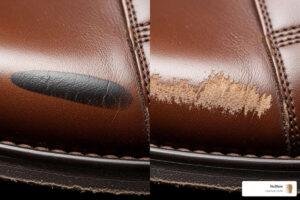
To fix scuffed leather shoes in the United States, first remove dirt, then clean the mark, restore color with matching shoe cream or polish, and condition the leather. Light scuffs often improve in minutes. Deep cuts, peeling finish, and exposed fibers may need a shoe repair shop.

First, identify the leather and the type of scuff
The safest repair depends on the shoe’s leather. Smooth finished leather can usually take cream, polish, and conditioner. Suede, nubuck, patent leather, and unfinished leather need different care.
A scuff may be one of three things:
- A surface mark: Rubber, paint, salt, or dirt sits on the finish.
- A color loss: The leather finish or dye has worn away.
- A deep cut or crack: The leather itself is split, gouged, or peeling.
A surface mark is the easiest to fix. Color loss needs a matching cream or polish. A deep cut cannot be fully erased with shoe polish.
Quick material check
Look at the shoe’s care label, box, or brand website before you start. If you are unsure, test every product on a hidden spot, such as the inside heel or under the tongue.
| Shoe material | Best first step | Avoid |
|---|---|---|
| Smooth finished leather | Clean, condition, then use cream or polish | Heavy water and harsh cleaners |
| Suede | Brush with a suede brush and use a suede cleaner if needed | Wax, standard shoe polish, and oily conditioner |
| Nubuck | Use a nubuck brush or approved cleaner | Smooth-leather polish |
| Patent leather | Wipe with a soft damp cloth and use patent-leather care | Abrasive brushes and regular polish |
| Faux leather | Use mild soap and water after a spot test | Solvents and strong heat |
| Unfinished or aniline leather | Use the maker’s care instructions | Generic polish without testing |
If the leather is peeling, cracked through, badly gouged, or separated from the sole, stop after gentle cleaning. More rubbing can make the damage worse.
What you need before fixing scuffed leather shoes
Gather simple tools before you begin:
- A soft horsehair brush or clean microfiber cloth
- A small amount of mild leather cleaner
- Leather conditioner made for smooth leather
- Matching cream polish or wax polish
- A clean applicator cloth or soft shoe brush
- Cotton swabs for edges and seams
- Newspaper or a shoe tree to hold the shape
Use a product made for the type of leather. A leather conditioner is not the same as a cleaner. Polish adds color and shine, while conditioner helps keep smooth leather flexible.
Do not use nail-polish remover, acetone, bleach, household spray cleaner, or cooking oil. These products can strip color, leave greasy stains, or dry the leather.
Before applying anything, remove the laces. Insert a shoe tree or loosely fill the shoe with plain paper. This gives you a firm surface and helps keep the leather in shape.
How to fix light scuffs on smooth leather shoes
Light scuffs usually need cleaning and gentle color restoration. Follow these steps in order.
1. Brush away loose dirt
brush the whole shoe with a dry, soft brush. Work around the welt, stitching, tongue, and sole edge. Loose grit can act like sandpaper when you wipe the shoe.
If the shoe has dried mud on it, let the mud dry first. Then brush it away. Do not scrub wet mud into the leather.
2. Wipe the scuff with a damp cloth
Dampen a microfiber cloth with clean water and wring it out well. The cloth should feel damp, not wet.
Gently wipe the mark. Use small, light motions. If the mark is only dirt or rubber transfer, this may remove it without any polish.
Let the area air-dry before moving on. Keep the shoe away from a radiator, hair dryer, fireplace, or direct heat. Fast heat can shrink or stiffen leather and may loosen adhesives.
3. Use a small amount of leather cleaner
If water does not remove the mark, place a small amount of leather cleaner on the cloth, not directly on the shoe. Clean a wider area around the scuff so the finish does not look patchy.
Do not soak the leather. Excess moisture can darken some leathers and may leave water marks.
Wipe away cleaner residue with a clean, slightly damp cloth. Allow the shoe to dry fully according to the product directions.
4. Apply conditioner sparingly
Once the shoe is clean and dry, apply a thin layer of leather conditioner. Use less than you think you need. Too much conditioner can make leather soft, dark, or oily.
Rub it over the panel, not just the scuffed spot. This helps create a more even finish. Wait until the conditioner has absorbed before applying color.
Some finished leathers do not need conditioner at every cleaning. If the leather still looks smooth and supple, you can move straight to a small amount of cream polish.
5. Restore color with cream polish
Choose a cream polish that matches the shoe as closely as possible. Black and dark brown are often easy to match. Tan, burgundy, navy, and unusual shades may need a neutral polish or a professional color match.
Test the polish in a hidden area first. Then apply a thin layer to the scuff with a soft cloth or applicator brush.
Blend the polish beyond the mark. A small spot of dark color can look more noticeable than the original scuff.
Let the polish dry, then buff the shoe with a clean brush or cloth. Add a second thin coat only if the color still looks uneven.
6. Add wax only when you want more shine
Wax polish can add shine and some surface protection, but it will not repair a cut. Apply it lightly to the toe and heel if you want a dress-shoe shine.
Avoid building thick wax over creases. Heavy wax can crack when the shoe bends.
Signs the repair worked
The repair is successful when:
- The scuff is less visible from normal standing distance.
- The color looks even across the leather panel.
- The leather feels clean but not greasy.
- The shoe bends without a hard, cracked layer of product.
- No sticky residue remains on the surface.
If the mark becomes darker, sticky, rough, or more visible, stop adding product. Wipe away excess residue with a clean cloth and let the shoe rest.
How to repair deeper scuffs, cuts, and missing color
Deep scuffs need more than ordinary polish. First decide whether the surface is merely discolored or physically damaged.
For worn color with no open cut
If the leather is smooth but a lighter patch shows through, use a matching leather cream or leather dye made for footwear. Apply several thin coats rather than one thick coat.
Allow each coat to dry before adding another. Thick product can sit on top of the leather and crack at the flex point.
Finish with a compatible conditioner or protective product. Follow the product label, because some dyes need a specific sealer.
For a shallow gouge
A shallow gouge may improve with a flexible leather filler. Use only a filler labeled for leather and footwear. Apply a very small amount, smooth it carefully, and let it cure fully.
After curing, use matching color cream or dye. This can make the damage less noticeable, but it may not recreate the original grain.
For a deep cut or torn leather
Do not try to hide a deep cut with layers of polish. Polish cannot rebuild missing leather. A repair professional may be able to patch, recolor, or replace the damaged panel.
Seek professional help when:
- The cut opens when you flex the shoe.
- The leather is peeling or splitting.
- The scuff reaches the lining.
- The toe has lost its shape.
- The sole or welt is also damaged.
- The shoe is expensive, vintage, handmade, or made from unusual leather.
A cobbler can often give a better result than a home repair, especially when the damaged area is large or highly visible.
How to fix scuffed suede, nubuck, and patent leather
Do not use standard smooth-leather polish on suede or nubuck. These materials have a raised surface, so wax and cream can flatten or stain the nap.
Suede
For a dry suede scuff:
- Let the shoe dry completely.
- Brush the area with a suede brush.
- Use short strokes in different directions.
- Finish by brushing the whole panel so the texture looks even.
For a stubborn mark, use a suede eraser made for footwear. Rub gently and remove the crumbs with a brush.
If the suede has a water stain, oil mark, or large dark patch, use a cleaner made for suede. Test it first. Some cleaners change the color of suede.
Nubuck
Nubuck needs a nubuck brush or cleaning block. Work gently because aggressive rubbing can create a smooth, shiny patch.
Use a nubuck-safe spray or cleaner when needed. Do not use ordinary leather conditioner unless the product label specifically says it is safe for nubuck.
Patent leather
Patent leather has a smooth, glossy coating. Wipe it with a soft, damp cloth. For sticky marks, use a patent-leather cleaner approved by the shoe maker.
Do not buff patent leather with wax polish. Avoid rough cloths, alcohol, and abrasive cleaners, which can dull the coating.
Common mistakes that make scuffs worse
The most common mistake is using too much product. Leather care works best in thin layers. You can add more later, but removing excess polish or conditioner can be difficult.
Avoid these errors:
- Rubbing hard: Friction can remove more color.
- Cleaning only the mark: This can leave a visible dark or light circle.
- Skipping the patch test: Different finishes react in different ways.
- Using a close but wrong polish color: A poor match can make the repair stand out.
- Applying polish to wet leather: It can trap moisture and create an uneven finish.
- Drying with high heat: Heat can damage leather and shoe adhesives.
- Using household oils: Oil may darken leather and attract dirt.
- Covering a structural problem: Polish will not fix a torn upper or loose sole.
- Using smooth-leather products on suede: Cream and wax can permanently flatten the nap.
When in doubt, do less. A clean, lightly conditioned shoe is often better than a heavily coated shoe with a mismatched color.
How to prevent future scuffs
You cannot prevent every mark, but regular care can reduce damage.
Brush off dirt after wearing the shoes. Dirt and grit can wear the finish as the leather flexes. Use shoe trees for leather dress shoes, and rotate pairs when possible so each pair can dry and recover between uses.
Apply a leather protectant only when it is suitable for the material. Test it first, and follow the label. Some protectants are made for smooth leather, while others are made for suede or nubuck.
Keep leather shoes in a cool, dry place. Do not store them in a sealed plastic bag while they are damp. If the shoes become wet, remove the insoles if possible, blot them, and let them dry at room temperature.
Use the right shoe for the conditions. Dress leather shoes may not be suited to heavy rain, road salt, or outdoor work. For wet or snowy U.S. weather, protective footwear may reduce damage better than repeated polishing.
Should you use a leather repair kit?
A leather repair kit can help with color loss or a small surface gouge, but it is not automatically better than basic shoe cream. Choose one only when it matches the shoe’s material and damage.
A kit is more useful when it includes:
- A flexible filler for small gouges
- A colorant made for footwear
- Clear instructions for curing and layering
- A color that can be blended
- A compatible finish or sealer
Avoid kits that suggest using thick layers to fix every type of damage. Leather finishes must flex with the shoe. A hard coating may crack the first time you walk in it.
For a valuable pair, compare the kit cost and risk with a cobbler’s repair fee. A professional may also match the color more closely.
FAQs about fixing scuffed leather shoes
Can toothpaste remove scuffs from leather shoes?
Toothpaste is not a good general leather cleaner. Some formulas contain abrasives that can dull or scratch the finish. Use a soft cloth and a leather-safe cleaner instead.
Can I use black polish on brown leather?
Usually not. Black polish can leave a gray, purple, or muddy cast on brown leather. Use a close brown shade or a neutral cream, and test it in a hidden area first.
Can rubbing alcohol remove a scuff?
Rubbing alcohol may remove some surface marks, but it can also strip color and damage the finish. It is not a safe first choice for most leather shoes.
How often should I condition leather shoes?
Condition when the leather looks dry, feels stiff, or develops fine surface lines. The right interval depends on wear, climate, and the product. Over-conditioning can soften and darken leather.
Can a shoe repair shop remove every scuff?
No. A cobbler can often improve deep damage, recolor worn areas, and repair tears, but the original finish or grain may not be fully restored. Ask for an assessment before authorizing work.
Final recommendation
For a light scuff on smooth leather, brush the shoe, wipe it with a damp cloth, use leather cleaner if needed, condition lightly, and apply matching cream polish. Work slowly and test each product first.
If the leather is cut, peeling, badly cracked, or made from suede, nubuck, patent, or an unusual finish, use material-specific care or contact a professional shoe repair shop.
Rubel Miah is the Senior Editor at MyStyleGrid.com, where he brings a sharp editorial eye and an unshakable love for fashion to everything he does. A true style addict, Rubel lives and breathes trends, from streetwear to high fashion, and has a knack for turning inspiration into impactful stories. With years of experience in fashion journalism and digital media, he curates content that empowers readers to express themselves through style. When he’s not editing features or forecasting the next big thing, you’ll find him hunting down vintage pieces or capturing street style moments around the city.