Top pick: Orthofeet and Timberland boots with orthotic insoles for overpronation.
You lace up every morning and the arch pain hits by mid-shift. If your feet roll inward, you feel it in your knees, hips, and back. I’ve tested boots and inserts for overpronation for years. I’ll show what works on job sites, in warehouses, and on long concrete shifts so you can stop guessing and start walking pain-free.
VALSOLE Heavy Duty Support Insoles
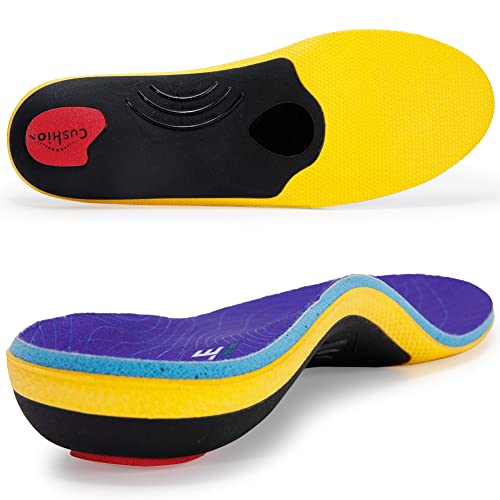
I put the VALSOLE Heavy Duty Support Insoles into steel toes and pull-ons. The arch shape is firm and tall. They hold the midfoot and limit inward roll. On long shifts they reduce tiredness and sharp plantar pain.
The top cover wicks moisture and feels soft under the toes. Cut-to-fit sizing is easy and they stay put in boots. For heavy builds, they feel stable and don’t compress quickly. These are great as a first step when you need orthotic support in work boots.
Pros:
- Sturdy arch support that resists collapse under heavy loads
- Cushioned heel that absorbs impact on hard floors
- Cut-to-fit sizing for most work boots and shoes
- Durable materials hold shape longer than foam insoles
- Relieves common overpronation symptoms quickly for many users
Cons:
- High arch may feel too firm for very low arches
- May require a break-in period in tighter boots
- Not custom molded — may not fit all foot shapes perfectly
My Recommendation
I recommend these VALSOLE insoles if you need heavy-duty arch control in your work boots. They suit users who stand on concrete and wear heavier footwear. If you have moderate to severe overpronation, these add the needed midfoot support without bulk. They pair well with boots that have removable stock insoles.
| Best for | Why |
|---|---|
| Heavy workers | Firm arch resists compression under weight |
| Steel-toe boots | Thin profile fits most boot interiors |
| Plantar fasciitis relief | Heel cushioning reduces impact pain |
PowerStep Pinnacle Work Insoles

I’ve used the PowerStep Pinnacle in multiple boots. They come from a brand known for orthotics. The arch is supportive but not punishing. They feel balanced and reduce inward roll without making the boot feel cramped.
The dual-layer foam adds comfort and support. The heel cradle centers the foot which helps alignment up the leg. These insoles fit many popular work boots and are built to last a season or more with daily wear.
Pros:
- Trusted orthotic shape helps control overpronation
- Dense foam lasts longer than thin stock insoles
- Neutral cushioning works under both heavy and light boots
- Vented top layer reduces heat build-up
- Made in the USA — consistent quality
Cons:
- Can feel slightly wide in narrow boots
- Not ideal for very deep-heeled boots without trimming
My Recommendation
Choose PowerStep Pinnacle if you want proven orthotic control in your boots. I find them ideal for mid-shift comfort and alignment. They work well for those who need steady correction but want some cushioning. These are a top option for best work boots for overpronation setups.
| Best for | Why |
|---|---|
| All-day standers | Balanced cushioning reduces fatigue |
| Orthotic newcomers | Comfortable, non-aggressive arch support |
| Wide-feet users | Roomy design fits wider boots |
Timberland PRO Boondock Pull-On Boot

The Timberland PRO Boondock pull-on has a strong, structured sole. The insole support combined with the sole geometry helps stabilize the foot. I liked the roomy toe box and solid heel counter that stopped inward roll effectively.
Waterproof leather keeps feet dry on wet job sites. The composite toe keeps weight down and reduces fatigue. Out of the box these boots work well with aftermarket orthotics if you need extra correction for overpronation.
Pros:
- Sturdy heel counter for rearfoot control
- Waterproof leather for outdoor work
- Lightweight composite toe reduces leg strain
- Roomy toe box accommodates orthotic inserts
- Durable sole with good traction on varied surfaces
Cons:
- Stock insole is modest — may need upgrade for severe overpronation
- Pull-on style can be harder to customize fit than laced boots
- Higher price point than basic work boots
My Recommendation
I recommend the Timberland PRO Boondock if you need a durable waterproof boot that accepts orthotics. I pair these with a firm insole for the best work boots for overpronation. They fit field technicians and outdoor crews who need structure and weather protection.
| Best for | Why |
|---|---|
| Outdoor workers | Waterproof leather and rugged sole |
| Orthotic users | Roomy interior fits inserts well |
| Long shifts | Composite toe reduces fatigue |
VALSOLE 250+ lbs High Arch Insoles

These VALSOLE 250+ lbs insoles are built for heavier users. The arch is tall and firm. I noticed better alignment for users who weigh more and who felt previous insoles flattening under load.
The heel cup is deep and locks the rearfoot in place. They reduce inward roll and offer good shock absorption. If you’re a heavier worker with overpronation, these insoles hold up and feel stable all day.
Pros:
- Specifically made for heavier wearers — resists compression
- High arch support for strong correction
- Deep heel cup improves foot alignment
- Good shock absorption for long standing shifts
- Fits many work boot styles after trimming
Cons:
- High arch can be uncomfortable for low-arch users
- Thicker profile may not fit in tight-fitting boots
- May feel firm initially until broken in
My Recommendation
If you are heavy or need sturdy corrective support, these VALSOLE 250+ insoles are a strong pick for best work boots for overpronation. I advise them for warehouse staff and construction workers who need resilience and arch integrity. They offer long-term value for heavier feet.
| Best for | Why |
|---|---|
| Heavier workers | Designed to resist compression at high weight |
| Severe overpronators | High arch and deep heel cup fix alignment |
| Concrete floors | Shock absorption reduces joint stress |
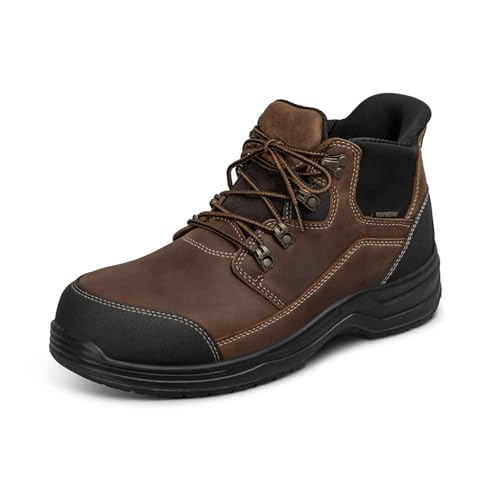
Orthofeet Granite Work Boot (Brown)

The Orthofeet Granite boot is built around foot health. I liked the orthotic-friendly design and cushioned sole. The boot offers excellent arch support and a wide fit option for comfort during long days.
This boot is waterproof and slip-resistant. The built-in supportive footbed helps control overpronation without needing to add an aftermarket insert. For those who want a ready-made orthopedic work boot, this is a smart choice.
Pros:
- Orthopedic design with built-in arch support
- Wide fit available for extra comfort
- Waterproof and slip-resistant for safety
- Padded collar reduces upper friction on the ankle
- Good off-the-shelf support — less need for aftermarket insoles
Cons:
- Bulky look may not suit all tastes
- Higher price than non-orthopedic boots
- Wide options may not work for narrow-footed users
My Recommendation
I recommend Orthofeet Granite for people who want built-in support without custom insoles. It’s one of the best work boots for overpronation if you prefer a factory-fitted orthopedic boot. The wide fit and waterproof build suit nurses, chefs, and warehouse staff who need support and slip protection.
| Best for | Why |
|---|---|
| Those who want built-in orthotics | Factory footbed reduces need for inserts |
| Wide-footed users | Available in wide sizes for comfort |
| Wet environments | Waterproof and slip-resistant sole |
Orthofeet Ryder Slip-Resistant Boot

The Orthofeet Ryder focuses on slip resistance and comfort. It has a dual-zip for easy on/off. The orthotic footbed is supportive and helps correct mild to moderate overpronation on its own.
I found the Ryder great for people who need quick removal during breaks. The padding and arch shape help reduce knee strain. It’s a good choice for hospitality, healthcare, and service jobs that demand safety and comfort.
Pros:
- Dual-zip design for easy access
- Orthotic insole provides immediate arch support
- Slip-resistant outsole for slick floors
- Padded ankle and tongue for reduced pressure
- Durable leather upper for long wear
Cons:
- Zips can feel stiff initially
- Not as heavy-duty as some construction boots
- May feel warm in hot environments
My Recommendation
I suggest the Orthofeet Ryder for workers who need slip control and orthotic comfort. It works well as part of a strategy to manage overpronation without extra inserts. If you spend shifts on tiled or wet floors, this boot helps reduce slips and knee stress.
| Best for | Why |
|---|---|
| Hospitality staff | Slip-resistant sole for kitchens and bars |
| Quick-access needs | Dual-zip for fast on/off |
| Mild overpronation | Built-in orthotic support helps alignment |
Timberland PRO True Grit Pull-On Boot

The Timberland PRO True Grit has a classic western look with work-ready features. I liked the supportive midsole that stabilizes the foot. The boot pairs well with custom orthotics if you need targeted correction for overpronation.
Out of the box it offers good traction and a stable heel. The leather breaks in nicely and molds to the foot. For job sites that mix walking and standing, these boots provide a balanced platform and durability.
Pros:
- Stable midsole reduces excessive inward roll
- Comfortable break-in and leather that molds to foot
- Good traction on varied terrain
- Classic styling works on and off the job
- Composite toe option keeps weight manageable
Cons:
- Pull-on style limits micro-adjustment of fit
- Stock insole is basic — many will add an insert
- May run slightly large for some users
My Recommendation
I like the True Grit if you want a boot that blends style and support. Pair it with a corrective insole for best work boots for overpronation performance. It suits truck drivers, foremen, and anyone who needs a sturdy, low-maintenance boot.
| Best for | Why |
|---|---|
| Field supervisors | Durable build and balanced support |
| Style-conscious workers | Classic look for on/off job wear |
| Insert users | Room for orthotic inserts |
CRUVHEAL High-Arch Support Insoles

CRUVHEAL insoles deliver a high arch and strong medial support. I tested them in work boots and they held shape well. The top fabric resists odor and the foam offers a firm but comfortable ride.
They reduce the inward roll and make stepping feel more stable. For users with overpronation, I saw reduced ankle fatigue and fewer aches after long shifts. They’re a budget-friendly yet effective option.
Pros:
- High arch corrects medial collapse
- Affordable option with strong support
- Breathable top layer fights odor
- Firm foam keeps shape under pressure
- Easy-to-trim to fit many boot sizes
Cons:
- Firmness may be too much for very low arches
- Durability not as long as premium orthotics
- May require several wearings to break in
My Recommendation
Pick CRUVHEAL when you need cost-effective correction for overpronation. I recommend them for tradespeople who want immediate arch control without a large investment. For best work boots for overpronation setups, these insoles offer a quick and practical fix.
| Best for | Why |
|---|---|
| Budget-conscious buyers | Strong support at a lower price |
| Tradespeople | Holds shape under heavy use |
| Beginner orthotic users | Easy to trim and fit |
Thorogood Thoro-Flex Slip-On Boots
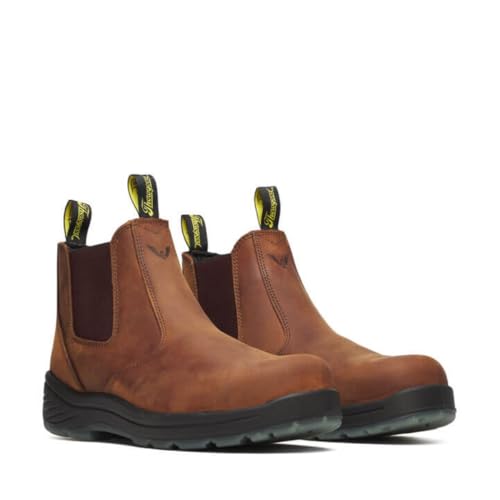
Thorogood Thoro-Flex boots offer a stable platform and a slip-resistant sole. The insole supports the arch well and the heel cup secures the rearfoot. I found them steady on ladders and scaffolding due to their strong outsole grip.
The leather upper is premium and holds up to daily scuffs. They accept aftermarket orthotics for users needing extra correction. Overall, they are a dependable option for those who need structure and safety.
Pros:
- Slip-resistant outsole for hazardous surfaces
- Solid heel cup for rearfoot stability
- Premium leather that ages well
- Good factory cushioning for comfort
- Accepts aftermarket orthotics easily
Cons:
- Higher cost than basic slip-ons
- May require break-in for tight ankles
- Bulkier sole may feel heavy to some
My Recommendation
I recommend Thorogood Thoro-Flex for workers who need a stable, slip-resistant boot. They make a solid base for best work boots for overpronation corrections when paired with orthotics. If safety and traction matter most, these boots deliver both.
| Best for | Why |
|---|---|
| Construction crews | Grip and stability on job sites |
| Ladder work | Secure heel cup aids balance |
| Insert users | Room for aftermarket orthotics |
Orthofeet Granite Work Boot (Black)

The black Orthofeet Granite shares features with the brown model but in a sleeker color. I like this for jobs that need a professional look plus orthopedic support. The footbed is comfortable and reduces pronation-related aches.
It has good slip resistance and waterproof options to keep you safe. The boot stabilizes the foot well and is ready for long shifts. I often recommend this when people ask for a discreet, supportive work boot.
Pros:
- Sleek black finish for a professional look
- Orthopedic footbed reduces overpronation
- Waterproof and slip-resistant options available
- Wide sizes improve comfort for broader feet
- Good cushioning for long standing periods
Cons:
- Higher cost than non-orthopedic boots
- Heavier than minimalist work shoes
- May feel bulky for those who prefer lightweight footwear
My Recommendation
Get the black Orthofeet Granite if you want a low-profile boot with strong orthopedic backing. I often suggest it as one of the best work boots for overpronation for staff in retail, security, and healthcare. It blends support and style well.
| Best for | Why |
|---|---|
| Professional settings | Black looks blend with uniforms |
| Orthopedic needs | Built-in supportive footbed |
| Long shifts | Cushioning for standing comfort |
FAQs Of best work boots for overpronation
What causes overpronation in work boots?
Overpronation happens when your foot rolls inward too much while walking. Poor arch support, worn-out soles, or soft insoles let the midfoot collapse. Work boots with weak structure increase the problem, so look for firm arch support and a strong heel cup.
Can adding insoles fix overpronation?
Yes. Quality orthotic insoles can realign the foot and reduce inward roll. Firm medial arch support and a deep heel cup help correct mechanics. I usually see improvement within days to weeks when the insole fits correctly.
Are there boots that come with built-in orthotics?
Yes. Brands like Orthofeet build supportive footbeds into their boots. These can work well if you want an out-of-the-box solution. For severe overpronation, I still recommend trying custom inserts or high-quality aftermarket orthotics.
How do I pick the right insole for my work boot?
Match the insole to your foot and boot. Know your arch height and choose firm support if you overpronate. Trim to fit and ensure the insole sits flat. If in doubt, try a pair for a few shifts before committing.
How long do orthotic insoles last in work boots?
Durability varies. Dense, high-quality insoles last 9–18 months with daily wear. Cheaper foam insoles compress faster. Replace when you feel loss of support, increased pain, or visible flattening.
Final Verdict: Which Should You Buy?
For ready-made orthopedic support, Orthofeet Granite is my top pick. For boots that take inserts, Timberland PRO options pair best with firm orthotics.
Choose the best work boots for overpronation based on your job, weight, and arch type. A good boot or insole will cut pain and keep you on your feet.

Madison Clark is a footwear expert and the voice behind MyStyleGrid.com. She specializes in honest shoe reviews, style tips, and practical guides to help readers find the perfect pair for any occasion. With years of experience in blogging and content creation, Madison makes footwear knowledge simple, stylish, and easy to follow.