KEEN sandals usually run true to size, but their roomy toe box can make them feel larger than expected.
The answer to “do KEEN sandals run true to size” depends on the model, your foot shape, and the fit you prefer. KEEN uses a wide, protective toe box in many designs, so knowing how to measure your feet and adjust for straps can prevent an uncomfortable return.
Do KEEN sandals run true to size?
For most shoppers, KEEN sandals run true to size in length. However, they often feel more spacious than standard sandals because KEEN designs many styles with a roomy forefoot and a rounded toe area.
That extra space is intentional. KEEN sandals are made for walking, hiking, water use, and daily outdoor wear. Your toes should have room to spread without touching the front of the shoe.
In general, choose your usual US shoe size when:
• Your current shoes fit well in length
• You have average or wide feet
• You want natural toe movement
• You plan to wear regular or medium-weight socks
• The sandal has adjustable straps
You may need a different size when:
• Your heel slips while walking
• Your toes move too far forward
• You have narrow feet
• You are between sizes
• The sandal model has a more secure or snug fit
So, do KEEN sandals run true to size? Usually, yes. The main issue is not often the length. It is the combination of width, toe-box room, foot volume, and strap adjustment.

Why KEEN sandals may feel bigger than expected
KEEN sandals can feel large even when the length is correct. This is mostly due to their wide front shape and protective toe design.
Many KEEN styles use a closed-toe or semi-closed-toe structure. The Newport, Seacamp, and similar models protect the toes with a curved rubber bumper. This shape gives your toes more room than a slim fashion sandal.
A standard sandal may taper near the toes. KEEN sandals usually do not. Think of the difference between a narrow canoe and a stable kayak. Both may be the same length, but the kayak gives your feet more room to balance.
Several design features affect how KEEN sandals feel:
• A wide toe box allows the toes to spread
• Adjustable straps can change the fit around the heel and instep
• A padded footbed may make the sandal feel thicker
• A sturdy outsole can feel less flexible than casual sandals
• A closed toe can hide extra space at the front
This roomy fit is helpful for long walks. Feet often swell during the day, especially in hot weather or after several hours of standing. A sandal with no extra room may feel fine in the morning but become tight by afternoon.
However, too much room can cause problems. If your foot slides inside the sandal, you may develop hot spots, blisters, or tired arches.

How KEEN sandals should fit
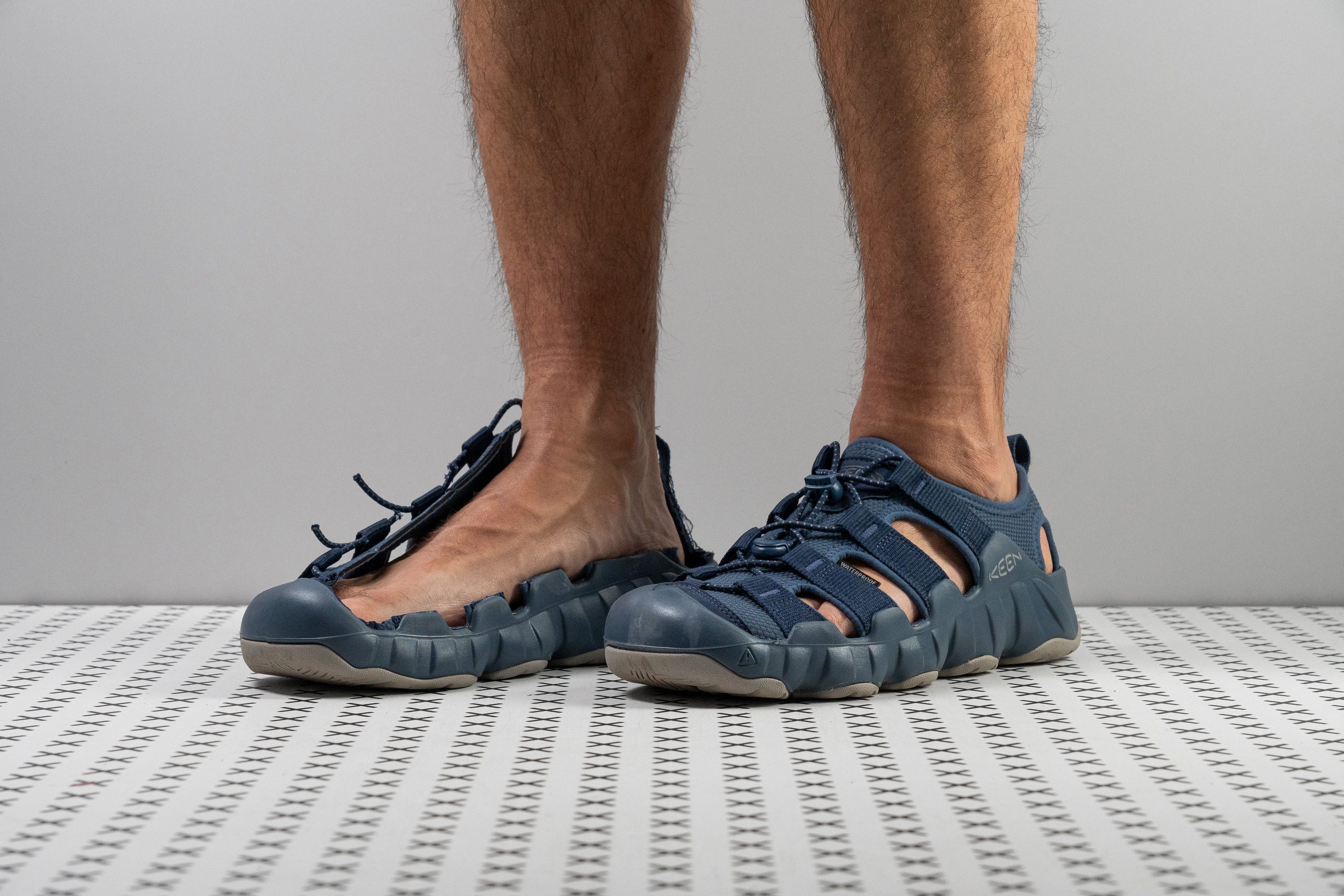
A well-fitting KEEN sandal should feel secure but not tight. Your foot should stay centered over the footbed as you walk.
Use these fit checks before wearing the sandals outdoors:
• Leave about a thumb’s width between your longest toe and the front edge
• Keep your heel inside the rear edge of the footbed
• Make sure your toes do not touch the protective bumper
• Check that the straps hold your foot without pinching
• Walk up and down stairs to test movement
• Confirm that your arch rests over the sandal’s support area
Your toes should not hang over the front or sides. They also should not press against the toe bumper. A small amount of space is normal, but your foot should not slide forward with every step.
The heel is just as important as the toe area. A little movement may be normal in a flexible sandal. Constant heel lifting, though, often means the sandal is too long, too loose, or not adjusted properly.
The best fit feels like a secure handshake. It should hold your foot in place without squeezing it.
KEEN sandal sizing by foot shape
Your foot shape matters as much as your measured length. Two people with the same foot length may need different KEEN sandal sizes because their width and instep height differ.
Wide feet
KEEN sandals are often a good choice for wide feet. Their roomy front gives the toes space, and many styles have adjustable straps.
Still, do not automatically size up. A larger size adds length, not just width. If the sandal already has enough toe room, sizing up may cause heel movement.
Narrow feet
People with narrow feet may find some KEEN sandals too roomy. This is especially true in the forefoot or around the heel.
Look for models with several adjustment points. Tightening the straps can help, but straps cannot fully fix a sandal that is too long. If your heel still slips after adjustment, try a smaller size or a different model.
High insteps
A high instep can make a sandal feel tight across the top of the foot. Adjustable hook-and-loop straps are useful because they allow more space without forcing you to buy a longer size.
Do not loosen the straps so much that your foot slides forward. The goal is more height, not less control.
Flat or low-volume feet
People with low-volume feet may notice extra space above the footbed. A secure heel strap and a snug instep strap can improve the fit.
If the sandal remains loose after adjustment, consider a lower-volume style. Adding a thick insole is not always a good solution because it can change the sandal’s intended support and reduce available toe room.
How to measure your foot for KEEN sandals
Measuring your feet is the most reliable way to answer “do KEEN sandals run true to size” for your own situation. Shoe size charts are useful, but your foot measurement gives a better starting point.
Follow these steps:
- Place a sheet of paper on a hard floor.
- Stand on the paper while wearing the socks you expect to use.
- Keep your weight evenly balanced.
- Trace around each foot, or ask someone to mark the heel and longest toe.
- Measure from the back of the heel to the longest toe.
- Measure both feet.
- Use the larger foot when comparing measurements with the brand’s chart.
Measure late in the day if possible. Feet can expand after walking or standing, and this gives you a more realistic measurement for outdoor sandals.
Do not measure while sitting. Your feet may lengthen slightly when you stand because they bear your full weight.
Also measure both feet. It is common for one foot to be a little longer or wider than the other. If the difference is noticeable, fit the larger foot and adjust the smaller side with the straps.

Do KEEN Newport sandals run true to size?
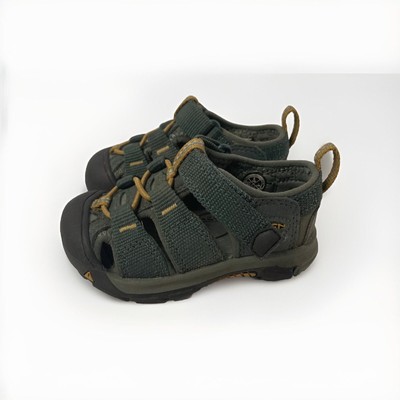
KEEN Newport sandals generally run close to true to size in length. Their well-known closed-toe design has a generous toe box, so many people find their usual size comfortable.
The Newport is built for active use. It has a protective toe bumper, a secure heel area, and straps that allow some adjustment. These features make it feel more supportive than a loose slip-on sandal.
The model may feel too large if you have narrow feet or prefer a close, minimalist fit. Before changing sizes, adjust the heel and instep straps. A slightly loose strap can make a correctly sized sandal feel too big.
For hiking, walking, and travel, most wearers should avoid sizing down simply to reduce toe-box space. Your toes need room, especially when walking downhill or carrying a backpack.
Do KEEN Elle and other casual sandals fit differently?
KEEN casual sandals can feel different from the Newport and other outdoor styles. They may have a slimmer upper, softer straps, or a less structured shape.
The Elle line, for example, has a more casual look and may feel closer to a traditional everyday sandal. The fit can also depend on whether the design uses elastic panels, a back strap, or a slip-on construction.
When comparing KEEN sandals, check:
• The model’s toe shape
• The number of adjustable straps
• Whether the heel is open or closed
• The footbed width
• Whether reviews mention a narrow or generous fit
• The return policy before ordering
Do not assume every KEEN sandal fits exactly like the Newport. Brand-wide sizing is a helpful guide, but construction changes from one model to another.

Should you size up or down in KEEN sandals?
Most people should start with their usual size rather than sizing up or down. Change size only after checking where the fit problem occurs.
Choose a smaller size when:
• Your heel sits far from the back edge
• Your foot slides forward during normal walking
• You have more than a thumb’s width at the front
• The straps cannot stop movement
• You have a narrow foot and a low instep
Consider a larger size when:
• Your toes touch the front bumper
• Your heel hangs off the back
• Your toes feel cramped from side to side
• You plan to wear thick socks
• Your feet swell and the current size feels tight
Do not size up just because the toe box looks wide. Width and length are different measurements. A sandal can have generous width while still having the correct length.
I have seen this mistake often in fit reviews and customer try-ons: someone feels extra room near the toes, assumes the sandal is too large, and orders a smaller pair. The smaller pair then presses against the toe bumper during downhill walking. The better solution is to judge heel position, toe clearance, and foot movement together.

KEEN sandals and socks: does sock use change the size?
Socks can change the way KEEN sandals fit. Thin hiking socks may work well with some closed-toe KEEN styles, while thick wool socks can make the same size feel tight.
If you plan to wear socks, measure your feet with those socks on. This is especially important for cool-weather travel, camping, and long outdoor walks.
Avoid choosing a larger size only for occasional sock use. A sandal that is too loose without socks may feel unstable most of the time.
A useful approach is to decide how you will wear the sandals most often:
• Bare feet: Use your normal measurement and check strap comfort
• Thin socks: Measure with the socks on
• Thick socks: Allow more upper and toe-box room
• Mixed use: Prioritize the way you will wear the sandals for longer periods
Common KEEN sandal fit problems and solutions
The heel slips
First, tighten the heel strap and adjust the front strap. Walk for several minutes on a level surface.
If your heel still lifts with every step, the sandal may be too long or too high-volume for your foot. A smaller size may help, but only if your toes still have enough space.
The toes touch the bumper
This usually means the sandal is too short, your foot is sliding forward, or the straps are too loose.
Adjust the straps before changing size. If your toes still touch the front while walking, choose the next size up.
The sandal feels tight across the top
Loosen the instep strap slightly. If the sandal remains tight, you may need a style with more upper volume rather than a longer size.
Sizing up can create excess length without solving the pressure across your instep.
The arch feels misplaced
Arch support should sit under the natural arch area, not directly under the middle of your heel or the ball of your foot.
If the support feels wrong, try a different model. Foot shape varies, and no single sandal works for every arch.
Blisters develop
Blisters often come from movement, moisture, rough edges, or straps that are too tight. Wear the sandals for short periods at first and check for red spots.