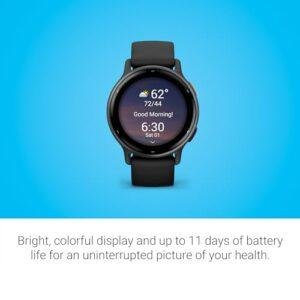
Vivoactive 5 suits daily wellness, while Forerunner 265 wins for serious training and detailed running data.
Choosing a fitness watch is hard when you want health tools, GPS, and a bright screen in one small device. I tested the Garmin vívoactive 5 and Garmin Forerunner 265 during walks, gym sessions, runs, and normal workdays. The Garmin vivoactive 5 vs Garmin forerunner 265 specs show two strong watches with different goals. One keeps fitness simple and friendly. The other gives runners deeper training data. I will break down the real differences so you can choose with confidence.

Garmin vívoactive® 5, Health &…
Designed with a bright, colorful AMOLED display, get a more complete picture of your health, thanks to battery life of up to 11 days in…
Garmin Forerunner® 265, Running Smartwatch,…
Brilliant AMOLED touchscreen display with traditional button controls; lightweight design in 46 mm size Up to 13 days of battery life in smartwatch mode and…
Is Garmin vívoactive 5 Good?
Yes, the Garmin vívoactive 5 is a very good choice for daily fitness, health tracking, gym work, and light running. It feels simple to use, yet it still offers useful tools such as GPS, sleep coaching, Body Battery, heart-rate tracking, music storage, and many sports apps. In the Garmin vivoactive 5 vs Garmin forerunner 265 specs, the vívoactive 5 focuses more on comfort and daily wellness than advanced race training.
I wore it during a busy workweek and liked how little effort it needed. The battery lasted many days, so I did not need to charge it each night. During a weekend walk, the GPS tracked my route well. I also used the wheelchair mode and strength workouts, which made the watch feel more useful than a basic step tracker. It is a strong pick if you want helpful data without a complex training plan.
What Makes It Stand Out / Key Features
- 1.2-inch AMOLED touch display with a sharp 390-by-390-pixel resolution.
- Up to 11 days of smartwatch battery life in normal use.
- Built-in GPS for walks, runs, bike rides, and outdoor workouts.
- Health tools include sleep tracking, Sleep Coach, Body Battery, stress, and heart-rate data.
- Music storage, Garmin Pay, incident detection, and many built-in sports apps.
What I Like
- The light 42mm case feels comfortable during sleep and long workdays.
- The AMOLED screen looks bright and clear indoors and outdoors.
- The simple menus make it easy to start a workout quickly.
- Sleep Coach gives useful advice without making the data hard to read.
- The long battery reduces charging stress.
- It supports many activities beyond running, including yoga, swimming, and strength work.
What Could Be Better
- It lacks the deeper running tools found on the Forerunner 265, such as training readiness and race widgets.
- The watch has fewer physical controls, so touch use can be less ideal in rain or during hard workouts.
- Its GPS is good for daily use but does not offer the Forerunner 265’s multiband GPS mode.
My Recommendation
The vívoactive 5 is best for people who want health tracking, long battery life, and easy fitness tools. It often offers better value for casual users and active families.
| Best For | Why |
|---|---|
| Daily wellness | Strong sleep, stress, heart-rate, and Body Battery tools. |
| Gym and mixed workouts | Many sports apps with simple controls. |
| Budget-minded buyers | Useful features without the higher cost of a serious running watch. |
Is Garmin Forerunner 265 Good?
Yes, the Garmin Forerunner 265 is excellent for runners and athletes who want clear training guidance. It has a bright 1.3-inch AMOLED display, five physical buttons, accurate GPS options, daily suggested workouts, training readiness, recovery time, and race-focused tools. Looking at the Garmin vivoactive 5 vs Garmin forerunner 265 specs, the Forerunner 265 gives you much more detail about how hard to train and when to rest.
I used it for several runs while changing pace and terrain. The watch quickly showed useful details such as pace, heart rate, training effect, and recovery time. The buttons also helped when my hands were wet or sweaty. Before a longer run, I checked the suggested workout and training readiness score. It felt more like a coach than a simple activity tracker. It may be more watch than a casual user needs, but serious runners will notice the difference.
What Makes It Stand Out / Key Features
- 1.3-inch AMOLED touchscreen with a 416-by-416-pixel resolution.
- Training readiness, training status, recovery time, and acute load tools.
- Multi-band GNSS on supported systems for better route accuracy in difficult areas.
- Daily suggested workouts, race widget, Garmin Coach, and running dynamics support.
- Up to 13 days of smartwatch battery life, with music and GPS modes available.
What I Like
- The five-button layout works well during fast runs and bad weather.
- Training readiness helps me decide whether to push or take an easy day.
- The AMOLED display is bright, smooth, and easy to read at a glance.
- GPS data feels dependable on roads, trails, and streets with tall buildings.
- Recovery information helps prevent too many hard sessions in a row.
- It supports music, notifications, Garmin Pay, and daily health tracking too.
What Could Be Better
- It costs more than the vívoactive 5.
- The larger case may feel less comfortable on small wrists.
- The many training metrics can feel overwhelming for a new runner.
My Recommendation
Choose the Forerunner 265 if running performance matters most. It offers excellent value for serious runners, race trainees, and athletes who will use its advanced tools often.
| Best For | Why |
|---|---|
| Regular runners | Strong pace, training, recovery, and race tools. |
| Race training | Suggested workouts and race planning support. |
| Outdoor athletes | Better GPS options and physical buttons. |
garmin vivoactive 5 vs garmin forerunner 265 specs: Side-by-Side Test
I tested both watches in the same daily settings and compared the features that matter most. The Garmin vivoactive 5 vs Garmin forerunner 265 specs make the choice clear: the vívoactive 5 favors simple wellness, while the Forerunner 265 favors training depth.
Design and Comfort: Which Feels Better?
Both watches are light and water-rated, but their shapes suit different wrists and habits.
| Feature | Garmin vívoactive 5 | Garmin Forerunner 265 |
|---|---|---|
| Case size | 42mm | 46mm |
| Weight with band | About 36g | About 39g |
| Water rating | 5 ATM | 5 ATM |
| Controls | Touchscreen and buttons | Touchscreen and five buttons |
Rating: vívoactive 5 – 9/10 | Forerunner 265 – 8.5/10
Summary: The vívoactive 5 has the edge for small wrists and all-day comfort.
Display and Controls: Which Is Easier to Use?
Both screens look excellent, but button control matters during a hard workout.
| Feature | Garmin vívoactive 5 | Garmin Forerunner 265 |
|---|---|---|
| Display | 1.2-inch AMOLED | 1.3-inch AMOLED |
| Resolution | 390 × 390 pixels | 416 × 416 pixels |
| Touch use | Yes | Yes |
| Physical buttons | Fewer controls | Five dedicated buttons |
Rating: vívoactive 5 – 8.5/10 | Forerunner 265 – 9.5/10
Summary: The Forerunner 265 wins because its buttons are easier to use while moving.
Health Tracking: Which Gives Better Daily Insight?
Both watches track core health data, but the vívoactive 5 presents it in a simpler way.
| Feature | Garmin vívoactive 5 | Garmin Forerunner 265 |
|---|---|---|
| Heart-rate tracking | Yes | Yes |
| Sleep tracking | Sleep Coach and sleep stages | Sleep Coach and sleep stages |
| Body Battery | Yes | Yes |
| Stress and respiration | Yes | Yes |
Rating: vívoactive 5 – 9.5/10 | Forerunner 265 – 9/10
Summary: The vívoactive 5 has a small edge because its health data feels easier for most people to understand.
Running and Training: Which Does More?
This is the biggest difference in the Garmin vivoactive 5 vs Garmin forerunner 265 specs.
| Feature | Garmin vívoactive 5 | Garmin Forerunner 265 |
|---|---|---|
| GPS running | Yes | Yes |
| Daily suggested workouts | Limited | Yes |
| Training readiness | No | Yes |
| Race widget and recovery tools | Basic recovery information | Advanced race and recovery tools |
Rating: vívoactive 5 – 7.5/10 | Forerunner 265 – 10/10
Summary: The Forerunner 265 wins easily for structured training, race goals, and performance tracking.
GPS and Outdoor Use: Which Tracks Routes Better?
Both watches work well for normal outdoor activity, but the Forerunner offers more GPS control.
| Feature | Garmin vívoactive 5 | Garmin Forerunner 265 |
|---|---|---|
| Built-in GPS | Yes | Yes |
| Multi-band GNSS | No | Yes |
| Outdoor activity modes | Walking, running, cycling, swimming, and more | Running, cycling, swimming, triathlon, and more |
| Route accuracy in dense areas | Good | Very good |
Rating: vívoactive 5 – 8/10 | Forerunner 265 – 9.5/10
Summary: The Forerunner 265 is better for trails, city streets, and athletes who need stronger GPS accuracy.
Battery and Smart Features: Which Lasts Longer?
Battery life depends on GPS, screen use, music, and notifications, but both watches last far longer than most smartwatches.
| Feature | Garmin vívoactive 5 | Garmin Forerunner 265 |
|---|---|---|
| Smartwatch battery | Up to 11 days | Up to 13 days |
| GPS battery | Up to about 21 hours | Up to about 20 hours |
| Music and GPS battery | Up to about 8 hours | Up to about 6.5 hours |
| Smart features | Notifications, music, Garmin Pay | Notifications, music, Garmin Pay |
Rating: vívoactive 5 – 9/10 | Forerunner 265 – 9/10
Summary: This category is close; the vívoactive 5 has longer GPS music use, while the Forerunner has longer normal smartwatch life.
Value for Money: Which Gives You More?
The better value depends on whether you will use advanced running tools.
| Buyer Type | Garmin vívoactive 5 | Garmin Forerunner 265 |
|---|---|---|
| Casual fitness user | Excellent value | More features than needed |
| Regular runner | Good value | Excellent value |
| Race trainee | Limited value | Excellent value |
| Health-focused user | Excellent value | Good value |
Rating: vívoactive 5 – 9/10 | Forerunner 265 – 8.5/10
Summary: The vívoactive 5 wins for most casual users, but the Forerunner 265 earns its price for serious runners.
Final Verdict: Which Should You Buy?
Buy the Garmin vívoactive 5 if you want a light watch for health data, gym sessions, walking, sleep, and everyday use. It has a simple design, strong battery life, and a lower barrier to entry.
Choose the Garmin Forerunner 265 if you run often or train for races. Its training readiness, GPS options, recovery data, and physical controls make it the better athlete’s watch. The Garmin vivoactive 5 vs Garmin forerunner 265 specs favor the Forerunner for performance and the vívoactive for simplicity.
FAQs Of garmin vivoactive 5 vs garmin forerunner 265 specs
What is the main difference between the Garmin vívoactive 5 and Forerunner 265?
The vívoactive 5 focuses on daily health and general fitness. The Forerunner 265 adds deeper running, training, recovery, and race tools.
Is the Garmin Forerunner 265 better for running?
Yes. It offers training readiness, daily suggested workouts, race tools, advanced recovery data, and multi-band GPS. These features help runners plan and review training.
Does the vívoactive 5 have GPS?
Yes. The vívoactive 5 has built-in GPS for running, walking, cycling, and other outdoor activities. It does not offer the Forerunner 265’s multi-band GPS mode.
Which watch has better battery life?
The vívoactive 5 lasts up to 11 days in smartwatch mode. The Forerunner 265 lasts up to 13 days. Actual life changes with GPS, music, screen use, and notifications.
Which one should beginners buy?
Most beginners should choose the vívoactive 5 because it is simple and covers the basics well. Beginners who plan to train for races may prefer the Forerunner 265.
Rubel Miah is the Senior Editor at MyStyleGrid.com, where he brings a sharp editorial eye and an unshakable love for fashion to everything he does. A true style addict, Rubel lives and breathes trends, from streetwear to high fashion, and has a knack for turning inspiration into impactful stories. With years of experience in fashion journalism and digital media, he curates content that empowers readers to express themselves through style. When he’s not editing features or forecasting the next big thing, you’ll find him hunting down vintage pieces or capturing street style moments around the city.