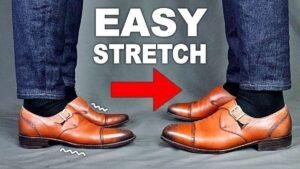
Tight shoes can cause blisters, sore toes, numbness, and foot pain. In most cases, you can loosen shoes that feel tight across the width or around the toe box. The safest method depends on the shoe material and where the pressure occurs.
Start with a shoe stretcher for leather, suede, or firm fabric shoes. For a small amount of extra room, try thick socks and gentle warmth. If the shoes are too short, badly misshapen, or painful after a few careful attempts, return them or take them to a professional shoe repair shop. Stretching can add width, but it usually cannot add meaningful length.

First, find out why the shoes feel tight
The best stretching method depends on the type of tightness. A shoe may feel small because of its width, length, toe shape, upper material, or internal padding.
Check these areas before you begin:
- Toes touching the front: The shoes may be too short. Stretching will not solve this well.
- Pressure on the sides: The shoes may need more width.
- Pressure on the top of the foot: The instep or vamp may be too low.
- Heel slipping while the front feels tight: The shoe may have the wrong shape or size.
- One foot hurting more than the other: Feet often differ in size. Fit the larger foot.
- Pain, numbness, or tingling: Stop wearing the shoes. These signs may mean the fit is unsafe.
A properly fitted shoe should leave enough room for your toes to spread and move. Your heel may lift slightly when you walk, but it should not slide up and down enough to cause rubbing.
Shoes made from leather and suede usually respond better to stretching than shoes made from plastic, vinyl, or coated synthetic material. Knit and mesh uppers may loosen with wear, but aggressive heat can damage them.
How to stretch tight shoes at home
Use one method at a time. Make small changes, then check the fit. A shoe that is stretched too far may lose its shape or fail to support your foot.
Method 1: Wear thick socks
This method works best when the shoes are only slightly tight.
- Put on one or two pairs of thick socks.
- Wear the shoes indoors for 10 to 15 minutes.
- Walk slowly and check for sharp pressure or rubbing.
- Remove the shoes if your feet become numb or painful.
- Repeat once or twice a day for several days.
This method uses gradual pressure to soften and loosen the upper. It is safer than forcing the shoes, but it may not work on stiff leather or hard synthetic materials.
Do not use thick socks if your toes are already cramped. Extra sock layers can increase pressure and make the problem worse.
Method 2: Use gentle heat with thick socks
Low heat may help leather or some flexible synthetic shoes become more pliable. It also carries a greater risk of damage.
- Put on thick socks.
- Wear the shoes.
- Set a hair dryer to low or medium heat.
- Hold it about 6 to 8 inches from the tight area.
- Warm the area for about 20 to 30 seconds.
- Move your foot while the material is warm.
- Keep the shoes on until they cool.
Never hold the dryer in one place. High heat can dry out leather, loosen glue, melt synthetic materials, or change the finish. Avoid this method for patent leather, delicate suede, plastic shoes, shoes with glued decorations, and shoes with foam parts that may deform.
If the shoes are leather, apply a suitable leather conditioner after the material cools. Test any product on a hidden area first.
Method 3: Use a two-way shoe stretcher
A shoe stretcher gives you more control than socks or heat. A two-way stretcher can expand both the width and length, but it should be used mainly for small fit changes.
- Choose a stretcher made for the shoe type.
- Place it inside the shoe.
- Turn the handle until it fits snugly.
- Add bunion or pressure-point plugs if the stretcher includes them.
- Turn the handle a small amount, usually about one-quarter turn.
- Leave the stretcher in place for 8 to 24 hours.
- Remove it and try on the shoes.
- Repeat slowly if more room is needed.
Do not force the stretcher. You should feel firm pressure, not extreme resistance. Stretching too fast can split seams, distort the toe, or pull the sole away from the upper.
For suede, use a stretcher made for suede and follow the material instructions. Suede can develop marks or a changed nap if it becomes wet or overheated.
Method 4: Use a shoe-stretch spray
A shoe-stretch spray can soften some leather and suede uppers. It does not make every shoe larger, and it may darken or stain some finishes.
- Read the label and confirm that the spray suits your material.
- Test it on a hidden part of the shoe.
- Spray a light amount on the inside or outside as directed.
- Insert a shoe stretcher.
- Leave the stretcher in place for the time listed on the product label.
- Wipe away excess spray and let the shoes dry fully.
Use good airflow and keep sprays away from heat or flames. Do not soak the shoes. Too much liquid can damage the lining, stain suede, weaken adhesives, or create an odor.
Method 5: Take the shoes to a shoe repair professional
A cobbler is the best choice for expensive shoes, stiff leather, delicate finishes, tight dress shoes, and shoes with a specific pressure point.
A professional may use a stretching machine, shaped forms, or targeted plugs. They can also assess whether the shoes are too short or poorly shaped. Ask for a small stretch first. A professional cannot safely turn a narrow size into a much larger shoe.
Which shoe-stretching method should you choose?
Use the simplest method that matches the problem. This table gives a practical starting point.
| Problem | Best first option | Main caution |
|---|---|---|
| Slightly tight leather shoes | Thick socks | Stop if toes feel numb |
| Tight leather across the width | Shoe stretcher | Expand slowly |
| Pressure over a bunion area | Stretcher with a pressure plug | Stretch only the affected spot |
| Tight suede shoes | Suede-safe spray and stretcher | Test for color change |
| Tight fabric or knit shoes | Short indoor wear sessions | Avoid high heat |
| Plastic or vinyl shoes | Return, exchange, or see a cobbler | They may not stretch well |
| Toes touching the front | Different size or shape | Stretching adds little length |
| Expensive or delicate shoes | Professional shoe repair | Home heat may cause damage |
A simple rule helps: stretch for width, replace for length. If your longest toe touches the front when you stand, the shoe is likely too short. Your toes should not press against the end during normal walking.
Shoe size also changes during the day. Feet often swell after hours of standing or walking. Try shoes in the afternoon or evening, and wear the socks you expect to use with them.
What not to do when stretching shoes
Some popular methods can damage shoes or create a poor fit.
Do not pour boiling water into the shoes
Water can stain leather, damage glue, shrink some materials, and harm the lining. Hot water also gives you little control over where the shoe stretches.
Be cautious with the freezer method
Filling bags with water and freezing them inside shoes may create outward pressure, but it can also distort the shoe, strain seams, and damage materials as the water expands. It is especially risky for glued shoes, delicate leather, and shoes with electronic or heated parts.
A shoe stretcher is more controlled and easier to remove before damage occurs.
Do not soak shoes in rubbing alcohol
Alcohol may soften some finishes, but it can remove color, dry leather, and damage coatings. It can also leave an uneven result.
Do not use a clothes dryer or oven
Strong heat can shrink, warp, melt, or separate shoe parts. It may also damage foam cushioning and synthetic soles.
Do not wear painful shoes for hours
Pain is not proof that the shoes are stretching correctly. Long wear can cause blisters, skin tears, pressure sores, and irritation. People with diabetes, reduced sensation, poor circulation, or foot problems should be especially careful because they may not feel damage early.
How to tell whether the shoes fit after stretching
Try the shoes indoors on a clean floor. Wear the socks you plan to use outside.
Check for these signs:
- Your toes can move without pressing into the front.
- The sides do not pinch when you stand.
- The upper does not create a sharp pressure point.
- Your heel stays mostly in place.
- You can walk for 10 to 15 minutes without rubbing.
- Your feet do not become numb, hot, or tingling.
- The shoe still holds its shape and supports your foot.
Look at your skin after wearing the shoes. Red marks that fade quickly may show mild pressure. A blister, deep mark, swelling, or lasting pain means the fit still needs attention.
If one shoe fits and the other does not, use a targeted stretcher or have only the tight shoe professionally adjusted. Do not stretch both shoes equally by habit.
When stretching will not fix the problem
Stretching is not a substitute for the correct size or shape.
Replace or return the shoes when:
- Your toes touch the front.
- Your heel slips badly.
- The arch sits in the wrong place.
- The shoe bends in the wrong spot.
- The upper cuts into your ankle.
- The sole feels unstable.
- You need to stretch the shoes by more than a small amount.
- Pain continues after a careful adjustment.
A shoe can feel tight because the last—the mold used to shape it—does not match your foot. A wide shoe may still feel wrong if it has a narrow toe box. In that case, buying a different shape is more effective than trying to force the current pair to fit.
For ongoing foot pain, repeated blisters, numbness, or pressure over a bunion or hammertoe, speak with a podiatrist or another qualified health professional. A shoe repair shop can alter the shoe, but it cannot diagnose a foot condition.
Key takeaways
- Use a shoe stretcher for controlled, gradual width changes.
- Try thick socks first when the shoes are only slightly tight.
- Use low heat only with materials that can tolerate it.
- Do not expect stretching to add much length.
- Avoid boiling water, strong heat, and soaking methods.
- Stop if you feel numbness, sharp pain, or tingling.
- Choose a cobbler for costly, delicate, or stiff shoes.
- Return shoes that are too short or badly shaped.
Frequently asked questions
Can I stretch shoes that are one size too small?
Usually not with good results. A shoe stretcher may add a small amount of width, but it cannot safely add a full size in length. If your toes touch the front, choose a larger size or a different shape.
How much can shoes stretch?
The amount varies by material, construction, and location. Leather often gives more than plastic or coated synthetic material. Most home methods are best for small adjustments, not major size changes.
Can I stretch sneakers?
Sometimes. Thick socks and short indoor wear sessions may loosen fabric or knit uppers. A shoe stretcher may help some leather or firm sneakers. Avoid high heat because it can damage foam, glue, mesh, and synthetic coatings.
How long does it take to stretch shoes?
Thick socks may take several short wear sessions. A shoe stretcher often stays in place for 8 to 24 hours, followed by a fit check. Several gentle rounds are safer than one forceful attempt.
Can a cobbler stretch shoes wider?
Yes, a shoe repair professional can often stretch certain shoes in the width or at a pressure point. Results depend on the material, seams, sole, and amount of extra room needed.
Sources and further reading
- American Academy of Orthopaedic Surgeons: Foot and Ankle Conditioning
- American Orthopaedic Foot & Ankle Society: Shoe and Foot Care
- American Diabetes Association: Foot Care
Conclusion
The safest way to stretch tight shoes is to make a small change at a time. Start with thick socks for mild tightness, use a shoe stretcher for controlled width adjustments, and choose a cobbler for delicate or valuable footwear. If the shoes are too short or cause pain, stretching is unlikely to solve the problem—another size or shape is the better answer.
Rubel Miah is the Senior Editor at MyStyleGrid.com, where he brings a sharp editorial eye and an unshakable love for fashion to everything he does. A true style addict, Rubel lives and breathes trends, from streetwear to high fashion, and has a knack for turning inspiration into impactful stories. With years of experience in fashion journalism and digital media, he curates content that empowers readers to express themselves through style. When he’s not editing features or forecasting the next big thing, you’ll find him hunting down vintage pieces or capturing street style moments around the city.