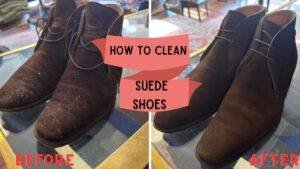
If you wear black suede shoes in the United States, you know how fast dust, road salt, rain, and sidewalk grime can dull the nap. The safest way to clean black suede is to brush it dry first, treat stains with as little moisture as possible, and let the shoes air-dry away from heat.
For most light dirt, you need only a suede brush, a clean cloth, and patience. Before using any cleaner, check the shoe’s care label or the manufacturer’s instructions. Some shoes use real suede, while others use synthetic microfiber with different care limits.
Introduction
Black suede is leather with a soft, raised surface called the nap. That nap gives suede its rich color and texture, but it can also trap dirt and show water marks.
Do not clean suede like smooth leather. Avoid soaking it, scrubbing hard, using household soap, or placing it in a washing machine. Those methods can flatten the nap, create pale rings, spread stains, or damage the dye.
The method below works best for everyday dirt and many small stains. Deep oil marks, large water stains, mold, and dye damage may need a professional suede cleaner or shoe repair shop.

What You Need to Clean Black Suede Shoes
Gather the tools before you start:
- A suede brush or soft crepe brush
- A clean, dry microfiber cloth
- A suede eraser or clean white pencil eraser
- A small amount of clean water
- White vinegar or rubbing alcohol for select stains
- Paper towels or plain white paper
- Shoe trees, crumpled paper, or clean towels
- A suede protector made for the shoe material
Use white tools and cloths when possible. Colored cloth can transfer dye to black suede or leave a mark that is hard to see until the shoe dries.
Test first
Test any liquid, eraser, or cleaner on a hidden part of the shoe. A tongue edge or inside heel works well. Let the test area dry fully before treating the visible surface.
This check matters even with black suede. Black dye can fade, lift, or become uneven when exposed to the wrong cleaner.
Identify the material
Look at the label or product page:
- Real suede: Made from the underside of animal hide. It needs gentle brushing and minimal moisture.
- Nubuck: Made from the outer part of the hide and sanded to create a fine surface. It often needs a nubuck-specific brush.
- Synthetic suede: Made from man-made fibers. It may tolerate more moisture, but the maker’s care instructions still control.
- Smooth leather with a suede-like finish: Follow the material label, not the shoe’s color or appearance.
A suede brush is not a universal tool for every fuzzy shoe. If the surface is very fine, start with a soft brush and light pressure.
How to Clean Black Suede Shoes Step by Step
Follow this order: remove loose dirt, lift marks, treat stains, dry the shoes, and restore the nap.
1. Remove the laces and inserts
Take out the laces and removable insoles. Clean the laces separately with mild detergent and water if the care label allows it.
Removing the laces exposes the tongue and prevents moisture or cleaner from collecting beneath them.
2. Let wet dirt dry
If the shoes have mud on them, do not scrub while the mud is wet. Let it dry at room temperature.
Wet mud can spread through the nap. Once dry, tap the soles together outdoors or over a trash can to remove loose pieces.
3. Brush away surface dirt
Use a suede brush with short, gentle strokes. Brush in one direction first, then lightly brush against the nap to loosen trapped dust.
Do not press hard. Heavy pressure can flatten the fibers and create shiny patches.
For seams, the welt, and the area around the sole, use the edge of the brush or a soft toothbrush. Keep the brush away from wet mud and oily stains until you have chosen the right treatment.
4. Lift scuffs with a suede eraser
Rub a suede eraser over dry scuff marks with light pressure. A clean white pencil eraser can work for small marks.
Brush away the eraser crumbs after each short pass. Stop if the color begins to look lighter or the surface becomes smooth.
An eraser removes surface transfer. It will not remove every deep stain, and repeated rubbing can wear the nap.
5. Treat water marks evenly
A small water spot may leave a ring because one area dried at a different rate from the rest of the panel. Rather than wetting only the ring, lightly dampen the entire affected panel with a clean cloth.
Use very little water. The goal is to make the surface evenly damp, not wet. Blot excess moisture, insert paper or a shoe tree to support the shape, and let the shoe dry naturally.
Once dry, brush the nap back into place.
6. Treat salt marks
Road salt is common on U.S. sidewalks and streets during winter. Brush off dry salt first. Then dab the mark with a cloth lightly dampened with a solution of equal parts white vinegar and water.
Do not pour the mixture onto the shoe. Use a small amount, test it first, and dab rather than scrub. After the mark lifts, allow the shoe to dry completely and brush the nap.
Vinegar has a strong smell while wet, but the odor usually fades as the shoe dries. If the stain remains, stop adding liquid rather than repeatedly soaking the material.
7. Treat grease or oil carefully
Blot fresh oil with a dry paper towel. Do not rub it into the nap.
For a small, dry oil spot, apply a thin layer of cornstarch or plain talcum powder. Leave it for several hours or overnight, then brush it away. This may absorb some surface oil, but it is not guaranteed to remove a deep stain.
Avoid kitchen degreasers, dish soap, and strong solvents. They can strip color and leave a larger discolored patch.
8. Dry the shoes slowly
Place the shoes in a cool, well-ventilated room. Fill them with plain paper or use unvarnished shoe trees to help them keep their shape.
Keep suede away from:
- Hair dryers
- Clothes dryers
- Radiators
- Heat vents
- Direct, strong sunlight
Heat can shrink leather, harden the surface, and cause uneven fading. Replace damp paper as needed.
9. Brush the dry nap
When the shoes are fully dry, brush them gently. Use short strokes to lift flattened fibers.
If the suede still looks uneven, brush the whole panel rather than only one small spot. This helps reduce visible differences in texture.
10. Apply suede protector
After cleaning, apply a protector designed for suede or nubuck. Follow the product label and spray in a ventilated area.
Hold the product at the stated distance and use light, even coats. Let the shoes dry fully before wearing them. A protector can help reduce future staining, but it does not make suede waterproof.
How to Remove Common Stains From Black Suede
The best treatment depends on the stain. Use this table as a quick guide, then test the method on a hidden area.
| Stain or problem | First action | Safer treatment | Avoid |
|---|---|---|---|
| Dust or dry dirt | Brush when dry | Suede brush | Wet scrubbing |
| Scuff mark | Use a suede eraser | Brush away residue | Hard rubbing |
| Water ring | Dampen the whole panel lightly | Dry slowly and brush | Spot-wetting only the ring |
| Road salt | Brush off dry crystals | Light vinegar-water dabbing | Soaking the shoe |
| Fresh oil | Blot immediately | Cornstarch or talc for a small mark | Rubbing or dish soap |
| Chewing gum | Harden it with cold | Gently lift pieces | Pulling while soft |
| Wax | Harden and lift carefully | Use a blunt edge | Heat from an iron or dryer |
| Ink | Blot if fresh | Test a tiny amount of rubbing alcohol | Spreading the ink |
| Mold or mildew | Isolate the shoes | Seek professional cleaning | Brushing mold indoors |
Chewing gum and wax
For gum, place the shoe in a plastic bag and chill it briefly in the freezer if the shoe’s construction allows. The goal is to harden the gum, not to freeze the shoe for a long time.
Once hard, lift the gum with a dull edge. Do not use a knife. Brush the area after the residue is gone.
Wax can also be hardened and lifted in small pieces. Do not use an iron, hair dryer, or hot water. Heat can spread wax and damage the nap.
Ink
Ink is difficult to remove from suede. If the mark is fresh, blot it with a clean cloth. Never rub outward from the center, because that can enlarge the stain.
Some care guides suggest a small amount of rubbing alcohol for ink, but it can change the color or texture. Test first and use a barely damp cotton swab. For a large ink mark, professional cleaning is safer.
What to Do if Your Black Suede Shoes Get Wet
Wet suede is not automatically ruined. The key is to dry it slowly and evenly.
- Blot surface water with a clean towel.
- Remove the laces and insoles.
- Fill the shoes with plain paper or use shoe trees.
- Let them dry at room temperature.
- Brush the nap after they are fully dry.
- Treat any remaining ring across the full affected panel, not just the edge.
Do not place wet suede near a heater. Fast heat may cause the leather to shrink or become stiff.
If the shoes are soaked through, dry them for at least a full day before judging the result. A temporary stiff feel can improve after brushing. If the surface remains hard, shiny, cracked, or badly discolored, a shoe repair professional may be able to improve it, though no treatment can guarantee a full restoration.
Can You Clean Black Suede Shoes With Water, Soap, or a Washing Machine?
Use only a small amount of water when the material and care instructions permit it. Water itself is not always the problem; uneven wetting, soaking, heat, and poor drying cause many visible marks.
Avoid regular soap unless the shoe manufacturer specifically approves it. Soap can leave residue in the nap and may change the finish.
Do not put real suede shoes in a washing machine. The agitation, soaking, detergent, and heat can damage the leather, glue, shape, and color. Some synthetic shoes may be labeled machine washable, but that is a product-specific exception, not a general suede-care rule.
Household products to avoid include:
- Bleach
- Laundry detergent
- Baking soda paste
- All-purpose cleaner
- Acetone or nail-polish remover
- Oily leather conditioner
- Furniture polish
- Harsh stain removers
These products may remove color, leave residue, or flatten the nap.
How to Restore Faded or Shiny Black Suede
Brushing can restore a flattened nap, but it cannot always restore lost dye.
If the shoes look shiny, brush gently in several directions with a suede brush. The shine may come from compressed fibers or surface oils.
If the color looks gray or patchy, use a black suede renovator only after checking the material and testing the product. A renovator is a color-restoring spray, not a cleaner. It can darken the shoe, transfer color, or create uneven results if sprayed too heavily.
Apply it outdoors or in a well-ventilated area. Protect nearby surfaces, use light coats, and allow the shoes to dry before brushing.
Do not use black shoe polish made for smooth leather. It can coat the nap and leave the surface sticky or glossy.
How to Keep Black Suede Shoes Clean Longer
Good storage reduces the need for aggressive cleaning.
- Brush the shoes after wearing them in dusty or wet conditions.
- Let them air out before placing them in a closed box.
- Store them in a cool, dry space.
- Use shoe trees or plain paper to help preserve their shape.
- Keep them away from direct sun, which can fade black dye.
- Apply a suede protector according to its label.
- Rotate suede shoes instead of wearing the same pair every day.
- Treat stains soon, before oil and dirt settle into the nap.
A short brush after each few wears is safer than a strong cleaning session after months of buildup.
Common Mistakes When Cleaning Suede
The most damaging mistakes are usually too much moisture, too much force, or too much heat.
Scrubbing one small spot
This can create a smooth or pale patch. Treat the affected panel evenly and use light strokes.
Cleaning before removing dry dirt
Water can turn loose dust into mud. Brush first unless the dirt is already wet.
Using a colored cloth
Dye may transfer to the shoe. Choose white or colorfast materials.
Applying too much product
Sprays, erasers, vinegar, and renovators all work best in small amounts. More product does not mean better cleaning.
Wearing the shoes before they dry
Damp suede can pick up new dirt and lose its shape. Wait until the surface feels fully dry.
Treating mold as a normal stain
Mold may spread to other items and can be a respiratory irritant. Keep affected shoes away from clothing and living areas, avoid dry-brushing them indoors, and consult a professional cleaner.
When to Use a Professional Shoe Cleaner
Professional help makes sense when:
- The shoes are expensive, vintage, or difficult to replace.
- The stain covers a large section.
- Oil, ink, paint, or dye has soaked deeply into the suede.
- The shoes have mold or mildew.
- The leather has cracked, shrunk, or become stiff.
- Home treatment has already caused uneven color.
- The soles or glued parts are separating.
Ask the cleaner whether they handle suede and nubuck specifically. A general dry cleaner may not provide the same process as a shoe repair shop or specialist leather cleaner.
No cleaner can promise that every stain will disappear. Suede can lose dye or change texture during cleaning, especially when the stain is old or the shoe has already been treated with another product.
Frequently Asked Questions
Can I use a toothbrush to clean black suede shoes?
Yes, a clean, soft toothbrush can help with seams and small areas. It is not a replacement for a suede brush on the main surface. Use light pressure so you do not flatten or roughen the nap.
Does black suede need special cleaner?
Not always. Dry brushing and a suede eraser may handle everyday dirt. For liquid cleaners, renovators, or protectors, choose a product labeled for suede or nubuck and test it first.
How do I clean black suede shoes without changing the color?
Use dry methods first, avoid soaking, and test every product in a hidden area. Treat the entire affected panel when moisture is needed. Uneven wetting is a common cause of color differences.
Can I use vinegar on black suede?
Diluted white vinegar may help with small salt marks, but it is not a universal suede cleaner. Use a small amount, dab gently, and test first. Never soak the shoe in vinegar.
How often should I clean black suede shoes?
Brush them whenever they show dust or after wearing them in dirty conditions. Deep cleaning should be occasional. Cleaning too often can wear the nap and affect the color.
Conclusion
The safest answer to “how do you clean black suede shoes?” is simple: brush them dry, erase small scuffs, treat stains sparingly, dry them away from heat, and brush the nap again when finished.
Start with the least aggressive method. If the shoes are soaked, badly stained, moldy, or valuable, stop before the damage grows and contact a suede-cleaning professional. For your next step, remove the laces, let any mud dry, and test your brush or cleaner on a hidden area first.
Rubel Miah is the Senior Editor at MyStyleGrid.com, where he brings a sharp editorial eye and an unshakable love for fashion to everything he does. A true style addict, Rubel lives and breathes trends, from streetwear to high fashion, and has a knack for turning inspiration into impactful stories. With years of experience in fashion journalism and digital media, he curates content that empowers readers to express themselves through style. When he’s not editing features or forecasting the next big thing, you’ll find him hunting down vintage pieces or capturing street style moments around the city.