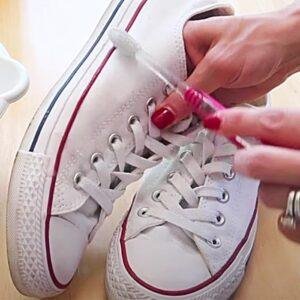
White tennis shoes are easy to wear and hard to keep clean. Dust from sidewalks, grass stains, road salt, and food marks can turn bright shoes gray or yellow. The good news is that most white canvas, knit, leather, and rubber shoes can be cleaned at home with mild soap, cool water, and a soft brush.
For shoes worn around the United States, start by checking the care label or the maker’s instructions. Then remove loose dirt, clean the upper with the right method for its material, treat the soles, and let the shoes air-dry away from heat. Do not put leather, suede, or glued shoes in a washing machine unless the manufacturer clearly allows it.

What You Need to Clean White Tennis Shoes
Gather the supplies before you start. You will need:
- A soft shoe brush or old toothbrush
- Mild liquid laundry detergent or gentle dish soap
- A bowl of cool or lukewarm water
- A clean white cloth or sponge
- Baking soda for odor or light grime
- A melamine sponge for rubber soles only
- White paper towels or a clean white towel
- A small mesh laundry bag, if machine washing is allowed
Use white tools when possible. A colored cloth can transfer dye to a white shoe.
Avoid strong cleaners unless the shoe maker approves them. Chlorine bleach can weaken fabric, damage glue, and leave yellow stains. Hot water can also shrink fabric or loosen the bond between the sole and upper.
Identify the Shoe Material First
The safest cleaning method depends on the shoe’s upper material. The upper is the part that covers your foot. The sole is the bottom part that touches the ground.
| Shoe material | Best cleaning method | Main risk |
|---|---|---|
| Canvas | Mild soap, soft brush, gentle hand wash | Shrinking or water marks |
| Mesh or knit | Light soap solution and gentle dabbing | Snags and stretched fibers |
| Smooth leather | Damp cloth and leather-safe cleaner | Cracking or loss of finish |
| Suede or nubuck | Dry brush and suede cleaner | Dark water stains |
| Rubber | Soap, brush, or melamine sponge | Scuffs or surface wear |
| Synthetic leather | Damp cloth and mild soap | Peeling from harsh cleaners |
If you are unsure, treat the shoe as delicate. Test any cleaner on a hidden area first. Wait until that spot dries before cleaning the whole shoe.
Material matters because water does not affect every shoe in the same way. Canvas can usually handle more moisture than leather. Suede needs a mostly dry method, while rubber soles can tolerate more scrubbing than the upper.
How to Clean White Canvas or Fabric Tennis Shoes
This method works well for most white canvas sneakers and fabric tennis shoes.
1. Remove the laces and insoles
Take out the shoelaces and removable insoles. Clean them separately. This lets you reach dirt around the tongue and eyelets.
If the insoles have a strong odor, sprinkle a small amount of baking soda on them. Let it sit for several hours, then shake or vacuum it away. Do not soak foam insoles unless the shoe maker says it is safe.
2. Brush away dry dirt
use a dry soft brush to remove loose dirt. Brush over the upper, tongue, seams, and outsole. Work from the top of the shoe toward the sole.
Dry brushing matters because wet dirt can spread into the fabric. It can also make small bits of grit harder to remove.
3. Make a mild cleaning solution
Mix a small amount of mild detergent with cool or lukewarm water. The water should look slightly soapy, not thick or cloudy.
A useful starting point is about one teaspoon of detergent in two cups of water. This is a cleaning guide, not a strict formula. More soap does not mean cleaner shoes. Extra soap can leave a film that attracts more dirt.
4. Scrub gently
Dip the brush into the solution, then tap off the excess. Scrub the fabric in small circles. Focus on dirty areas, seams, and the area around the toe.
Do not fully soak the shoe. Too much water can cause shrinkage, stains, odor, and glue failure. Use a damp cloth to lift away loosened dirt as you work.
5. Clean the rubber sole
Use the same soap solution on the rubber midsole and outsole. A toothbrush works well for narrow grooves.
For black scuff marks, lightly use a damp melamine sponge on the rubber only. Do not use it on fabric, leather, suede, or printed areas. Its abrasive surface can dull or remove the finish.
6. Rinse away soap
Wipe the shoe with a clean cloth dampened with plain water. Repeat until no soapy feel remains.
Do not hold the shoe under a running faucet unless the care instructions allow full rinsing. Controlled moisture is safer for most glued shoes.
7. Air-dry correctly
Press a clean towel against the shoe to remove extra water. Stuff the toe with white paper towels to help the shoe keep its shape.
Let the shoes dry at room temperature in a well-ventilated spot. Keep them away from radiators, clothes dryers, fireplaces, and direct heat. Heat can warp the sole, shrink fabric, or damage adhesive.
Replace damp paper as needed. The shoes may need a full day to dry, depending on how wet they became.
How to Clean White Leather Tennis Shoes
White leather needs less water and less scrubbing than canvas.
- Remove loose dirt with a dry soft brush or cloth.
- Mix mild soap with a small amount of water.
- Dampen a soft white cloth. Do not soak it.
- Wipe one small section at a time.
- Remove soap with a second damp cloth.
- Dry the shoe with a clean towel.
- Apply a leather conditioner only if the shoe maker recommends one.
Do not use baking soda as a scrub on smooth leather. It can dull the finish. Avoid toothpaste, alcohol, acetone, and chlorine bleach. These products may dry the leather or strip its coating.
If the shoe has a coated finish, patent surface, printed design, or painted detail, test the cleaner in a hidden area first. Some marks are not dirt. They may be scuffs or loss of color that cleaning cannot repair.
How to Clean White Mesh or Knit Tennis Shoes
Mesh and knit uppers need a light touch. Their fibers can snag, stretch, or trap soap.
Start by brushing off dry dirt. Then use a soft toothbrush or soft shoe brush with a diluted soap solution. Dab and brush lightly instead of pressing hard.
Use a clean damp cloth to lift away soap. Avoid twisting, wringing, or bending the upper while it is wet. Stuff the shoes with white paper and let them dry naturally.
Do not use a stiff brush on knit fabric. Do not scrub one spot for a long time. If a stain remains, repeat the gentle process after the shoe dries rather than applying a stronger chemical.
How to Clean White Suede or Nubuck Shoes
Suede and nubuck should not be cleaned like canvas. Too much water can create dark rings and flatten the nap, which is the soft, raised surface of the material.
Use this process:
- Let mud dry completely.
- Brush away the dirt with a suede brush.
- Use a suede eraser on small dry marks.
- Brush the area again to restore the texture.
- For deeper stains, use a cleaner made for suede or nubuck.
- Follow that product’s label and test it first.
Do not use dish soap, bleach, or a soaking method on suede. For oil, ink, large water marks, or color transfer, a shoe repair professional may be safer than repeated home treatment.
How to Wash White Shoelaces
Shoelaces often make clean shoes look dirty. Remove them before cleaning the shoes.
Place the laces in a bowl of warm water with a small amount of mild detergent. Let them soak for about 10 to 15 minutes. Rub the laces together or brush them gently with a toothbrush.
Rinse well and press them in a towel. Air-dry them fully before putting them back in the shoes.
You can also place sturdy fabric laces in a mesh laundry bag and wash them with a cool, gentle load. Do not machine wash leather, waxed, elastic, or decorative laces unless their care instructions allow it.
How to Remove Common Stains From White Tennis Shoes
Treat stains based on what caused them. Always remove loose dirt first and test a cleaning method in a hidden spot.
Grass stains
Use mild detergent and cool water. Brush gently from the outside of the stain toward the center. This helps limit spreading.
Avoid chlorine bleach. It may damage the fibers and can leave a yellow or pale green mark.
Mud
Let mud dry before brushing. Wet mud can spread and push grit deeper into the shoe. After brushing, use the mild soap method for the shoe’s material.
Road salt
Road salt can leave white or gray rings, especially on leather. Wipe the area with a clean cloth dampened with water. On leather, use a leather-safe cleaner if plain water does not remove the mark.
Let the shoe dry slowly. Do not use direct heat.
Grease or oil
Blot fresh grease with a clean paper towel. Do not rub it. For suede, use a suede-safe product. For canvas, a small amount of mild detergent may help, but old oil stains may not come out fully.
Scuff marks
Use a damp cloth first. If the mark is on rubber, try a melamine sponge with light pressure. Keep the sponge away from the upper.
Red stains or dye transfer
These stains can be difficult to remove. Do not keep adding stronger products. On delicate materials, aggressive cleaning may cause more damage than the stain itself.
Can You Put White Tennis Shoes in the Washing Machine?
Some fabric or canvas tennis shoes can go in a washing machine, but hand washing is usually gentler. Check the care label or the manufacturer’s instructions first.
If machine washing is approved:
- Remove the laces and insoles.
- Brush off loose dirt.
- Put the shoes in a mesh laundry bag or pillowcase.
- Wash with cool water on a gentle cycle.
- Use a small amount of mild detergent.
- Skip bleach and fabric softener.
- Air-dry the shoes.
Do not use a dryer unless the manufacturer specifically permits it. Dryer heat can shrink fabric, deform foam, and loosen the sole.
Avoid machine washing leather, suede, nubuck, shoes with glued decorations, and shoes with delicate foam or electronic parts. When in doubt, clean them by hand.
How to Whiten White Tennis Shoes Without Yellowing Them
The safest way to make white shoes look brighter is to remove dirt and soap residue, not to use harsh bleach.
Use these habits:
- Clean stains soon after they appear.
- Use mild detergent.
- Rinse away all soap.
- Dry shoes indoors or in shade.
- Keep wet shoes away from direct heat.
- Do not mix cleaning chemicals.
- Avoid chlorine bleach unless the shoe maker gives specific instructions.
Yellowing can come from bleach damage, heat, glue aging, or leftover detergent. Once the material or finish has changed color, cleaning may not restore the original shade.
Some white rubber soles also turn yellow with age. That change may come from oxidation rather than surface dirt. Scrubbing harder will not always fix it.
Common Mistakes to Avoid
A few popular cleaning methods can damage white shoes.
Using toothpaste
Toothpaste may remove a light mark from some rubber surfaces, but it is not a universal shoe cleaner. It can leave residue or dull materials. Use a mild shoe-safe cleaner instead.
Using too much baking soda
Baking soda can help absorb odor, but it is not a harmless scrub for every material. Avoid rubbing it into leather, suede, or delicate knit.
Soaking the entire shoe
A full soak can damage glue, padding, and shape. Clean with controlled moisture unless the care label says the shoe can be submerged.
Scrubbing with a hard brush
A stiff brush can rough up fabric, scratch leather, and remove surface color. Start with the softest tool that may work.
Drying shoes in the sun or dryer
Fast heat can cause shrinkage and yellowing. Air-drying takes longer but creates less risk.
Cleaning only the visible top
Dirt often hides around the tongue, eyelets, seams, and sole edge. Clean these areas gently so the shoe looks even when dry.
What to Do If the Cleaning Does Not Work
If the stain remains, stop before using a stronger chemical. Let the shoe dry completely, then check whether the mark is dirt, scuffing, dye transfer, or material damage.
Repeat a mild cleaning method once if the shoe is still dirty. Do not keep scrubbing the same spot. Repeated friction can create a lighter patch or damage the fibers.
Consider professional cleaning or repair when:
- The shoe is suede or nubuck with a large stain.
- The leather is cracked or peeling.
- The sole is separating.
- Dye has transferred deeply into the material.
- The shoe has paint, ink, or chemical damage.
- The care label warns against water cleaning.
A professional may not restore every stain, but they can reduce the chance of further damage.
How to Keep White Tennis Shoes Clean Longer
Clean shoes stay brighter when dirt does not have time to build up.
- Brush off dust after outdoor use.
- Wipe small marks as soon as you notice them.
- Rotate pairs so each pair can dry fully.
- Store shoes in a cool, dry place.
- Keep them away from wet floors and muddy areas.
- Use a material-safe protective spray if the manufacturer recommends one.
- Do not store damp shoes in a closed gym bag.
- Wash or replace dirty laces.
A quick wipe takes less time than a deep clean. Think of it as sweeping the floor before mud gets tracked through the house.
Quick Answer: What Is the Best Way to Clean White Tennis Shoes?
For most white canvas or fabric tennis shoes, brush off dry dirt, clean with a mild soap solution and soft brush, wipe away residue, and air-dry with white paper inside. Use less water for leather, a dry method for suede, and extra care with mesh or knit.
FAQs
Can I use hydrogen peroxide on white tennis shoes?
Hydrogen peroxide may lighten some fabric stains, but it can also affect color, coatings, and glue. Do not use it without checking the shoe maker’s guidance. A mild soap solution is a safer first step.
How often should I clean white tennis shoes?
Clean them when dirt or stains appear. A light wipe every few wears can reduce the need for deep scrubbing. The best schedule depends on use, weather, and the shoe material.
Why did my white shoes turn yellow after washing?
Yellowing may result from bleach, heat, glue aging, oxidation, or soap residue. Rinse thoroughly, avoid direct heat, and do not repeat harsh treatments. Cleaning may not reverse a permanent material change.
Can I use a Magic Eraser on white shoes?
A melamine sponge can help remove marks from rubber soles. Use light pressure and keep it off leather, suede, mesh, knit, fabric, and printed details. It works by mild abrasion, so it can wear down some surfaces.
How can I remove odor from white tennis shoes?
Remove the insoles and let the shoes dry fully. Sprinkle baking soda inside the shoes, leave it for several hours, and remove it before wearing them. Do not use baking soda as a hard scrub on delicate uppers.
Conclusion
The best way to clean white tennis shoes is to match the method to the material. Use mild soap and controlled moisture for canvas, less water for leather, a dry brush for suede, and gentle dabbing for mesh or knit. Clean the rubber separately, rinse away residue, and air-dry every pair away from heat.
When a stain does not lift, stronger is not always better. A careful second pass is safer than bleach, heavy scrubbing, or a hot dryer. Start with the mildest method that fits the shoe, and check the care label before using a washing machine or chemical cleaner.
Rubel Miah is the Senior Editor at MyStyleGrid.com, where he brings a sharp editorial eye and an unshakable love for fashion to everything he does. A true style addict, Rubel lives and breathes trends, from streetwear to high fashion, and has a knack for turning inspiration into impactful stories. With years of experience in fashion journalism and digital media, he curates content that empowers readers to express themselves through style. When he’s not editing features or forecasting the next big thing, you’ll find him hunting down vintage pieces or capturing street style moments around the city.