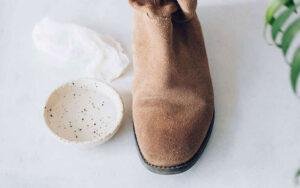
You can fix most suede shoes at home if the damage is limited to dirt, light water marks, scuffs, or small stains. Start by letting the shoes dry fully, then brush the nap—the soft, raised surface of suede—with a suede brush. Use a suede eraser for scuffs, a small amount of suede cleaner for deeper stains, and a professional cobbler for severe oil marks, torn suede, or color damage.
Suede is common in shoes sold across the United States, from casual sneakers to boots and loafers. Road salt, rain, sidewalk grime, grass, and spilled drinks can all leave marks on it. The good news is that suede often looks much better after careful cleaning. The bad news is that too much water, heat, or rubbing can cause permanent damage.

What You Need Before You Fix Suede Shoes
Gather the right tools before you begin. Using household cleaners or rough brushes can flatten the nap, spread a stain, or remove the shoe’s color.
You will usually need:
- A suede brush or clean, soft-bristled brush
- A suede eraser or clean white pencil eraser
- A clean white cloth
- Suede cleaner made for the shoe’s color and material
- Clean water in a small bowl
- Paper towels or plain white towels
- Shoe trees, crumpled paper, or clean socks
- A suede protector spray, if the care label allows it
Avoid colored towels. Dye from a towel can transfer to light suede. Also avoid dish soap, bleach, ammonia, hydrogen peroxide, alcohol, and multipurpose cleaners unless the shoe maker specifically approves them.
Check the shoe material first
“Suede” is a type of leather with a sanded, napped surface. Nubuck is also sanded leather, but it normally has a finer and slightly stronger surface. Many synthetic shoes use microfiber or faux suede, which may react differently to cleaners.
Check the tongue, inside lining, box, or care label. If the shoe is faux suede, follow its instructions first. If you cannot identify the material, test any cleaner on a hidden area.
Test every method in a hidden spot
Apply a small amount of the product to an inside edge or area under the tongue. Let it dry completely. Check for:
- A darker or lighter patch
- Color bleeding
- A stiff or shiny surface
- A change in texture
- A visible ring around the test area
If you see any of these changes, stop. A professional shoe repair shop may be able to help.
How to Fix Dirty or Dusty Suede Shoes
Dry dirt is usually the easiest suede problem to fix. Do not add water at first. Water can turn loose dirt into mud and push it deeper into the fibers.
Follow these steps:
- Remove the laces.
- Let the shoes dry if they are damp.
- Stuff the shoes with paper or shoe trees so they keep their shape.
- Brush away loose dirt with a suede brush.
- Brush in one direction first, then use short strokes from several angles.
- Use light pressure around seams and edges.
- Brush the nap back into place when the surface looks clean.
A suede brush has different sides for different jobs. The soft bristles lift dust. A rubber or crepe side can help remove surface marks and restore the nap. Use the rough metal side, if the brush has one, with care. Heavy pressure can scrape the suede.
If the dirt is stuck
For dried mud, wait until the mud is fully dry. Break off large pieces with your fingers or the edge of a plastic card. Do not use a knife or other sharp tool. Brush away the remaining dust.
If a dark patch remains, use a cleaner designed for suede. Apply it to the whole affected panel rather than only the center of the mark when the product instructions call for broad application. Cleaning one small spot can create a noticeable color difference.
How to Remove Scuffs and Shiny Marks
A light scuff often comes from crushed nap rather than missing material. A suede eraser can lift the mark and bring back the soft texture.
To treat a scuff:
- Make sure the shoe is dry.
- Brush off loose dirt.
- Rub the suede eraser gently over the mark.
- Use short strokes instead of hard, repeated rubbing.
- Brush away the eraser crumbs.
- Raise the nap with a suede brush.
A clean white pencil eraser may work on a small mark, but a suede eraser is less likely to leave residue.
When the suede looks shiny
Shiny spots can appear when the nap has been pressed flat. Brush the area gently in more than one direction. If the mark remains, hold the shoe near steam for only a few seconds, without letting water touch it. Then brush the nap while it is slightly relaxed.
Use great care with steam. Too much heat or moisture can shrink leather, loosen glue, or leave water stains. Do not hold the shoe over boiling water, and do not use a clothes steamer directly on the suede.
If the shiny area is caused by wear, not crushed fibers, home treatment may not restore it. A cobbler may be able to recolor or refinish the panel.
How to Fix Water Stains on Suede
Small water spots often leave rings because the leather dries unevenly. The safest approach is to dampen the entire suede panel lightly and evenly, rather than soaking only the ring.
Use this method:
- Remove dirt with a dry brush.
- Put a small amount of clean water in a bowl.
- Dampen a clean white cloth and wring it out well.
- Lightly wipe the full panel around the stain.
- Keep the moisture even. Do not saturate the leather.
- Blot excess water with a dry towel.
- Insert shoe trees or paper to hold the shape.
- Let the shoe dry at room temperature.
- Brush the nap when the shoe is fully dry.
This process can reduce a water ring, but it is not guaranteed to remove deep staining. Some suede changes color after contact with water. Dark, pale, or dyed suede may react differently.
What not to do with wet suede
Do not:
- Put suede shoes in a dryer
- Place them on a radiator or heating vent
- Use a hair dryer on high heat
- Leave them in direct, hot sunlight
- Scrub wet suede
- Wear them until the inside and outside are dry
Fast heat can make leather stiff, warped, or cracked. Drying at room temperature takes longer, but it is safer.
How to Remove Oil, Grease, and Food Stains
Oil stains are among the hardest suede stains to remove. Act quickly, but do not rub. Rubbing spreads oil and pushes it farther into the leather.
For a fresh, small oil mark:
- Blot the area with a clean white cloth or paper towel.
- Do not press hard.
- Cover the mark with an absorbent powder recommended for suede, such as a suede-safe cleaning powder.
- Leave it in place according to the product directions.
- Brush the dried residue away.
- Repeat only if the care instructions permit it.
Some people use cornstarch or talc as an absorbent treatment, but these home methods are not risk-free. Powders can leave residue, and they may not work on every dye or finish. A suede cleaning product with clear instructions is the safer choice.
For old grease, large food stains, or dark oil marks, take the shoes to a cobbler. Home attempts may spread the stain or create a pale patch that is harder to repair.
How to Remove Salt Stains from Suede Boots
Salt stains are common on footwear used during snowy or icy winters in states such as Illinois, New York, Michigan, and Colorado. They often appear as white edges or crusty lines after road salt dries on the shoe.
First, brush away dry salt. Then use a suede-safe cleaner or a very lightly dampened white cloth to treat the affected panel. Work gently and avoid soaking the shoe.
A light acidic solution is sometimes used for salt residue, but vinegar can change the color of suede and leave its own odor. If the shoe maker does not approve it, test it in a hidden area first. Commercial suede salt-stain cleaners are often easier to control.
After the shoe dries:
- Brush the nap back into place.
- Check for remaining white marks.
- Repeat only as directed by the cleaner.
- Apply a compatible suede protector after the shoe is fully clean and dry.
If salt has caused a stiff texture, deep discoloration, or cracking, professional cleaning may be needed.
How to Clean Suede Shoes With a Suede Cleaner
A suede cleaner is useful when brushing and erasing do not remove the mark. Choose a product labeled for suede or nubuck. Read the instructions because formulas differ.
A careful cleaning process looks like this:
- Remove the laces and loose dirt.
- Test the cleaner on a hidden section.
- Apply the recommended amount to a cloth, sponge, or brush.
- Clean with gentle, even strokes.
- Treat the full panel if the directions require an even finish.
- Remove residue as directed.
- Let the shoe dry naturally.
- Brush the nap after drying.
Do not mix cleaning products. Mixing chemicals can damage the leather and may create harmful fumes. Work in a well-ventilated space, and keep cleaners away from children and pets.
Some suede shoes have a coating, printed pattern, contrast trim, or glued decoration. Cleaner that is safe for plain suede may damage those parts. Protect nearby materials or ask a shoe repair professional before cleaning the whole shoe.
How to Repair Torn, Cracked, or Bald Suede
Cleaning cannot repair missing suede. If the surface is worn smooth, torn, or cracked, the problem is structural rather than dirt-related.
Small surface wear
For mild bald spots, brushing may improve the texture. A suede recoloring product may also help, but color matching can be difficult. Test it first, and use a product made for the shoe’s material.
Tears and cuts
A small tear may be repairable with a flexible leather or suede adhesive. The repair must stay flexible when the shoe bends. Ordinary craft glue and super glue can become hard and may leave a visible, shiny patch.
Use adhesive only if:
- The tear is small.
- The surrounding suede is still strong.
- The damaged area does not sit on a high-flex bend.
- The product is made for leather or suede.
- You can test it first.
For a large tear, separated sole, broken seam, or damage near the toe crease, use a cobbler. A professional can use a patch, matching material, stitching, dye, or adhesive suited to footwear.
Cracked suede
Cracks usually mean the leather has dried out, been overheated, or suffered heavy wear. A conditioner made specifically for suede may improve flexibility, but it cannot rebuild missing fibers. Do not use ordinary smooth-leather shoe polish or heavy leather oil. Those products can darken suede and flatten its nap.
How to Restore the Color of Suede Shoes
Color loss can sometimes be corrected with a suede dye or renovator spray. These products are not simple cleaners. They add or refresh color and can permanently change the shoe.
Before applying one:
- Match the color as closely as possible.
- Test it in a hidden spot.
- Mask soles, midsoles, laces, and hardware.
- Apply light, even coats.
- Let each coat dry before adding another.
- Brush the nap after the final coat dries.
A color product may not cover bleach marks, deep oil stains, or uneven fading. It may also make a light shoe darker. When both shoes need treatment, apply the product evenly to both so they match.
For expensive, vintage, designer, or brightly colored shoes, professional refinishing is usually safer than experimenting at home.
How to Dry and Protect Suede Shoes
Drying is part of the repair. Proper drying helps prevent wrinkles, odor, and shape loss.
Place the shoes in a cool, dry room. Insert shoe trees or loosely packed plain paper. Replace wet paper as needed. Keep the shoes away from strong heat and allow them to dry fully before brushing or wearing them.
Once clean and dry, a suede protector can help reduce future staining. It does not make suede waterproof, and it does not prevent every mark. Spray outdoors or in a well-ventilated area, follow the label, and let the shoes dry before use.
Reapply protection only as often as the product label recommends. Too much spray can change the texture or darken some suede.
A simple care schedule
- Brush after wearing the shoes in dusty or dirty areas.
- Treat spots before they set.
- Let wet shoes dry before storing them.
- Store them in a breathable shoe bag, not a sealed plastic bag.
- Keep them away from direct sun and heat.
- Use shoe trees or paper to preserve their shape.
When You Should Take Suede Shoes to a Professional
A cobbler or professional cleaner is the better choice when the damage is extensive or the shoes are valuable. Seek professional help for:
- Large oil or grease stains
- Bleach or chemical damage
- Deep water discoloration
- Torn panels or broken seams
- Extensive color loss
- Mold or a strong musty odor
- A separated sole
- Suede that has become hard, cracked, or badly warped
- Designer, vintage, or sentimental shoes
Tell the professional what caused the damage and what products you already used. This information can affect the repair method.
Avoid wearing shoes with a loose sole or an open tear. Continued wear can enlarge the damage and make a repair more expensive.
Common Mistakes That Damage Suede
The most common suede repair mistakes involve too much moisture, heat, or force.
Avoid these methods:
- Washing suede shoes in a washing machine
- Soaking the shoes in a sink
- Scrubbing with a hard-bristled brush
- Using bleach or stain remover made for fabric
- Applying smooth-leather polish
- Using cooking oil as a conditioner
- Drying shoes with a hair dryer or heater
- Rubbing a wet stain
- Cleaning only the center of a large panel
- Skipping the hidden-area test
- Applying dark dye without testing the color
A small, controlled treatment is usually safer than a strong remedy. If the first attempt makes the mark larger or changes the color, stop and let the shoe dry before deciding what to do next.
Quick Decision Guide for Suede Shoe Damage
| Problem | First step | Best next action | When to stop |
|---|---|---|---|
| Dust or dry dirt | Brush when dry | Repeat with light strokes | If the nap starts to flatten |
| Light scuff | Use a suede eraser | Brush the nap | If color comes off |
| Water ring | Evenly dampen the panel | Dry at room temperature, then brush | If color changes sharply |
| Fresh oil | Blot without rubbing | Use a suede-safe absorbent treatment | If the stain spreads |
| Road salt | Brush off dry residue | Use suede-safe salt cleaner | If white marks remain after one careful treatment |
| Color loss | Test a suede renovator | Apply light, even coats | If the color does not match |
| Tear or cracked leather | Stop wearing the shoe | Contact a cobbler | Do not use hard glue |
The key trade-off is simple: light surface damage is often safe to treat at home, while deep stains and material damage become riskier with every extra product.
FAQs About Fixing Suede Shoes
Can you fix suede shoes with water?
Sometimes. Light, even moisture can reduce a water ring, but soaking suede may cause darker patches, stiffness, or shrinkage. Use as little water as possible, test first, and let the shoe dry naturally.
Can baking soda clean suede shoes?
Baking soda may absorb some odors, but it is not a universal suede cleaner. It can leave powder in the nap and may not remove stains. Use a product made for suede when possible, and brush away any dry powder fully.
Can you use a toothbrush on suede?
A clean, soft toothbrush can help with small areas, seams, or light dust. Avoid hard brushing and do not use a toothbrush covered with toothpaste or cleaner residue.
How do you fix suede shoes that got soaked?
Remove the laces, blot away excess water, stuff the shoes with plain paper, and let them dry at room temperature. Once fully dry, brush the nap. Do not use direct heat. Severe staining or shape loss may require professional cleaning.
Can you use a magic eraser on suede?
It is best to avoid it. A melamine sponge acts like a fine abrasive and can remove or flatten the nap. Use a suede eraser designed for the material instead.
How often should you protect suede shoes?
Use a suede protector according to its label rather than on a fixed schedule. Reapply after cleaning or when the product directions call for it. Test the spray first because some protectors darken suede.
Conclusion
To fix suede shoes, begin with the least aggressive method: let them dry, brush away dirt, and use a suede eraser for light scuffs. Treat water, salt, and stains with a suede-safe cleaner only after testing it in a hidden area. Avoid heat, soaking, harsh chemicals, and hard scrubbing.
If the suede is torn, cracked, badly stained, or valuable, stop experimenting and take it to a cobbler. Careful cleaning can restore the look of suede, but no home method can replace missing leather or reverse every type of damage.
Rubel Miah is the Senior Editor at MyStyleGrid.com, where he brings a sharp editorial eye and an unshakable love for fashion to everything he does. A true style addict, Rubel lives and breathes trends, from streetwear to high fashion, and has a knack for turning inspiration into impactful stories. With years of experience in fashion journalism and digital media, he curates content that empowers readers to express themselves through style. When he’s not editing features or forecasting the next big thing, you’ll find him hunting down vintage pieces or capturing street style moments around the city.