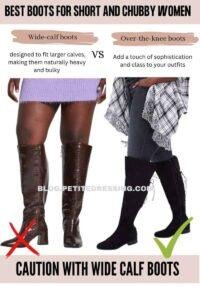
If a boot listing says “wide calf,” it means the boot has extra room around the lower leg. In the United States, this usually refers to the circumference of the boot shaft, not the width of your foot.
A wide-calf boot is made for people whose calves need more room than a standard boot provides. The exact measurement varies by brand, size, boot height, and style. Always check the brand’s calf chart before you buy.

What does “wide calf” mean?
Wide calf means the upper part of a tall boot has a larger shaft opening. The shaft is the part of the boot that covers your lower leg.
For example, a tall riding boot may list these measurements:
- Foot width: medium
- Shaft height: 15 inches
- Shaft circumference: 16 inches
- Calf fit: wide
In this example, 16 inches is the calf circumference. It is not the width of the shoe at your toes.
Many brands use “wide calf” for a shaft that measures several inches more than their standard calf size. However, there is no single U.S. standard for the term. One brand’s wide calf may fit like another brand’s extra-wide calf.
The key point is simple: wide calf describes the fit around your leg, while wide width describes the fit around your foot.
Wide calf vs. wide-width boots
These terms solve two different fit problems.
| Boot term | Where it adds room | Who may need it |
|---|---|---|
| Wide calf | Around the lower leg | A person with fuller calves |
| Wide width | Around the foot | A person with a broad foot |
| Wide calf and wide width | Around both areas | A person who needs room in the leg and foot |
A person can need one, both, or neither.
For example, you may have slim feet but full calves. In that case, you may need a wide-calf boot in a regular foot width. Another person may have wide feet but slim calves. That person may need a wide-width boot with a standard shaft.
Do not assume that a wide-calf boot also has a wide footbed. Check both measurements before ordering.
How to measure your calf for boots
Measure your calf before you shop. This gives you a better starting point than guessing from labels such as “wide” or “extra wide.”
What you need
Use:
- A soft tape measure
- A chair or flat surface
- The socks, pants, or leggings you plan to wear with the boots
- A piece of paper to record the number
Measurement steps
- Sit with your foot flat on the floor.
- Find the fullest part of your calf. This is often near the widest part of the muscle.
- Wrap the tape around your calf.
- Keep the tape level and snug, but do not pull it tight.
- Record the measurement in inches.
- Measure the other calf as well.
Use the larger measurement if your legs differ slightly.
If you plan to wear jeans or thick socks inside the boots, measure over them. For bare-leg wear, measure your bare calf. This small detail can change the fit.
Example
Suppose your calf measures 16 inches over the clothes you plan to wear. A boot with a listed calf circumference of 16 inches may feel tight because it offers no extra space.
A better target may be a boot with a shaft circumference of about 16.5 to 17 inches, depending on the material and the fit you want.
This is a practical estimate, not a universal rule. Stretch fabric may need less extra room than stiff leather. A zipper boot may fit differently from a pull-on boot.
How much extra room should a wide-calf boot have?
A boot should feel secure without cutting into your leg. Most people need a small amount of ease, or extra space, around the calf.
Consider these factors:
- Bare-leg wear: You may need less room.
- Jeans or leggings: You may need more room.
- Thick socks: Add more space.
- Stretch panels: The boot may adapt to small changes in calf size.
- Stiff leather: It may soften, but it will not always stretch enough to fix a poor fit.
- Zippers: A zipper can make the boot easier to put on, but it does not guarantee a larger calf opening.
A little space at the top can be helpful. Too much space can cause the boot to slide, fold, or rub.
As a general shopping method, compare your calf measurement with the brand’s shaft circumference measurement. Do not compare your calf size with the boot’s flat width unless the brand explains how it calculated that number.
Where is the calf measurement taken?
Boot brands do not always measure the shaft in the same place. This is one reason sizing charts can seem confusing.
A brand may measure:
- Around the top opening
- Around the widest part of the shaft
- At a stated point below the top
- With the boot fully closed
- With stretch material relaxed or extended
The boot’s shaft height also matters. A shorter boot may sit at a wider or narrower part of your leg than a taller boot.
Look for three measurements:
- Shaft height: How far the boot reaches up your leg.
- Shaft circumference: The distance around the boot opening or shaft.
- Foot width: The space across the part of the boot that holds your foot.
If a listing shows only “wide calf” but gives no measurement, contact the seller or look for the brand’s fit guide. A label alone does not tell you the true opening size.
Which boots are available in wide-calf sizes?
Wide-calf options are common in several tall-boot styles.
Tall riding boots
Riding boots often reach below the knee. They may come in standard, wide, and extra-wide calf options. Some include elastic panels at the back.
Fashion boots
Knee-high and over-the-knee fashion boots may offer wide-calf versions. These boots can have less flexible materials, so measurements matter.
Western boots
Many Western boots have a roomy shaft, but a roomy shaft is not the same as a wide-calf fit. The opening may still be too narrow for some legs. Check the shaft circumference when it is listed.
Rain boots
Tall rain boots often have a wide opening or adjustable gusset. This can help if you need room for pants. Rubber usually has less give than stretch fabric.
Dress boots
Tall dress boots may use leather, suede, or synthetic materials. Their shape can be narrow even when the product page uses a wide-calf label.
The best choice depends on the measured calf opening, the material, and how you plan to wear the boot.
Signs that your boots need a wider calf
Your boots may be too narrow in the calf if:
- The zipper stops before it reaches the top.
- The boot leaves deep marks on your skin.
- You feel pressure when you sit or bend your knee.
- The shaft pushes your pants down.
- The boot causes rubbing or numbness.
- The boot stretches outward at the zipper.
- The shaft feels tight after only a few minutes.
A small gap at the top does not always mean the boots are too loose. Some styles are designed to leave space. The main test is whether the boots stay in place and feel comfortable during normal movement.
Do not rely on “breaking in” to solve severe tightness. Leather may relax somewhat with wear, but a boot that restricts movement or causes pain is the wrong fit.
What if wide-calf boots are too loose?
A wide-calf boot can also be too large. Signs include:
- The shaft slides down while walking.
- The boot spins around your leg.
- Fabric or leather collapses at the ankle.
- Your heel lifts excessively.
- You need to tighten the boot far beyond its intended design.
Possible solutions include:
- Wearing thicker socks
- Wearing boot cuffs or leg warmers
- Choosing a style with an adjustable buckle
- Selecting a boot with a back gusset
- Trying a smaller shaft size if the foot still fits
Do not size down in the entire boot only to reduce calf room. A smaller foot size can cause toe pressure, heel pain, or cramped feet.
Can boots stretch in the calf?
Some boots can stretch a little, but the amount depends on the material and construction.
Stretch fabric usually gives more than stiff leather, rubber, or rigid synthetic material. A boot with an elastic panel may adjust to small changes in calf size.
A shoe repair professional may be able to stretch some leather boots. The result depends on the leather, the seams, the zipper, and the amount of extra room needed. Stretching cannot always create several inches of added circumference.
Avoid using heat, water, or forceful home methods. They can damage the material, weaken glue, stain leather, or change the shape of the boot.
How to shop for wide-calf boots online
Use this process to reduce fit problems:
- Measure both calves.
- Measure over your usual boot clothing.
- Find the brand’s calf circumference.
- Check where the brand took the measurement.
- Compare the shaft height with your leg.
- Check the foot width separately.
- Review the return policy before ordering.
- Try the boots on indoors if returns require unworn soles.
Read customer comments with care. A statement such as “runs small” may refer to the foot, calf, shaft height, or zipper. Look for reviews that name the actual calf measurement and clothing worn.
A product photo can also mislead you. The same boot may look loose on one model and close-fitting on another because calf shape varies.
Common mistakes when choosing a wide-calf boot
Mistake 1: Confusing calf width with shoe width
A wide-calf boot can still have a narrow toe box. Check both parts.
Mistake 2: Measuring the calf at the wrong spot
Measure the fullest part of the calf, not the ankle or the knee.
Mistake 3: Forgetting clothing
Jeans can take up more room than bare skin. Measure in the way you will wear the boots.
Mistake 4: Trusting the label alone
“Wide calf” is not a fixed measurement across all brands.
Mistake 5: Ignoring shaft height
A boot that reaches a different point on your leg may fit differently, even with the same listed circumference.
Mistake 6: Buying too tight and expecting major stretching
Minor softening may happen. Major size changes are not guaranteed.
Frequently asked questions
Is a wide-calf boot the same as an extra-wide boot?
No. These labels vary by brand. “Wide calf” and “extra-wide calf” describe different fit ranges within a brand, but the measurements may overlap across different brands.
What calf size is considered wide for boots?
There is no single U.S. measurement that defines wide calf. Many brands place wide-calf boots above their standard shaft measurements, but each brand sets its own range. Use the listed circumference rather than the label.
Can I wear wide-calf boots if I have skinny calves?
Yes, but the shaft may gap or slide. Look for adjustable straps, buckles, elastic panels, or a narrower calf option.
Do wide-calf boots fit wide feet?
Not always. Wide calf refers to the leg opening. The foot may still have a narrow, medium, or wide fit. Check the foot-width options separately.
Should boots be tight around the calf?
They should feel secure but should not pinch, cause pain, limit movement, or leave strong marks. You should be able to sit and walk without pressure.
Conclusion
Wide calf in boots means extra room around the boot shaft, or the part that surrounds your lower leg. It does not automatically mean the boot has a wider footbed.
Measure the fullest part of both calves, compare that number with the brand’s shaft circumference, and account for socks or pants. If the label and the measurement disagree, trust the measurement.
The best next step is to write down your larger calf measurement and use it when comparing boot size charts.
Rubel Miah is the Senior Editor at MyStyleGrid.com, where he brings a sharp editorial eye and an unshakable love for fashion to everything he does. A true style addict, Rubel lives and breathes trends, from streetwear to high fashion, and has a knack for turning inspiration into impactful stories. With years of experience in fashion journalism and digital media, he curates content that empowers readers to express themselves through style. When he’s not editing features or forecasting the next big thing, you’ll find him hunting down vintage pieces or capturing street style moments around the city.