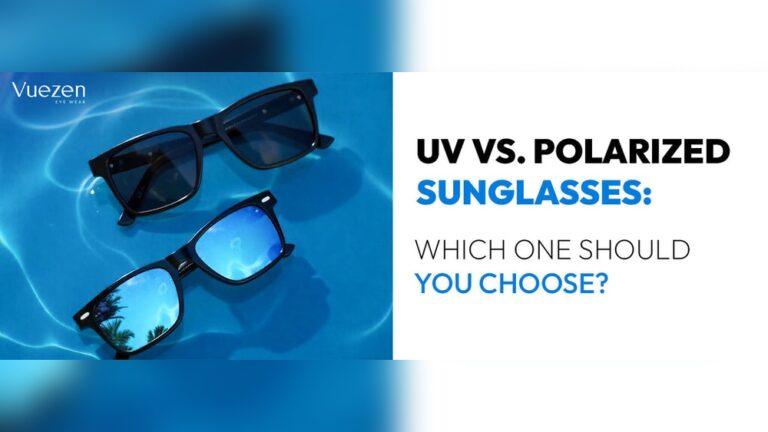
If you’ve ever shopped for sunglasses, you have probably seen two common terms: UV protection and polarized lenses. These words are everywhere—from the labels on stylish sunglasses in the store, to ads on your phone. But what do they really mean? And if you want to protect your eyes and see clearly on sunny days, which is better: UV or polarized sunglasses?
Let’s dive in together. I’ll explain each type in simple words, using real examples, facts, and what eye doctors say. By the end, you’ll know exactly which is right for you, so you can buy with total confidence.
What Does Uv Protection Mean?
When people talk about UV protection, they’re talking about how well sunglasses block ultraviolet (UV) light. UV light comes from the sun, and you can’t see it. But just because you can’t see it, doesn’t mean it isn’t there.
There are two types of UV rays that matter for your eyes:
- UVA rays: These go deep into your eyes, and can harm your retina over time.
- UVB rays: These mostly damage the outer part of your eye, like your cornea and lens.
Too much UV can cause problems, like:
- Cataracts (cloudy lens in your eye)
- Photokeratitis (sunburn of your eye, like snow blindness)
- Macular degeneration (loss of sharp vision)
Doctors say everyone should protect their eyes from UV, just like you protect your skin with sunscreen.
How Do Sunglasses Block Uv?
Sunglasses block UV by using special chemicals or coatings in the lens. You cannot see or feel this. Even clear lenses can sometimes block UV.
When you buy sunglasses, look for a sticker or label that says:
- “100% UV protection”
- “Blocks 99-100% UVA and UVB”
- “UV400” (blocks rays up to 400 nanometers)
If you don’t see these words, the glasses may not protect your eyes—even if they’re dark!
Common Myths About Uv Protection
- Dark lenses always block UV.
- Not true. Darkness of the lens does not mean it blocks UV. Some cheap sunglasses look dark but let UV pass through. This is risky, because your pupils open wider behind dark lenses, letting in even more UV.
- Expensive glasses are always better.
- Not always. Many affordable sunglasses have excellent UV protection. Always check the label, not just the price.
- All sunglasses sold in stores protect from UV.
- Sadly, no. Some fashion sunglasses have little or no UV protection. Only trust labels or test at a professional shop.
What Does Polarized Mean?
Polarized sunglasses are different. They focus on cutting glare, not blocking UV. Glare happens when sunlight bounces off flat surfaces—like water, roads, or snow—straight into your eyes. This makes it hard to see, tires your eyes, and can be dangerous, especially while driving or fishing.
How Do Polarized Lenses Work?
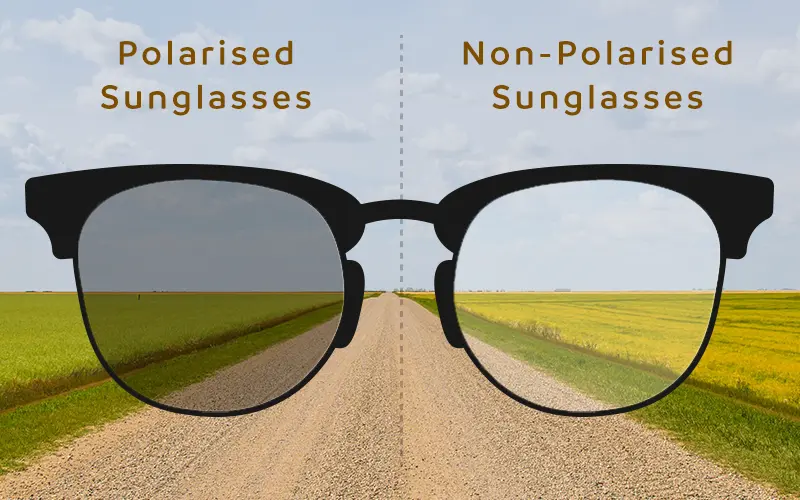
Polarized lenses have a special filter built in. This filter blocks light waves that bounce off flat surfaces horizontally (the main source of glare). Only vertical light passes through, so your eyes get a clearer view with less brightness.
Here’s a simple way to imagine it: Think of window blinds. If the blinds are turned one way, only light from a certain direction gets through. Polarized lenses do the same for your eyes.
Who Needs Polarized Sunglasses?
Polarized sunglasses are especially good for:
- Drivers: They reduce glare from the road and other cars.
- Fishermen and boaters: They cut glare from water, so you can see fish or hazards below the surface.
- Outdoor sports: Golf, cycling, skiing, and more—anywhere glare is a problem.
- People with sensitive eyes: If bright light bothers you, polarization helps a lot.
Important Note
Not all polarized sunglasses have UV protection! Some only cut glare, but do nothing to block harmful UV rays. For safe eyes, you want both features.
Uv Vs Polarized Sunglasses: Key Differences
Let’s compare the two types side by side, so you can see how they work. Here’s a helpful chart:
| Feature | UV Protection Sunglasses | Polarized Sunglasses |
|---|---|---|
| Blocks UV Rays | Yes (if labeled UV400 or 100%) | Only if also labeled UV protection |
| Reduces Glare | No | Yes |
| Improves Color Clarity | No | Yes |
| Good for Driving | Yes, for UV safety | Yes, for glare reduction |
| Good for Water Sports | Somewhat | Excellent |
| Required for Eye Health | Yes | No, but helpful |
| Can Be Combined? | Yes, many are both | Yes, many are both |
As you can see, they do different jobs. UV protection is about keeping your eyes healthy. Polarization is about making vision more comfortable and clear.
Do You Need Uv, Polarized, Or Both?
Here’s a simple answer: You always need UV protection. If you spend time outdoors, your eyes need to be safe from UV rays.
Polarization is optional, but very helpful if you:
- Drive a lot
- Spend time near water or snow
- Do sports outside
- Find glare painful or distracting
Many good sunglasses today offer both UV and polarized lenses. This is ideal for most people.
Let’s go deeper and see what happens if you choose only one or the other.
If You Buy Only Uv Protection
Your eyes will be safe from the sun’s harmful rays. But you might still have trouble seeing on bright days, especially around water, snow, or shiny roads.
If You Buy Only Polarized (no Uv)
You’ll see less glare, but your eyes are still at risk from UV damage. Over time, this can cause permanent eye problems—even blindness.
The Best Option
Look for sunglasses labeled:
- “Polarized”
- “100% UV protection” or “UV400”
If you see both, you’re getting the best of both worlds.
Real-life Examples
It helps to hear how these features work in real life. Let’s look at some common situations:
- Driving on a sunny day
- With only UV protection: Your eyes are safe, but you might squint from glare off other cars or the road.
- With polarization: The glare disappears, making it easier and safer to drive.
- Fishing at a lake
- With only UV: You can’t see beneath the water’s surface well.
- With polarization: You can spot fish, rocks, or weeds under the water because glare is blocked.
- Walking in the city
- With only UV: Your eyes are protected.
- With polarization: Shop windows and car hoods won’t blind you with glare.
- Playing sports like golf
- With only UV: Your eyes are safe, but you may lose track of the ball in bright light.
- With polarization: The course looks clearer, and you track the ball better.
What Should You Look For When Buying?
It’s easy to get confused by all the choices. Here are the most important things to check:
1. Uv Protection Level
Make sure the label says “100% UV protection,” “Blocks 99-100% UVA and UVB,” or “UV400. ” If you’re not sure, ask the seller or test them at an optical shop.
2. Polarization
If you want glare reduction, look for “Polarized” on the label. Some brands show this with a sticker, or on the inside arm of the glasses.
3. Lens Material
- Polycarbonate: Strong, light, often blocks UV. Good for sports.
- Plastic: Cheap, but can scratch and may not block UV unless treated.
- Glass: Clear, scratch-resistant, heavier. Can be polarized and UV protected.
4. Fit And Comfort
Sunglasses only work if you wear them! Make sure they fit well, don’t pinch, and cover your eyes fully. Wrap-around styles block more side sunlight.
5. Color And Tint
Lens color does not affect UV protection, but it can help with contrast and comfort. Gray, brown, and green are most common. Try different colors to see what you like best.
6. Lens Size And Shape
Bigger lenses or wrap-around shapes cover your eyes more, blocking light from the sides. This gives more complete protection.
7. Certification
Some sunglasses have extra certifications, like ANSI Z80.3 or CE marks. These mean the glasses passed certain safety tests.
Common Mistakes When Choosing Sunglasses
Even careful shoppers make mistakes. Here are some to avoid:
- Choosing style over protection. Fashion is nice, but your eyes must come first.
- Assuming dark lenses mean safe lenses. As we saw, lens color is not equal to UV protection.
- Not checking for polarization when you want glare reduction. Some brands sell “polarized style” sunglasses that aren’t really polarized.
- Forgetting fit and comfort. Uncomfortable glasses will sit in a drawer, not on your face.
- Thinking expensive is always better. Some budget glasses offer great protection.
The Science: How Much Uv Is Too Much?
You might wonder: how much UV is safe? Experts say there’s no safe amount of UV for your eyes. Even on cloudy days, up to 80% of UV rays can get through. Reflected light from water, snow, or sand is even stronger—so you need protection all year.
Here’s a simple chart to show how UV reaches your eyes:
| Situation | Approx. UV Exposure | Risk Level Without Protection |
|---|---|---|
| Sunny, midday | 100% | Very high |
| Cloudy day | Up to 80% | High |
| Snow or ice | Up to 90% reflected | Very high |
| Beach/sand | Up to 25% reflected | High |
| Water | Up to 100% reflected | Very high |
How Do You Test If Sunglasses Are Polarized?
If you want to check if sunglasses are polarized, try this easy trick:
- Hold the sunglasses in front of a computer screen (LCD screen).
- Look through the lenses, then slowly rotate them sideways.
- If the lenses turn dark or black at a certain angle, they are polarized.
You can also buy a small polarization tester from some optical shops, or simply ask the store for proof.
Are There Any Downsides To Polarized Lenses?
Polarized lenses are great for most people, but there are a few things to know:
- Screen visibility: Sometimes, polarized lenses make it hard to see screens on phones, car dashboards, or ATMs. The filter can block light from these screens, making them look dark or rainbow-colored.
- Pilots and heavy equipment operators: Some pilots avoid polarized lenses because they can hide important reflections from glass or instruments.
- Price: Polarized sunglasses are often a bit more expensive than non-polarized ones.

Credit: www.bantonframeworks.co.uk
Kids Need Protection Too
Children’s eyes let in more UV than adults, because their lenses are clearer. This means UV can reach deeper into their eyes and cause damage faster. Always choose sunglasses with full UV protection for kids. Polarization is a bonus, but UV is a must.
Prescription Sunglasses: Can You Get Both?
If you wear glasses for vision, you can still get all these benefits! Many brands now offer prescription sunglasses with both UV and polarization. Ask your eye doctor or optical shop for options.
Real Data And Research
- The World Health Organization says up to 20% of cataracts are caused by UV exposure.
- Studies show that people who spend lots of time outdoors (fishing, skiing, farming) have a much higher risk of eye diseases if they don’t use UV protection.
- Polarized sunglasses can reduce glare by up to 99%, making driving and water sports much safer.
You can read more from the American Academy of Ophthalmology for detailed medical advice.
Can You Tell The Difference When Wearing Them?
The difference is clear! When you put on true polarized sunglasses, you’ll notice:
- The world looks sharper and less bright
- Colors seem deeper and clearer
- Reflections off water, snow, or cars are almost gone
With UV-only sunglasses, you may still squint and see glare, but your eyes are safe.
Try this yourself: wear polarized sunglasses on a sunny day and look at a car windshield. The reflection will almost disappear.

Credit: www.oscarwylee.com.au
Are There Situations Where You Don’t Want Polarized Lenses?
A few. If you must read digital screens a lot in the sun, or if you’re a pilot, you might prefer UV-only lenses. For most people, though, polarization is a big plus.
What About Blue Light?
Some sunglasses also claim to block blue light. Blue light is different from UV, but it can make eyes tired after lots of screen time. For most outdoor needs, UV and polarization are more important.
Credit: www.feelgoodcontacts.com
How To Care For Your Sunglasses
To keep your glasses working well:
- Store them in a hard case when not using
- Clean with a soft microfiber cloth, not your shirt or paper towels
- Avoid leaving them in a hot car, which can damage coatings
- Check for scratches, which can reduce clarity and protection
If your lenses get badly scratched, it’s time to replace them—scratches can let in more UV.
The Bottom Line: Which Is Better?
So, is UV or polarized better? Here’s my honest advice:
- UV protection is a must. Never skip it.
- Polarized is a great bonus if you want clearer vision, less glare, and more comfort.
The best sunglasses have both. If you can, choose sunglasses that say “100% UV protection” and “Polarized. ” Your eyes will thank you, both now and in the future.
And remember: you don’t have to spend a fortune. Good protection comes in many price ranges—just check the labels.
If you’re still not sure, try different types at a shop. See what looks and feels best for you. Your eyes are worth it!
Frequently Asked Questions
What Does Uv400 Mean On Sunglasses?
UV400 means the sunglasses block all light rays with wavelengths up to 400 nanometers. This covers both UVA and UVB rays, giving full UV protection for your eyes.
Can Polarized Sunglasses Hurt Your Eyes?
No, polarized sunglasses do not hurt your eyes. They reduce glare, making vision more comfortable. But if they do not have UV protection, your eyes are still at risk from the sun’s harmful rays.
How Can I Tell If My Sunglasses Block Uv?
Check the label or sticker. Look for “100% UV protection,” “Blocks 99-100% UVA and UVB,” or “UV400. ” If there’s no label, ask the store or take them to an optical shop for testing.
Are Polarized Sunglasses Better For Driving?
Yes, polarized sunglasses are very helpful for driving. They cut glare from the road and other cars, making it easier and safer to see.
Do Children Need Uv Or Polarized Sunglasses?
Children need UV protection most, because their eyes are more sensitive. Polarization is also helpful, but always start with 100% UV protection for kids.
Choosing the right sunglasses is not hard when you know what to look for. Keep your eyes safe, enjoy the outdoors, and see the world clearly—every single day.
Madison Clark is a footwear expert and the voice behind MyStyleGrid.com. She specializes in honest shoe reviews, style tips, and practical guides to help readers find the perfect pair for any occasion. With years of experience in blogging and content creation, Madison makes footwear knowledge simple, stylish, and easy to follow.