Your cat likes your shoes because they carry your scent, offer comfort, and invite curious sniffing.
If you wonder, “why does my cat like my shoes,” the answer often comes down to scent, security, warmth, and instinct. Cats use smell to understand their world, so your shoes can feel like a small, familiar piece of you. This guide explains the behavior, when it is harmless, and how to respond if your cat chews, licks, or guards your footwear.

Why Does My Cat Like My Shoes?
The main reason your cat likes your shoes is their strong personal scent. Your feet have many sweat glands, and shoes hold odor from your skin, socks, floors, grass, and outdoor spaces. To a cat, this creates a rich scent story.
Cats have a powerful sense of smell. Their noses help them identify people, animals, places, and possible threats. Your shoes may smell more like you than many other items in the home, especially after a long day.
Shoes also sit on the floor, where cats spend much of their time. They are easy to reach, easy to sniff, and often left in the same spot. This makes them a familiar object in your cat’s daily environment.
In simple terms, your shoes are like a scented message from you. They tell your cat where you have been and provide a comforting reminder of a trusted person.

8 Common Reasons Cats Like Shoes
There is rarely just one answer to why does my cat like my shoes. Several natural behaviors may work together.
1. Your shoes smell like you
Cats often seek familiar scents when they feel relaxed or want comfort. Your shoes may carry your strongest everyday smell, especially if you wear them often.
This can explain why a cat sleeps beside sneakers, rubs against boots, or places a paw inside a slipper. The behavior may be a quiet form of bonding.
2. Shoes collect interesting outdoor smells
Your shoes pick up scents from sidewalks, soil, plants, other pets, and public places. Your cat may investigate them because they bring new information into the home.
For a curious cat, sniffing a shoe can be like reading the day’s news. The smell may reveal that you visited another house, walked near a dog, or stepped through a garden.
3. Shoes feel safe and familiar
Cats often choose objects that smell like their people. This may help them feel secure when you are away or when the home feels busy.
A shy cat may sleep near your shoes because they offer a familiar scent without the movement and noise that come with direct contact. This is especially common after a change in the home.
4. Shoes provide warmth
Some shoes hold heat after you take them off. Warmth can attract cats because they naturally seek comfortable places for rest.
Boots, slippers, and soft sneakers may also create a snug space for a paw or nose. Still, check shoes before putting them on, since a cat may hide inside them.
5. Your cat wants attention
Cats learn which actions make people react. If your cat bats at your shoes and you laugh, talk, or pick them up, the behavior may become a game.
This does not mean your cat is being spiteful. It means the cat has linked shoes with social attention.
6. Rubbing leaves a familiar scent
When cats rub their cheeks or bodies on objects, they spread scent from glands on the face and body. This behavior helps make an area feel familiar.
Your cat may rub against your shoes to mix its scent with yours. This can be a normal part of social bonding and territory marking.
7. The shape and texture feel good
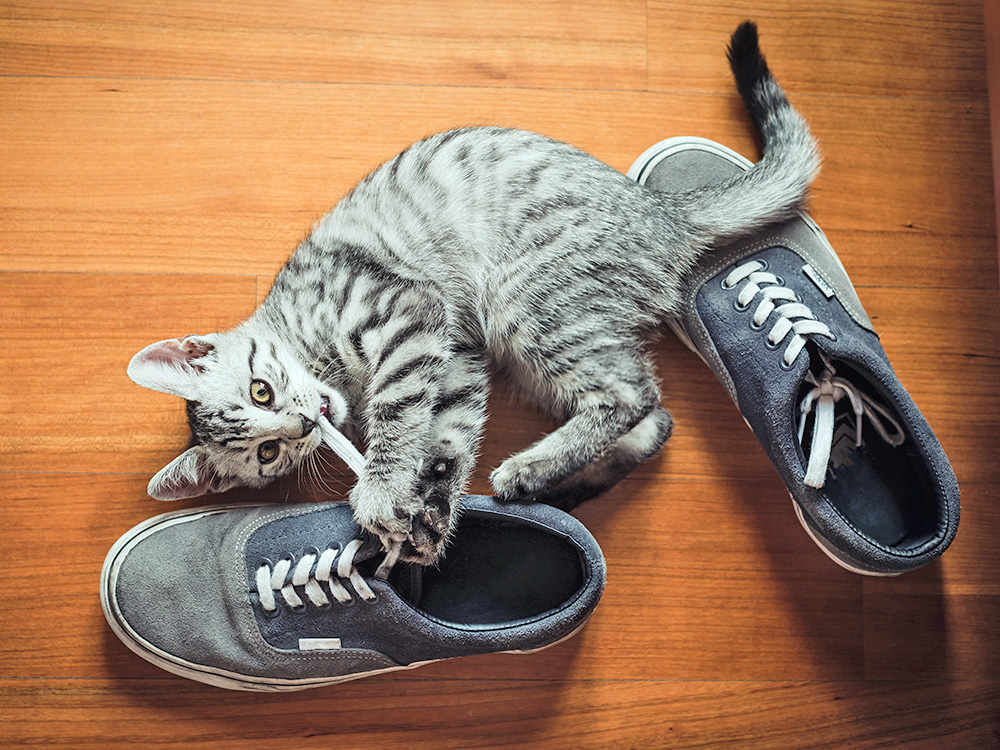
Laces, leather, rubber, and soft fabric can appeal to a cat’s senses. A shoe may be fun to paw, bite, roll over, or chase.
Young cats and playful adult cats may treat shoes like toys. The problem begins when chewing creates a health risk or damages the shoe.
8. Your cat may be bored
If your cat pays attention to shoes only when the house is quiet, boredom may play a role. Shoes are easy targets when there are few other activities available.
Cats need play, climbing, scratching, and hunting-style tasks. Without them, they may create their own entertainment from household objects.
Is It Normal for a Cat to Sleep on Shoes?
Yes, sleeping on or beside shoes is usually normal. Cats often rest near objects that carry familiar smells, and your shoes may help your cat feel close to you.
This habit may become more noticeable when you travel, work long hours, or change your routine. Your cat may be using your scent as a small source of comfort.
However, look at the whole picture. A cat that suddenly hides beside shoes, stops eating, vocalizes more, or avoids normal resting areas may be stressed or unwell.
Watch for changes such as:
• Loss of appetite
• Vomiting or diarrhea
• Excessive grooming
• Sudden aggression
• Hiding for long periods
• Changes in litter box use
If these signs appear, contact your veterinarian. Shoes may be comforting, but they should not be used to explain away a sudden behavior change.

Why Does My Cat Lick or Chew My Shoes?
Licking or chewing shoes can happen because of salt, scent, texture, or play. Human sweat contains salt, and some cats may be drawn to salty residue on footwear.
Chewing may also reflect kitten behavior, oral exploration, or boredom. Some cats enjoy the feel of rubber soles, soft laces, or leather.
Still, chewing shoes is not always safe. Shoes may contain cleaning chemicals, polish, glue, dye, or small parts that can cause harm if swallowed.
Keep an eye out for these risks:
• Loose laces that could be swallowed
• Small rubber or leather pieces
• Shoe polish and cleaning sprays
• Salt, pesticides, or road chemicals
• Sharp metal pieces
Never use strong scents or sprays to make shoes unpleasant. Essential oils can be toxic to cats, and some cleaning products can irritate the mouth, skin, or lungs.
Instead, store shoes in a closed cabinet and offer safe alternatives. A food puzzle, catnip toy, kicker toy, or supervised play session can redirect the behavior.

Why Does My Cat Like My Shoes More Than My Clothes?
A cat may prefer shoes because they often carry a stronger and more complex scent than shirts or sweaters. Shoes contact your feet, the ground, and many outdoor surfaces.
Your clothing may also be washed more often. Clean fabric holds less of your natural scent, while worn shoes can preserve it for hours.
Shoes also have firm shapes. A cat can rub against them, place a paw inside, or sit beside them. A shirt may be softer, but it may not offer the same scent strength or structure.
In some homes, cats prefer shoes because they are always placed in one predictable location. Cats usually enjoy routine, and a familiar shoe spot can become part of their comfort zone.

Why Does My Cat Like My Partner’s Shoes Too?
If your cat likes several people’s shoes, the behavior may be about scent exploration rather than one special person. Each pair carries a different smell and may provide new information.
Your cat may also enjoy the shape, warmth, or texture of the shoes. This is common in social cats that investigate every new object.
If your cat favors one person’s shoes, that person may have a stronger scent, a different routine, or footwear with a more attractive texture. It may also be linked to the person who gives the cat the most attention.
There is no reliable evidence that shoe preference proves a cat loves one person more. Cats show affection in many ways, including slow blinking, following, grooming, head rubbing, and resting nearby.

Why Does My Cat Like My Shoes When I Am Away?
Your cat may like your shoes more when you are away because they carry your familiar scent. This can provide comfort during a change in routine.
Some cats show mild separation stress when their people leave. They may sleep on clothing, wait near doors, vocalize, or search rooms. A shoe can become a scent-based link between the cat and the missing person.
A familiar-smelling object may help, but it is not a cure for serious anxiety. Provide a calm routine, daily play, safe resting places, and enough food and water.
If your cat panics when alone, ask a veterinarian for advice. A veterinary behaviorist can help identify anxiety and create a safe plan.
How to Stop a Cat From Chewing Shoes
You do not need to punish your cat for liking shoes. Punishment can create fear and may not teach the behavior you want.
Use a calm, consistent plan:
-
Put shoes away as soon as you remove them.
-
Block access to shoe racks or closets.
-
Offer a safe toy with a similar texture or shape.
-
Start a short play session when your cat approaches the shoes.
-
Praise calm behavior near the toy.
-
Rotate toys every few days to keep them interesting.
-
Add scratching posts, climbing areas, and food puzzles.
Use play that copies natural hunting. Move a wand toy like prey, let your cat catch it, and finish with a small meal or treat. This sequence can help satisfy the search, chase, catch, and eat pattern.
A common mistake is giving a cat a worn-out shoe as a toy. The cat may not understand why one shoe is allowed but another is forbidden. Clear rules work better when every shoe stays off-limits.
In behavior cases I’ve reviewed, the best results usually come from changing the environment rather than scolding the cat. Easy storage, daily play, and quick redirection solve more problems than loud corrections.
How to Make Shoes Safer Around Cats
Safe storage is the simplest solution. Use a closed shoe cabinet, lidded bin, or closet that your cat cannot open.
Clean shoes according to the manufacturer’s instructions. Avoid leaving wet shoes where a cat can lick them, especially if they have touched road salt, fertilizer, pesticides, or unknown chemicals.
Also keep these items away from cats:
• Shoe polish
• Waterproofing sprays
• Glue and adhesive removers
• Insoles with loose foam
• Shoelaces and small charms
• Boots treated with chemical products
If your cat swallows part of a shoe, contact a veterinarian promptly. Do not induce vomiting unless a veterinary professional tells you to do so.
Seek urgent help if your cat has trouble breathing, repeated vomiting, severe weakness, drooling, choking, or sudden collapse.
When Shoe Interest May Signal a Health Problem
Most shoe interest is harmless. Yet unusual chewing or licking can sometimes relate to pica, a condition in which an animal eats nonfood items.
Pica may be linked to boredom, stress, early weaning, nutritional problems, or medical conditions. A cat that eats fabric, plastic, rubber, or leather needs veterinary attention.
Contact your veterinarian if the behavior is:
• New and intense
• Focused on eating objects
• Hard to interrupt
• Linked with weight loss
• Paired with vomiting or constipation
• Present with changes in thirst or urination
A veterinarian may review your cat’s diet, environment, dental health, and overall condition. Blood tests or imaging may be needed in some cases.
Do not assume the behavior is only emotional. Stress can be part of the picture, but medical causes should be checked first when a cat is eating nonfood items.
What Experts Say About Scent and Cat Behavior
Veterinary behavior guidance commonly recognizes scent as a major part of feline communication. Cats use smell to mark familiar areas, identify other animals, and reduce uncertainty.
Research on feline behavior also supports the importance of environmental enrichment. Cats benefit from spaces that let them climb, scratch, hide, explore, and perform hunting-style activities.
Animal welfare groups and veterinary organizations advise using positive reinforcement instead of punishment. Rewarding a desired action helps cats learn what works while protecting trust between the cat and caregiver.
There are limits to what anyone can know from shoe behavior alone. A cat cannot explain whether it likes a shoe for comfort, salt, texture, or play. Context matters, so consider age, personality, routine, and health.
Simple Ways to Redirect Shoe Interest
Try these practical changes:
• Place a washable mat near the entryway and reward your cat for sitting there.
• Keep a toy basket close to the door.
• Give your cat a treat puzzle during busy periods.
• Schedule two or three short play sessions each day.
• Add a soft bed that carries a safe, familiar household scent.
• Keep outdoor shoes separate from indoor cat areas.
• Use a consistent cue such as “leave it,” followed by a toy or treat.
Never chase your cat around the house for a shoe. Chasing can turn the item into a prize and make the game more exciting.
Instead, stay calm, offer a better choice, and reward your cat when it switches targets. With repetition, your cat can learn that toys bring more fun than footwear.
Frequently Asked Questions About Why Does My Cat Like My Shoes
Why does my cat sleep in my shoes?
Your cat may sleep in your shoes because they smell like you and provide a familiar, enclosed space. The warmth and shape may also make them comfortable.
Why does my cat rub against my shoes?
Rubbing helps your cat spread its scent and combine it with a familiar human scent. It can be a normal sign of comfort, social bonding, or territory marking.
Is it safe if my cat licks my shoes?
A brief lick is not always harmful, but shoes can carry salt, chemicals, dirt, and cleaning products. Prevent licking and contact a veterinarian if your cat swallows residue or shows signs of illness.
Why does my cat chew my shoelaces?
Shoelaces move like prey and may be fun to chase or bite. Remove them from your cat’s reach because swallowed laces can cause a dangerous intestinal blockage.
Should I give my cat an old shoe as a toy?
It is better not to give cats shoes as toys. They may learn that chewing footwear is allowed, making it harder to protect new shoes and avoid unsafe materials.
When should I call a veterinarian about shoe behavior?
Call a veterinarian if your cat eats shoe parts, suddenly develops intense chewing, or has vomiting, constipation, drooling, weakness, or appetite changes. These signs may point to poisoning, a blockage, pica, or another health issue.
Conclusion
The answer to why does my cat like my shoes usually involves scent, comfort, warmth, curiosity, and play. Your shoes carry a strong reminder of you, while their texture and outdoor smells make them especially interesting.
Enjoy the harmless attention, but prevent chewing and licking by storing shoes safely and offering better outlets. Add daily play, enrichment, and calm redirection so your cat can explore without facing avoidable risks.
Try one change today, such as using a closed shoe bin or starting a short play session near the entryway. If your cat’s behavior changes suddenly or includes eating nonfood items, speak with your veterinarian and share your experience in the comments.

Rubel Miah is the Senior Editor at MyStyleGrid.com, where he brings a sharp editorial eye and an unshakable love for fashion to everything he does. A true style addict, Rubel lives and breathes trends, from streetwear to high fashion, and has a knack for turning inspiration into impactful stories. With years of experience in fashion journalism and digital media, he curates content that empowers readers to express themselves through style. When he’s not editing features or forecasting the next big thing, you’ll find him hunting down vintage pieces or capturing street style moments around the city.