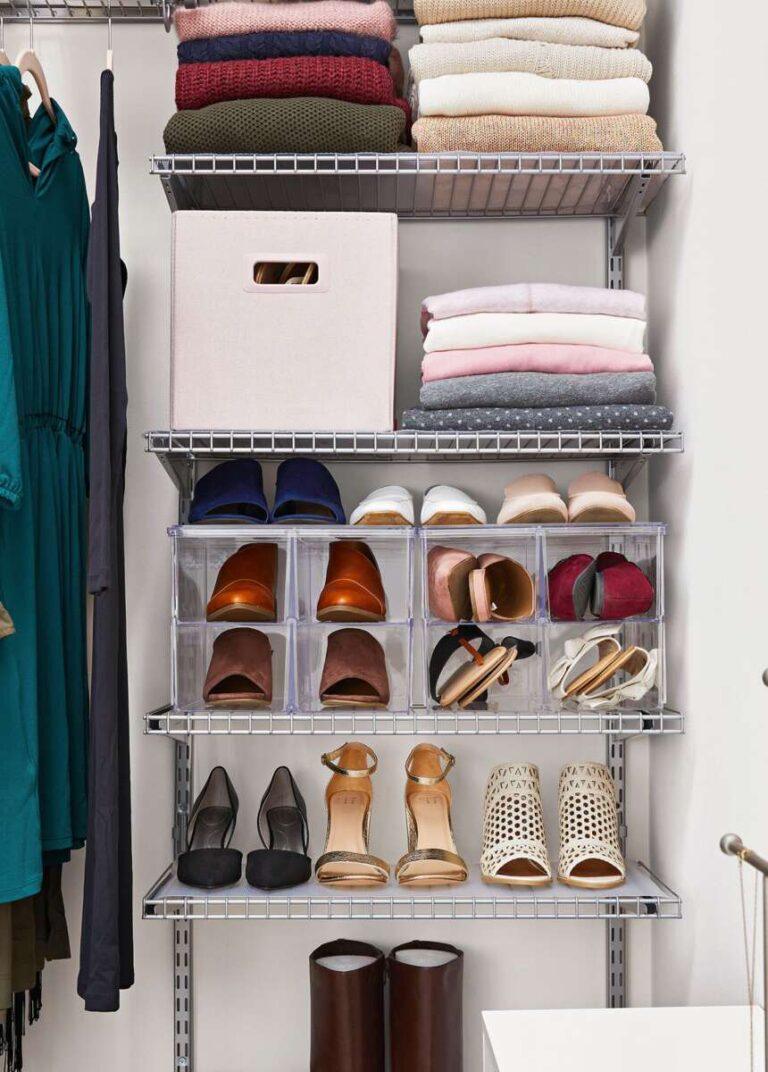
Keep shoes off damp floors with shelves, breathable bins, moisture control, and clear labeling.
I’ve helped dozens of homeowners and run tests in real garages, so I know what works and why. This guide on how to store shoes in garage explains practical steps, smart products, and common pitfalls. Read on for easy plans you can use today to protect shoes from moisture, pests, odor, and damage.
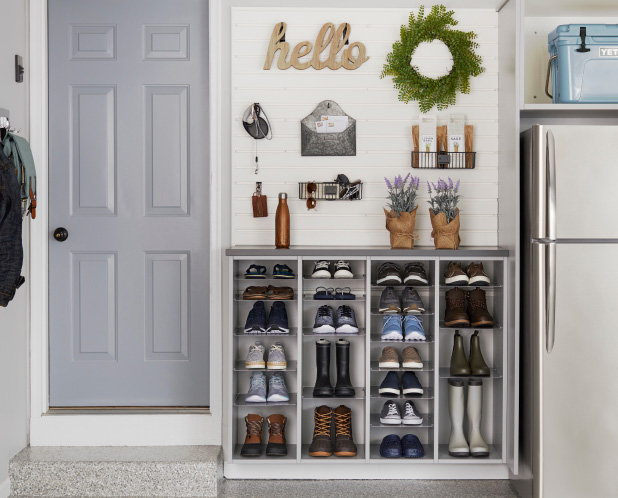
Why proper shoe storage in the garage matters
Garages are handy for shoe storage. But concrete floors, damp air, pests, and temperature swings can ruin shoes fast. Knowing how to store shoes in garage saves money, keeps gear ready, and extends shoe life.
Common harms include mold, sole separation, fading, and pest damage. Building science shows concrete can wick moisture into stored items. That is why elevation and moisture control matter when you learn how to store shoes in garage.

Risks and challenges when you store shoes in garage
Cold, wet concrete transfers moisture into shoe boxes and cloth. High humidity breeds mold and odor within days. Rodents and insects are drawn to soft liners and cardboard.
Chemicals stored in a garage can off-gas and harm leather and rubber. Temperature swings can dry glue and crack soles. Understanding these risks helps you pick the right storage method for how to store shoes in garage.
:max_bytes(150000):strip_icc()/271204785_1124938741678656_3354778696828968217_n-8c8415bdb4b5497da7693b715d98ca91.jpg)
How to prepare your garage for shoe storage
Start with a clean surface. Sweep and vacuum to remove dust and food crumbs. Wipe down shelves and walls with a mild cleaner.
Raise shoes off the concrete. Use pallets, risers, or wall shelves. This simple step prevents outgassing and moisture wicking when you store shoes in garage.
Control humidity. Use a dehumidifier or silica gel packs for enclosed bins. Aim for relative humidity below 60 percent to slow mold.
Check for pests. Seal gaps, fix torn screens, and keep food out of the garage. Regular checks lower the chance of damage when you store shoes in garage.
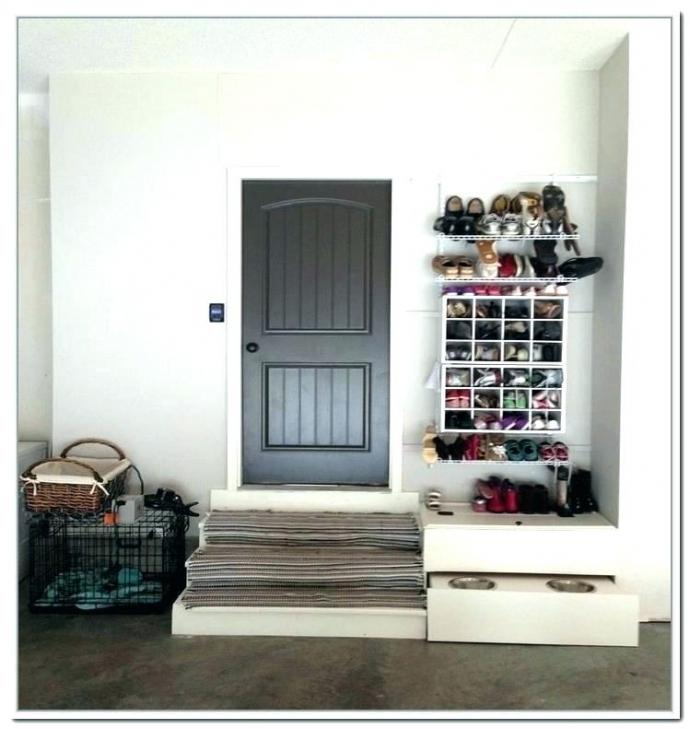
Best storage solutions and layout ideas
Consider these proven options for how to store shoes in garage:
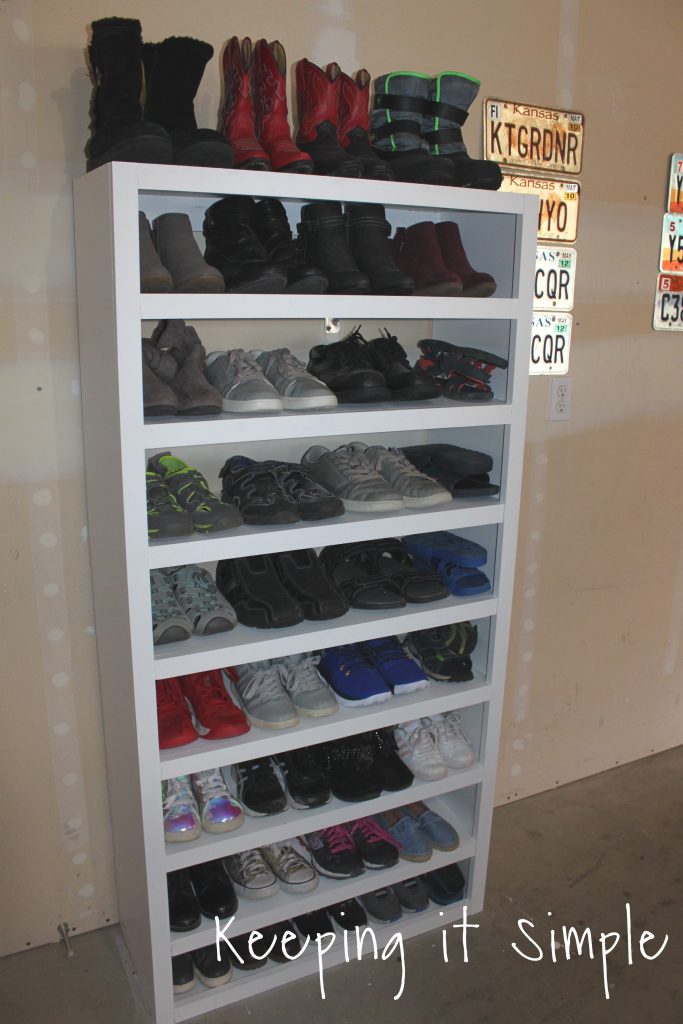
- Open metal shelving with plastic bins. Easy to access and dries fast after spills.
- Wall-mounted cubbies or shoe cubbies. Saves floor space and keeps shoes visible.
- Clear plastic shoe boxes with ventilation holes. Stackable and insect-resistant.
- Hanging closet organizers on garage doors. Good for off-the-floor storage for light shoes.
- Heavy-duty shoe racks near the door. Great for daily work boots and sneakers.
- Pegboard with hooks for hanging sandals and flip-flops. Flexible and cheap.
I once converted a narrow garage corner into labeled cubbies. Work boots lived bottom left. Dress shoes lived top right. The system lasted years and made mornings quicker. Small labels and clear bins make a big difference when you store shoes in garage.

Moisture control, pest prevention, and odor management
Moisture and smell are the main enemies of shoe care in garages. Use these tactics when you store shoes in garage:
- Place silica gel packets or desiccant canisters inside boxes. They absorb damp and reduce mold.
- Run a garage dehumidifier on humid days. It is the best fix for persistent damp.
- Use cedar blocks or sachets to repel moths and reduce odor. Cedar also absorbs light moisture.
- Keep shoes clean and dry before storing. Dirt and sweat speed mold and smell.
- Consider breathable containers for leather shoes. Airtight plastic can trap moisture unless you add desiccants.
A small fan helps air flow on hot days. For long-term storage, rotate shoes and air them weekly. These steps make how to store shoes in garage practical and effective.
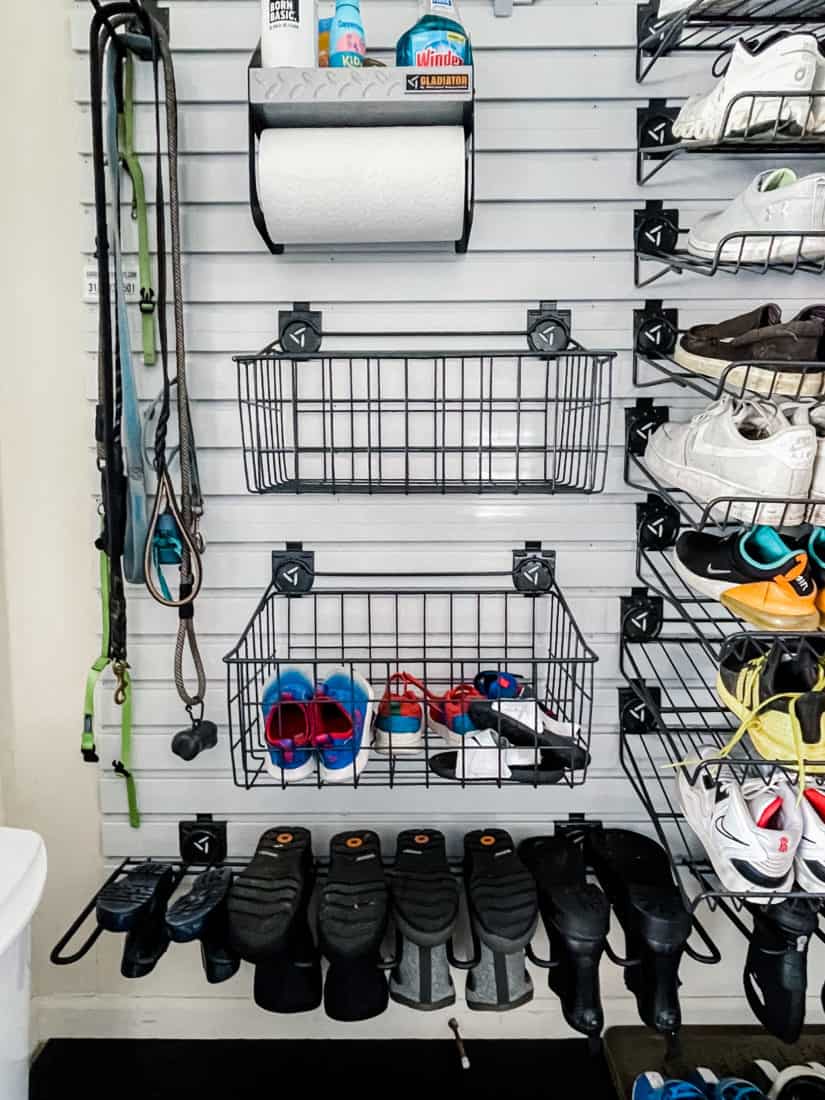
Maintenance schedule and seasonal rotation
A simple schedule keeps things tidy and safe when you store shoes in garage:
- Monthly: Sweep, spot-check boxes, and air out closed bins.
- Quarterly: Inspect for pests, replace silica packets, and wipe soles.
- Seasonally: Move off-season shoes to covered storage or swap places to reduce wear.
Label boxes by season or type. This cuts rummaging and keeps shoes in better shape. Rotating shoes also helps you notice damage early.
Common mistakes to avoid
Avoid these errors when you store shoes in garage:
- Leaving shoes on raw concrete. It invites moisture and stains.
- Using airtight plastic for damp shoes. Trapped moisture causes mold.
- Storing filthy shoes. Dirt attracts pests and speeds odor.
- Overstacking boxes. Crushing changes shape and damages heels.
- Ignoring chemical storage. Keep automotive fluids far from shoe areas.
I once stored winter boots in sealed bins while they were damp. A month later, the mold ruined the lining. That mistake taught me to always dry before storing and use desiccants when I store shoes in garage.
:strip_icc()/closet-shelving-shoes-storage-2c2fc29c-d75c891674ac417783a78ca0b6c48a97.jpg)
Quick questions people ask (PAA-style)
How much moisture will a garage ruin shoes?
Garages with high humidity or leaks can ruin shoes in weeks. Moisture causes mold, glue failure, and odors fast.
Can I store leather shoes in a garage long-term?
You can if the garage is dry, temperature-stable, and shoes are in breathable containers with silica. Leather hates damp and hard freezes.
What’s the cheapest effective storage method?
Raised shelving with clear plastic bins and silica packets gives good protection at low cost. It keeps shoes dry and visible.
Frequently Asked Questions of how to store shoes in garage
How do I keep shoes from smelling in a garage?
Dry shoes fully before storing. Use silica gel packets, baking soda, or cedar to absorb moisture and odor.
Are plastic bins safe for long-term shoe storage?
Plastic bins work if shoes are dry and you include desiccants. For leather, allow some airflow to prevent drying and cracking.
Will a dehumidifier prevent mold on shoes?
A dehumidifier lowers humidity and greatly reduces mold risk. Pair it with elevation and ventilation for best results.
How should I store wet boots after work?
Clean mud off, dry them with newspaper or a boot dryer, then air them before placing in raised storage. Do not seal while damp.
Can pests destroy shoes in a garage?
Yes. Mice, silverfish, and insects can chew liners and leave droppings. Seal entry points and avoid cardboard boxes if pests are a problem.
Conclusion
Storing shoes in the garage can be simple and safe with the right steps. Clean, raise, control moisture, and choose breathable containers. Check shoes often and rotate them by season. Start small: dry your shoes, add silica packets, and move them off the floor this week. Try one change now and you’ll see how much longer your shoes last. Leave a comment with your setup or subscribe for more garage organization tips.

Rubel Miah is the Senior Editor at MyStyleGrid.com, where he brings a sharp editorial eye and an unshakable love for fashion to everything he does. A true style addict, Rubel lives and breathes trends, from streetwear to high fashion, and has a knack for turning inspiration into impactful stories. With years of experience in fashion journalism and digital media, he curates content that empowers readers to express themselves through style. When he’s not editing features or forecasting the next big thing, you’ll find him hunting down vintage pieces or capturing street style moments around the city.