Shoes should fit with about a thumb's width in front, snug midfoot, and a locked heel.
I have fitted hundreds of runners and tested dozens of pairs. I know how should shoes fit for running, what to look for, and how small changes boost comfort and speed. Read on to learn precise steps, real-life tips, and a simple checklist you can use at the store or at home.
Why proper fit matters: performance, comfort, and injury prevention
A correct fit changes every run. When you get how should shoes fit for running right, your stride stays natural. You avoid blisters, black toenails, and many overuse injuries. Research and coaching practice show fit is as important as cushioning and support.
My clients who switched to properly fitting shoes reported less pain and faster recovery. Fit affects how the foot strikes, how the arch behaves, and how your toes push off. Small adjustments can make long runs feel much easier.

How to measure your feet and choose the right size
Measure at the end of the day when feet are largest. Stand on a piece of paper and trace your foot. Measure from heel to longest toe and compare to the brand’s size chart. Remember that sizes vary across brands and models.
Measure width as well. If the widest part of your shoe squeezes your foot, the fit is wrong. Try both feet; use the larger measurement. If you run with socks, measure with the socks you will wear.

Quick answers (PAA-style)
What is the ideal toe space?
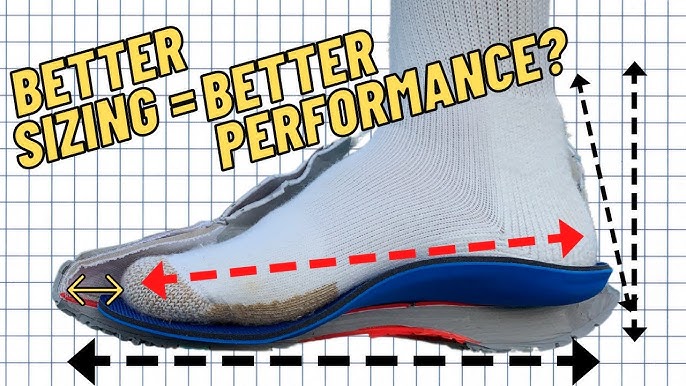
Leave about a thumb’s width (roughly 0.5 to 1 cm) from the longest toe to the shoe front.
Should running shoes be tight or loose?
They should feel snug around the midfoot and heel, with room in the toe box to splay.
Is size the only factor?
No. Shape, width, and arch profile matter as much as length.
The fit checklist: length, width, heel, midfoot, and toe box
Use this checklist when you try shoes. It applies to daily runs, long runs, and races.
Length
- There should be about a thumb’s width between your longest toe and the shoe end. This prevents black toenails and toe pain during long runs.
Width
- The shoe should not compress the widest part of your foot. Your foot should feel supported, not pinched.
Heel
- The heel should lock and not slip more than a quarter inch. Excessive slip causes blisters and instability.
Midfoot
- The midfoot should feel snug but not tight. Laces should secure the foot without cutting circulation.
Toe box
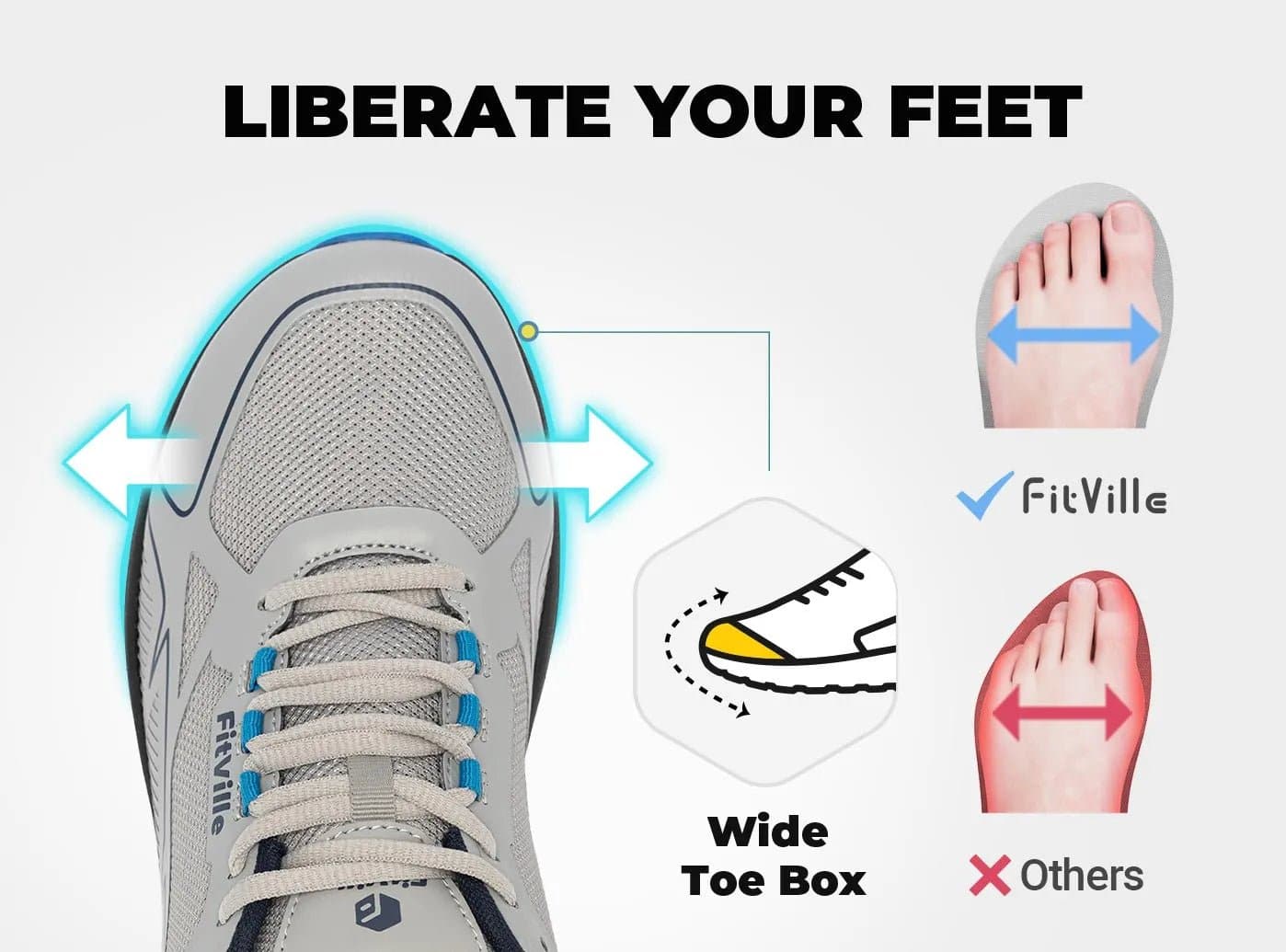
- The toes should splay naturally when you stand. Narrow toe boxes force toes together and cause friction.
Try shoes with the socks you run in. Walk a few minutes, jog in place, and if possible run a short loop outdoors. If anything hurts, move to another size or model.

Gait, foot type, and how they influence fit
Your gait and foot shape change what fit works best. A neutral runner often needs a different fit than an overpronator. Foot arch height affects how much midfoot support you need.
If you overpronate, you may prefer shoes with snug midfoot support and some stability features. High arches usually need more cushioning and a wider toe box to allow natural push-off. Try different models until your gait feels smooth.
Break-in, adaptation, and when to replace shoes
New shoes may feel firm. Allow a short break-in of 20–50 miles. If pain persists beyond the break-in, the shape likely does not suit your foot.
Signs to replace shoes
- Compression of midsole
- Visible outsole wear
- New aches in knees, hips, or shins
Most running shoes last 300–500 miles depending on your weight, surface, and running style.

Common fit problems and practical fixes
Blister at the back of the heel
- Use a heel lock lacing technique and try a slightly snugger heel. If persistent, use a padded heel tab.
Black toenails
- Ensure proper toe space. Trim nails straight and avoid tight, toe-crushing shoes.
Toe numbness
- Loosen laces near the toes and check shoe width. A wider toe box often resolves numbness.
Foot slides forward on downhill runs
- Try a deeper heel cup or lace-lock technique. Consider a half size up for long descents.
Hot spots
- Use lubricants, tape, or different socks. Evaluate shoe shape for internal seams or pressure points.
My real-world lessons: what I learned fitting runners
I once fitted a marathoner who thought size was the only metric. After measuring and switching to a model with a roomier toe box, their long-run pain disappeared. Lesson: the right length alone is not enough.
Another time I learned that light, snug shoes caused midfoot pain for a runner with high arches. We switched to a cushioned model with a slightly wider midfoot and the pain stopped. Trust testing and your own feel.
Buying tips: in-store, online, and what to test
In-store
- Test shoes late in the day and bring your running socks. Run on a treadmill or jog outside if possible. Use the store’s fitting expertise.
Online
- Check return policies and size charts. Order two sizes if unsure and return the poor fit.
What to test
- Try tying the shoes as you would while running. Walk and jog. Check heel lock, toe space, and any rubbing.
Limitations and trade-offs to consider
No shoe fits everything perfectly. A shoe that is great for long runs may feel heavy for speedwork. Fit can change with temperature, socks, and swelling.
Be ready to own different shoes for different purposes. Accept small compromises for the right balance between comfort and performance.
Related concepts: orthotics, socks, and foot strengthening
Orthotics
- Custom or over-the-counter orthotics can change fit and comfort. They alter internal volume and may require a larger size.
Socks
- The right sock thickness affects fit dramatically. Thin performance socks reduce rubbing. Thicker socks add volume and may require a half size up.
Foot strengthening
- Strong feet adapt better. Exercises for toes, arch lifts, and calf strength help you get more from a good fit.
Frequently Asked Questions of how should shoes fit for running
How much space should be in front of my toes?
Leave about a thumb’s width between the longest toe and the shoe end to prevent black toenails and toe pain. This allows natural swelling and toe splay.
Should my heel slip when I run?
Your heel should feel locked with minimal slip. Small slip may be okay, but persistent slipping causes blisters and inefficiency.
How tight should laces feel?
Laces should secure the midfoot and heel without cutting circulation. You should be able to wiggle toes freely.
Do I need different sizes for different brands?
Yes. Sizes and shapes vary by brand and model, so always try the shoes or check a size chart and return policy when buying online.
When should I replace running shoes?
Replace shoes after 300–500 miles or when cushioning and support wear down. Watch for new aches, worn tread, or compressed midsoles.
Conclusion
Getting how should shoes fit for running right is simple but powerful. Aim for a thumb’s width in front, a snug midfoot, and a locked heel. Measure your feet, test shoes under running conditions, and be ready to adapt with socks, orthotics, or a different model.
Take action today: measure your feet, try the checklist on your next shoe visit, and track miles to know when to replace shoes. Share your questions or shoe stories in the comments and subscribe for more running-fit tips.

Rubel Miah is the Senior Editor at MyStyleGrid.com, where he brings a sharp editorial eye and an unshakable love for fashion to everything he does. A true style addict, Rubel lives and breathes trends, from streetwear to high fashion, and has a knack for turning inspiration into impactful stories. With years of experience in fashion journalism and digital media, he curates content that empowers readers to express themselves through style. When he’s not editing features or forecasting the next big thing, you’ll find him hunting down vintage pieces or capturing street style moments around the city.