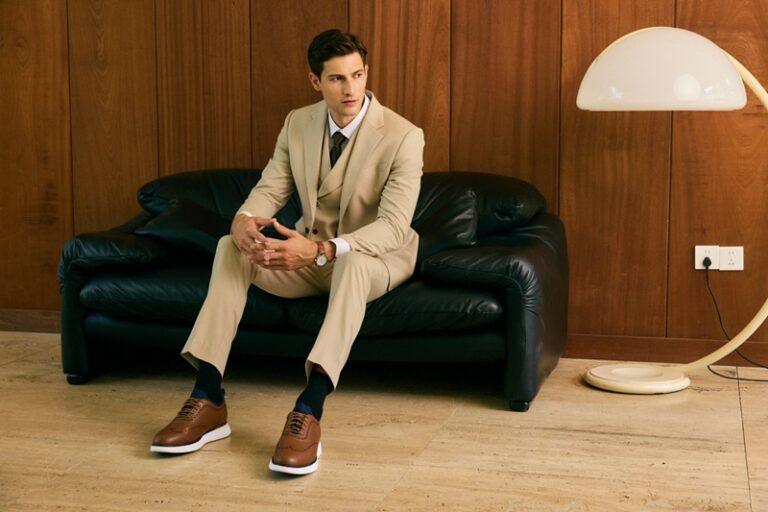
Choose clean, low-profile sneakers in neutral colors and quality materials like leather.
I have helped dozens of professionals refine their wardrobes and tested sneakers across offices with different dress codes. This guide on how to choose sneakers for business casual office walks you through practical rules, real-world tips, and tested examples. You will learn what to look for in style, fit, materials, and care so your sneakers look smart, feel great, and comply with workplace norms. Read on to make confident, work-ready sneaker choices fast.
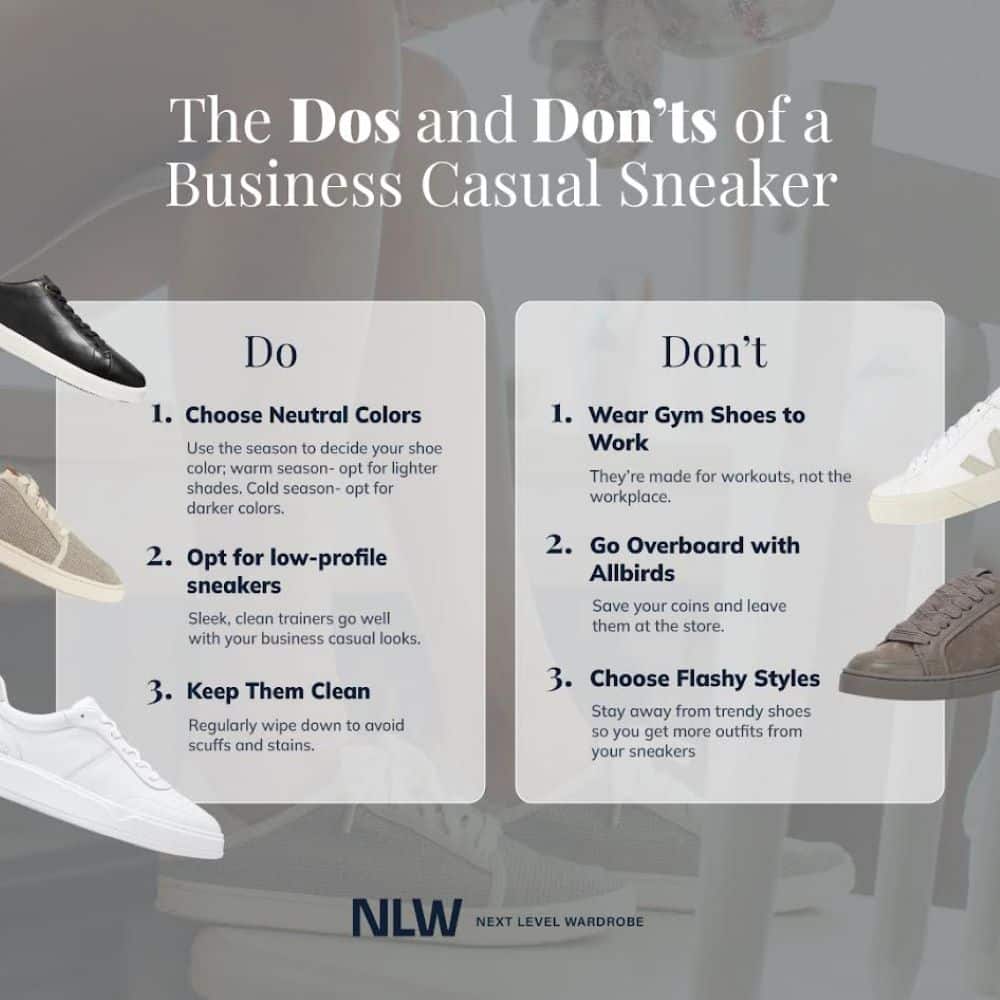
Why sneakers work in a business casual office
Sneakers tuned for business casual bring comfort without killing polish. They pair well with chinos, casual trousers, and blazers when chosen right. The key is balance. A messy running shoe looks out of place. A simple leather low-top blends in.
Benefits
- Comfort that keeps you productive and on your feet.
- A modern, approachable vibe that fits many company cultures.
- Versatility for commuting and after-work social plans.
Limitations
- Not all offices accept sneakers; always check the dress code.
- Bright logos, sporty silhouettes, or distressed designs can look unprofessional.
How this relates to how to choose sneakers for business casual office
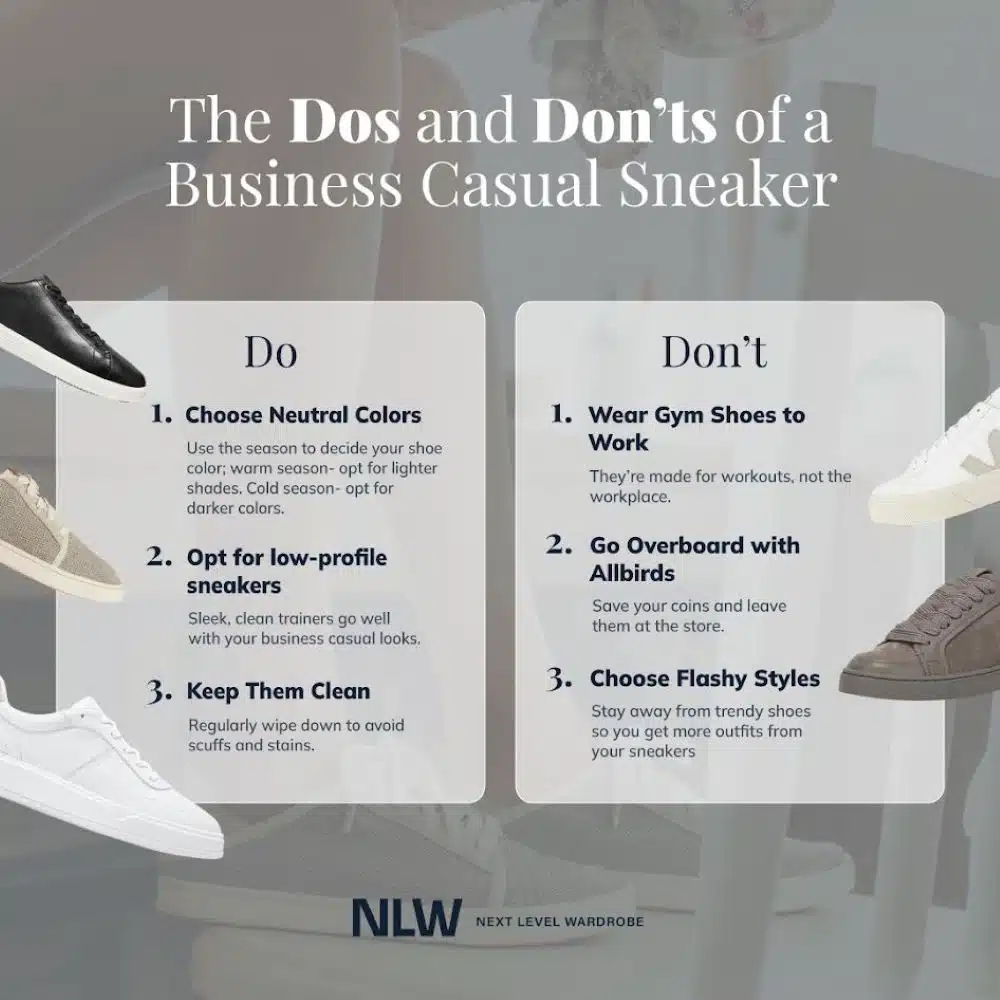
- Focus on minimalism, neutral tones, and refined materials. This is the baseline most workplaces accept.
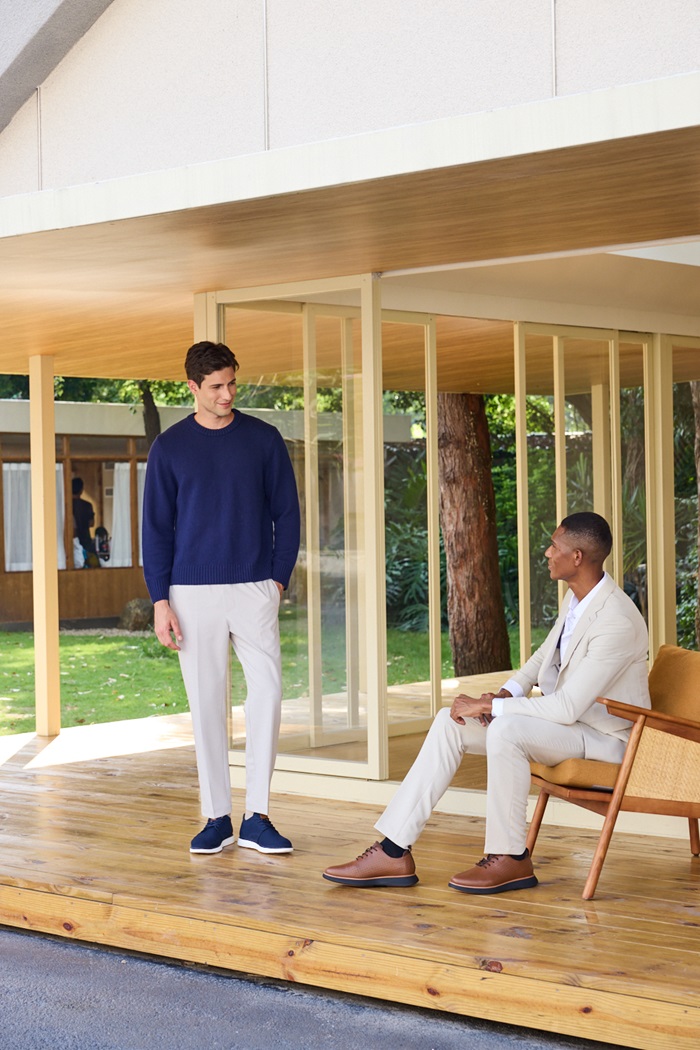
Source: brunomarc.com
Key criteria for how to choose sneakers for business casual office
Start with a short checklist. If a pair meets these points, it will likely pass office muster.
Essential criteria
- Clean silhouette — low-top and streamlined shapes work best.
- Neutral colors — white, black, navy, gray, and brown blend with workwear.
- Premium materials — smooth leather, polished suede, or fine knit avoid a sporty look.
- Thin, non-technical sole — avoid big chunky soles and vivid tread.
- Minimal branding — small or no logos keep the shoe understated.
- Good fit and support — comfort equals confidence during long days.
Why each criterion matters
- A clean silhouette echoes dress shoes. It signals intent.
- Neutral colors keep outfits cohesive.
- Premium materials age well and can be cleaned to look new.
- Thin soles maintain the refined line similar to dress shoes.
- Minimal branding reduces distraction and looks professional.
Personal insight
- I once wore bright mesh trainers to a client meeting and learned the hard way that even comfort must be tamed by style. After that, I favored simple leather pairs that get compliments without question.

Source: youtube.com
Best sneaker styles for business casual looks
Here are reliable style routes when deciding how to choose sneakers for business casual office.
Minimal leather low-tops
- Smooth, matte leather with subtle stitching. These read closest to dress shoes.
Suede chukkas and low-top suede
- Soft texture adds depth. Choose muted tones and clean soles.
Textile knit in neutral shades
- Works in more relaxed offices. Choose dense knit and leather trims for polish.
Derby-sneaker hybrids
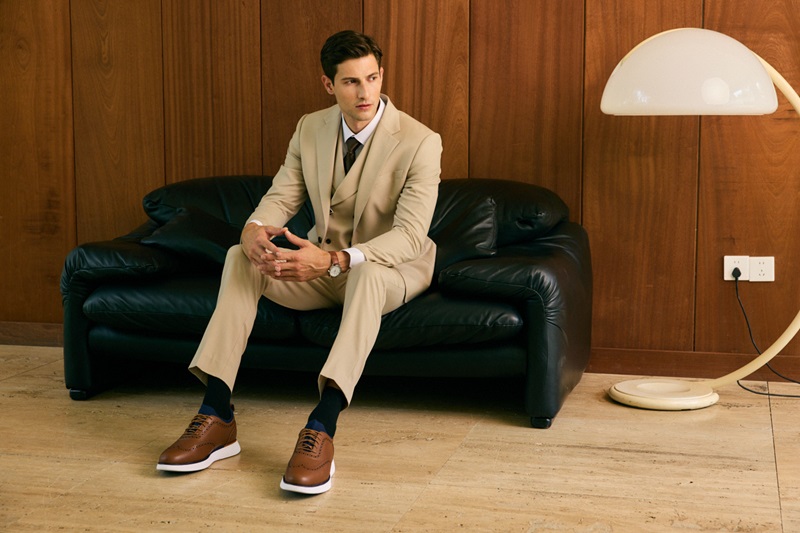
- Shoe-lace-up profile with sneaker sole. A good bridge between formal and casual.
Slip-ons with structure
- Sleek slip-ons can look very smart if the toe shape is narrow and materials are premium.
Examples to visualize
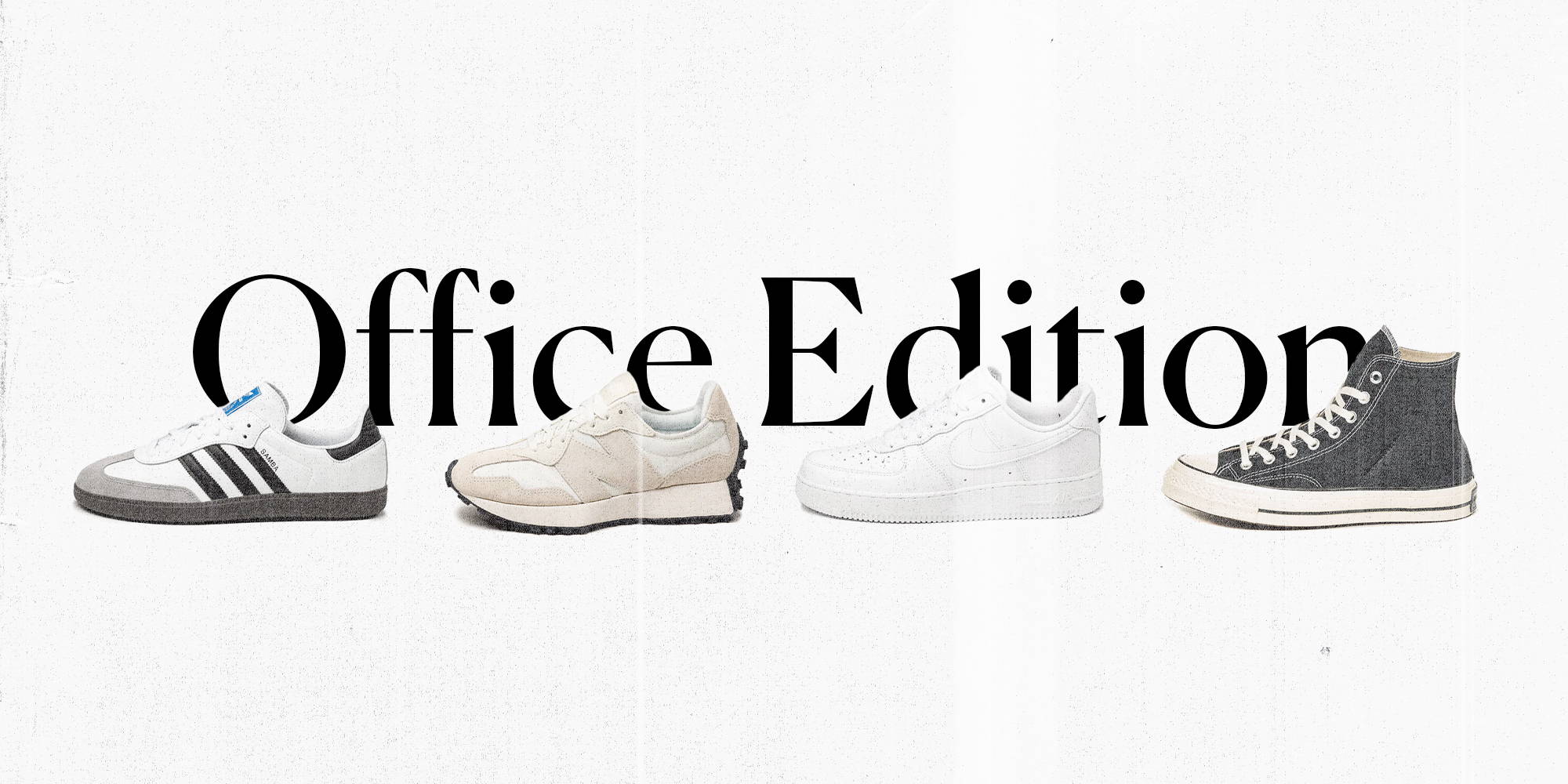
- Think of plain white leather low-tops, gray suede low-tops, or navy knit sneakers with leather heel tabs.
How to mix styles with outfits
* Pair minimal leather with chinos and a blazer.
- Match suede with wool trousers in fall or winter.
- Use knit sneakers with slim jeans and an unstructured blazer for creative offices.
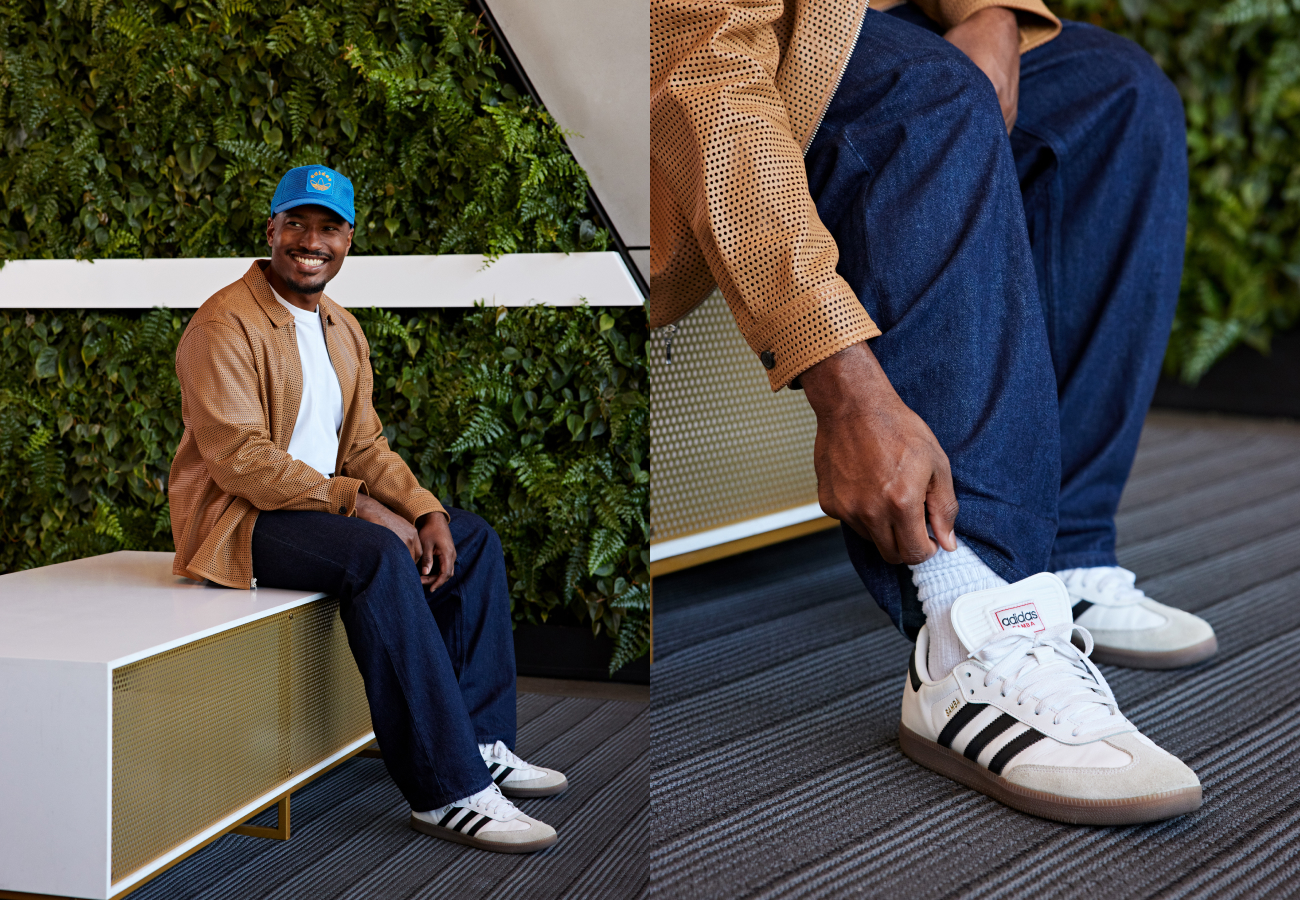
Source: adidas.com
Fit, comfort, and practical testing when choosing sneakers
Fit is non-negotiable. A stylish shoe that hurts will sit in the closet.
Fit checklist
- Try shoes at the end of the day when your feet are slightly swollen.
- Wear the socks you plan to use at work during the fitting.
- Check heel slip, toe room (about a thumb’s width), and arch support.
- Walk on different surfaces in-store to test grip and cushion.
Comfort upgrades
- Removable insoles let you add orthotics or memory foam inserts.
- Break-in period is normal for leather. Expect brief stiffness that softens with wear.
- Consider a wider fit if you have a broad forefoot.
How to evaluate how to choose sneakers for business casual office by comfort
- Comfort influences daily performance. Prioritize supportive soles that don’t look clunky.
Source: nextlevelwardrobe.com
Colors, materials, and maintenance
Smart choices here keep sneakers looking office-ready for months.
Colors to prefer
- White, off-white, navy, gray, black, brown, and olive work best.
- Limit contrast piping or bright soles. Subtle contrast is OK.
Materials to choose
- Full-grain or corrected-grain leather for durability and polish.
- Suede for texture in dry climates or where casual is acceptable.
- Dense knit for relaxed offices; avoid open mesh.
Care and maintenance
- Clean leather with a damp cloth and use a neutral shoe cream sparingly.
- Brush suede with a suede brush and use a protector spray.
- Wipe soles after rainy commutes to avoid salt stains on pavement.
Practical tip from experience
- I keep a small shoe cleaning kit in my desk drawer. Quick touch-ups after commuting keep shoes presentation-ready.

Source: hockerty.com
Styling tips and common outfit pairings
How you style sneakers determines how professional they look.
Pairings that work
- Blazer + chinos + leather low-tops for client-facing business casual.
- Sweater + slim trousers + suede sneakers for creative meetings.
- Button-down + dark jeans + structured slip-ons for casual Fridays.
Socks and trouser hems
- No-show socks or thin dress socks maintain a clean line.
- Show a slight ankle break on slim chinos. Avoid overly cropped or baggy hems.
Avoid these combos
- Athletic socks with shorts and a blazer.
- Bright logo-heavy sneakers with formal trousers.
- Distressed sneakers with business attire.
Personal note
- I prefer cuffed chinos with clean white leather sneakers. It looks intentional and tidy.
Source: brunomarc.com
Buying guide: budget, where to shop, and testing tips
Budgeting smart saves time and money when learning how to choose sneakers for business casual office.
Price bands
- Entry-level: $60–$120. Basic leather or suede options.
- Mid-range: $120–$250. Better materials and construction.
- Premium: $250+. High-quality leather, stitching, and long-term durability.
Where to try
- In-store try-ons help assess fit and finish.
- Buy online from retailers with free returns and clear size guides.
Testing checklist in-store
- Inspect seams and glue lines.
- Bend the shoe to check sole flex—should flex near the toe, not midfoot.
- Smell the interior—must not have chemical or mildew odors.
Sustainability and durability
- Look for vegetable-tanned leather or recycled materials if eco-preference matters.
- Consider resolable shoes for long-term value.

Source: hockerty.uk
Common mistakes and how to avoid them
Avoid these pitfalls when choosing sneakers for the office.
Top mistakes
- Choosing flashy athletic sneakers and expecting them to read professional.
- Ignoring fit for the sake of looks.
- Buying mesh running shoes for a business casual setting.
How to avoid them
- Stick to the checklist: simple silhouette, neutral color, quality material.
- Test comfort and examine construction before purchase.
- Keep a backup pair for rainy days and commutes.
Source: asphaltgold.com
Frequently Asked Questions of how to choose sneakers for business casual office
Are white sneakers appropriate for a business casual office?
White sneakers can be appropriate if they are clean, low-profile, and made from leather or polished materials. Avoid worn, highly athletic white shoes.
Can I wear mesh or athletic trainers to work?
Mesh and performance trainers usually read as sporty and are best avoided in business casual unless your office is very relaxed. Choose denser knit or leather alternatives.
What trousers pair best with business casual sneakers?
Chinos, slim wool trousers, and dark, tailored jeans pair best. Keep hems neat and avoid overly baggy cuts.
How often should I replace office sneakers?
Replace them when the sole compresses, the lining wears through, or the shape collapses—typically every 12–24 months depending on wear. Regular care extends life.
Should I wear no-show socks with business casual sneakers?
No-show socks are fine and create a modern silhouette. Use thin dress socks for a slightly more formal look.
Conclusion
Choosing sneakers for work is about balance. Pick clean silhouettes, neutral colors, quality materials, and a proper fit. Test comfort and care for your shoes. With the right pick, your sneakers will boost comfort and polish, not hurt your professional image. Try one mindful pair this month and observe how it changes your daily comfort and style. If this guide helped, share your experience below or subscribe for more practical wardrobe tips.

Rubel Miah is the Senior Editor at MyStyleGrid.com, where he brings a sharp editorial eye and an unshakable love for fashion to everything he does. A true style addict, Rubel lives and breathes trends, from streetwear to high fashion, and has a knack for turning inspiration into impactful stories. With years of experience in fashion journalism and digital media, he curates content that empowers readers to express themselves through style. When he’s not editing features or forecasting the next big thing, you’ll find him hunting down vintage pieces or capturing street style moments around the city.