Slip resistance comes from sole material, tread design, and effective water evacuation.
I have tested shoes in kitchens, construction sites, and rainy streets to understand what makes a shoe non slip. This guide explains the science, materials, tests, and real-world tips so you can choose and maintain shoes that truly grip.

What makes a shoe non slip? The basics
What makes a shoe non slip starts with how the sole meets the floor. The right rubber compound, tread pattern, and surface contact force work together to prevent slips. Combined with proper fit and maintenance, these elements decide real-world performance.

Key components that create slip resistance
Several parts of a shoe matter when thinking about what makes a shoe non slip.
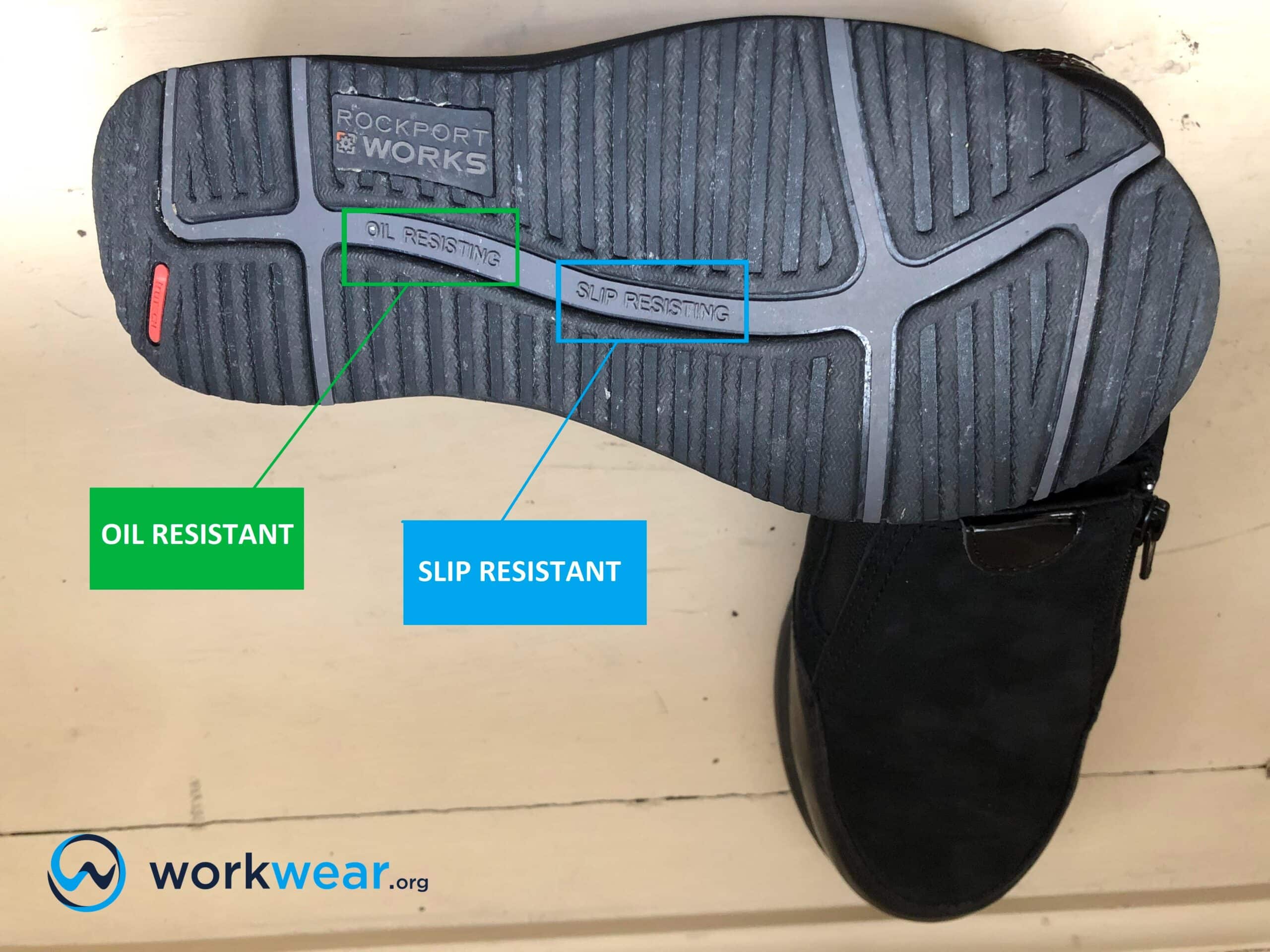
- Outsole material — Soft, tacky rubber often grips better on wet floors than hard plastics. The compound can include oils or silica to boost grip.
- Tread pattern — Channels, siping, and multi-directional lugs move liquids away from the contact patch. That prevents hydroplaning underfoot.
- Sole hardness — Durometer affects flex and traction. Too hard and the sole skates; too soft and it wears fast.
- Contact area and shape — Wider contact areas spread weight and improve friction on smooth surfaces. Rounded heels and stable toe boxes reduce rolling slips.
- Surface texture — Microscopic roughness on the outsole creates micro-contacts that increase friction on smooth floors.
- Weight distribution and balance — Proper shoe fit and midsole support keep the foot stable and maintain consistent grip.
Materials and tread patterns that work best
Knowing materials helps you spot shoes that will perform.
- Natural and synthetic rubbers — Offer the best grip when blended properly. They stay tacky across a range of temperatures.
- Polyurethane and TPU — Durable and oil-resistant, good for greasy environments though sometimes less tacky when wet.
- EVA midsoles — Comfortable but not for traction; they work with a rubber outsole for grip.
- Siping — Thin surface cuts let the tread deform and bite the floor, improving traction on wet or oily surfaces.
- Channels and directional lugs — Move water and debris away from the sole. Look for multi-directional designs for wet and slippery work.
From my experience testing kitchen shoes, models with deeper channels and pronounced siping felt safer on water than flat-soled options. The shoes with softer rubber compounds and visible water channels had fewer slips during real tasks.

How shoes are tested and rated for slip resistance
Testing helps quantify what makes a shoe non slip.
- Coefficient of friction (COF) — A lab number showing how much friction exists between shoe and test surface. Higher is usually better.
- Static versus dynamic tests — Static measures standing grip; dynamic measures sliding resistance while walking. Both matter for real use.
- Industry standards — Labs use ISO and ASTM-style machines to test wetted or oily floors. Some lab ratings label shoes with SRC or similar marks.
- Lab vs field — A good test predicts performance, but real floors, contaminants, and wear change results. Field testing completes the picture.
I’ve seen shoes pass lab tests and still slip on a greasy kitchen floor because real world contamination and wear weren’t simulated. Always combine lab ratings with practical trials where you work.

Common myths and mistakes about non-slip shoes
Misunderstandings can lead to bad choices.
- All rubber is non-slip — Not true. Rubber formulas vary and some hard rubbers slip on wet tiles.
- Deeper tread always means safer — Deep lugs help on loose surfaces but can trap grease. Proper channeling matters more for liquids.
- New shoes are always better — New soles can be too smooth or have mold-release residues that reduce grip. Some need a break-in or cleaning.
- Replacing shoes isn’t optional — Worn tread loses channels and siping, which cuts traction dramatically.
- Sole treatments always help — Some aftermarket sprays or pads help short-term but can wear unevenly or void warranties.
A mistake I made early in my footwear testing was trusting tread depth alone. I bought industrial shoes with big lugs that performed poorly on wet ceramic. Later I found the rubber compound and siping were the real factors.
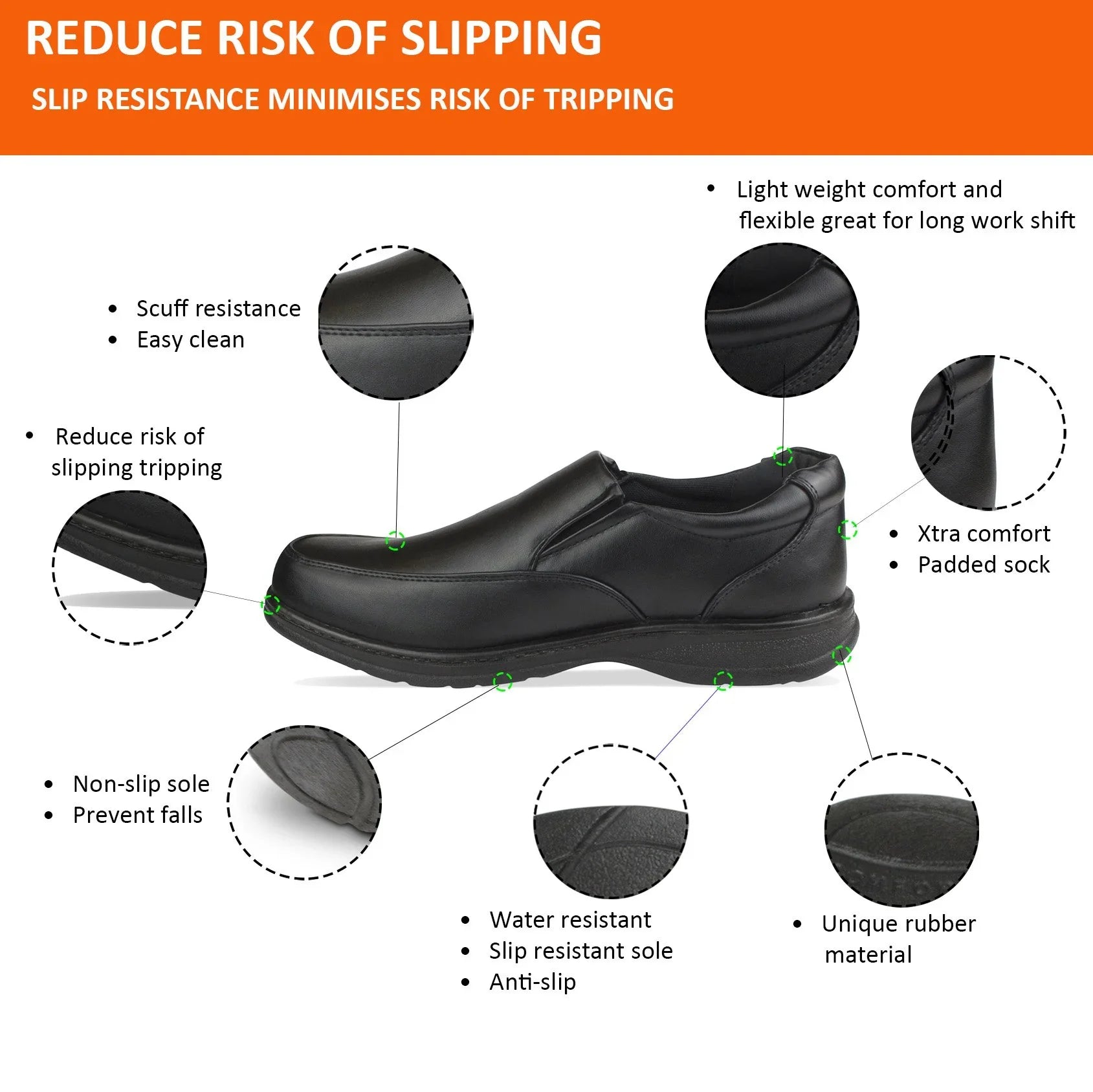
How to choose and maintain non-slip shoes
Choosing the right shoe means matching features to your environment.
- Match sole to work surface — Look for tacky rubber for wet floors and oil-resistant compounds for greasy areas.
- Check for water channels and siping — These features evacuate liquids and improve bite.
- Fit and stability matter — A secure fit prevents slips caused by foot movement inside the shoe.
- Inspect tread depth and pattern regularly — Replace shoes when channels and siping wear flat.
- Clean soles — Wipe away grease and debris. A clean sole grips better than a dirty one.
- Consider replacements and resoling — High-quality shoes can be resoled to restore grip and extend life.
When buying, test shoes on a small wet patch if allowed. Walk naturally and check confidence in each step. My practical rule: invest in two pairs and rotate them to extend life and maintain grip.

Quick checks and common short questions
These quick checks answer common, search-driven concerns about what makes a shoe non slip.
How can I test a shoe quickly at home?
Place a small wet or oily patch on tile and walk across it slowly. If your foot slides or feels unstable, the shoe likely won’t be safe in wet conditions.
Does tread wear mean a shoe is unsafe?
Yes. When siping and channels smooth out, water cannot escape and slip risk rises. Replace shoes when patterns no longer channel liquids.
Can outdoor shoes work for kitchen floors?
Sometimes. Outdoor soles with deep lugs may track grease and slip on smooth, wet tiles. Look for kitchen-rated tread and rubber compounds for best results.
Frequently Asked Questions of what makes a shoe non slip
What is the single most important factor in slip resistance?
Sole material and its ability to maintain friction on wet or oily surfaces is the most critical factor. Tread design and fit complement that material to create real-world safety.
Do slip-resistant shoes work forever?
No. Slip resistance declines with wear, contamination, and aging. Regular inspection and timely replacement keep protection reliable.
Are more expensive shoes always better for slip resistance?
Not always. Cost can reflect comfort or brand, but the sole compound and tread design determine grip. Evaluate features, tests, and user feedback instead of price alone.
Can I improve grip on old shoes?
Cleaning soles and removing grease can help short-term. Some aftermarket non-slip pads or professional resoling may restore grip, but results vary widely.
How often should I replace slip-resistant shoes?
Replace when tread channels or siping are worn flat or when you feel less stable on wet floors. For heavy daily use, that may be every 6 to 12 months.
Is there a standard label that guarantees performance?
Labels and lab marks indicate test results, but no label guarantees field performance for all surfaces. Combine lab ratings with real-world testing in your environment.
Conclusion
Understanding what makes a shoe non slip helps you pick footwear that keeps you safe at work and home. Focus on outsole material, tread design, proper fit, and routine maintenance to maintain grip over time. Try the simple wet-patch test before you rely on shoes for safety, and replace them when tread and siping wear down. If this guide helped, try one of the test methods on your current shoes, share your results below, or subscribe for more practical footwear advice.

Rubel Miah is the Senior Editor at MyStyleGrid.com, where he brings a sharp editorial eye and an unshakable love for fashion to everything he does. A true style addict, Rubel lives and breathes trends, from streetwear to high fashion, and has a knack for turning inspiration into impactful stories. With years of experience in fashion journalism and digital media, he curates content that empowers readers to express themselves through style. When he’s not editing features or forecasting the next big thing, you’ll find him hunting down vintage pieces or capturing street style moments around the city.