Best ski boots for bunions: Nordica Cruise S W and K2 BFC lines offer comfort, room, and adjustability.
I’ve spent many winters testing boots and tweaks for skiers with bunions. Imagine a day on the slope where your feet stay warm, your toes don’t ache, and you can carve without thinking about pain. That relief comes from the right boot, plus smart padding or a stretcher when needed. Below I walk you through the best ski boots for bunions and useful add-ons to make skiing painless and fun.
Bylion Ski & Snowboard Fitting Pads

I keep a set of fitting pads in my kit. These adhesive pads help fill gaps in the shell and secure the heel. For bunions, they can reduce unwanted slide and limit rubbing inside the boot. They work with most ski liners and cost far less than a custom footbed.
The pads come in two sizes and offer targeted cushioning at the ankle and heel. They are easy to trim and place. For skiers with bunions, they keep the foot stable so you don’t shift forward and compress the forefoot. They’re a simple fix before you try a more permanent boot mod.
Pros:
- Adds cushioning where boots rub
- Easy to install and trim
- Inexpensive way to reduce pressure on bunions
- Works with most liners and shell types
- Helps prevent ankle blisters by improving fit
Cons:
- Temporary solution, not a substitute for a wider shell
- Adhesive may lose stickiness over seasons
- May need several pads for ideal positioning
My Recommendation
If you need a quick, budget-friendly fix, these pads are a great first step. I recommend them for skiers who want to try fitting tweaks before committing to boot stretching or a new pair. They make tight boots feel more secure and can reduce direct pressure on bunions. For many, this small change improves comfort and makes a boot usable for a season.
| Best for | Why |
|---|---|
| Quick comfort boost | Easy to apply, cheap, immediate relief |
| Heel slip reduction | Fills gaps and stabilizes heel |
| Trial before mods | Test positioning before stretching boots |
ROCES Idea Up Adjustable Boots

I like adjustable boots like the ROCES Idea Up for growing feet and varied fits. Their adjustable shell lets you widen the forefoot slightly, which helps skiers with bunions. The idea is simple: more room where you need it without losing cuff support.
The boot is light and forgiving. It’s great for casual skiers or kids who need room for toe issues. For bunions, the extra width and soft liner reduce pressure. If you need the best ski boots for bunions, these adjustable shells are a smart, low-cost option.
Pros:
- Adjustable fit for wider forefeet
- Lightweight and comfortable
- Good for beginners and casual skiers
- Soft flex reduces sharp pressure points
- Works well with aftermarket insoles
Cons:
- Not aggressive enough for expert skiers
- Limited adjustability compared to full shell stretching
- Sizing can run large—try before you commit
My Recommendation
I recommend the ROCES Idea Up for skiers who need room without a custom shop visit. They are among the best ski boots for bunions if you want an off-the-rack solution that still offers comfort. These boots are best for recreational skiers and teens who want a softer, more forgiving fit.
| Best for | Why |
|---|---|
| Growing feet | Adjustable shell for longer use |
| Mild bunions | Soft liner reduces pressure |
| Casual skiers | Comfort over performance |
Boot Stretcher Tool

A boot stretcher is a practical tool if your shell pinches at the bunion area. I often use a stretcher before a shop visit. It lets you target the bulge of a bunion and slowly widen the shell without costly resizing. It works on many leather and synthetic shells.
Using a stretcher can save a boot that otherwise feels too tight. I advise making small changes over multiple sessions. This approach reduces risk and gives predictable results. If you want the best ski boots for bunions, try stretching before replacing boots.
Pros:
- Targets pressure points exactly where needed
- Cost-effective vs. buying a new boot
- Works on leather and some synthetic shells
- Can be used at home with care
- Gives gradual, controlled expansion
Cons:
- Requires patience and multiple sessions
- Risk of over-stretching if misused
- Not a fix for extremely narrow shells
My Recommendation
If your shell presses on a bunion, a stretcher is a smart buy. I consider it essential for skiers who like to tweak gear at home. It can turn a snug boot into one of the best ski boots for bunions by creating targeted space. Use it slowly and check fit each time.
| Best for | Why |
|---|---|
| Targeted widening | Stretch bunion area only |
| DIY fit tweaks | Save money vs. new boots |
| Gradual expansion | Less risk than one-time mods |
Nordica Cruise S W (24.5)
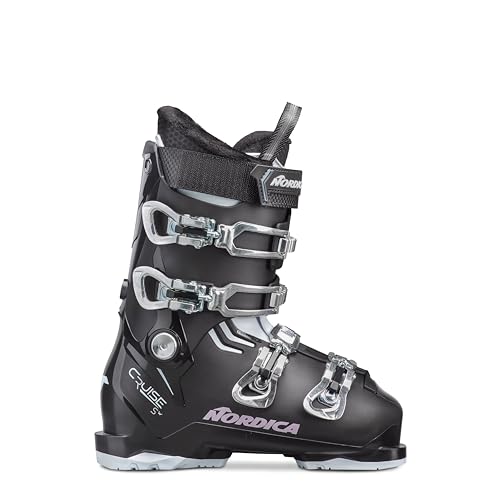
Nordica’s Cruise S W line is known for a roomy, comfort-oriented fit. The 102mm last and comfort liner give more space in the forefoot. I often recommend them to women who have bunions and want a softer feel. The shell offers enough support for all-mountain riding without crowding the toes.
The boot balances comfort and control. It has a forgiving flex that still transfers energy to the ski. For bunions, the liner and shell geometry reduce pressure. These are a top pick if you want one of the best ski boots for bunions that still lets you ski all day.
Pros:
- Roomy 102mm last fits wider feet
- Comfort liner reduces hot spots
- All-mountain performance with softer flex
- Good heat-moldable liner for custom comfort
- Reliable cuff support for varied terrain
Cons:
- Not ideal for racers or very stiff-flex seekers
- May require custom footbed for best alignment
- Liner break-in period for full comfort
My Recommendation
I recommend the Nordica Cruise S W for skiers who want comfort without giving up control. In my experience, they rank among the best ski boots for bunions because of the roomy last and cushioned liner. They are best for intermediate to advanced recreational skiers who value a forgiving ride and long-day comfort.
| Best for | Why |
|---|---|
| Wider feet | 102mm last gives forefoot room |
| All-day comfort | Soft liner and forgiving flex |
| Versatile skiing | Stable yet comfortable on varied terrain |
ASOLO Greenwood Bunion Fit

Though these are hiking boots, ASOLO’s Greenwood with a bunion fit shows how dedicated designs can help. The roomy toe box and leather upper reduce pressure on the bunion area. If you mix hiking and light ski touring, these can be an alternate option when you need more forefoot space.
The boot is water-resistant and cushioning, with a sole that grips. For people with bunions who prefer cross-training gear, this model works well off the mountain or for approach hikes. While not a direct alpine ski boot, it highlights design features I look for in the best ski boots for bunions.
Pros:
- Roomy toe box for bunion relief
- Water-resistant leather upper
- Cushioned midsole for comfort
- Good traction for approaches and walks
- Built with bunion-fit intent
Cons:
- Not a true alpine ski boot
- Bulkier than alpine boots for ski use
- May need custom insole for best support
My Recommendation
I suggest ASOLO Greenwood for people who need a roomy, supportive shoe for approaches or resort chores. While not an alpine boot, the design cues make them a reminder of what to look for in the best ski boots for bunions: wide toe box, soft upper, and solid support. They are best for multi-activity users.
| Best for | Why |
|---|---|
| Approach/Travel | Comfortable walking with bunion room |
| Multi-sport users | Good support off the slopes |
| Bunion-focused fit | Designed with roomy toe box |
K2 BFC 95 BOA (24.5)

The K2 BFC 95 BOA blends comfort with easy adjustability via the BOA system. The BOA closure allows fine-tuned pressure distribution across the foot. For bunions, this means you can loosen across the forefoot and tighten where you need hold, reducing focal pressure on the bunion bump.
The boot has a friendly flex and a wider last that suits many foot shapes. I find it comfortable on groomers and gentle terrain. If you need the best ski boots for bunions that still give precise micro-adjustments, the BOA-equipped K2 is a top pick.
Pros:
- BOA system for precise fit adjustments
- Wider last for more forefoot room
- Good flex for all-day comfort
- Simple entry and exit with BOA
- Compatible with aftermarket insoles
Cons:
- BOA parts may need maintenance over years
- Not as stiff as high-performance race boots
- May need liner molding for perfect fit
My Recommendation
I recommend the K2 BFC 95 BOA for anyone who wants on-the-fly fit tuning. The BOA closure and wider last make them among the best ski boots for bunions for skiers who need variable pressure control. They are best for intermediate skiers seeking comfort and ease.
| Best for | Why |
|---|---|
| Micro-adjustment | BOA lets you tailor pressure |
| Wider feet | Designed with a roomier last |
| Daily comfort | Friendly flex for long days |
Rossignol Pure 80

Rossignol’s Pure line targets comfort without losing downhill capability. The Pure 80 has a softer flex and a comfort-focused shell. For bunions, this softer shell means less sharp pressure over the toe box and less rubbing on the joint.
The liner is plush and heat-moldable. I find these great for skiers returning from an injury or those who need gentle pressure. They fit many foot shapes and can be combined with insoles for better arch support. They are useful when searching for the best ski boots for bunions that don’t compromise on stability.
Pros:
- Soft flex for reduced toe pressure
- Plush, heat-moldable liners
- Comfort-focused shell profile
- Good for recovery or cautious skiers
- Compatible with custom footbeds
Cons:
- Not suitable for aggressive racers
- May feel too soft for precise carving
- Less direct power transfer than stiffer boots
My Recommendation
The Rossignol Pure 80 is for skiers who want cushioned comfort on the slopes. I rate it among the best ski boots for bunions if you prefer a softer shell and plush liner. It’s best for leisurely days and for anyone who needs gentler pressure on the forefoot.
| Best for | Why |
|---|---|
| Gentle skiers | Soft flex reduces pressure |
| Recovery skiing | Plush liner for comfort |
| Comfort seekers | Designed to minimize hot spots |
K2 BFC 75 Women’s

The K2 BFC 75 is an entry-level boot with a forgiving feel and roomy fit. I often recommend it to new skiers who also need bunion relief. The softer flex and wider internal volume reduce sharp pressure points around the forefoot.
It’s easy to step into and comfortable for short to medium days on the mountain. For those learning to ski or wanting some forefoot space, it hits the right notes. It’s a solid, budget-friendly option among the best ski boots for bunions.
Pros:
- Soft flex for comfort
- Roomier internal volume
- Affordable price point
- User-friendly for new skiers
- Compatible with aftermarket orthotics
Cons:
- Limited performance for advanced skiers
- Less torsional stiffness
- May require liner upgrades for long days
My Recommendation
I recommend the K2 BFC 75 for beginners and casual skiers seeking comfort. They are one of the best ski boots for bunions in their price range because they offer room and a soft flex. Best for weekend skiers and learners who prioritize comfort over performance.
| Best for | Why |
|---|---|
| Beginners | Soft flex eases learning |
| Budget buyers | Affordable with comfortable fit |
| Casual days | Roomy and forgiving for short days |
Nordica Cruise S W (25.5)
This 25.5 variant of the Nordica Cruise S W keeps the same comfort DNA. I note that slightly larger sizes can free more space near the bunion. That helps if your normal size feels tight across the forefoot. The 102mm last is consistent and forgiving.
The fit is predictable and the liner molds well. I use this size when my foot needs a touch more length for overall comfort. With a small tweak like a different insole or pad, these become hard to beat among the best ski boots for bunions.
Pros:
- Roomy forefoot in larger size
- Consistent comfort and support
- Good liner molding options
- All-mountain versatility
- Easy to pair with orthotics
Cons:
- May need footbed adjustment for alignment
- Not ultra-stiff for aggressive carving
- Heavier than ultralight race shells
My Recommendation
Choose this Nordica size if extra length helps your forefoot alignment. I recommend it as one of the best ski boots for bunions when you need both room and all-mountain capability. It’s best for skiers who want comfort plus confidence on varied runs.
| Best for | Why |
|---|---|
| Extra length | 25.5 frees up forefoot space |
| Moldable liners | Custom fit improves comfort |
| Versatile skiers | Good across resort terrain |
Nordica Cruise S W (26.5)
The 26.5 version gives yet more space for those with longer feet or pronounced bunions. I often see skiers benefit from the extra length with fewer pressure points. That can mean a more forgiving fit without losing lateral support.
It’s still an all-mountain boot but tuned for more comfort. If you struggle to find the best ski boots for bunions, trying a different size in a comfort-forward boot like this can solve the issue. The shell stays supportive and the liner shapes to your foot over time.
Pros:
- Extra length frees up forefoot
- Comfort liner still molds well
- Good for taller skiers or longer feet
- Maintains balance of comfort and control
- Compatible with padding and orthotics
Cons:
- Larger size may reduce heel hold without insole
- May need tongue or pad adjustments
- Liner break-in still required
My Recommendation
Try the 26.5 if length helps avoid bunion pressure. I find this variant among the best ski boots for bunions because it gives more forefoot room while keeping support. Best for taller skiers or anyone who needs extra length to relieve hotspots.
| Best for | Why |
|---|---|
| Long feet | Extra length reduces toe crowding |
| Bunion relief | More room lowers joint pressure |
| Pair with insoles | Improves heel hold while adding space |
FAQs Of best ski boots for bunions
How do I choose the best ski boots for bunions?
Look for a wider last, softer flex, and heat-moldable liners. Try different sizes and use padding or stretchers if needed. I also suggest testing boots with your usual ski socks and any orthotics you use.
Can I stretch ski boots to fit a bunion?
Yes. A targeted stretch at the bunion zone often helps. Use a boot stretcher or visit a shop. Stretch gradually and test fit after each session to avoid over-expansion.
Are custom footbeds necessary for bunion relief?
Not always, but they help alignment and pressure distribution. I often use a quality aftermarket footbed to improve heel hold and reduce forefoot pressure in boots that otherwise fit well.
Do softer boots hide bunion pain better than stiff ones?
Softer boots reduce sharp pressure points and can feel better. However, they may not offer the same performance. If comfort is your priority, soft or medium flex boots are often better for bunions.
What quick fixes help on the slope for bunion pain?
Use adhesive pads, a boot stretcher, thicker socks, or a better insole. I carry extra padding and can tweak fit in the parking lot to keep skiing comfortably.
Final Verdict: Which Should You Buy?
If you want the best ski boots for bunions that blend comfort and control, Nordica Cruise S W models stand out for a roomy last and supportive liner. They are versatile, heat-moldable, and reliable for all-mountain skiing.
For adjustable micro-fit, K2 BFC models with BOA systems offer fine-tuned pressure control. Combine boots with pads or a stretcher for the best ski boots for bunions solution that fits your foot and your style.

Madison Clark is a footwear expert and the voice behind MyStyleGrid.com. She specializes in honest shoe reviews, style tips, and practical guides to help readers find the perfect pair for any occasion. With years of experience in blogging and content creation, Madison makes footwear knowledge simple, stylish, and easy to follow.