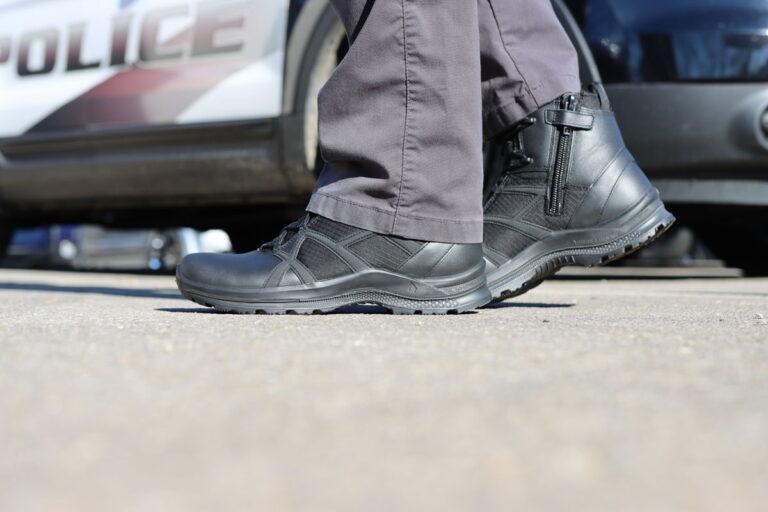
Most cops wear black duty boots or tactical shoes that offer comfort, grip, support, and protection during long shifts.
What shoes do cops wear depends on their department, job, uniform rules, and daily duties. Patrol officers often choose black leather duty boots, lightweight tactical shoes, or polishable uniform shoes. The best pair must handle long walks, sudden movement, wet streets, hard floors, and hours spent standing in one place. This guide explains the main types, key features, rules, and buying tips so you can understand what makes police footwear work in real life.
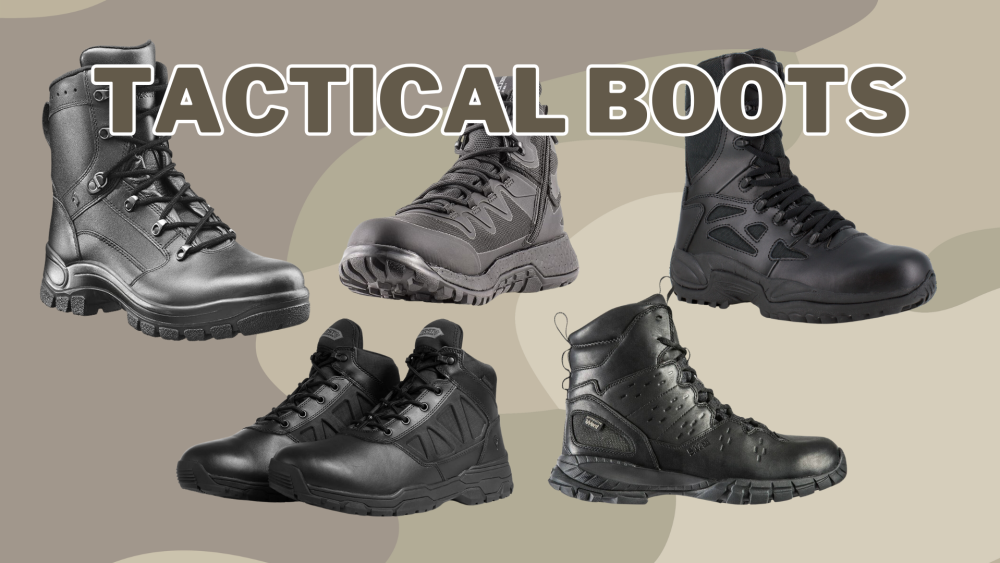
What shoes do cops wear?
Most police officers wear black duty footwear. The exact style can range from a tall patrol boot to a low-cut tactical shoe. Some agencies set strict rules, while others let officers choose from approved brands and designs.
When asking what shoes do cops wear, it helps to separate police work into different roles. A patrol officer may need strong ankle support and weather protection. A detective may wear plain black walking shoes. A motorcycle officer may need a tall boot with extra protection.
Common choices include:
• Black duty boots with leather or synthetic uppers
• Lightweight tactical boots for patrol and field work
• Low-cut tactical shoes for indoor or urban duties
• Polishable uniform shoes for formal settings
• Waterproof boots for rain, snow, and wet terrain
• Safety-toe boots for special work sites
• Slip-resistant shoes for hospitals, jails, and smooth floors
Police footwear is not chosen for style alone. It is part of an officer’s work equipment, much like a duty belt or flashlight. The shoe must support safe movement without causing pain after a full shift.
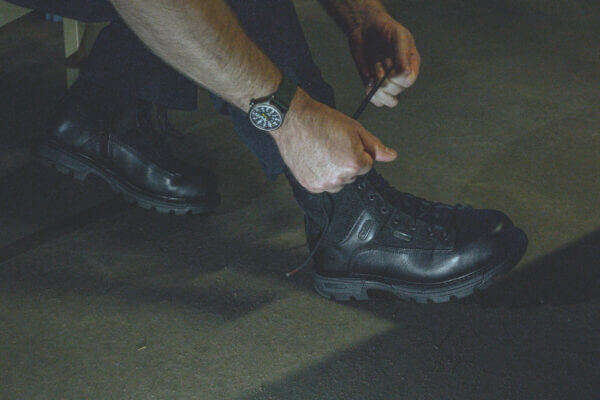
The main types of police footwear
Black duty boots
Black duty boots are the most familiar option. They often rise above the ankle and use strong laces, side zippers, or both. The higher design can help protect the ankle and keep debris out.
Many duty boots use leather, nylon, or a mix of both. Leather looks formal and can be polished, while nylon lowers weight and improves airflow. Some models combine a leather toe and heel with fabric panels for a balance of strength and comfort.
Tactical shoes
Tactical shoes look more like athletic shoes but have features built for police, security, and emergency work. They are often lighter than boots and may have flexible soles.
An officer who spends most of the day inside a station, courthouse, or city block may prefer a tactical shoe. This style can reduce foot fatigue, but it may offer less ankle coverage than a full boot.
Uniform shoes
Some departments require a traditional uniform shoe. These shoes usually have a smooth black finish, a low heel, and a neat shape. They are common for administrative roles, ceremonies, court appearances, and formal assignments.
Uniform shoes can look professional, but they may not work well for long foot pursuits or rough ground. A polished appearance should never come at the cost of safe traction.
Specialized boots
Some officers need footwear for a specific setting. Examples include mounted patrol, marine units, motorcycle units, search teams, and tactical response teams.
Specialized boots may include features such as:
• Extra water resistance
• Strong toe and heel protection
• Heat-resistant materials
• Deeper tread
• Reinforced ankle panels
• Compatibility with motorcycle equipment
• Extra room for thick socks
So, what shoes do cops wear in special units? The answer depends on the risks of the assignment. A marine officer needs water-ready boots, while a motorcycle officer needs footwear that protects the foot during a slide.

Features that matter in police shoes
Traction
Traction is one of the most important features. Police officers may move across wet pavement, grass, tile, stairs, gravel, or oily floors. A sole with a good rubber compound and clear tread can lower the chance of a slip.
Deep tread is not always best. Very deep lugs can feel awkward on smooth floors and may collect mud. The ideal tread matches the officer’s normal work area.
Comfort and fit
Police work often means standing or walking for eight, ten, or even twelve hours. A poor fit can lead to blisters, heel pain, sore arches, and knee discomfort.
A good fit should provide:
• A snug heel that does not lift
• Enough toe room to wiggle the toes
• No pressure across the widest part of the foot
• Stable support around the midfoot
• Space for the socks worn during duty
Feet often swell during a long shift. Trying on shoes late in the day can give a more useful fit than trying them on first thing in the morning.
Ankle support
Tall duty boots can give more ankle coverage than low shoes. This can be useful on uneven ground, stairs, and outdoor scenes. Still, a tall boot does not automatically prevent every ankle injury.
Support must work with the wearer’s movement. A boot that is too stiff can slow natural motion and create pressure points. The best choice offers stability without feeling like a cast.
Water resistance
Rain, puddles, snow, and wet grass are common parts of police work. Water-resistant footwear can keep feet dry during short exposure. Waterproof footwear offers more protection but may feel warmer and less breathable.
No waterproof boot stays waterproof forever. Seams, leather, and membrane layers can wear down. Regular cleaning and the right conditioner can help extend the useful life of the boot.
Breathability
Warm feet can sweat, especially during summer patrols. Moisture increases rubbing and can contribute to blisters. Breathable fabric panels and moisture-wicking socks can help.
There is a trade-off between airflow and water protection. A highly breathable shoe may dry faster, while a sealed waterproof boot may hold more heat.
Durability
Police shoes face hard use. Officers may kneel, climb stairs, drive, run, and walk across rough ground. Reinforced stitching, strong eyelets, durable toe caps, and quality soles can increase service life.
A low price may seem appealing, but replacing a cheap pair several times can cost more than buying one reliable pair. The right value comes from comfort, safety, and long-term use.
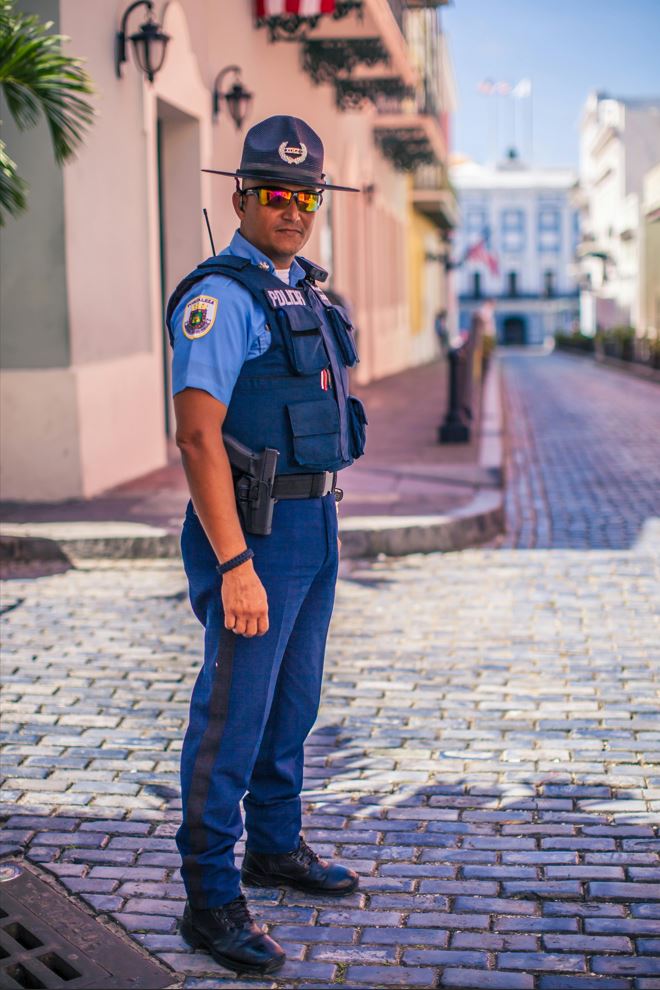
Do police officers wear boots or sneakers?
Most officers wear boots or tactical shoes rather than ordinary sneakers. Some tactical shoes use athletic-style cushioning, but they still include work-focused features such as slip resistance, stronger materials, and a stable sole.
Traditional running shoes are designed for forward motion on predictable surfaces. Police work is less predictable. An officer may need to turn quickly, stop on wet pavement, climb a fence, or stand on concrete for hours.
That does not mean every officer needs a heavy boot. Lightweight tactical shoes can be a smart choice when department policy allows them and the assignment is mostly urban or indoor.
The answer to what shoes do cops wear often comes down to three questions:
- What does the department approve?
- What surfaces does the officer face?
- What footwear keeps the officer safe and comfortable for the whole shift?
A shoe that works well for one officer may be wrong for another. Foot shape, old injuries, climate, and job duties all matter.

Police shoe requirements and uniform rules
Departments may control the color, height, finish, sole, and overall appearance of police footwear. Many require black shoes or boots so the uniform looks consistent.
Some agencies also require shoes to be:
• Polishable
• Plain in design
• Free from bright logos
• Made with an approved color
• Suitable for the duty environment
• Compatible with department safety rules
A department may list approved footwear in its uniform policy. This policy is more important than online reviews or personal preference.
Before buying, officers should check the rules about:
• Boot height
• Side zippers
• Visible brand marks
• Composite or steel toes
• Reflective panels
• Athletic-style designs
• Waterproof materials
• Safety certifications
A comfortable boot that violates uniform policy may not be allowed. In many cases, the safest move is to ask a supervisor, training officer, or supply unit before spending money.

What shoes do cops wear in different assignments?
Patrol officers
Patrol officers often choose black duty boots or tactical shoes. Their footwear must handle car work, street calls, stairs, uneven ground, and long periods of standing.
A patrol boot usually needs strong traction, good cushioning, and quick adjustment. A side zipper can save time, but the laces must still hold the foot securely.
Detectives
Detectives may wear duty boots, tactical shoes, or plain black shoes. Their work can include interviews, surveillance, court, office tasks, and scene visits.
A low-cut tactical shoe may be more comfortable for a detective who spends much of the day indoors. The shoe should still provide grip and support when the work moves outside.
Court and ceremonial officers
Court or ceremonial duties may require a more formal shoe. A smooth black leather shoe often fits the uniform better than a rugged boot.
Even formal shoes should have a stable sole and enough cushioning. Looking professional is important, but foot health matters too.
Motorcycle officers
Motorcycle officers commonly wear taller, stronger boots. These boots may protect the ankle and lower leg from impact, heat, road debris, and weather.
Motorcycle boots may feel stiff when walking. That trade-off can be reasonable because the footwear is designed around riding safety.
Tactical and search teams
Special teams may use boots with stronger protection and more aggressive tread. Their footwear may need to work in mud, wooded areas, buildings, and steep ground.
The exact design depends on the mission. There is no single “police boot” that fits every assignment.

How police officers care for their boots
Good care can improve comfort and extend boot life. It also helps the footwear remain presentable under department rules.
A simple care routine includes:
- Remove dirt after outdoor work.
- Let the boots dry at room temperature.
- Avoid placing leather boots next to a heater.
- Clean leather with a suitable product.
- Polish boots when the uniform requires a shine.
- Check the sole for worn tread.
- Replace damaged laces and loose insoles.
- Rotate pairs when possible.
Wet boots should dry slowly. High heat can shrink leather, weaken glue, and damage waterproof layers.
One practical lesson applies to anyone buying work shoes: do not wait for a painful pair to fail. If the sole is smooth, the heel leans to one side, or the upper has opened, the shoe may no longer provide safe support.

Common mistakes when choosing police shoes
Buying only for appearance is a common mistake. A bright shine looks sharp, but it does not fix poor traction or a bad fit.
Other mistakes include:
• Choosing a boot that is too tight
• Ignoring the width of the foot
• Wearing new boots on a long shift
• Failing to test them on stairs
• Picking a sole that is too hard
• Assuming waterproof means breathable
• Skipping department uniform rules
• Wearing cotton socks that hold sweat
• Waiting too long to replace worn tread
Break in new footwear before using it for a full shift. Wear it around the house, on short walks, and during routine tasks first. This process can reveal rubbing or pressure before the problem becomes a blister.
A useful real-world test is to wear the boots with the same socks and insoles used at work. A pair that feels fine in thin store socks may feel tight during duty.

How to choose shoes for police or security work
If you are choosing footwear for police, security, corrections, or emergency work, start with the job rather than the brand.
Use this checklist:
• Confirm the uniform policy
• Measure both feet
• Try shoes on late in the day
• Wear duty socks during fitting
• Walk up and down stairs
• Test the heel for slipping
• Check toe room
• Look for a slip-resistant rubber sole
• Compare weight and ankle support
• Review the return policy
Quality is not the same as maximum stiffness or maximum weight. The right shoe should disappear from your attention after you put it on. If you constantly notice pressure, rubbing, or heat, it is probably not the right model.
People with diabetes, recurring foot pain, or past injuries should ask a qualified health professional for footwear advice. A police boot can support the foot, but it cannot replace medical care.
Materials used in police boots and shoes
Leather remains popular because it is durable, presentable, and easy to polish. Full-grain leather often offers strong wear resistance, but it may need more break-in time.
Nylon and mesh reduce weight and improve airflow. They are useful in hot conditions but may show wear faster in rough work. Synthetic leather can offer a uniform look with less care, though quality varies widely.
Soles often use rubber or similar compounds. The best material depends on the surface, weather, and work demands. A sole made for wet tile may feel different from one made for mud or loose gravel.
Manufacturers may describe footwear as oil-resistant, slip-resistant, waterproof, or safety-rated. These terms are not identical. Buyers should read the product details and look for clear testing information instead of relying on a vague label.
Frequently Asked Questions about what shoes do cops wear
What shoes do cops wear on patrol?
Most patrol officers wear black duty boots or tactical shoes. Their footwear usually provides traction, cushioning, durability, and some ankle support.
Do cops wear steel-toe boots?
Some officers wear steel-toe or composite-toe boots when their duties involve construction areas, vehicles, or other impact risks. Many patrol roles do not require a safety toe, so department policy decides whether it is allowed or needed.
Can police officers wear sneakers?
Some departments allow black tactical sneakers or athletic-style duty shoes. Ordinary running shoes may not meet uniform, durability, traction, or appearance requirements.
Why do cops wear black boots?
Black boots match many police uniforms and create a consistent, professional appearance. Black leather can also be cleaned and polished for formal duties.
Are police boots comfortable?
Many police boots are designed for long shifts, but comfort depends on fit, foot shape, socks, insoles, and the job environment. A well-fitted lightweight boot may feel better than a heavy boot with features the wearer does not need.
Do cops wear waterproof boots?
Some officers wear waterproof boots for rain, snow, water work, or outdoor patrol. Waterproof boots can keep feet dry, but they may be warmer and less breathable than non-waterproof models.
How often should police boots be replaced?
Replacement depends on use, care, and condition rather than a fixed date. Worn tread, damaged stitching, a collapsing heel, or reduced support are signs that new footwear may be needed.
Conclusion
So, what shoes do cops wear? Most wear black duty boots, tactical boots, or approved tactical shoes selected for grip, comfort, support, durability, and uniform compliance. The best choice changes with the officer’s assignment, climate, foot needs, and department rules.
Treat police footwear like safety equipment, not a fashion purchase. Check the policy, test the fit, break in the pair, and replace it when the tread or support fails. If this guide helped, explore more work-footwear resources or share your own experience with duty boots in the comments.

Rubel Miah is the Senior Editor at MyStyleGrid.com, where he brings a sharp editorial eye and an unshakable love for fashion to everything he does. A true style addict, Rubel lives and breathes trends, from streetwear to high fashion, and has a knack for turning inspiration into impactful stories. With years of experience in fashion journalism and digital media, he curates content that empowers readers to express themselves through style. When he’s not editing features or forecasting the next big thing, you’ll find him hunting down vintage pieces or capturing street style moments around the city.