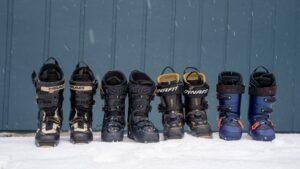
Most adult ski boots weigh about 3 to 5 pounds per boot, or 6 to 10 pounds per pair.
Knowing how much ski boots weigh in pounds helps you choose the right setup for comfort, travel, and performance. Weight can change a lot based on boot size, shell material, liner, buckles, and whether the boot is made for resort skiing or uphill touring. This guide explains the normal weight ranges, how to weigh your boots, and what those numbers mean on the mountain.

How much do ski boots weigh in pounds?
Most adult alpine ski boots weigh between 3 and 5 pounds per boot. A complete pair usually weighs about 6 to 10 pounds.


That range covers many common resort boots. Soft beginner boots often sit near the lower end. Stiff expert and race boots often weigh more because they use thicker plastic, stronger buckles, and supportive liners.
When asking how much do ski boots weigh in pounds, it is important to check whether the number applies to one boot or the full pair. Product pages often list the weight of a single boot, while shoppers may think the number describes both boots.
Typical weights look like this:
• Lightweight resort boots: 2.5 to 3.5 pounds per boot
• Standard adult alpine boots: 3.5 to 4.5 pounds per boot
• Stiff freeride or race boots: 4.5 to 6 pounds per boot
• Adult touring boots: 2 to 4 pounds per boot
• Youth ski boots: 1.5 to 3 pounds per boot
These are useful estimates, not fixed rules. Two boots with the same flex rating can have different weights because their shell shapes, liners, and hardware may differ.
Average ski boot weight by type
Ski boots are built for different jobs. A downhill resort boot does not need the same walking features as an alpine touring boot. That design difference has a major effect on weight.


Alpine resort ski boots
Traditional alpine boots are made for lift-served skiing. They focus on power transfer, downhill control, warmth, and a secure fit.
Most adult resort boots weigh about 3.5 to 5 pounds each. A pair may weigh 7 to 10 pounds before you add ski socks, boot bags, or boot heaters.
A beginner boot may weigh less because it has a softer shell and fewer stiffening features. A high-performance boot may weigh more because it uses a firm shell, thick liner, and strong four-buckle design.
Freeride and all-mountain boots
Freeride boots are made for mixed terrain, deep snow, and aggressive skiing. They often have a walk mode, stronger soles, and extra rubber around the toe and heel.
The usual weight is about 4 to 5.5 pounds per boot. Some models can go above that range, especially in large sizes or with heavy liners.
These boots feel like a sturdy hiking shoe compared with a lightweight touring boot. The extra mass can improve downhill stability, but you will notice it during long walks across a parking lot.
Alpine touring boots
Touring boots are designed for climbing as well as skiing. They use lighter plastics, thinner liners, reduced buckles, and a walk mechanism that allows more ankle movement.
Many adult touring boots weigh about 2 to 4 pounds per boot. Very light ski mountaineering models may weigh less, while freeride touring boots can approach the weight of resort boots.
The tradeoff is simple: less weight usually helps on the climb, while more weight often provides better downhill support. A boot that saves one pound per foot can feel wonderful on a long ascent, but it may feel less powerful in rough snow.
Race ski boots
Race boots are stiff and precise. They are built to transfer force quickly from the skier to the ski.
Many race boots weigh around 4.5 to 6 pounds per boot. Their dense shells and narrow liners can make them heavier than a casual resort boot.
Weight alone does not determine race performance. Fit, shell stiffness, alignment, and skier skill matter just as much.
Kids’ ski boots
Children’s ski boots are much lighter than adult boots. A typical pair may weigh 3 to 6 pounds, depending on size and construction.
Small boots often have two buckles and a soft shell. Larger junior race boots may use more plastic and hardware, so their weight can move closer to adult models.


What affects ski boot weight?
Several parts contribute to how much ski boots weigh in pounds. The difference between two pairs may look small on a scale, but it can feel clear after several hours of skiing.
Boot size
A larger shell needs more plastic. It may also require a larger liner, longer buckles, and a bigger sole.
For this reason, a men’s size 29 boot usually weighs more than the same model in size 25. Women’s and junior versions may weigh less because they use smaller shells and different shapes.
Manufacturers usually list weight for one sample size. Your actual pair may be heavier or lighter than the published figure.
Shell material
Ski boots use plastics such as polyurethane, polyether, and other engineered compounds. Each material has a different balance of weight, flex, durability, and cold-weather performance.
A thick shell can add weight but may improve power and longevity. A thin shell can reduce weight but may provide less support for strong or heavy skiers.
Flex rating
A stiff boot often uses more material around the shell and cuff. It may also include extra reinforcement to prevent unwanted movement.
Still, flex numbers are not universal. One brand’s 100-flex boot may feel different from another brand’s 100-flex boot. The number also does not tell you the complete weight.
Liners
The liner affects both comfort and mass. A thick, heat-moldable liner can weigh more than a thin touring liner.
Aftermarket liners may change the final weight by several ounces per boot. Some custom liners add support and warmth but are heavier than the liners supplied with lightweight boots.
Buckles and power straps
Four metal buckles, ladder systems, power straps, and spine reinforcements all add small amounts of weight. These parts may seem minor, but several ounces in one boot become a noticeable difference over a full day.
A touring boot may use two buckles and a lighter strap. A race boot may use four large buckles and a strong power strap.
Walk mechanisms and soles
Touring boots include walk modes, pivot points, tech fittings, and rockered soles. These parts can add weight, but the rest of the boot is often made lighter to balance the design.
GripWalk or rubber soles may weigh a little more than traditional alpine soles. They can make walking easier, which may be more useful than saving a few ounces.


How much do ski boots weigh in pounds with bindings and skis?
Ski boots are only one part of your total equipment weight. If you are carrying your gear, the skis and bindings usually add much more than the boots.
A rough equipment estimate for one adult setup is:
• Ski boots: 6 to 10 pounds per pair
• Alpine skis: 8 to 14 pounds per pair
• Alpine bindings: 4 to 7 pounds per pair
• Poles: 1 to 2 pounds per pair
A complete resort setup can therefore weigh about 19 to 33 pounds, depending on the equipment. Touring equipment may weigh less, but the total can still add up with skins, crampons, a backpack, and safety gear.
Boots matter most when they are on your feet. You lift them with every step, so a small weight difference is repeated thousands of times during a long tour. While skiing downhill, however, fit and control usually matter more than a minor difference on the scale.
Does ski boot weight affect skiing performance?
Yes, but the effect depends on how and where you ski.
Lighter boots can make walking, climbing, and travel easier. They may also reduce leg fatigue during long touring days. This is why uphill-focused skiers often pay close attention to grams.
Heavier boots can offer useful benefits:
• More support for powerful turns
• Better downhill stability
• Stronger shells for rough snow


• Greater durability
• Warmer, thicker liners
The best boot is not always the lightest boot. A lightweight boot that does not fit well can cause pain, poor control, and cold feet. A slightly heavier boot with a precise fit may help you ski longer and with more confidence.
A helpful comparison is hiking footwear. You would not choose running shoes for a rocky winter climb simply because they weigh less. Ski boots work the same way: weight matters, but purpose matters first.
How to weigh ski boots accurately
If you want to know exactly how much do ski boots weigh in pounds, use a kitchen, luggage, or shipping scale.
Follow these steps:
-
Remove the footbeds if you want to compare shell and liner weight separately.
-
Keep the liners and buckles in their normal skiing position.
-
Weigh one boot at a time.
-
Record the number in pounds and ounces.
-
Weigh the second boot because small differences can occur.
-
Add both numbers to find the pair weight.
For example, if one boot weighs 4 pounds 2 ounces and the other weighs 4 pounds 1 ounce, the pair weighs 8 pounds 3 ounces.
Do not weigh only the shell and assume that it represents the complete boot. The liner, footbed, buckles, power strap, and sole are part of the weight you carry on the mountain.


You can convert ounces to pounds by dividing the ounces by 16. For example, 4 pounds 8 ounces equals 4.5 pounds.
Ski boot weight in pounds compared with kilograms
Ski brands often publish boot weight in grams or kilograms. Converting the number makes comparisons easier for shoppers in the United States.
Use these basic conversions:
• 1 kilogram equals 2.205 pounds
• 1 pound equals 453.6 grams
• 1,000 grams equals about 2.2 pounds
Examples:
• 1.5 kilograms equals about 3.3 pounds
• 1.8 kilograms equals about 4 pounds
• 2 kilograms equals about 4.4 pounds
• 2.3 kilograms equals about 5.1 pounds
Always check whether a manufacturer gives the weight for one boot or a pair. A listing that says 1,800 grams may mean one boot, not both boots.
How to choose the right ski boot weight
Start with your skiing style, not the number on the scale. Your ideal weight depends on the type of terrain you ski, how often you walk or tour, and how much support you need.
Use these guidelines:
• Choose a lighter boot if you tour often, hike for turns, or value low fatigue.
• Choose a midweight boot for regular resort skiing and mixed terrain.
• Choose a heavier boot if you ski fast, prefer a stiff feel, or need strong downhill control.
• Choose based on fit before weight if you are a beginner.
• Compare weight in the same size and with the same components.
A boot fitter can help you find the right balance. A well-fitted boot should hold your heel securely, keep your toes lightly touching the liner when standing, and avoid painful pressure points.
One common mistake is buying a touring boot for resort use because it looks light and modern. Some touring boots ski very well downhill, but others sacrifice stiffness and durability to save weight. Match the boot to your main activity.
Another mistake is comparing a stripped-down catalog weight with the weight of a fully assembled boot. Ask whether the listed number includes the liner, footbed, buckles, strap, and sole.
Do ski boots feel heavier after a full day?
Yes. Ski boot weight becomes more noticeable when you walk, climb stairs, carry equipment, or ski through difficult snow.
A pair that feels light in a store may feel different after six hours of skiing. Wet liners can also add a small amount of weight, while packed snow around the soles can make boots feel clumsy.
Fit and circulation affect perceived weight too. A tight boot can make your legs and feet tire faster, even if the boot is technically light. Good footbeds, dry liners, and proper buckle tension can make the same boot feel easier to wear.
In my experience comparing equipment for resort days and uphill travel, the biggest lesson is that a comfortable boot often feels lighter than its actual scale weight. A painful lightweight boot is still a poor choice.
What is a reasonable ski boot weight for beginners?
For many adult beginners, a pair weighing about 6.5 to 9 pounds is reasonable. This usually provides enough structure for control without making the boots unnecessarily heavy.
Beginners should focus on comfort, easy flex, warmth, and fit. A very light boot may not offer the support needed for learning balanced turns, while a very stiff boot can make basic movement harder.
If you only ski a few days each year, comfort may matter more than saving half a pound. If you expect to hike or tour often, then a lighter model may be worth considering.
Frequently asked questions about how much do ski boots weigh in pounds
How much does one adult ski boot weigh?
One adult ski boot usually weighs about 3 to 5 pounds. Lightweight touring boots may weigh closer to 2 pounds, while stiff race or freeride boots can weigh more than 5 pounds.
How much does a pair of ski boots weigh?
A typical adult pair weighs about 6 to 10 pounds. The exact weight depends on boot size, shell design, liner thickness, buckles, and intended use.
Are touring ski boots lighter than regular ski boots?
Yes, most touring boots are lighter than traditional resort boots. Many touring boots weigh about 2 to 4 pounds each, although freeride touring models can be heavier.
Do heavier ski boots perform better?
Not always, but heavier boots often provide more support, durability, and downhill stability. Fit, flex, alignment, and skiing style are more important than weight alone.
Does ski boot size change its weight?
Yes. Larger boots usually weigh more because they use larger shells, liners, and hardware. Manufacturer weight figures often use one sample size, so your pair may not match the listed number exactly.
How can I find the exact weight of my ski boots?
Use a digital kitchen, luggage, or shipping scale. Weigh each complete boot with its liner, footbed, buckles, strap, and sole, then add the two measurements.
Conclusion
Most adult ski boots weigh about 3 to 5 pounds each, making a typical pair roughly 6 to 10 pounds. Touring boots are often lighter, while race and freeride boots usually weigh more because they emphasize stiffness and downhill control.
When deciding how much do ski boots weigh in pounds, remember that the listed number may apply to one boot and one specific size. Check the full boot weight, compare similar sizes, and put fit and purpose ahead of a small weight difference.
Use a scale to measure your current boots, then speak with a professional boot fitter before buying your next pair. A well-fitted boot can make every run more comfortable, so explore trusted gear guides and share your own ski boot weight and experience in the comments.
Madison Clark is a footwear expert and the voice behind MyStyleGrid.com. She specializes in honest shoe reviews, style tips, and practical guides to help readers find the perfect pair for any occasion. With years of experience in blogging and content creation, Madison makes footwear knowledge simple, stylish, and easy to follow.