Use aggressive traction, sturdy soles, and on-demand slip-on cleats to stop boots sliding on ice.
I’ve spent years testing winter gear on city sidewalks, mountain trails, and slippery job sites. This guide explains, clearly and practically, how to stop boots from sliding on ice. You’ll get proven gear choices, simple DIY fixes, walking techniques, and maintenance tips grounded in real experience and research. Read on to learn actionable steps that keep you steady, confident, and safe on ice.

Why boots slide on ice
Ice is smooth and hard. Most boot soles rely on friction. On ice, friction drops dramatically. That makes soles slide instead of bite.
Factors that increase sliding
- Smooth or worn soles reduce grip.
- Hard rubber becomes slick in very cold weather.
- Packed snow and black ice hide slippery surfaces.
- Wrong gait or heavy loads shift your center of gravity.
Understanding these causes helps you choose the right fixes. If you know why slipping happens, you can target solutions to stop boots from sliding on ice.

Choose the right boots to stop boots from sliding on ice
Picking boots designed for ice is the best starting point. Look for features that promote traction and stability.
What to look for
- Deep, multi-directional lug patterns that channel water and snow.
- Softer rubber compounds that remain grippy in cold temperatures.
- A low, stable heel to reduce forward tipping.
- Proper fit to prevent the foot from moving inside the boot.
My experience: a boot with good lugs and a snug fit reduced slips on compacted snow during daily walks. Replacing worn boots was more effective than any add-on I tried.

Traction devices and cleats: the most reliable fix
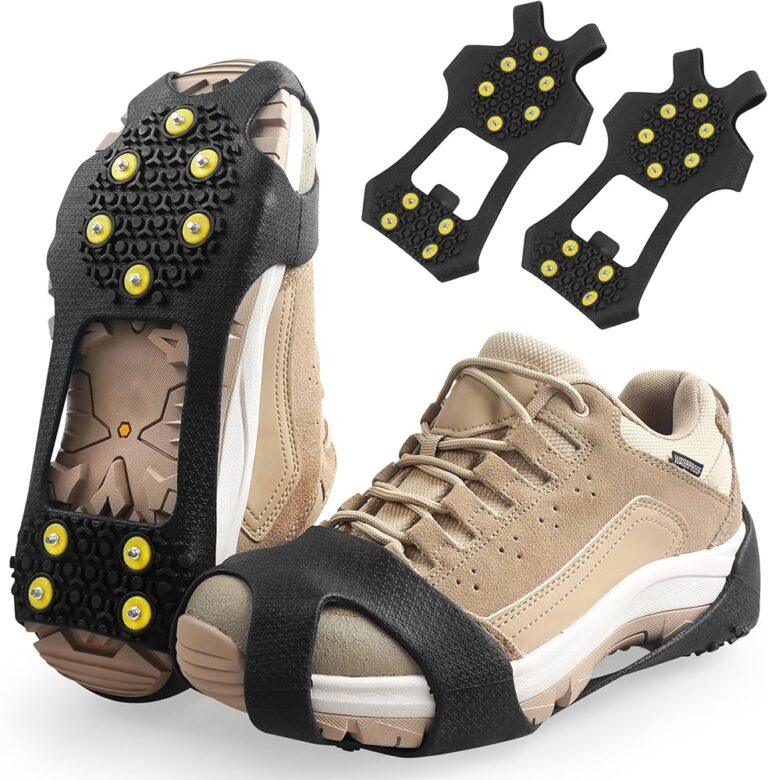
Traction devices are the fastest, most reliable way to stop boots from sliding on ice. They come in several types and price ranges.
Common traction options
- Slip-on microspikes for hiking or mixed terrain. They add metal teeth for bite.
- Crampons for steep ice or mountaineering. They have aggressive points and wide straps.
- Rubber sole cleats for city use. They are low-profile and easy to walk in.
- Heel ice grips provide extra bite for commuters without changing normal walking feel.
Tips for using traction devices
- Match the device to your activity. Don’t use heavy crampons for a short city walk.
- Check fit and secure straps before you step on ice.
- Keep devices in a bag so you can change them when surfaces change.
I used microspikes on a winter trail; they stopped my boot from sliding on packed ice within the first few steps. For city work, thin rubber cleats were more practical and kept me stable on black ice.
 temporary grips you can use now”
style=”max-width: 100%; height: auto; border: 2px solid black; border-radius: 10px; display: block; margin: 0 auto;”
loading=”lazy”
/>
PAA-style quick questions
What traction device is best for sidewalks?
- Low-profile rubber cleats are best for sidewalks and commute routes due to comfort and ease of use.
Are metal spikes safe on indoor floors?
- No. Metal spikes can damage flooring and are slippery on tile or wood; remove them before entering buildings.
How tight should traction straps be?
- Tight enough that the device won’t shift, but not so tight that it cuts circulation or damages the boot.

DIY fixes and temporary grips you can use now
When you don’t have traction devices, simple fixes help stop boots from sliding on ice temporarily.
Easy on-the-spot hacks
- Duct tape: wrap a strip of tape sticky-side-out on the sole to add bite for short walks.
- Sheet metal screws: driven into the sole in a pattern can create permanent studs if you plan to resole later.
- Grip spray: some sprays texture soles for a short time. Reapply often.
- Sand or salt in a pocket: scatter under your feet while crossing a patch of ice.
Practical cautions
- DIY metal studs can damage floors and void boot warranties.
- Temporary fixes work for short distances. For long use, pick proper traction devices.
I once used duct tape during a sudden freeze. It worked for the block I needed to cross, but it wore off fast. For repeated ice, invest in a proper grip solution.

Improve gait and balance to reduce slips
How you walk matters as much as what you wear. Small changes in technique help stop boots from sliding on ice.
Walking tips
- Take short, flat-footed steps. Keep your weight centered over each foot.
- Bend knees slightly to lower your center of gravity.
- Point feet slightly outward for a wider base and better stability.
- Use trekking poles or a cane with an ice tip for extra support.
Practice these moves on dry ground to build muscle memory. In my time guiding winter hikes, teaching clients a slow, deliberate gait cut their slip rate dramatically.

Maintenance and long-term prevention
Keeping boots and traction tools in good shape prevents future sliding. Regular care extends grip and safety.
Maintenance checklist
- Inspect soles for wear. Replace boots or resole when lugs are shallow.
- Clean out snow and ice from treads after each use.
- Store boots dry to avoid rubber hardening and cracking.
- Re-tension straps and check spikes on traction devices often.
Resoling and professional service
- Resoling with a grippy rubber compound can restore traction.
- Professional installs for studs or protective plates are cleaner and safer than DIY.
I learned the value of maintenance the hard way. A new pair of soles transformed an old winter boot into a reliable, non-sliding shoe for many seasons.
Safety limits and when to avoid ice
Even the best gear and technique cannot make every surface safe. Know when to avoid risks.
When to stay off ice
- Thin ice near water or shaded patches can’t be trusted.
- Long stretches of polished black ice are unsuitable for normal walking.
- Steep slopes and packed glazed ice require technical gear and experience.
Be honest about risk. If conditions exceed your traction devices or skill, find another route or wait for safer conditions. That judgment keeps you safer than any boot upgrade.
Frequently Asked Questions of how to stop boots from sliding on ice
What is the quickest way to stop boots from sliding on ice?
Use slip-on microspikes or low-profile rubber cleats. They provide immediate traction for most walking situations.
Can I add screws or studs to my boot soles?
Yes, you can add screws or studs, but do so carefully or have a cobbler install them to avoid damage and ensure correct placement.
Are winter hiking boots enough to prevent slipping?
Good winter hiking boots help, but on hard ice you still need traction devices to stop sliding reliably.
Do expensive boots always stop slipping better?
Not always. Sole design and rubber compound matter more than price. High-quality traction features are key.
How do I walk safely when boots start to slide?
Freeze, plant your foot flat, take small steps, and shift weight slowly. Use poles or grab rails if available.
Conclusion
Stopping boots from sliding on ice is a mix of the right gear, simple fixes, and smart movement. Choose boots with grippy soles, add the right traction devices, use quick DIY fixes when needed, and practice a steady gait. Keep your equipment cared for and know when to avoid dangerous surfaces. Try one change today—like getting rubber cleats or practicing shorter steps—and you’ll notice more confidence and fewer slips. Share your own tips, ask questions, or subscribe for more winter safety advice.

Rubel Miah is the Senior Editor at MyStyleGrid.com, where he brings a sharp editorial eye and an unshakable love for fashion to everything he does. A true style addict, Rubel lives and breathes trends, from streetwear to high fashion, and has a knack for turning inspiration into impactful stories. With years of experience in fashion journalism and digital media, he curates content that empowers readers to express themselves through style. When he’s not editing features or forecasting the next big thing, you’ll find him hunting down vintage pieces or capturing street style moments around the city.