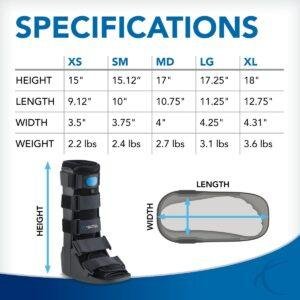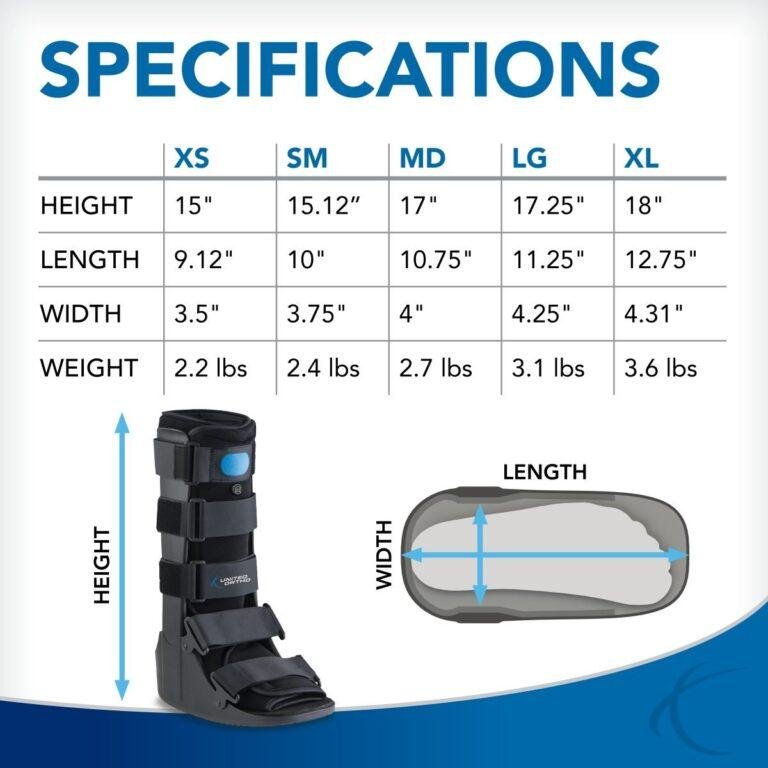
Most walking boots weigh about 1.5 to 3 pounds per boot, or 3 to 6 pounds per pair.
How much does a walking boot weigh? The answer depends on its height, shell, padding, tread, and size. A short fracture boot may feel fairly light, while a tall medical walking boot can feel like a small ankle weight with every step. After comparing common boot designs and manufacturer specifications, I’ll explain the real weight ranges, what changes them, and how to choose a boot that supports healing without adding needless strain.
Average walking boot weight
A typical orthopedic walking boot weighs between 1.5 and 3 pounds per boot. This means a pair would weigh about 3 to 6 pounds, although most people wear only one boot.
The exact number varies by model. A low-profile boot for a mild ankle injury may weigh close to 1 pound. A tall air-cast boot with a rigid frame, thick sole, and extra padding may weigh 3 pounds or more.
Here is a simple guide:
| Walking boot type | Approximate weight per boot | Common use |
|---|---|---|
| Short walking boot | 1 to 2 pounds | Foot, toe, and mild ankle injuries |
| Tall walking boot | 2 to 3 pounds | Ankle, lower-leg, and tendon injuries |
| Lightweight boot | 1 to 2 pounds | Short-term support and daily movement |
| Heavy-duty boot | 2.5 to 4 pounds | Strong protection and severe injuries |
| Pediatric walking boot | 0.5 to 1.5 pounds | Children’s foot and ankle injuries |
These figures are general estimates, not fixed rules. A larger boot size, wider frame, or added air chamber can increase the weight.

How much does a walking boot weigh by type?
The design of the boot has a major effect on its weight. A walking boot is not simply a shoe with extra padding. It may include a hard shell, rocker sole, air liner, straps, metal parts, or reinforced plastic.
Short walking boots
Short boots usually cover the foot and ankle. They often weigh between 1 and 2 pounds.
They are common for:
• Sprained ankles
• Stable foot fractures
• Toe and metatarsal injuries
• Mild tendon problems
• Recovery after minor procedures
Because they end below the calf, short boots often feel easier to walk in. They also tend to be cooler and less tiring than tall models.
Tall walking boots
Tall boots extend up the lower leg and usually weigh between 2 and 3 pounds. Some larger models may weigh more.
Doctors may recommend them for:
• Ankle fractures
• Achilles tendon injuries
• Severe ankle sprains
• Lower-leg injuries
• Post-surgery protection


A tall boot offers more control, but that extra control comes from more material. This is why how much does a walking boot weigh often depends first on whether the boot is short or tall.
Pneumatic or air walking boots
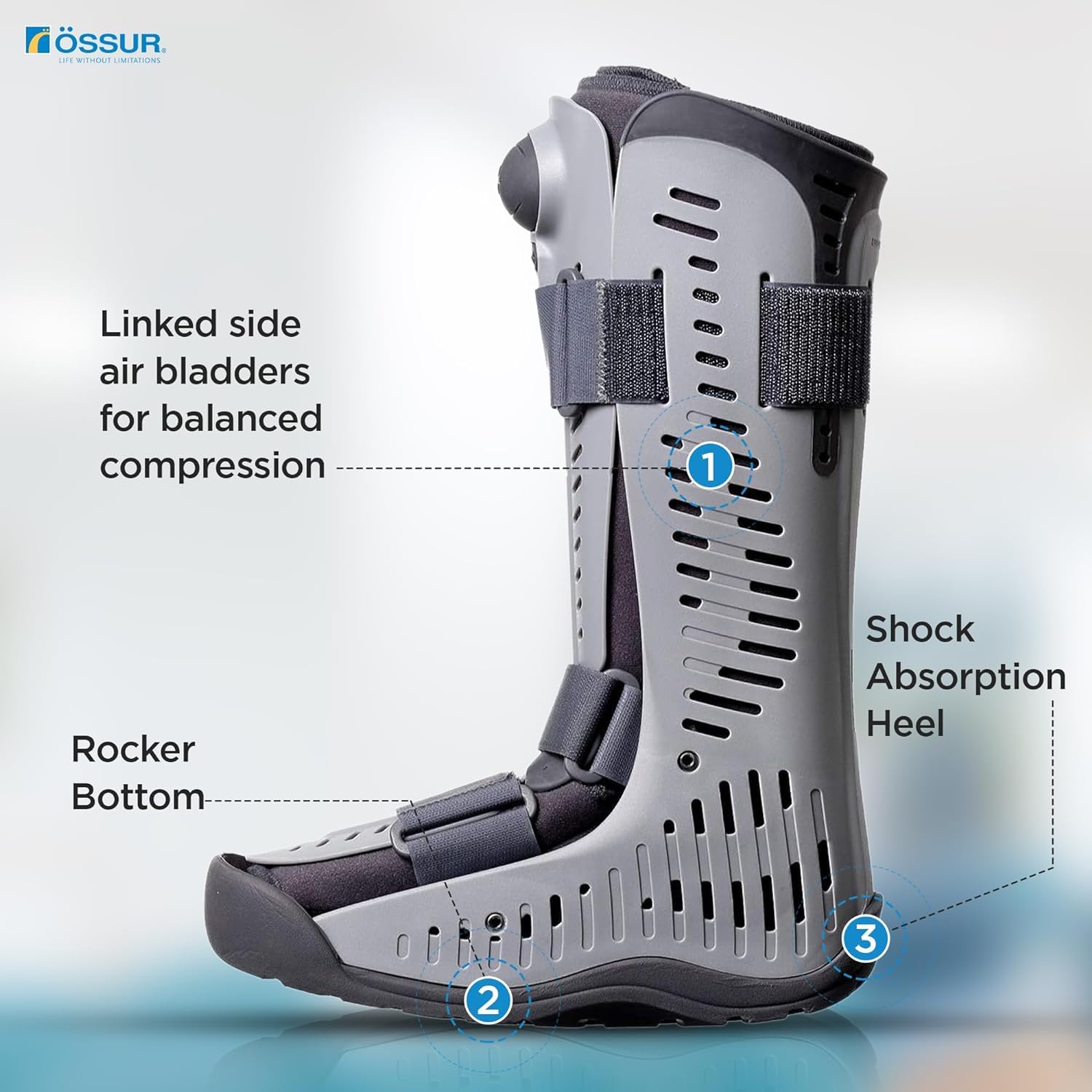
Air walking boots have chambers that can be inflated around the leg. The air itself adds almost no meaningful weight, but the pump, liner, and stronger frame may add some weight.
Most air boots weigh around 2 to 3 pounds. They can also feel heavier when the straps are tight or when the boot sits high on the leg.
Pediatric walking boots
Children’s walking boots are smaller and often weigh less than 1.5 pounds. However, even a lightweight boot can feel heavy to a child because it may represent a large share of the child’s body weight.
Parents should check the fit often. A child’s swelling can change during the day, and a boot that is too loose may not protect the injury properly.
What affects walking boot weight?
Several features affect how much does a walking boot weigh. The listed weight is only a starting point because your size, injury, and walking style change how heavy the boot feels.
Boot height
A tall boot uses more plastic, padding, and straps than a short boot. This is one of the clearest reasons tall boots are heavier.
Boot size
A size small boot may weigh much less than an extra-large boot from the same product line. Manufacturer weight charts often list one test size, so your boot may not match the number shown online.
Frame material
Rigid plastic protects the foot and ankle but adds weight. Some newer designs use lighter composite materials. These can reduce weight while keeping the boot firm, but lighter does not always mean better for every injury.
Sole design
A thick rocker sole can make walking smoother. It helps your foot roll forward instead of bending at the injured area. However, thick rubber and foam add weight.
Padding and liners
More padding improves comfort and may reduce pressure. It can also make the boot warmer and heavier. Removable liners are useful because they can be washed and replaced.
Air chambers
Air systems allow you to adjust pressure around the limb. They may improve the fit, but the surrounding structure still adds weight.
Fasteners and support bars
Large straps, buckles, hinges, and support bars can add small amounts of weight. These parts matter most in specialized boots made for stronger stabilization.
Your injury
A serious injury may require a heavier boot. Trying to use the lightest boot without medical approval can reduce protection and slow recovery.


Why does a walking boot feel heavier than its listed weight?
The answer is partly about physics and partly about body movement. A boot sits at the end of your leg, far from your hip. That makes each extra pound more noticeable than the same weight held close to your body.
A boot also changes your stride. You may lift your knee higher, swing your leg outward, or place more pressure on the other foot. These changes can make a 2-pound boot feel much heavier after a few minutes.
The rocker sole can help, but it does not remove the effort. Your hip and thigh muscles still work harder to move the boot forward.
In practical use, people often notice:
• Faster leg fatigue
• More pressure on the uninjured leg
• Hip or lower-back soreness
• A shorter walking distance
• More effort on stairs
• Trouble keeping balance on uneven ground
One common mistake is judging a boot only by its scale weight. A well-fitted 2.5-pound boot may feel easier than a poorly fitted 1.8-pound boot that slips, rubs, or forces an awkward stride.
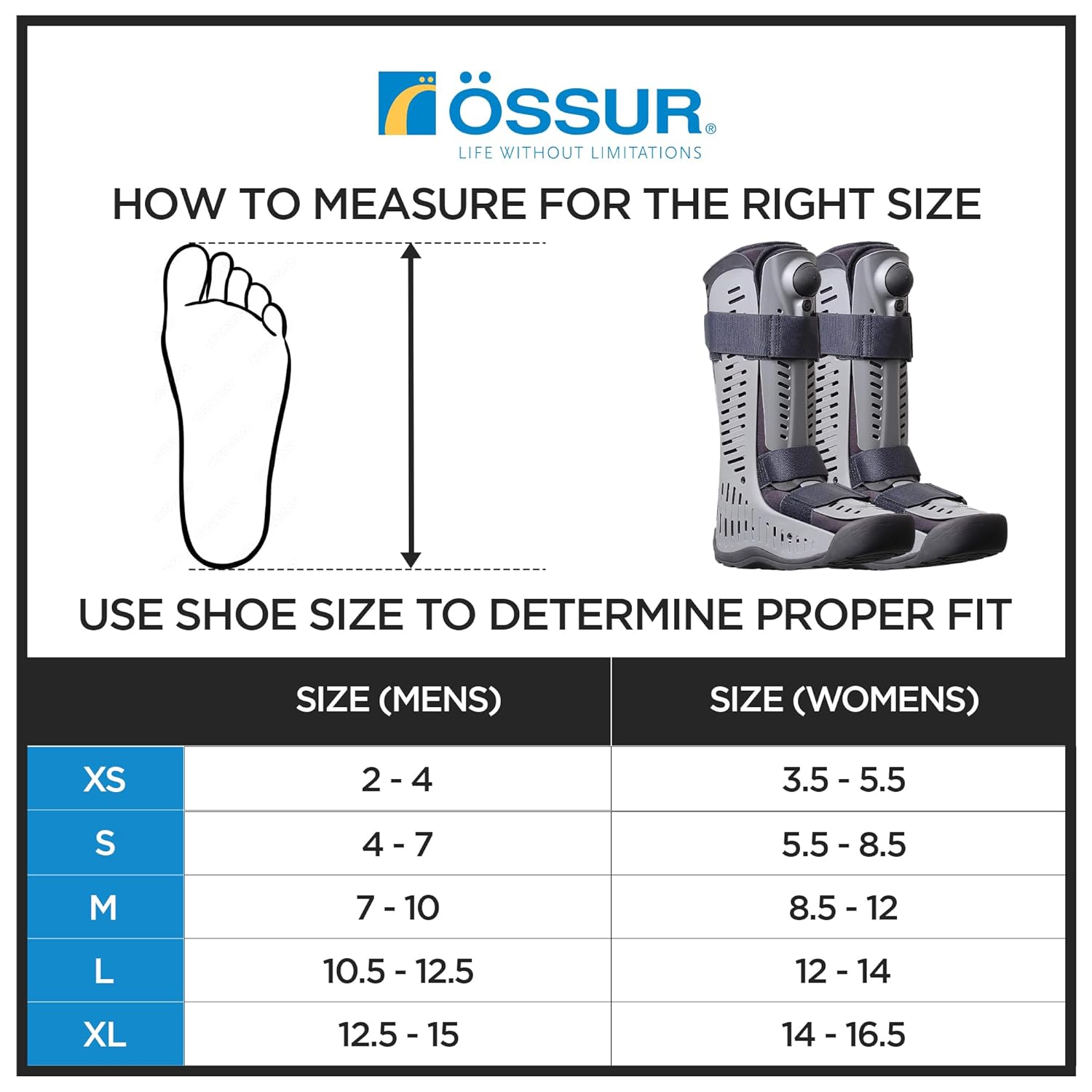
How to measure how much a walking boot weighs
You can measure your own boot at home in less than a minute. This is useful when comparing products or planning travel.
Follow these steps:
- Remove loose items, such as extra socks or an insert that you do not normally use.
- Place a kitchen or luggage scale on a flat surface.
- Set the scale to pounds or ounces.
- Put the empty boot on the scale.
- Record the weight.
- Weigh the boot again with its liner and normal insole.
- Compare the result with the manufacturer’s listed weight.
Always measure the boot as you wear it. If you use an air liner, insole, or heel lift, include those parts.
To convert ounces to pounds, divide the ounces by 16. For example, a boot that weighs 40 ounces weighs 2.5 pounds.
A bathroom scale usually cannot measure a single boot accurately. A kitchen scale or luggage scale is a better choice.

Walking boot weight comparison
The following examples show how much does a walking boot weigh in common situations. These are useful planning ranges rather than medical limits.


Lightweight walking boot
A lightweight model may weigh 1 to 2 pounds. It is often easier for short trips, indoor movement, and mild injuries.
Its limitation is that it may offer less height, padding, or side-to-side control. The right level of protection matters more than saving a few ounces.
Standard tall walking boot
A standard tall boot often weighs 2 to 3 pounds. It provides a balance between stability and movement.
This is the most common range for adults with ankle injuries. Some people adapt within a few days, while others need more time.
Heavy-duty walking boot
A heavy-duty boot may weigh 3 to 4 pounds or more. It can include a strong frame, thick sole, multiple air chambers, or extra support.
This type may be appropriate for complex injuries, but it can create more fatigue. Ask your clinician whether the added protection is necessary for your condition.
Shoe and boot comparison
A normal athletic shoe may weigh 8 to 16 ounces. A walking boot can weigh two to four times as much.
That difference explains why everyday activities can suddenly feel harder. Walking to the kitchen may be easy, but a long shopping trip can become tiring.

Does walking boot weight affect recovery?
Weight alone does not determine recovery. The main goals are protection, proper alignment, controlled movement, and safe weight bearing.
A boot that is too light may not limit movement enough. A boot that is too heavy may cause fatigue, poor balance, or extra stress on the opposite leg.
Your clinician may also tell you whether you can bear full weight, partial weight, or no weight on the injured side. Do not increase walking just because the boot feels comfortable.
Contact your medical provider if you notice:
• New or worsening pain
• Numbness or tingling
• Blue, pale, or unusually cold toes
• Severe swelling
• Skin sores or blisters
• A boot that slips during walking
• Pain in the knee, hip, or lower back
The American Academy of Orthopaedic Surgeons and hospital-based orthopedic guidance commonly stress proper fit, skin checks, and following weight-bearing instructions. These steps matter more than choosing the lowest listed boot weight.


How to choose a comfortable walking boot
When people ask how much does a walking boot weigh, they often want to know which boot will be easiest to live with. Weight matters, but comfort and fit should guide the final choice.
Look for these features:
• A stable rocker sole
• Adjustable straps
• A washable or removable liner
• Enough room for your toes
• Smooth edges around the calf
• A heel that stays in place
• A sole with safe traction
• A size that matches your measurements
Try the boot with the sock you plan to wear. Your foot may swell later in the day, so check the fit in the afternoon when possible.
Your toes should not press against the front. The heel should stay seated, and the straps should feel secure without causing numbness.
Avoid adding thick socks to fix a boot that is too large. This can create pressure points and heat. A properly sized boot is usually safer and more comfortable.

Tips for walking with a heavy boot
A heavier boot can be manageable when you adjust your routine. Think of it as carrying a small backpack on your foot. Short, steady steps work better than long strides.
Try these practical tips:
- Walk slowly on flat surfaces at first.
- Use a handrail on stairs.
- Keep floors clear of rugs and clutter.
- Rest before your leg becomes very tired.
- Use a cane or crutches if your clinician recommends them.
- Wear a supportive shoe of similar height on the other foot.
- Check your skin after removing the boot.
- Follow the prescribed schedule for wearing the boot.
A shoe of similar height can reduce the uneven feeling between your legs. Do not use a thick platform shoe without advice, since it may create a new balance problem.
In my experience with comparing boot setups, the biggest comfort mistake is wearing the boot too loosely. The foot slides inside, the leg works harder, and the boot feels heavier than it really is. Tightening each strap evenly usually helps, but it should never cause tingling or color changes.

Walking boot weight for travel and daily tasks
If you plan to fly or drive, measure the boot before your trip. Knowing how much does a walking boot weigh can help you pack clothing, arrange luggage, and plan breaks.
Keep these points in mind:
• A worn boot may count as part of your travel clothing, but airline rules differ.
• Security staff may ask you to remove the boot or provide another screening method.
• A removable boot can make airport checks easier.
• Long walks through terminals may increase swelling.
• Carry medical instructions and any required imaging or prescriptions.
• Do not drive in a boot unless your clinician and local rules allow it.
A walking boot can affect pedal control, especially on the right foot. Even if the boot feels light, your reaction time and ankle movement may be limited.
For daily tasks, plan around energy rather than distance. A rolling bag, shower chair, or delivery service can reduce unnecessary strain during recovery.
Frequently Asked Questions About How Much Does a Walking Boot Weigh
How much does a walking boot weigh in pounds?
Most adult walking boots weigh about 1.5 to 3 pounds per boot. Short boots may weigh less, while tall or heavy-duty boots may weigh 3 to 4 pounds.
Is a walking boot heavier than a regular shoe?
Yes. A walking boot often weighs two to four times as much as an athletic shoe. Its rigid frame, thick sole, padding, and straps add protection but also require more effort to move.
Does a tall walking boot weigh more than a short boot?
Usually, yes. A tall boot covers more of the leg and often includes extra padding and support, so it commonly weighs about 2 to 3 pounds or more.
Can I choose a lighter walking boot?
You may be able to choose a lighter model, but your injury must come first. Ask your doctor or physical therapist before changing boot types, since less weight may also mean less support.
Why does my walking boot feel so heavy?
The boot sits at the end of your leg and changes your stride. Muscle fatigue, swelling, poor fit, and putting extra weight on the opposite leg can make it feel heavier.
Does walking boot weight affect how long I can walk?
It can. A heavier boot may increase fatigue and alter your balance, but your injury and weight-bearing limits are also important. Increase activity only according to your clinician’s instructions.
How can I find the exact weight of my boot?
Check the manufacturer’s product specifications or weigh the boot with a luggage or kitchen scale. Include the liner, insole, and air components you normally use.
Should both walking boots weigh the same?
If you are comparing two boots of the same size and model, they should be close in weight. Small differences can occur because of manufacturing variation, liners, inserts, or different sizes.
Conclusion
How much does a walking boot weigh? Most adult models weigh about 1.5 to 3 pounds per boot, with short boots at the lighter end and tall, heavy-duty boots at the heavier end. Size, materials, padding, sole design, and air systems all affect the final number.
The lightest boot is not always the best boot. Choose the level of support prescribed for your injury, check the fit carefully, and use a scale if the exact weight matters. A comfortable, secure boot can make recovery easier, even when it feels awkward at first.
Measure your boot, follow your weight-bearing instructions, and speak with your health care provider if pain, numbness, or balance problems develop. Share your own walking boot experience or explore more injury-recovery guides to make your daily routine safer and more comfortable.

Madison Clark is a footwear expert and the voice behind MyStyleGrid.com. She specializes in honest shoe reviews, style tips, and practical guides to help readers find the perfect pair for any occasion. With years of experience in blogging and content creation, Madison makes footwear knowledge simple, stylish, and easy to follow.