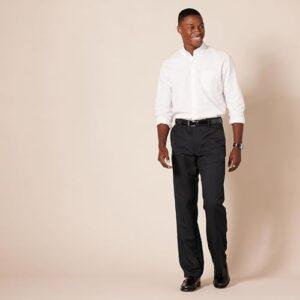
Business casual men’s pants usually include chinos, wool trousers, dress pants, and some dark, clean jeans.
Knowing what pants are business casual men can wear makes dressing for work much easier. The right pair should look neat, fit well, and match your workplace culture without feeling as formal as a suit. This guide explains the best choices, colors, fabrics, fits, styling rules, and common mistakes so you can get dressed with confidence.

What pants are business casual men can wear?
The best business casual pants for men sit between formal dress trousers and casual everyday pants. They should look polished, feel comfortable, and work with shirts, sweaters, blazers, and office shoes.
The most reliable options include:
- Chinos in navy, khaki, gray, olive, or tan
- Wool trousers in charcoal, navy, or medium gray
- Cotton dress pants with a clean, flat front
- Corduroy pants in a fine wale during cooler months
- Dark, plain jeans when the workplace allows denim
- Linen or cotton-linen trousers for warm weather
A good pair of business casual pants should have a smooth finish, a clean hem, and no visible damage. Excessive fading, cargo pockets, large logos, and heavy distressing usually make pants look too casual.
When people ask what pants are business casual men should choose, chinos and wool trousers are the safest answers. They are flexible enough for meetings but relaxed enough for normal office days.
Chinos
Chinos are often the most useful business casual pants for men. They are usually made from cotton twill and have a lighter, softer look than suit trousers.
Choose chinos with:
- A flat front
- Medium-weight fabric
- A straight or tailored leg
- Simple side pockets
- Minimal stitching and no cargo pockets
Navy chinos are especially useful because they pair well with white shirts, blue Oxford shirts, gray sweaters, and brown leather shoes.
Wool trousers
Wool trousers give you a more refined look. They are ideal for client meetings, presentations, interviews, and offices with a more formal business casual dress code.
Look for lightweight or tropical wool in warmer weather. Flannel wool works well in fall and winter because it adds warmth and texture without looking sloppy.
Dress pants
Cotton or blended dress pants can also fit a business casual wardrobe. Pick a pair with a clean waistband, simple pockets, and a smooth front.
Avoid shiny synthetic fabric. It can look cheap under office lighting and may wrinkle or cling in an unflattering way.

How to choose the right business casual pants
Fit matters more than the brand or price. Even affordable pants can look polished when the waist, seat, thigh, and hem fit correctly.
The waistband should sit comfortably without squeezing your stomach. You should be able to slide one or two fingers inside the waistband, but the pants should not need a belt to stay up.
Check these areas when trying on pants:
- Waist: It should feel secure but not tight.
- Seat: The fabric should lie smoothly without pulling.
- Thigh: You should be able to sit and walk with ease.
- Knee: The pants should not twist or bunch.
- Hem: The bottom should touch the top of your shoe with a small break.
- Rise: The pants should sit at a natural point, not extremely low.
A slim fit is not the same as a tight fit. Business casual pants should follow your shape while still allowing normal movement.
The best leg shape
A straight or tailored leg works for most men. It creates a clean line from the hip to the ankle and looks current without being extreme.
Slim pants can work if they do not pull across the thighs or calves. Wide-leg pants may fit some modern offices, but they need careful styling and a clean drape.
The right length
For most office settings, a slight break is a safe choice. This means the pants make a small fold where they meet the shoe.
A no-break hem can look sharp with loafers or sleek dress shoes. A full break may look too loose unless the workplace has a traditional style.
A tailor can fix length quickly. In my experience, a simple hem often makes a bigger difference than buying a more expensive pair of pants.

Best colors for business casual men’s pants
Color affects how formal or relaxed your outfit looks. Darker shades usually appear more professional, while lighter shades feel more casual.
The most useful colors are:
- Navy: Versatile and easy to dress up
- Charcoal: Professional and refined
- Medium gray: Soft, modern, and flexible
- Khaki: Classic and relaxed
- Olive: Stylish but still understated
- Tan: Best for spring and summer
- Brown: Useful with blue, cream, and white shirts
If you are building your first work wardrobe, start with navy, gray, and khaki. These colors cover most office situations and work with many shoe styles.
Black pants can be business casual, but they may look too formal or too stark with some outfits. They work best when the fabric has a soft finish and the rest of the outfit is balanced.
Bright red, neon green, loud checks, and bold prints are usually poor choices for a traditional office. Save them for social events unless your workplace encourages creative dress.
Matching pants with shirts
A simple contrast often looks best. Pair dark pants with a lighter shirt, or light pants with a darker or richer shirt.
Reliable combinations include:
- Navy chinos with a white Oxford shirt
- Gray trousers with a pale blue shirt
- Khaki chinos with a navy polo
- Olive pants with a cream sweater
- Charcoal trousers with a patterned button-down
- Tan linen trousers with a light blue shirt
Your belt and shoes do not need to match your pants exactly. They should simply look like part of the same outfit.

Are jeans business casual for men?
Dark jeans can be business casual in some workplaces, but they are not accepted everywhere. The answer depends on the company, industry, client expectations, and day of the week.
Choose jeans that are:
- Dark blue or solid black
- Free from rips and heavy fading
- Made from a clean, structured denim
- Straight or tailored in shape
- Free from large labels or decorative stitching
Avoid light wash jeans, distressed knees, frayed hems, paint marks, and very tight cuts. These details make an outfit look casual rather than business casual.
Before wearing jeans to work, observe what managers and senior employees wear. Workplace dress codes often contain unwritten rules. A written policy may say “business casual,” but one company may mean chinos and button-down shirts while another allows clean sneakers and dark denim.
When unsure, wear chinos instead. They provide a similar level of comfort while creating a more professional first impression.

Pants that are not business casual
Some pants are comfortable but do not usually meet business casual standards. They may work for remote work, errands, or weekends, but they can look too relaxed in an office.
Avoid these choices in most professional settings:
- Sweatpants and joggers
- Athletic pants
- Cargo pants with large side pockets
- Basketball shorts or casual shorts
- Pajama-style pants
- Very distressed jeans
- Leather pants
- Track pants
- Pants with large logos
- Extremely baggy or skin-tight pants
Shorts deserve special attention. Some warm-weather offices allow tailored shorts, but many do not. If you wear them, choose a structured pair that reaches close to the knee and pair it with a polished shirt and loafers.
Cargo pants are another gray area. Minimal, tailored versions may work in creative or casual offices, but traditional business casual usually favors a cleaner front.

How fabric changes the look
Fabric affects comfort, structure, breathability, and formality. It also changes how your pants move during a long workday.
Cotton chinos are comfortable and easy to wash. They are a strong choice for daily office wear, but very thin cotton can wrinkle quickly and look less polished.
Wool trousers drape well and resist wrinkles better than many cotton pants. They often feel more formal, so they are useful when you need to look especially sharp.
Linen is cool and breathable, but it wrinkles easily. That relaxed texture can work in a creative or warm-weather office, though it may not suit a formal client meeting.
Blended fabrics can add stretch and durability. A small amount of elastane can make sitting, commuting, and walking more comfortable. Too much stretch may make the pants look shiny or lose their shape.
Corduroy can work in fall and winter. Choose fine wale corduroy in dark brown, navy, or olive rather than thick, bulky cords.
The best fabric depends on your day. If you commute by train, sit for hours, or move between meetings, wrinkle resistance and comfort may matter more than a perfectly formal finish.

What shoes work with business casual pants?
Shoes help determine whether your pants look polished or too relaxed. The same chinos can look formal with leather derby shoes and casual with canvas sneakers.
Good choices include:
- Loafers
- Derby shoes
- Oxford shoes
- Monk strap shoes
- Chukka boots
- Chelsea boots
- Clean leather sneakers in casual offices
Brown leather shoes pair well with navy, khaki, gray, olive, and tan pants. Black shoes look strongest with charcoal, black, and dark navy trousers.
Sneakers require judgment. Simple leather sneakers may work in a modern office, but running shoes, high-top basketball shoes, and heavily worn sneakers usually do not.
Your shoes should be clean and in good repair. Scuffed leather, worn soles, and dirty laces can reduce the polished effect of an otherwise strong outfit.
Matching socks
Socks should cover your ankle when you sit down. Choose colors that connect with your pants, shoes, or shirt.
Navy, charcoal, brown, and dark gray socks are easy choices. Bright patterns can work, but they should look intentional rather than distracting.

Business casual pants for different workplaces
There is no single universal definition of business casual. The right choice depends on the setting.
Traditional offices
Law firms, banks, consulting firms, and formal corporate offices often favor wool trousers, pressed chinos, and leather dress shoes.
In these spaces, dark colors and conservative patterns are safest. Jeans may be acceptable on casual Fridays, but you should confirm the policy first.
Casual corporate offices
Many technology companies, marketing firms, and modern offices allow chinos, clean dark jeans, sweaters, and minimalist sneakers.
Even in a relaxed office, pants should fit well and look clean. Casual does not mean careless.
Creative workplaces
Design studios, media companies, and fashion-related offices may allow more color, texture, and personal style.
You can try olive trousers, corduroy, cropped hems, or tasteful patterns. Keep the outfit balanced by pairing one expressive item with simple basics.
Interviews
For an interview, dress slightly more formally than the everyday office standard. Navy or charcoal trousers are usually safer than jeans.
If the industry is formal, wear wool trousers with a button-down shirt and leather shoes. If it is casual, chinos with a clean blazer may be enough.

How to build a business casual pants wardrobe
You do not need a large wardrobe. A few well-fitting pairs can create many outfits.
Start with these core pieces:
- Navy chinos
- Gray trousers
- Khaki or tan chinos
- Dark, plain jeans if your workplace allows them
- A seasonal option, such as corduroy or linen trousers
Add shirts in white, light blue, gray, and soft patterns. Then add one navy blazer, a gray sweater, and brown leather shoes.
A useful wardrobe rule is to make each pair of pants work with at least three tops and two pairs of shoes. This keeps your closet practical and reduces impulse buying.