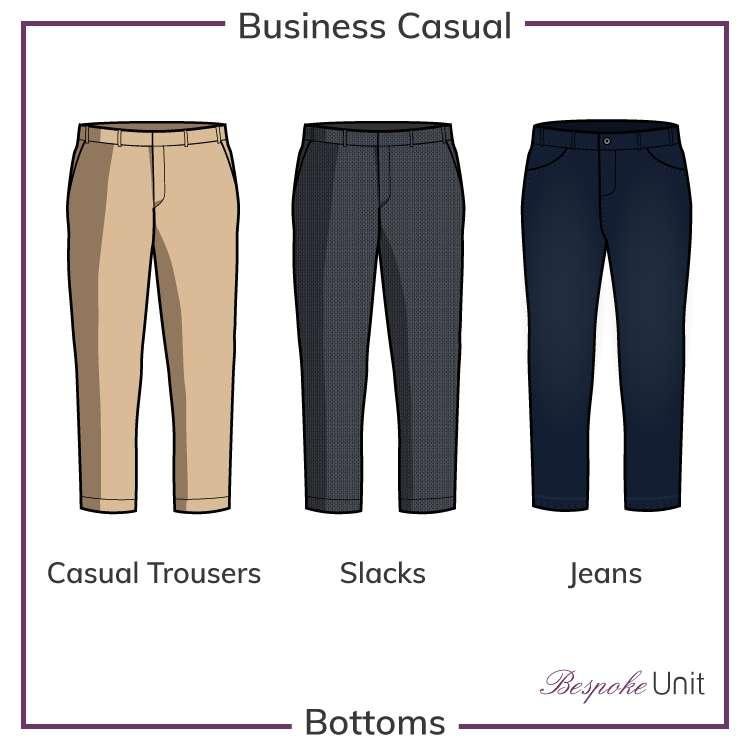
Business casual pants usually include chinos, dress slacks, tailored trousers, and neat dark jeans in some workplaces.
Knowing what pants are considered business casual can make getting dressed for work much easier. The right pair should look polished, fit well, and suit your office culture without feeling as formal as a full business suit. This guide explains the best styles, colors, fabrics, and fit choices, along with common mistakes that can make an outfit look too casual.

What Pants Are Considered Business Casual?
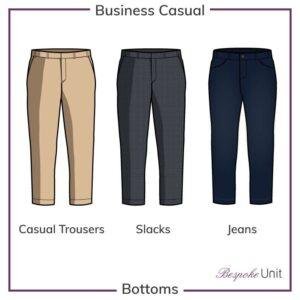
The safest business casual pants are clean, well-fitted, and made from structured fabric. They should look intentional rather than relaxed or worn in. In most offices, the following styles meet the standard:
• Chinos made from cotton twill are versatile and easy to dress up.
• Dress slacks made from wool blends, polyester, or other smooth fabrics look more formal.
• Tailored trousers offer a sharp shape without the need for a matching jacket.
• Corduroy pants can work in casual offices, especially in fine wale fabric and dark colors.
• Dark, clean jeans may be acceptable in some workplaces, but they are not safe in every office.
• Knit or ponte trousers can work when they have a structured cut and a smooth finish.
The main idea is simple: business casual pants should look neat enough for a meeting but comfortable enough for a full workday. They should not have rips, stains, frayed hems, loud graphics, or a loose weekend fit.
Office rules vary by industry and company. A law firm, bank, or client-facing workplace may expect dress slacks, while a technology company may allow dark denim and polished chinos.

The Best Types of Business Casual Pants
Different pant styles create different levels of formality. Learning the difference helps you choose the right pair for an interview, normal workday, presentation, or casual Friday.
Chinos
Chinos are one of the most useful choices for business casual dressing. They are usually made from cotton twill and have a clean, simple design.
Choose chinos with:
• A flat front or subtle pleats
• A medium or high rise
• A straight, slim, or tailored leg
• A smooth waistband
• Minimal visible stitching
Khaki, navy, gray, olive, and stone are reliable colors. Navy chinos with a white button-down shirt look sharp without seeming stiff. Gray chinos pair well with a blue Oxford shirt and brown loafers.
Dress Slacks
Dress slacks are a stronger choice when you need a more polished look. They often use wool, polyester, rayon, or blended materials that drape smoothly.
Good dress slacks should:
• Hang cleanly from the waist
• Have a crease or pressed front
• Break lightly over the shoe
• Avoid shiny or thin fabric
• Match the level of formality in your workplace
Gray, charcoal, navy, and black are the most useful colors. Black slacks can look formal, so balance them with a softer shirt or a simple knit top if your workplace is relaxed.
Tailored Trousers
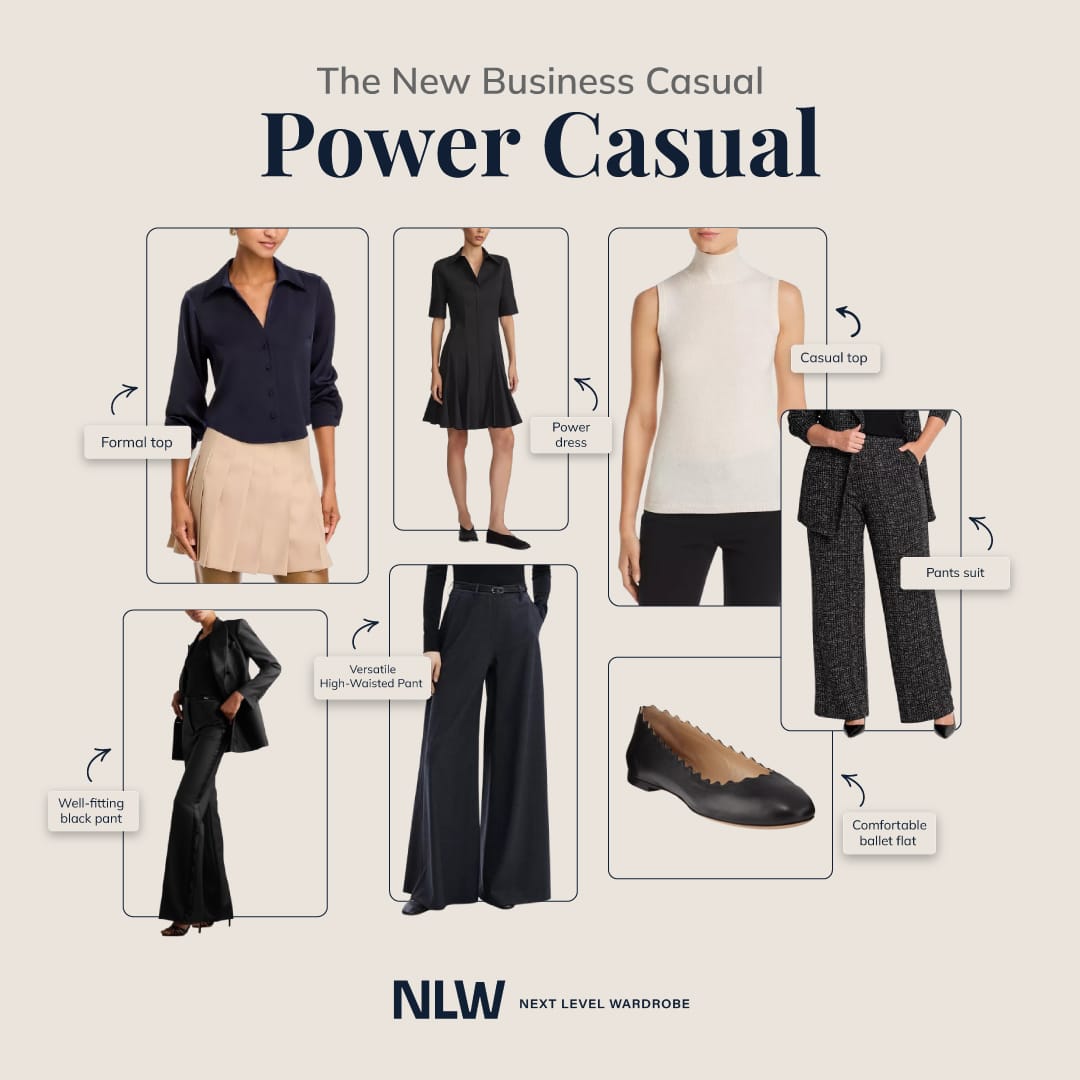
Tailored trousers can refer to many designs, including ankle-length pants, wide-leg trousers, pleated trousers, and high-waisted styles. The key is the structure of the garment.
A wide-leg trouser can be business casual when it has a firm fabric, clean waistband, and controlled shape. It may look too casual if it is made from thin jersey material or has a loose, pajama-like appearance.
Dark Jeans
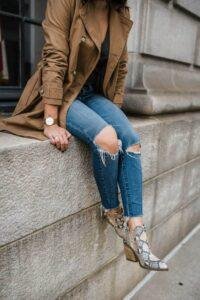
Dark jeans are sometimes included in business casual dress codes, but this depends heavily on the employer. Choose a dark indigo or black pair with no fading, distressing, whiskering, holes, or decorative stitching.
Straight-leg and slim-straight jeans usually look more professional than baggy or heavily tapered designs. Pair them with a blazer, leather belt, loafers, or clean leather sneakers to raise the overall level of polish.
Corduroy Pants
Fine wale corduroy can work well in fall and winter. Choose dark brown, navy, charcoal, or forest green instead of bright colors.
Avoid thick, loose corduroy that looks more suited to outdoor wear. A tailored corduroy trouser with a tucked-in shirt can look refined in a creative or relaxed office.

Colors and Fabrics That Work Best
Color and fabric often determine whether pants look professional. Even a good style can appear too casual when the material is thin, wrinkled, or overly bright.
Reliable Colors
The most flexible business casual colors include:
• Navy
• Charcoal
• Medium gray
• Black
• Khaki
• Beige
• Olive
• Dark brown
Neutral colors make it easier to create several outfits from a small wardrobe. They also keep attention on your face during meetings and presentations.
Fabrics to Consider
Wool-blend trousers are smooth, breathable, and naturally polished. They are often ideal for formal business casual offices.
Cotton twill works well for chinos. It is durable and comfortable, but it may wrinkle more than wool.
Stretch fabric can improve comfort during commuting and long meetings. Look for a small amount of elastane or spandex rather than a very thin, clingy fabric.
Linen blends can work in warm weather, but pure linen wrinkles quickly. A linen-cotton or linen-rayon blend usually looks more controlled.
Avoid fabrics that look like gymwear, sleepwear, or beachwear. Fleece, shiny nylon, worn jersey, and thin sweatpant material are usually poor choices for business casual settings.

How Should Business Casual Pants Fit?
Fit is one of the most important parts of professional clothing. Expensive pants can look unpolished if they pull at the hips, bunch at the ankle, or sag at the seat.
Use this checklist when trying on business casual pants:
• The waistband should sit comfortably without digging into your skin.
• The fabric should not pull across the hips, thighs, or pockets.
• The seat should lie flat without excessive sagging.
• The rise should allow comfortable sitting and movement.
• The leg should follow your shape without clinging.
• The hem should meet the shoe neatly.
• Pockets should lie flat when you stand and sit.
A small amount of tailoring can make a major difference. Hemming is often the easiest alteration. A tailor can also adjust the waist, taper the leg, or refine the seat.
Avoid pants that are extremely tight. Professional clothing should let you move naturally. At the same time, oversized pants may look careless unless the wide shape is clearly designed and balanced by the rest of the outfit.
How to Style Business Casual Pants
The best business casual outfit combines pants with polished but approachable pieces. Think of the outfit as a scale: your pants set the base, and your shirt, shoes, and accessories adjust the level of formality.
For a Traditional Office
Wear navy or charcoal dress slacks with:
• A white or light blue button-down shirt
• Leather loafers or oxfords
• A simple belt
• A structured blazer if needed
This combination is suitable for many offices, interviews, presentations, and client meetings.
For a Relaxed Office
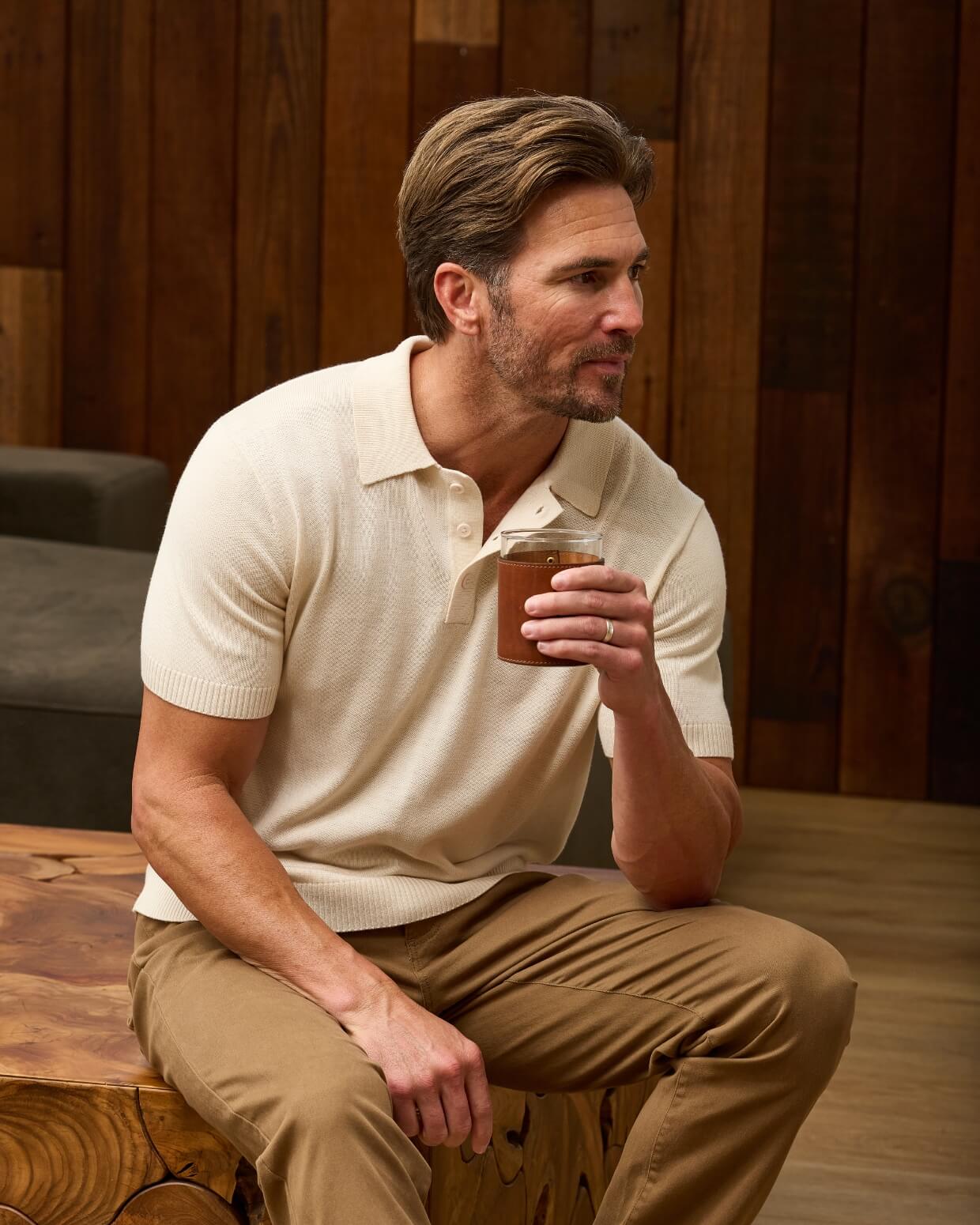
Wear chinos or dark jeans with:
• A knit polo
• An Oxford shirt
• A fine-gauge sweater
• Clean leather sneakers or loafers
The clothes can be comfortable, but they should still be clean, pressed, and in good condition.
For a More Fashion-Forward Office
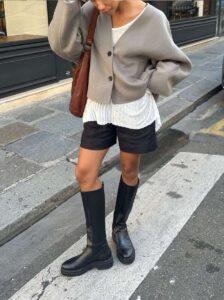
Try pleated trousers, cropped trousers, or wide-leg pants with:
• A tucked-in blouse or knit top
• A fitted cardigan
• Sleek ankle boots
• Simple jewelry or a structured bag
Balance is important. If the pants have a wide or dramatic shape, keep the top neat and streamlined.
Shoes Matter
Shoes can change the entire impression of business casual pants. Loafers, ballet flats, oxfords, low block heels, Chelsea boots, and simple leather sneakers are common choices.
Avoid flip-flops, worn athletic shoes, beach sandals, and heavily scuffed footwear. In many offices, shoes are one of the first details people notice.

Business Casual Pants for Different Workplaces
There is no single universal business casual dress code. The correct choice depends on the workplace, industry, region, and daily schedule.
Corporate Offices
Banks, accounting firms, law offices, and executive workplaces often favor dress slacks and tailored trousers. Dark chinos may be acceptable, but jeans are usually risky unless the company clearly permits them.
Creative Offices
Advertising, design, media, and technology offices may allow dark denim, corduroy, relaxed tailoring, and more color. Even in a creative workplace, clothes should look deliberate rather than messy.
Healthcare and Education
Comfort and movement matter in healthcare and education. Chinos, ankle pants, and washable trousers can work well, provided they are neat and appropriate for the role.
Remote and Hybrid Work
Remote work may allow softer fabrics, but video calls still require a professional upper half. For hybrid days, knit trousers or stretch chinos can provide comfort while maintaining a polished appearance.
Interviews
When you do not know the dress code, choose the more formal option. Navy or charcoal dress slacks are safer than jeans. You can always dress down after learning how employees dress.
A practical rule is to dress about one step more formally than the normal daily standard. This shows respect without making you look disconnected from the workplace.
Common Mistakes to Avoid
Understanding what pants are considered business casual also means knowing what usually fails the standard. Small details can change a polished outfit into a sloppy one.
Avoid these common mistakes:
• Wearing wrinkled pants to the office
• Choosing a low-rise style that exposes the waistband when sitting
• Wearing athletic joggers as a substitute for trousers
• Selecting jeans with holes, fading, or frayed hems
• Wearing pants that are too tight around the thighs
• Choosing a very thin fabric that shows pockets or underwear
• Leaving loose threads, stains, or pet hair on the garment
• Wearing cargo pants with large exterior pockets
• Pairing formal trousers with visibly worn sneakers
• Ignoring the company dress code
One lesson that comes up often in real workplaces is that condition matters as much as style. A simple pair of chinos can look better than expensive trousers when the chinos are pressed, clean, and properly fitted.
Another useful lesson is to test pants while sitting. A pair can look perfect while standing but feel tight at the waist or pull across the thighs during a meeting. Comfort is not a luxury; it helps you stay focused and confident.

Building a Business Casual Pants Wardrobe
You do not need dozens of pairs. A small, balanced wardrobe can cover most work situations.
Start with these core pieces:
-
One pair of navy trousers
-
One pair of charcoal or medium-gray slacks
-
One pair of khaki or stone chinos
-
One pair of dark navy jeans, if your workplace allows denim
-
One seasonal option, such as corduroy or a linen blend
Choose pants that can work with several shirts and shoes. For example, navy chinos can pair with white, blue, gray, burgundy, and light pink shirts. Gray slacks work with nearly every neutral color.
Care for your pants according to the label. Hang them after wearing, remove small marks quickly, and avoid washing structured trousers more often than needed. Proper care helps the fabric hold its shape and keeps your business casual wardrobe looking new.
A simple weekly plan can also help:
• Monday: Charcoal slacks with a white shirt
• Tuesday: Navy chinos with a blue Oxford shirt
• Wednesday: Gray trousers with a knit polo
• Thursday: Khaki chinos with a sweater
• Friday: Dark jeans with a blazer, if allowed
Frequently Asked Questions About What Pants Are Considered Business Casual
Are jeans considered business casual?
Dark, clean jeans may be business casual in relaxed offices. Avoid ripped, faded, baggy, or heavily decorated jeans, and check your company policy before wearing them.
Are khakis business casual?
Yes, khakis are among the most common business casual pants. Choose a tailored pair with a clean finish, and avoid styles that look like outdoor or work uniforms.
Can I wear black pants for business casual?
Yes, black trousers can work well in business casual outfits. Choose a structured fabric and pair them with a polished shirt, blouse, sweater, or blazer.
Are leggings business casual pants?
Most standard leggings are too casual for traditional business settings because they are tight and often made from thin stretch fabric. Ponte pants or structured knit trousers can be a better alternative when the workplace allows them.
Can women wear wide-leg pants to work?
Yes, wide-leg pants can be business casual when they are tailored and made from a polished fabric. Pair them with a neat top and structured shoes to keep the outfit balanced.
Are cargo pants business casual?
Traditional cargo pants are usually not considered business casual because their large pockets create a casual, utility-focused look. Minimal pocket details and tailored fabric may work in a very relaxed or creative office.
Should business casual pants have a crease?
A crease is not required, but it can make dress slacks and trousers look sharper. Chinos and casual cotton pants often look better without a strong crease.
What pants should I wear to a business casual interview?
Wear navy, charcoal, or black dress slacks or tailored trousers. If the company is clearly casual, dark chinos may work, but dress slacks remain the safer choice when the policy is uncertain.
Conclusion
The best answer to what pants are considered business casual is simple: choose clean, well-fitting chinos, dress slacks, tailored trousers, or approved dark jeans. Focus on neutral colors, structured fabrics, neat hems, and shoes that match the formality of the workplace.
When in doubt, dress slightly more formally and observe what your coworkers wear. Build a small collection of versatile pants, care for them well, and adjust your choices for meetings, interviews, and casual office days. Review your workplace policy, try on your outfits while sitting and walking, and choose the pair that helps you feel both comfortable and prepared.
Madison Clark is a footwear expert and the voice behind MyStyleGrid.com. She specializes in honest shoe reviews, style tips, and practical guides to help readers find the perfect pair for any occasion. With years of experience in blogging and content creation, Madison makes footwear knowledge simple, stylish, and easy to follow.