
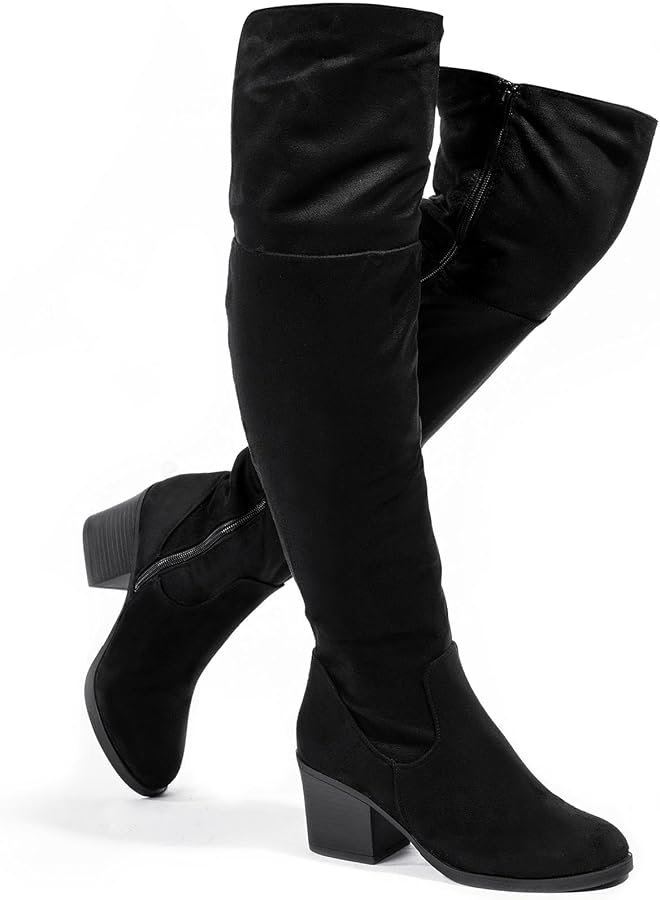
Knee-high boots should reach just below the knee, usually ending one to two inches beneath the kneecap.
Knowing how tall should knee high boots be helps you find a pair that looks balanced, feels comfortable, and moves well. The ideal height depends on your leg shape, boot style, shaft design, and how you plan to wear them. This guide explains how to measure the right height, avoid common fit mistakes, and choose boots that feel as good as they look.

What Does “Knee-High” Mean?
Knee-high boots are designed to cover most of the lower leg. Their shaft usually extends from the foot to just below the knee joint.
Most knee-high boots end about 1 to 2 inches below the center of the kneecap. This space lets your knee bend without the boot pressing into the joint. It also keeps the shaft from bunching as you walk.
The exact height varies by brand. A women’s knee-high boot may have a shaft height of about 14 to 17 inches, while some tall styles reach 18 inches or more. The measurement usually starts at the top of the heel and runs up the back of the shaft.
When asking how tall should knee high boots be, think about function first. A boot that reaches the right place but feels tight at the knee is not the right fit.
How Tall Should Knee High Boots Be?
The ideal height for most people is 1 to 2 inches below the kneecap. This position gives your leg a long, clean shape without limiting movement.
A well-fitted knee-high boot should:
• Sit below the knee crease
• Leave enough room for natural knee movement
• Stay upright without folding or sliding
• Cover the calf without squeezing it
• Feel comfortable when you sit, stand, and walk


The answer to how tall should knee high boots be can change based on the boot’s purpose. Riding boots may sit slightly lower for comfort. Fashion boots may reach closer to the knee. Winter boots can have a taller shaft to provide more warmth.
Your height also matters. On a shorter person, a 16-inch shaft may reach the knee. On a taller person, the same boot may look more like a mid-calf style. This is why shaft height matters more than the label alone.
How to Measure the Correct Boot Height
Measuring your leg at home can make online shopping much easier. You need a flexible measuring tape, a chair, and the socks or pants you plan to wear with the boots.
Follow these steps:
-
Sit with your foot flat on the floor.
-
Place the end of the tape at the floor beside your heel.
-
Measure straight up the back of your leg.
-
Stop 1 to 2 inches below the center of your kneecap.
-
Record the measurement in inches.
This number gives you a useful target for boot shaft height. Compare it with the product details before ordering.
Do not measure while standing only on your toes or while wearing thick clothing. Both actions can give you an inaccurate result. Measure both legs if one calf is slightly larger than the other.
When I check boot measurements, I also measure the widest part of the calf. Many fit problems come from ignoring shaft width. A boot can have the perfect height but still feel uncomfortable if the calf opening is too narrow.
Shaft Height vs. Overall Boot Height
Boot listings often include two different measurements: shaft height and overall height. These measurements are not the same.


Shaft height measures the boot from the top of the heel to the top edge of the shaft. Overall height may include the heel, outsole, and platform. A boot with a 15-inch shaft and a 2-inch heel may have an overall height of 17 inches.
For questions about how tall should knee high boots be, focus on the shaft height. That measurement tells you where the boot will sit on your leg.
Check these details before buying:
• Shaft height
• Shaft circumference
• Heel height
• Toe shape
• Stretch level
• Closure type
A side zipper can make a snug boot easier to put on. Stretch panels may add comfort around the calf. Pull-on boots need more room through the opening because they do not adjust as easily.
The Best Knee-High Boot Height for Different Leg Shapes
There is no single boot height that suits every leg. The best choice creates comfort and visual balance.
Short Legs
If you have shorter legs, choose boots that end slightly below the knee. A shaft that is too tall may press into the kneecap or make your legs look shorter.
A pointed or almond-shaped toe can create a longer visual line. Wearing boots and pants in similar colors can also make the legs appear more extended.
Long Legs
People with long legs can often wear taller shafts. Boots that end close to the knee may look especially balanced.


Still, the boot should not touch the back of the knee. Even long legs need enough room for bending and sitting.
Wide Calves
If you have fuller calves, shaft circumference may matter more than height. Look for wide-calf boots, stretch panels, elastic gussets, or adjustable buckles.
Do not size up in length to gain calf room. A larger foot size can cause heel slip, toe movement, and poor support.
Slim Calves
Slim calves may need a closer shaft fit. If the boot opening is too wide, the shaft may slide down or wrinkle.
Look for narrow-calf designs, adjustable straps, fitted shafts, or boots with elastic panels. A small gap is fine, but the boot should not collapse around your leg.
How Knee Shape Affects Boot Height
Your kneecap and knee crease affect how a boot feels. Some people have a lower knee crease, while others have a longer space between the calf and knee.
A boot that ends too high may rub the kneecap. One that ends too low may look like a mid-calf boot instead of a knee-high style.
Try the boots while doing normal movements:
• Walk across the room
• Sit in a chair
• Bend your knee
• Climb a few steps
• Stand with your legs relaxed
The top edge should stay in place without digging into your skin. A soft leather shaft may relax with wear, but it will not usually gain much length. Fit the boot correctly from the start.


In my experience, the most common mistake is judging height while standing still. A boot may look perfect in a mirror but press against the knee when you sit. Always test both appearance and movement.
How Much Space Should Be Above the Knee?
Knee-high boots should usually leave about 1 to 2 inches between the shaft edge and the kneecap. This gap is not a strict rule, but it works well for most people.
You may prefer a larger gap if:
• You have sensitive knees
• You plan to wear thick socks
• The boot has a stiff shaft
• You need extra space for sitting
You may prefer a smaller gap if:
• The shaft is soft and flexible
• The boot has a lower heel
• The design includes a stretch panel
• You want a taller, sleek appearance
The key is avoiding pressure. If the top edge leaves red marks or causes numbness, the boots are too tight or too tall.
Choosing the Right Height for Different Outfits
Boot height affects the way an outfit looks. The right pair can make clothing feel polished without competing with it.
With Jeans
Wear knee-high boots under straight-leg, slim, or skinny jeans. The pants should fit smoothly inside the shaft without creating large folds.
If your jeans are too bulky, the boot may feel tight even when the calf measurement seems correct.
With Dresses
Knee-high boots work well with shirt dresses, sweater dresses, and casual midi dresses. Leaving a small area of skin between the boot and hem can create a relaxed look.
For a longer dress, choose a slim boot shaft so the outfit does not look heavy.
With Skirts
A knee-high boot pairs well with mini and knee-length skirts. A similar color between the boot and tights creates a smooth, classic line.
For a polished office look, choose a moderate heel and a boot that ends evenly below the knee.
With Leggings
Leggings should fit smoothly inside the boot. This combination works best when the boot shaft is firm but not tight.
Avoid extra fabric around the ankle. Wrinkles can make the boot look poorly fitted and may cause pressure during walking.
Heel Height and Knee-High Boot Proportions
Heel height does not change the shaft measurement, but it changes how the boot looks and feels.
A flat knee-high boot often looks casual and provides good stability. A low block heel adds height without placing too much pressure on the front of the foot. A tall stiletto creates a dressier shape but may be less comfortable for long periods.
Consider these common heel ranges:
• Flat heel: Best for walking, travel, and everyday wear
• 1 to 2 inch heel: A practical choice for work and daily outfits
• 2 to 3 inch block heel: Adds height with reasonable stability
• Heel above 3 inches: Better for short events than all-day use
A taller heel can shift your weight forward. This may increase pressure on the ball of the foot. If you need to stand or walk for hours, comfort and stability should guide your choice.
Materials That Change the Fit
The boot’s material affects how the shaft feels over time.
Leather may soften and mold to your leg. However, leather usually stretches more in width than in height. Do not buy a boot that is too short and expect it to become taller.
Synthetic materials often hold their shape well. They may provide less stretch, so accurate calf measurements are important.
Stretch fabric and elastic panels offer more flexibility. They are helpful when your calf size changes slightly during the day.
Consider these material traits:
• Leather: Durable, breathable, and likely to soften
• Suede: Flexible and soft but needs protection from moisture
• Synthetic leather: Often affordable and easy to clean
• Knit or stretch fabric: Comfortable and flexible
• Rubber: Useful for rain but less breathable
A boot should feel secure without cutting into your leg. If you need to force the zipper closed, the boot is too narrow. Zippers can break when the shaft is under constant strain.
Common Knee-High Boot Fit Problems
Understanding common mistakes makes shopping easier.
The Boot Hits the Knee
If the top edge touches the knee, the shaft is too tall or the boot is not shaped for your leg. Try a shorter shaft or a style with a softer, lower opening.
The Boot Slides Down
Sliding often means the shaft is too wide, the material is too soft, or the boot lacks support. A fitted shaft or adjustable strap may solve the problem.
The Boot Cuts Into the Calf
This usually means the shaft circumference is too small. A wide-calf style is safer than sizing up in foot length.
The Ankle Looks Loose
A loose ankle can reduce support and make the boot look bulky. Look for a contoured shaft or a style with ankle shaping.
The Heel Lifts
A small amount of heel movement can happen in new boots. Excessive lifting may cause blisters and suggests the foot size or shape is wrong.
When testing a new pair, wear the socks you expect to use. Thick winter socks can change the fit more than many shoppers expect.
How Should Knee-High Boots Fit Around the Calf?
The shaft should hug the calf gently without squeezing it. You should be able to slide one finger between your leg and the boot in most areas.
A little space is useful. It allows room for movement, socks, and natural changes in leg size during the day.
Shop later in the day when your feet and legs may be slightly larger. This gives you a more realistic fit than trying boots first thing in the morning.
For online purchases, check the return policy. Product measurements can vary, and some brands measure the shaft on a standard-size boot rather than the size you order.
Are Taller Boots Better for Warmth and Support?
Taller boots can provide more coverage and warmth. They may also offer extra support around the ankle and lower leg.
However, height alone does not guarantee comfort or protection. Insulation, lining, weatherproofing, tread, and construction also matter.
For cold weather, look for:
• Insulated lining
• Water-resistant or waterproof materials
• A thick outsole
• Enough room for warm socks
• Secure traction
Do not choose a tighter boot for warmth. Restricted circulation can make your feet feel colder. A comfortable fit with proper insulation is more effective.
For outdoor use, choose boots made for the activity. Fashion knee-high boots may not provide the grip or protection needed for snow, ice, or long walks.
How to Shop for Knee-High Boots Online
Online listings can provide enough information if you know what to check.
Use this process:
-
Measure your leg shaft height.
-
Measure the widest part of your calf.
-
Check the brand’s size chart.
-
Compare shaft height and circumference.
-
Read reviews from people with similar measurements.
-
Confirm the return and exchange policy.
-
Order from a seller with clear product details.
Reviews can reveal useful information about stretching, zipper placement, and true-to-size fit. Still, treat reviews as personal experiences rather than guarantees.
Product photographs can also be misleading. Models may wear boots with hidden socks, inserts, or tailoring. Measurements are more reliable than appearance.
Care Tips to Preserve Boot Height and Shape
Good care helps knee-high boots keep their structure.
Store boots upright with boot shapers or rolled towels. Avoid folding tall boots, since sharp creases can damage the shaft and change its shape.
Keep leather away from direct heat. Radiators and hair dryers can dry the material and cause cracking. Let wet boots dry at room temperature.
Use care products made for the specific material. Leather conditioner may damage suede, while some waterproof sprays can darken light-colored fabrics.
Simple care habits include:
• Clean dirt soon after wearing the boots
• Let boots dry fully before storage
• Use boot trees or soft inserts
• Rotate pairs when possible
• Store boots in a cool, dry place
Frequently Asked Questions About How Tall Should Knee High Boots Be
How high should knee-high boots come up?
Knee-high boots should usually end 1 to 2 inches below the kneecap. This leaves enough room to bend your knee and prevents the shaft from rubbing the joint.
Should knee-high boots touch the knee?
No, the top edge should not press against or touch the kneecap during movement. A small gap improves comfort, especially when sitting or walking upstairs.
Can knee-high boots be too tall?
Yes, boots can be too tall if they press into the knee, restrict movement, or create discomfort when you sit. Choose a shorter shaft or a style with a softer top edge.
How do I measure for knee-high boots?
Measure from the floor beside your heel to a point 1 to 2 inches below your kneecap. Also measure around the widest part of your calf to check the shaft circumference.
Should knee-high boots be tight around the calf?
They should feel secure but not tight. You should usually be able to fit one finger between the boot and your calf without feeling pressure or numbness.
Are knee-high boots good for short legs?
Yes, knee-high boots can look great on short legs when the shaft ends below the knee. A pointed toe, low heel, and similar-colored pants can create a longer visual line.
Do leather knee-high boots stretch?
Leather may soften and stretch slightly, mainly around the width of the foot and calf. It usually does not stretch enough in height to fix a boot that is too short.
Conclusion
The best answer to how tall should knee high boots be is simple: the shaft should end about 1 to 2 inches below the kneecap. The boot should allow easy movement, fit comfortably around the calf, and stay in place as you walk.
Measure your shaft height and calf before shopping. Then compare those numbers with the brand’s product details. A well-fitted pair should feel like a supportive glove for your lower leg, not a rigid tube.
Use these tips the next time you shop for boots, and take time to test the fit while sitting, standing, and walking. Explore more footwear guides or share your own knee-high boot fitting tips in the comments.
Madison Clark is a footwear expert and the voice behind MyStyleGrid.com. She specializes in honest shoe reviews, style tips, and practical guides to help readers find the perfect pair for any occasion. With years of experience in blogging and content creation, Madison makes footwear knowledge simple, stylish, and easy to follow.