Introduction
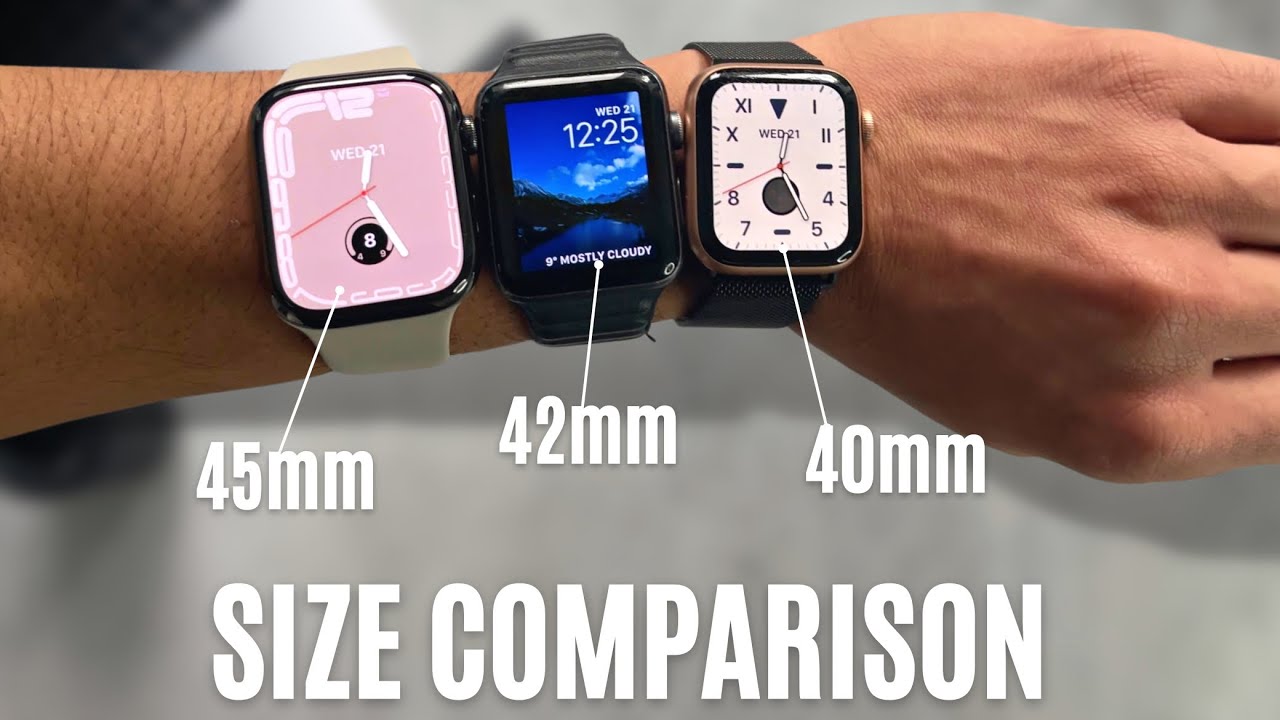
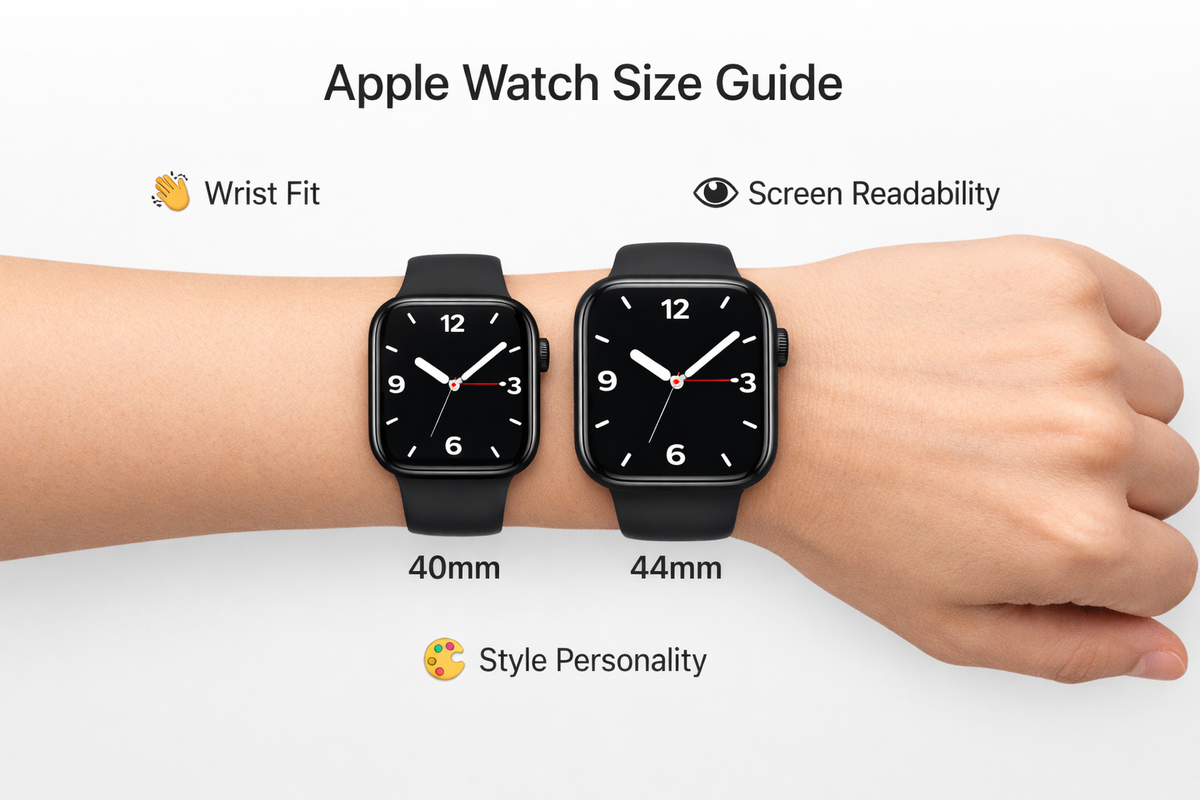
For shoppers in the United States, the Apple Watch Series 7 comes in two case sizes: 41mm and 45mm. The 41mm model is the smaller option, while the 45mm model gives you a larger screen and more room for text and controls.
The 41mm case measures about 35mm wide, 41mm tall, and 10.7mm thick. The 45mm case measures about 38mm wide, 45mm tall, and 10.7mm thick. The size name refers mainly to the case height, not the screen’s diagonal measurement.

Apple Watch Series 7 Sizes at a Glance
Apple Watch Series 7 has two sizes:
| Apple Watch Series 7 size | Case height | Case width | Case thickness | Approximate display area |
|---|---|---|---|---|
| 41mm | 41mm | 35mm | 10.7mm | 904 square mm |
| 45mm | 45mm | 38mm | 10.7mm | 1,143 square mm |
Apple lists the 41mm model with a screen resolution of 430 × 352 pixels. The 45mm model has a resolution of 484 × 396 pixels. Both models use the same general Series 7 design and features.
The 45mm version is not simply taller. It is also wider, so it offers a larger viewing area. That extra space can make messages, workout data, maps, and watch controls easier to read.
These measurements come from Apple’s technical specifications for Apple Watch Series 7:
What Does the 41mm or 45mm Measurement Mean?
The 41mm and 45mm labels describe the approximate height of the Apple Watch case. They do not describe the watch band length or the diagonal size of the display.
For example, the 45mm Series 7 case is about 45mm from top to bottom. Its width is about 38mm. The case is not 45mm wide.
The two sizes also have different display resolutions and viewing areas:
- 41mm: 430 × 352 pixels and about 904 square mm of display area
- 45mm: 484 × 396 pixels and about 1,143 square mm of display area
The display uses rounded corners, so the usable screen shape is not a simple rectangle. The larger case gives the 45mm model about 26% more display area than the 41mm model, based on Apple’s listed display-area figures.
Both models are about 10.7mm thick. Choosing the 45mm version does not mean the watch becomes much thicker on the wrist. The main difference is its height, width, screen area, and weight.

Which Apple Watch Series 7 Size Should You Choose?
The 41mm Apple Watch Series 7 is usually the better fit for smaller wrists, people who prefer a lighter watch, and anyone who wants a less noticeable case.


The 45mm Apple Watch Series 7 is usually better for people who want the largest text and display available in the Series 7 range. It can also help if you often read messages, view workout numbers, or use apps directly on the watch.
Use this comparison as a starting point:
| Choose the 41mm model if you want… | Choose the 45mm model if you want… |
|---|---|
| A smaller case | The largest Series 7 display |
| A lighter feel | Larger text and controls |
| A more compact look | More space for maps and workout data |
| A better fit for a small wrist | A watch that is easier to read at a glance |
| A watch that may feel less bulky during sleep | A larger watch face for daily use |
Size is not based on wrist size alone. Wrist shape, band style, personal taste, and eyesight also matter. A small wrist can still wear the 45mm model comfortably, while someone with a larger wrist may prefer the compact look of the 41mm model.
If possible, compare both case sizes in person. A store display model can help you judge more than measurements alone. Look at the watch while your arm rests at your side, while you type, and while you bend your wrist.

Apple Watch Series 7 Wrist Size and Fit
Apple does not make the 41mm and 45mm sizes for specific wrist sizes only. Instead, the best choice depends on how the case sits on your wrist and how much screen you want.
A practical fit check works well:
- Wrap a flexible tape around your wrist where the watch will sit.
- Record the wrist measurement in inches or millimeters.
- Compare the case width with the flat space on your wrist.
- Make sure the case does not extend far beyond the sides of your wrist.
- Try moving your wrist up and down to check for pressure or rubbing.
A watch should sit securely without being painfully tight. The heart-rate sensors need contact with your skin, but the band should not leave deep marks or cause numbness.
The 41mm case may feel more balanced on a narrow wrist. The 45mm case may look better on a wider wrist, but comfort matters more than appearance. A flexible Sport Band can also feel different from a rigid metal band, even when both bands fit the same case size.
For sleep tracking, many people may prefer the smaller and lighter 41mm model. For reading notifications and viewing fitness data, the larger 45mm screen may be more useful.

Do Apple Watch Series 7 Bands Fit Both Sizes?
Apple Watch Series 7 bands are divided into two size groups:
- 41mm bands fit 38mm and 40mm Apple Watch cases
- 45mm bands fit 42mm and 44mm Apple Watch cases
This means the 41mm Series 7 uses the same general band group as older 38mm and 40mm Apple Watch models. The 45mm Series 7 uses the same band group as older 42mm and 44mm models.
A 41mm band does not belong to the same size group as a 45mm band. You should check the band’s listed compatibility before buying a replacement.
The size change from Series 6 to Series 7 can cause confusion. Apple changed the case labels from 40mm and 44mm to 41mm and 45mm, but the older band groups remained broadly compatible within their respective sizes.


For example:
- A band listed for 38mm, 40mm, and 41mm models is intended for the smaller case group.
- A band listed for 42mm, 44mm, and 45mm models is intended for the larger case group.
The case itself is not interchangeable between the two groups. A 41mm watch case needs a 41mm-compatible band, and a 45mm case needs a 45mm-compatible band.
Apple Watch Series 7 Weight by Case Material
The exact weight of Apple Watch Series 7 depends on the case size, material, and connection type. Apple offered the Series 7 in aluminum, stainless steel, and titanium versions in the United States.
Approximate case weights are:
| Case material | 41mm weight | 45mm weight |
|---|---|---|
| Aluminum | 32.0 grams | 38.8 grams |
| Stainless steel | 42.3 grams | 51.5 grams |
| Titanium | 37.0 grams | 45.1 grams |
These figures describe the watch case and do not include the band. A metal band can add noticeable weight.
The aluminum models are the lightest. Stainless steel models are heavier, while titanium sits between aluminum and stainless steel in Apple’s listed weights. If you plan to wear the watch during exercise or sleep, case and band weight may affect comfort.
Weight alone does not determine fit. A heavier watch can still feel comfortable with a well-adjusted band, while a light watch can feel awkward if it shifts on the wrist.

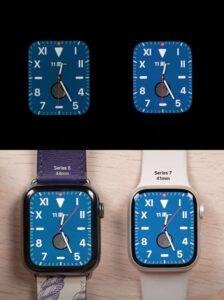
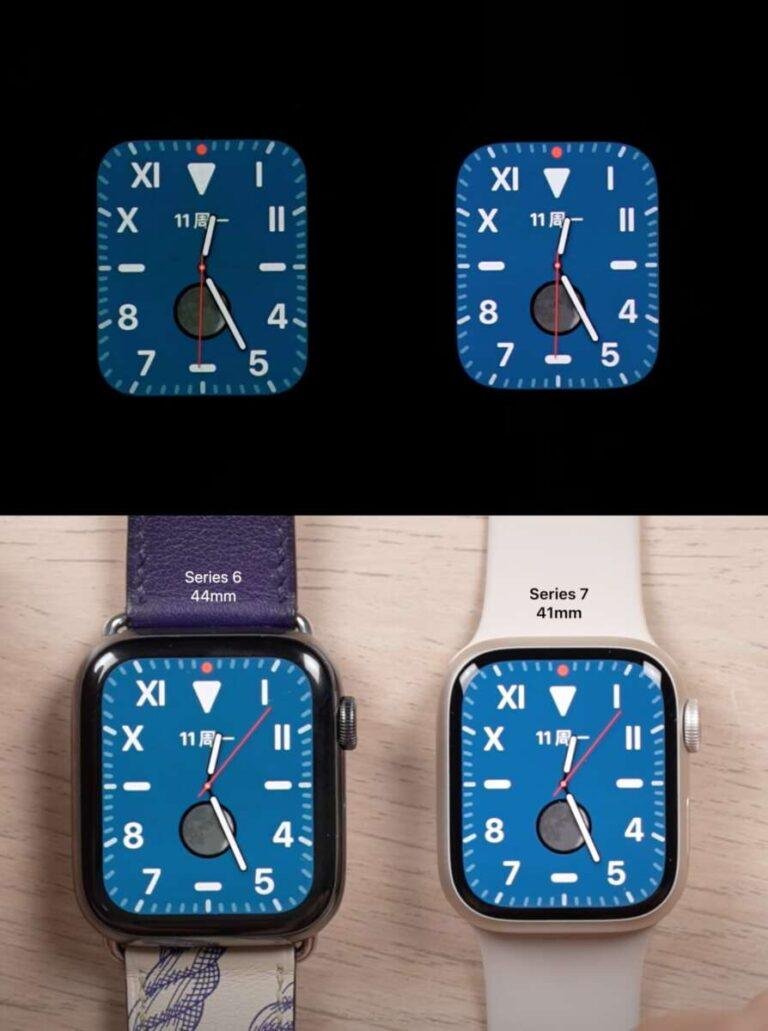
Is the Apple Watch Series 7 Bigger Than Series 6?
Yes. Apple Watch Series 7 is slightly larger than Apple Watch Series 6.
The Series 6 came in 40mm and 44mm case sizes. The Series 7 came in 41mm and 45mm sizes. Apple also reduced the display borders on Series 7, which created a larger screen without a dramatic increase in the overall case size.
The change is easiest to notice in the display:
- Series 7 has thinner borders around the screen.
- The 41mm Series 7 replaces the 40mm Series 6.
- The 45mm Series 7 replaces the 44mm Series 6.
- Older bands remain compatible within the correct small or large size group.
If you already own a 40mm Apple Watch, the 41mm Series 7 is the closest size match. If you own a 44mm model, the 45mm Series 7 is the closest match.

Is the Apple Watch Series 7 the Same Size as Series 8 or Series 9?
Yes. Apple Watch Series 7, Series 8, and Series 9 use the same two main case sizes:


- 41mm
- 45mm
Their listed case dimensions are also very similar. However, similar case size does not mean every feature or part is identical. Always check the specific model and band listing when buying accessories.
This size pattern also applies to many current Apple Watch models. The 41mm and 45mm labels describe Apple’s standard small and large case groups for these generations.
The Apple Watch Ultra line is different. Apple Watch Ultra models use a much larger 49mm case and are not part of the 41mm or 45mm size groups.

How to Tell Which Apple Watch Series 7 Size You Have
You can check the size without measuring the watch.
Check the engraving
Remove the band from the watch case. The case size is usually engraved in the band slot area. Look for a marking such as 41mm or 45mm.
Check the Apple Watch settings
On the watch, open:
Settings → General → About
Look for model information. The model details may not always display the case size in a simple way, so the case engraving is often the clearest check.
Check the iPhone Watch app
On your paired iPhone:
- Open the Watch app.
- Tap My Watch.
- Tap General.
- Tap About.
- Review the model and case information.
You can also compare the case with Apple’s model identification resources if the watch is used or refurbished.
Measure the case
If you measure the watch, measure the case from its top edge to its bottom edge. Do not include the Digital Crown, side button, or band.
A measurement close to 41mm indicates the smaller case. A measurement close to 45mm indicates the larger case.

Common Mistakes When Choosing the Size
The most common mistake is assuming that 41mm and 45mm describe screen width. They describe the approximate case height.


Other mistakes include:
- Buying a 41mm band for a 45mm case
- Measuring the band instead of the watch case
- Comparing the screen diagonal with the case-size number
- Assuming the larger model is much thicker
- Choosing by wrist size alone
- Forgetting that a metal band adds weight
- Treating a case protector as proof that the watch itself has a different size
Case protectors and screen protectors must match the case size. A protector made for a 41mm Apple Watch may block the screen or sensors if used on a 45mm model.
When buying a used Apple Watch Series 7, confirm the case size in the listing photos. Ask the seller for a picture of the engraving if the description only says “large” or “small.”

Frequently Asked Questions
Is Apple Watch Series 7 41mm or 45mm?
Apple Watch Series 7 comes in both sizes. The smaller version is 41mm, and the larger version is 45mm.
Is the 41mm Apple Watch Series 7 too small?
Not for most people who want a compact watch. The 41mm model still has a large, readable display and the same main Series 7 platform. It may be a better choice for a small wrist or for sleep tracking.
Is the 45mm Apple Watch Series 7 too big?
The 45mm model may feel large on a narrow wrist, but many people can wear it comfortably. Its larger screen can help with text, maps, workout data, and touch controls.
Will a 40mm band fit the 41mm Apple Watch Series 7?
Yes. Bands made for the 38mm and 40mm Apple Watch case group are generally compatible with the 41mm Series 7.
Will a 44mm band fit the 45mm Apple Watch Series 7?
Yes. Bands made for the 42mm and 44mm case group are generally compatible with the 45mm Series 7.
Does the 45mm Apple Watch Series 7 have better features?
No. The 45mm model mainly gives you a larger case and display. The two Series 7 sizes share the same core chip, sensors, software support for compatible versions, and major functions.
Which Apple Watch Series 7 size is better for older adults?
The 45mm model may be easier to read because it has a larger display. However, comfort, font settings, vision needs, and band fit also matter. A person who finds the larger case heavy may prefer the 41mm model.
Conclusion
The Apple Watch Series 7 is available in 41mm and 45mm sizes. Choose the 41mm model for a smaller, lighter feel, or choose the 45mm model for a larger display and easier viewing.
Remember the matching band groups: 41mm works with 38mm and 40mm bands, while 45mm works with 42mm and 44mm bands. If you are unsure, check the engraving inside the band slot or measure the case from top to bottom.

Rubel Miah is the Senior Editor at MyStyleGrid.com, where he brings a sharp editorial eye and an unshakable love for fashion to everything he does. A true style addict, Rubel lives and breathes trends, from streetwear to high fashion, and has a knack for turning inspiration into impactful stories. With years of experience in fashion journalism and digital media, he curates content that empowers readers to express themselves through style. When he’s not editing features or forecasting the next big thing, you’ll find him hunting down vintage pieces or capturing street style moments around the city.