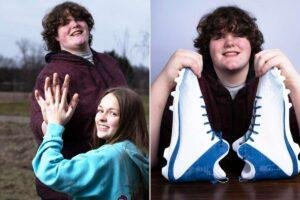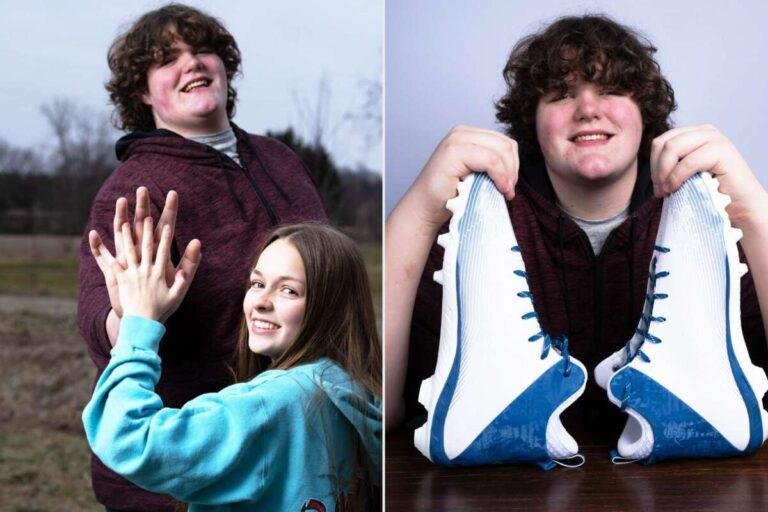
Robert Wadlow had the largest recorded shoe size, wearing a US men’s size 37AA.
The answer sounds simple, but shoe size records need careful checking. Size systems differ by country, custom shoes are often measured in length and width, and some claims lack reliable proof. This guide explains who had the largest shoe size, how large those feet were, and how the record compares with other famous cases.
Who had the largest shoe size?
Robert Wadlow had the largest recorded shoe size in history. He wore a US men’s size 37AA, which is about 18.5 inches long, or 47 centimeters.
Wadlow was born in Alton, Illinois, in 1918. His extraordinary height and foot size were linked to a medical condition called pituitary gigantism. His body produced an unusually high amount of growth hormone because of a tumor in his pituitary gland.
Robert Wadlow reached a height of 8 feet 11 inches, or 2.72 meters. He remains the tallest person ever recorded with reliable medical evidence.
His shoes were not sold in ordinary stores. A shoe company made custom footwear for him. His size 37AA shoes were much longer than the largest standard sizes found in most stores today.
The key facts are:
• Person: Robert Wadlow
• Largest recorded shoe size: US men’s size 37AA
• Foot length: About 18.5 inches or 47 centimeters
• Height: 8 feet 11 inches or 2.72 meters
• Country: United States
• Record type: Largest documented shoe size and largest recorded feet

How large were Robert Wadlow’s feet?
Robert Wadlow’s feet were about 18.5 inches long. That is longer than a standard adult basketball shoe and close to the length of a small baseball bat.
His feet were also very wide. The “AA” part of his shoe size means his feet were unusually narrow for their length. This may seem surprising, since many people expect extremely long feet to be wide as well.
His body continued to grow throughout his life. At age 13, he was already taller than most adults. By age 16, he stood more than 7 feet tall. His hands, arms, legs, and feet grew along with the rest of his body.
Finding shoes was a constant challenge. Wadlow often needed shoes made specially for his feet. A normal retail shoe could not provide enough length, and even a large custom shoe needed the right shape and support.
The largest shoe size in Wadlow’s case was not simply a novelty. It affected his comfort, movement, clothing, travel, and daily life. His story shows why a record can also reveal the practical challenges faced by the person who holds it.


Why did Robert Wadlow have such large feet?
Robert Wadlow had pituitary gigantism. This condition begins during childhood, while the growth plates are still open.
The pituitary gland sits at the base of the brain. It helps control growth by releasing human growth hormone. In Wadlow’s case, a tumor caused his body to release too much of this hormone.
Too much growth hormone before adulthood can lead to:
• Unusual height
• enlarged hands and feet
• Longer arms and legs
• Changes in facial features
• Muscle weakness or joint strain
• Greater difficulty with movement
The condition is rare. Most people who are very tall do not have a shoe size anywhere near Wadlow’s size. Height, foot length, genetics, nutrition, and health all affect shoe size, but they do not increase at the same rate for everyone.
Gigantism is different from acromegaly. Gigantism occurs before the growth plates close. Acromegaly usually develops in adults, after normal height growth has ended. Both conditions can involve excess growth hormone, but their effects are not identical.
Modern doctors can often detect and treat excess growth hormone earlier. Treatment may include surgery, medicine, or radiation, depending on the cause. Early care can reduce the risk of long-term problems.

What is the largest shoe size worn by a living person?
The answer depends on the record category and the date of measurement. Robert Wadlow holds the historical record, but other people have held records for the largest feet among living individuals.
Venezuelan man Jeison Orlando Rodríguez Hernández has been recognized for having exceptionally large feet. Reports have measured his feet at about 40 centimeters long, with a shoe size near US men’s size 26.
His measurements are much smaller than Wadlow’s size 37, but they are still far beyond normal retail sizing. He has also needed custom-made shoes.
Record organizations may update their measurements over time. They may also use different rules for:
• Largest feet ever
• Largest feet on a living person
• Largest shoe size
• Longest right foot
• Longest left foot
• Largest verified shoe worn
For that reason, a careful answer should name the record type. If someone asks, “Who has the largest shoe size?” the strongest historical answer is Robert Wadlow. If they ask about a living person, the answer may depend on the latest verified record.


How does a US size 37 compare with normal shoe sizes?
A US men’s size 37 is far outside the normal shoe range. Most adult men in the United States wear somewhere between a US size 8 and size 13, although foot sizes vary widely.
A typical US men’s size 10 shoe has an internal length of roughly 10.5 to 11 inches. Robert Wadlow’s shoes were about 18.5 inches long. That means his shoes were around 7 or 8 inches longer than a common adult men’s shoe.
A simple comparison helps:
• US men’s size 10: About 10.5 to 11 inches
• US men’s size 14: About 12 inches
• US men’s size 20: About 15 inches
• Robert Wadlow’s size 37AA: About 18.5 inches
These figures are estimates. Shoe brands use different shapes, and size charts are not perfectly consistent. A shoe’s inside length may also differ from its listed size.
It is also important to avoid comparing US, UK, and European numbers as if they were the same. A US men’s size 37 does not equal a European size 37. In fact, a European size 37 is close to a US women’s size 6 or 7.
Why are very large shoes made by hand?
Standard shoe factories produce common sizes in large quantities. Extremely large sizes have very little demand, so keeping them in regular stores would be costly and inefficient.
Custom shoemakers begin with exact measurements. They may create a special last, which is the mold used to shape the shoe. The maker then selects materials that can support the wearer without becoming too heavy.
A custom shoe for a very large foot may require:
• Detailed length and width measurements
• A molded foot form
• Strong leather or synthetic materials
• Reinforced soles
• Special arch support
• Extra stitching
• Custom laces or closures
• Careful testing for balance and comfort
A large shoe is not just a normal shoe scaled up. If a design is enlarged without changing its structure, it may bend, split, or become unstable.
People with unusually large feet should also focus on fit, not just size. A shoe that is long enough may still pinch the toes or fail to support the heel. A podiatrist or experienced shoe fitter can help identify pressure points and balance issues.

How are record-breaking feet measured?
Reliable measurements use more than a shoe label. Shoe sizes can vary between brands, countries, and time periods. A documented record normally depends on direct measurements of the feet.


The basic process may include:
- The person stands on a firm, flat surface.
- Each foot is measured from the heel to the longest toe.
- The widest part of the foot is measured.
- Both feet are checked because they may differ.
- Measurements are witnessed and recorded.
- Medical or official records are reviewed when available.
The longest toe is not always the second toe. Some people have a longer big toe, while others have a longer second toe. The measurement should run from the back of the heel to the farthest point in front.
Feet can also swell during the day. For ordinary shoe shopping, it is often best to measure both feet later in the day, when they are at their largest. Wear the type of socks you expect to use with the shoes.
This matters because the largest shoe size claims are easy to exaggerate. A photograph of a large shoe can look impressive, but it does not prove the actual size. Direct measurement and independent verification provide stronger evidence.

What can people learn from the largest shoe size record?
The story of the largest shoe size teaches more than a measurement. It shows how important accurate sizing and custom support can be.
People with large feet often make common mistakes when buying shoes. They may buy a pair that is too short because the next size is not available. They may also choose a loose shoe to gain length, which can cause the heel to slide and create blisters.
Better habits include:
• Measure both feet before buying shoes.
• Shop by foot length and width, not only by the printed size.
• Leave about a thumb’s width in front of the longest toe.
• Check that the heel stays in place while walking.
• Try shoes with the socks you plan to wear.
• Replace shoes when the sole loses support.
• Seek professional advice for pain, numbness, or repeated blisters.
A personal lesson many shoe shoppers discover is that “bigger” does not always mean “better.” A longer shoe can still be uncomfortable if the heel, arch, or toe box has the wrong shape.
For children, rapid growth makes regular checks even more important. Tight shoes can cause pain and affect walking. Parents should check fit often instead of waiting for visible wear.
Common myths about the largest shoe size
Several myths surround record-breaking feet. Some come from confusion between height, foot size, and shoe labels.
One myth is that every very tall person has enormous feet. Tall people often have larger feet than average, but body proportions differ. A person can be tall and wear a fairly common shoe size.
Another myth is that a shoe size number is a universal measurement. It is not. A US size, UK size, and European size use different systems. Even two brands using the same system may produce shoes with different internal lengths.
A third myth is that the biggest shoe ever photographed must be the biggest shoe ever worn. Photographs can be misleading because of camera angles and perspective. Official records need measurements and supporting evidence.


Finally, some online posts confuse the largest foot with the largest shoe size. A foot may be measured in centimeters, while a shoe is labeled by a national sizing system. The two terms are related, but they are not identical.
Frequently Asked Questions About Who Has the Largest Shoe Size
Who has the largest shoe size in history?
Robert Wadlow had the largest recorded shoe size in history. He wore a US men’s size 37AA, with feet measuring about 18.5 inches long.
What size shoes did Robert Wadlow wear?
Robert Wadlow wore US men’s size 37AA. His shoes had to be made specifically for him because ordinary stores did not carry anything close to that size.
Who has the largest feet among living people?
Jeison Orlando Rodríguez Hernández has been recognized for having some of the largest feet among living people. His feet have been measured at about 40 centimeters long, and he has worn shoes near a US men’s size 26.
Is a US size 37 the same as a European size 37?
No. US and European shoe sizes use different systems. A European size 37 is much smaller than a US men’s size 37.
Can someone naturally grow into a size 37 shoe?
A shoe size that large is extremely rare. Exceptional foot growth is usually linked to unusual genetics or a medical condition such as pituitary gigantism, and it should be evaluated by a qualified medical professional.
Are Robert Wadlow’s shoes still available to see?
Some of Wadlow’s shoes and personal items have appeared in museums and historical exhibits. Their availability can change, so visitors should check the current details with the relevant institution.
Does height always determine shoe size?
No. Height can influence foot length, but it does not determine it. Genetics, body proportions, age, sex, and health all play a role in shoe size.
Conclusion
Robert Wadlow had the largest recorded shoe size, wearing a US men’s size 37AA with feet about 18.5 inches long. His size was connected to pituitary gigantism, and his custom shoes show why extreme measurements require special design and support.
When comparing shoe records, always check the record category, measurement method, and sizing system. If you are buying shoes for unusually large feet, measure both feet, focus on comfort, and seek professional fitting help when needed. Share this guide with anyone curious about record-breaking shoe sizes, and explore reliable medical or footwear resources for more information.

Madison Clark is a footwear expert and the voice behind MyStyleGrid.com. She specializes in honest shoe reviews, style tips, and practical guides to help readers find the perfect pair for any occasion. With years of experience in blogging and content creation, Madison makes footwear knowledge simple, stylish, and easy to follow.