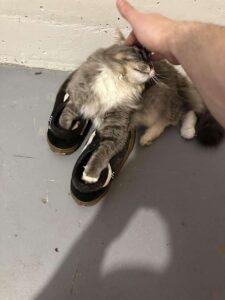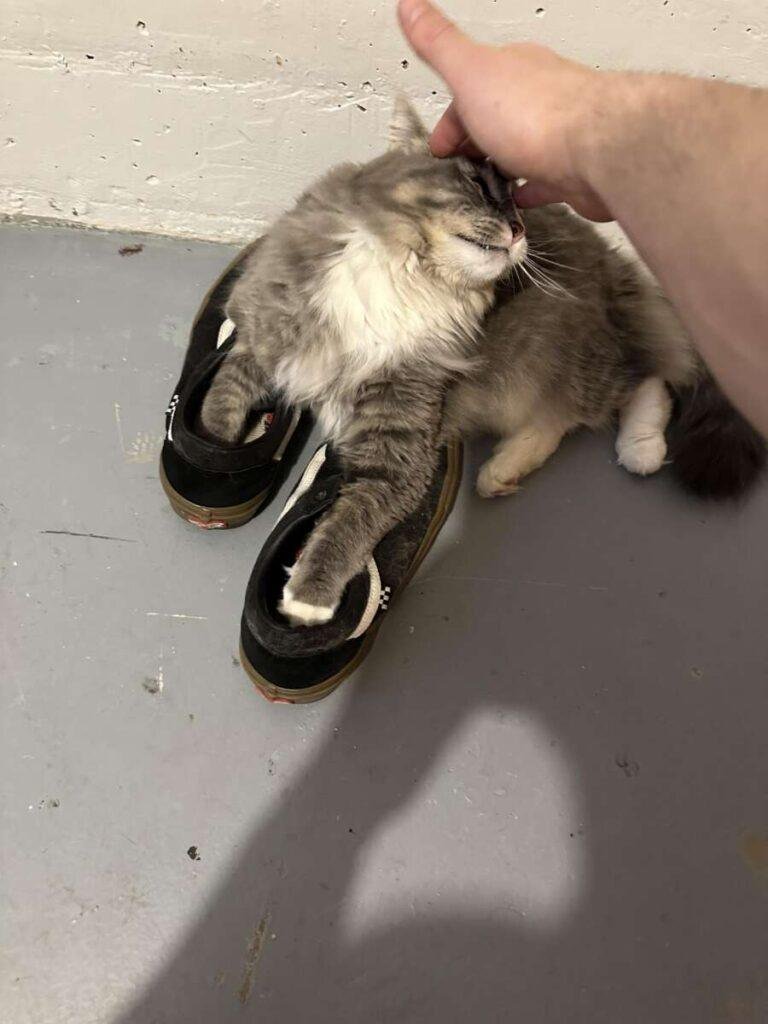
Your cat lays on your shoes because they carry your scent, feel warm, and provide comfort.
If you wonder, “why does my cat lay on my shoes,” the behavior is usually normal and easy to understand. Shoes are small scent maps of your day. They smell like you, hold heat, and often sit in places where your cat can watch the room. This guide explains the main reasons, what the habit means, when to worry, and how to respond safely.
Why Does My Cat Lay on My Shoes?
The simplest answer is that your shoes smell like you. Cats use scent to understand people, places, and objects. Your shoes collect your natural scent, outdoor smells, and traces from every place you visit.
To your cat, a pair of shoes may work like a comfort item. The smell is familiar and reassuring, much like a favorite blanket. This can be especially important when your cat is alone for part of the day.
Cats also choose objects that feel safe. Shoes often sit on the floor, near walls, under tables, or beside entry doors. These spots can give your cat a clear view of the room while keeping the body in a protected position.
Several common reasons explain this habit:
• Your shoes smell strongly like you.
• The shoes may still be warm after you take them off.
• Your cat may want to mark them with its own scent.
• The shape may feel cozy for resting.
• Shoes may be near your usual walking path.
• Your cat may enjoy the texture of the laces, leather, or fabric.
When asking why does my cat lay on my shoes, think of the behavior as a mix of scent, comfort, warmth, and social bonding. Most of the time, it is not a sign of a problem.

Your Scent Makes Shoes Comforting
Cats have a powerful sense of smell. They use scent to identify familiar people and decide whether an object feels safe. Since shoes spend hours close to your feet, they can carry a stronger personal scent than many other items in your home.
This is one reason why does my cat lay on my shoes may seem more puzzling than why your cat sleeps on your shirt. Shoes spend time outdoors, but they also hold your scent. Your cat may be interested in both layers.
Some cats sleep on shoes when their person is away. The shoes act like a small reminder that you are nearby. This does not mean your cat is always anxious. It may simply show that your cat enjoys familiar smells.
Kittens may show this behavior more strongly. Young cats often seek warm, familiar objects when they are tired or unsure. Adult cats can do the same during changes such as moving, new furniture, visitors, or a different work schedule.
A cat that lies on your shoes may also be adding its own scent. Cats have scent glands around the face and body. When they rub or rest on an object, they can leave a familiar scent behind. This can make the item feel more like part of their shared home.
A simple scent test
try placing a clean pair of shoes beside a pair you have worn all day. Your cat may choose the worn pair. This small test can show whether scent is a major part of the behavior.
Do not use strong sprays or perfumes to test the response. Artificial scents can bother cats, and some fragrance oils may be unsafe for them.

Shoes Can Feel Warm and Cozy
Warmth is another common reason why does my cat lay on my shoes. Cats like warm resting spots because their normal body temperature is higher than ours. A recently worn shoe may hold heat for a short time.
The shape of a shoe can also make it appealing. Boots and sneakers may create a small boundary around the paws or body. Cats often like spaces that feel enclosed but still allow a quick escape.
This is similar to why a cat may sleep in a box, basket, or laundry pile. The object does not need to be soft to feel secure. It only needs to offer the right mix of warmth, scent, and shelter.
Some shoe materials also have an interesting feel. Leather, canvas, rubber, and fabric each offer a different texture. A cat may press its paws on the shoe or rub against it because the material feels good.
Keep in mind that a shoe may become too warm in some cases. Do not leave heated footwear, electric shoe dryers, or shoes treated with chemicals where your cat can reach them.
Your Cat May Be Marking Your Shoes
Cats communicate through scent. When your cat rubs against your shoes, lies on them, or paws at them, it may be marking the item as familiar. This behavior is usually peaceful. It is not the same as spraying urine.
Scent marking helps cats create a shared home smell. Your cat may view your shoes as part of the household territory because they move between the home and the outside world.
This can explain why does my cat lay on my shoes near the front door. The entry area contains many new smells. Outdoor scents from sidewalks, grass, other animals, and public places can make shoes especially interesting.
A cat may inspect your shoes after you return home. This is a normal form of information gathering. Your cat is not reading your day in words, but smell gives it useful details about where you have been.
There is one important difference to watch. If your cat urinates on your shoes, that is not simply a resting habit. Urine marking or sudden house soiling can relate to stress, conflict, or a medical issue. A veterinarian should assess any new or repeated urination outside the litter box.
Shoes May Help Your Cat Feel Close to You
Many cats show affection in quiet ways. They may not greet you like a dog, but they often choose objects that smell like their favorite person. Sleeping on your shoes can be one of those subtle signs.
This does not prove that every cat is feeling lonely. Cats vary widely in their social needs. Some enjoy constant contact, while others prefer to share space without being touched.
In my experience observing cat behavior, owners often mistake this habit for a strange obsession. Once they place a worn shirt or small blanket nearby, the cat may use both items. That suggests the main attraction is often the familiar scent, not the shoe itself.
Your cat may also be waiting for you near the door. If the shoes are in a busy area, your cat may have learned that this is where you appear and leave. The location becomes part of the routine.
You can support this bond without encouraging unsafe chewing. Offer a washable blanket that carries your scent. Wear it for a few hours, then place it in your cat’s favorite resting area.

Is Lying on Shoes a Sign of Stress?
Usually, no. A cat that calmly sleeps on your shoes, eats normally, uses the litter box, and behaves as usual is probably showing a harmless preference.
However, any repeated behavior should be viewed alongside other signs. Cats can hide pain and stress, so a sudden change matters more than an old habit.
Contact your veterinarian if shoe resting appears with:
• Hiding more than usual
• Loss of appetite
• Vomiting or diarrhea
• Changes in litter box use
• Excessive grooming
• Aggression or fear
• Vocalizing in a new way
• Trouble walking or jumping
• Sudden clinginess or withdrawal
Stress can come from household changes, loud noise, new pets, unfamiliar people, or a changed schedule. Medical problems can look similar to stress, which is why a professional check is wise when several signs appear.
Do not punish your cat for lying on shoes. Punishment can increase fear and may make the behavior worse. Calm redirection works better.
When the shoe habit is not the real concern
If your cat only rests on shoes, the habit is rarely serious. If your cat chews, swallows, licks, or guards the shoes, the risk is different. The concern then involves poisoning, choking, intestinal blockage, or resource guarding.
Watch especially closely around:
• Shoelaces and loose threads
• Leather treatment products
• Cleaning chemicals
• Road salt and deicers
• Pesticides and lawn chemicals
• Small metal parts

Are Shoes Safe for Cats to Sleep On?
Shoes are often safe for short naps, but they are not always clean or harmless. Shoes can carry dirt, salt, bacteria, parasites, and chemical residue from outside.
Wipe shoes when you have walked through salt, pesticides, oil, or other chemicals. Let them dry before allowing your cat to approach them. Store products such as polish, glue, and waterproofing sprays in a closed cabinet.
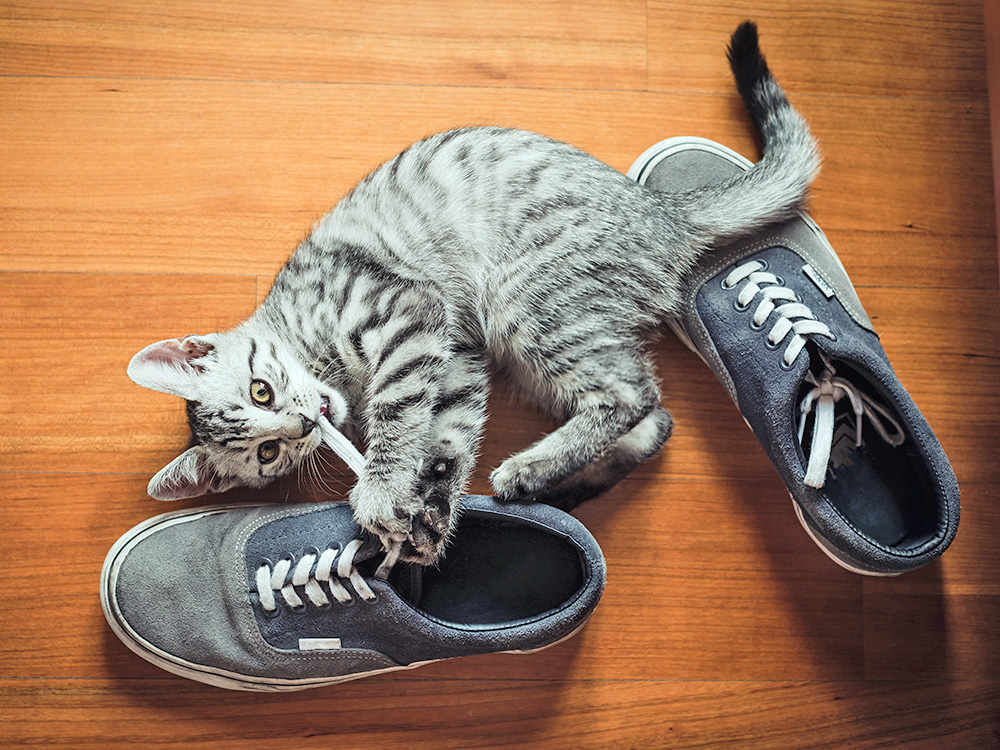
Shoelaces are another concern. Some cats enjoy batting and chewing them. A loose lace can become a choking hazard or cause a blockage if swallowed.
Leather and synthetic materials may also contain dyes or treatments. A cat that only rests on the shoe faces little risk, but licking or chewing can create a problem.
A safer routine is simple:
-
Keep outdoor shoes in a closed rack or closet.
-
Remove wet, muddy, or chemically treated footwear.
-
Check laces for loose ends.
-
Offer a cat-safe toy for chewing and batting.
-
Call a veterinarian if your cat swallows part of a shoe.
Never try to make your cat vomit unless a veterinarian specifically tells you to do so. Some objects can cause more injury when brought back up.
How to Stop Your Cat From Lying on Your Shoes
You do not need to stop the behavior unless it causes damage or creates a safety risk. If you want to protect your shoes, provide a better resting option.
Place a small bed, mat, or fleece blanket near the shoe area. Choose a spot that is quiet but not isolated. Many cats prefer a place where they can watch household activity.
You can make the new bed more appealing by adding:
• A washable cloth with your scent
• A familiar blanket
• A few treats
• A cat-safe toy
• A warm, but not hot, resting surface
Move the shoes out of reach once your cat begins using the new spot. Avoid grabbing the cat suddenly or scolding it. Instead, guide the cat toward the alternative with a treat or toy.
Consistency matters. If shoes are sometimes allowed and sometimes removed, your cat may not understand the rule. Keep the new resting area available every day.
One mistake I often see is offering a bed in a cold, hidden corner and expecting the cat to prefer it. Location matters as much as comfort. A simple mat beside your favorite chair may work better than an expensive bed placed in an unused room.

What Does It Mean When a Cat Sleeps on Your Shoes?
When a cat sleeps on your shoes, the behavior may have several meanings at once. Cats rarely act for one reason only.
It may mean your cat:
• Feels safe with your scent
• Wants warmth
• Likes the shoe’s shape
• Enjoys the entryway location
• Is marking a familiar household object
• Wants to stay near your daily routine
Body language can give you more clues. A relaxed body, slow blinking, normal breathing, and gentle purring suggest comfort. Flattened ears, a tense body, rapid tail movement, or wide pupils may suggest fear or irritation.
The setting also matters. A cat that naps on shoes after you leave may be seeking familiar scent. A cat that attacks shoelaces may be playing. A cat that suddenly guards shoes may be showing stress or discomfort.
Look at the whole pattern rather than focusing on one action. This approach is more accurate and helps avoid unnecessary worry.

Frequently Asked Questions About Why Does My Cat Lay on My Shoes
Why does my cat lay on my shoes instead of its bed?
Your shoes may smell more like you and may be warmer or more interesting than the bed. Cats often choose a resting place based on scent, location, temperature, and how safe the area feels.
Why does my cat sleep on my shoes when I am gone?
Your shoes carry your familiar scent, which may help your cat feel connected to you. This is usually normal if your cat continues to eat, play, groom, and use the litter box normally.
Should I be worried if my cat suddenly lays on my shoes?
A sudden change is worth watching, especially if it comes with hiding, appetite loss, litter box changes, or unusual vocal sounds. If other symptoms appear, arrange a veterinary check because stress and illness can look alike.
Can my cat get sick from laying on outdoor shoes?
Resting on clean, dry shoes is usually low risk, but shoes can carry chemicals, salt, parasites, and dirt. Keep treated or heavily soiled shoes away from cats, and prevent chewing or licking.
How can I keep my cat off my shoes?
Offer a comfortable alternative with a familiar-smelling blanket, then store your shoes out of reach. Redirect your cat calmly with a treat or toy instead of using punishment.
Does laying on my shoes mean my cat loves me?
It can show that your scent feels familiar and safe, but cat behavior has more than one meaning. Your cat may also like the warmth, texture, shape, or location of the shoes.
Conclusion
The answer to why does my cat lay on my shoes usually involves a simple blend of scent, warmth, comfort, and routine. Your shoes carry your personal smell and may help your cat feel secure. They may also offer a cozy shape and an interesting place near the door.
Most shoe resting is harmless. Check for chemical residue, loose laces, chewing, and sudden behavior changes. If your cat shows other signs of illness or stress, speak with a veterinarian.
Try placing a washable, familiar-smelling blanket near your cat’s favorite shoe spot. With patience and a safe alternative, you can protect your footwear while keeping your cat comfortable. Share your cat’s shoe habit in the comments and explore more feline behavior guides for practical, evidence-based advice.

Rubel Miah is the Senior Editor at MyStyleGrid.com, where he brings a sharp editorial eye and an unshakable love for fashion to everything he does. A true style addict, Rubel lives and breathes trends, from streetwear to high fashion, and has a knack for turning inspiration into impactful stories. With years of experience in fashion journalism and digital media, he curates content that empowers readers to express themselves through style. When he’s not editing features or forecasting the next big thing, you’ll find him hunting down vintage pieces or capturing street style moments around the city.