Introduction
A 235 ski boot is a Mondopoint 23.5 size. It is designed for a foot about 23.5 centimeters long, or roughly 9.25 inches.
For shoppers in the United States, a 235 ski boot usually converts to about:
- US women’s: 6.5–7
- US men’s: 5.5–6
- EU: about 37–38
These conversions are estimates. Ski boot brands may size their shells and liners in slightly different ways. Your measured foot length, foot width, and the boot’s fit matter more than a standard shoe-size chart.

What does 235 mean in ski boots?
The number 235 refers to the Mondopoint sizing system, often called Mondo size. Mondopoint uses the length of your foot in centimeters.
So:
- 23.5 Mondo = 23.5 cm foot length
- 23.0 Mondo = 23.0 cm foot length
- 24.0 Mondo = 24.0 cm foot length
The “235” label is usually printed without a decimal point. A boot marked 235 is the same size as one marked 23.5.
Mondopoint is common in ski boots because it gives a direct length measurement. Regular shoes use different systems and often include more extra space. A person who wears a US women’s 7 sneaker may not always need a 23.5 ski boot.
Is 235 the boot length or shell length?
A 235 size describes the target foot length, not the outside length of the boot shell.
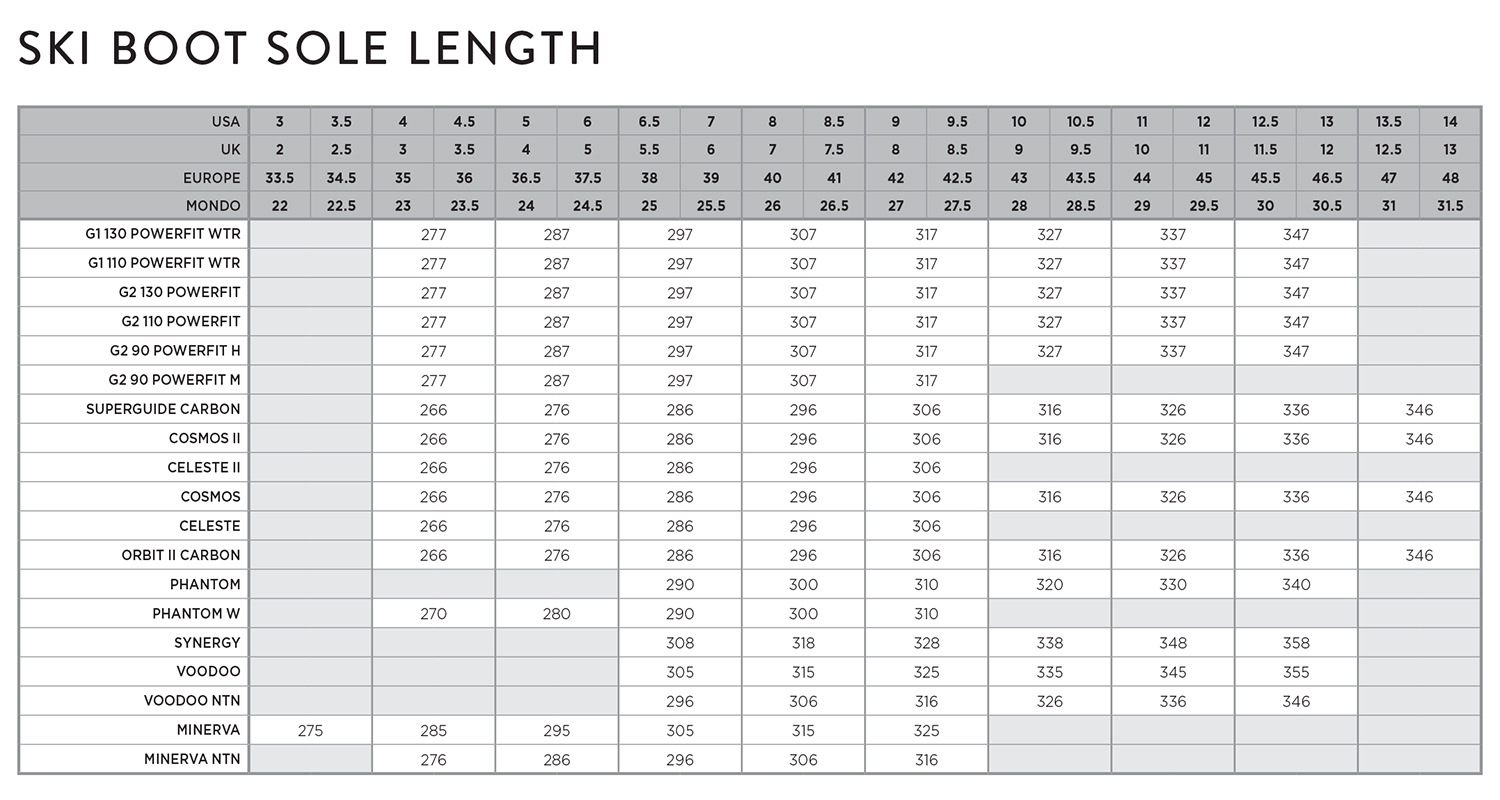
The outer shell is longer than 23.5 centimeters. Its actual length depends on the boot model, construction, and shell size. If you need to check whether a boot will fit a binding, look for the boot sole length, or BSL, printed on the boot shell. BSL is usually measured in millimeters and may be around 275–285 mm for a boot in this size range, but it varies by model.
Do not use “235” as the boot sole length when adjusting bindings.

What US shoe size is a 235 ski boot?
A 235 ski boot is roughly equal to a US women’s 6.5 to 7 or a US men’s 5.5 to 6. The exact conversion changes by brand and by the shape of the boot.
| Ski boot size | Foot length | Approx. US women’s size | Approx. US men’s size | Approx. EU size |
|---|---|---|---|---|
| 225 | 22.5 cm | 5–5.5 | 4–4.5 | 35–36 |
| 230 | 23.0 cm | 6–6.5 | 5–5.5 | 36–37 |
| 235 | 23.5 cm | 6.5–7 | 5.5–6 | 37–38 |
| 240 | 24.0 cm | 7–7.5 | 6–6.5 | 38 |
| 245 | 24.5 cm | 7.5–8 | 6.5–7 | 38–39 |
This table is a general guide, not a guarantee. A narrow 235 boot may feel smaller than a wide 235 boot, even though both have the same nominal length.
Ski boot brands also use different liner shapes. Some boots have a lower-volume fit, while others provide more room over the instep, in the heel, or across the forefoot.


How to measure your foot for a 235 ski boot
Measure both feet before choosing a size. Most people have one foot that is slightly longer or wider than the other.
What you need
- A sheet of paper
- A pencil
- A ruler or tape measure
– The ski socks you plan to wear
Measurement steps
- Put the paper on a hard floor.
- Stand on the paper while wearing thin ski socks.
- Keep your heel lightly against a wall.
- Ask someone to mark the tip of your longest toe.
- Measure from the wall edge to the toe mark.
- Repeat the process for the other foot.
- Use the measurement of your longer foot.
If your longer foot measures close to 23.5 cm, a 235 boot is a logical starting point. If it measures 23.8 or 23.9 cm, a 240 may be more suitable, depending on the brand and fit.
Do not measure while sitting. Your foot can lengthen slightly when you stand because your body weight spreads the foot.
Example
Suppose your feet measure:
- Left foot: 23.3 cm
- Right foot: 23.6 cm
Use the right-foot measurement. A 235 boot may work if the model fits true to size, but you should check the shell and liner carefully. A 240 may offer better length, while a boot fitter could adjust a 235 shell if the fit is close but not perfect.
How should a 235 ski boot fit?
A correctly fitted 235 ski boot should feel snug, secure, and even, not painful. Ski boots should not fit like loose winter shoes.
When standing upright, your toes may lightly touch the front of the liner. When you bend your knees into a skiing position, your toes should pull back slightly. Your heel should stay mostly in place when you flex forward.
Look for these signs:
- Your heel does not lift heavily.
- Your toes are not curled or forced under.
- Your foot does not slide from side to side.
- The shell holds your foot without sharp pressure.
- You can flex your ankle without numbness.
- Your toes remain warm and have normal feeling.
A new liner often feels firm. It may pack out a little with use, but it should not be painfully tight from the start.
The shell-fit check
A professional boot fitter can remove the liner and place your foot inside the empty shell. With your toes lightly touching the front, the fitter checks the space behind your heel.
A small, even gap can be normal for an alpine ski boot. Too much space can cause poor control, heel lift, and the temptation to over-tighten the buckles. Too little space can create pain and pressure that liner molding may not solve.
The correct gap depends on the skier, boot type, and intended use. A beginner may prefer a little more comfort, while an advanced skier often wants a closer performance fit. This is one reason a direct US shoe conversion cannot replace an in-person fitting.


Does a 235 ski boot fit the same in every brand?
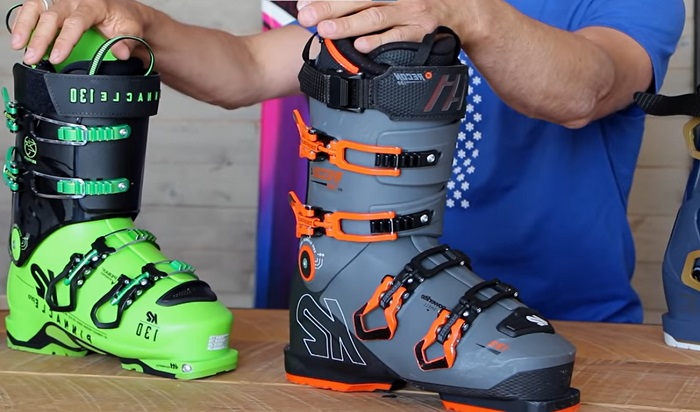
No. A 235 size has a similar length target across brands, but the fit can differ greatly.
Important differences include:
- Last width: the width of the boot at the forefoot
- Instep height: the room over the top of the foot
- Heel pocket: how tightly the heel and ankle are held
- Volume: the total space inside the boot
- Flex rating: how easily the boot bends forward
- Liner shape: the internal padding and support
Two boots marked 235 can feel very different. One may suit a narrow foot with a low instep. Another may better suit a wider foot with a taller instep.
Women’s-specific boots may also use different cuff shapes and liner designs, but the number 235 still refers mainly to foot length. Do not assume that every women’s 235 is shorter than every unisex or men’s 235.
Check the manufacturer’s current size chart for the exact model. Brand charts are useful for confirming the intended foot length and the available last widths, but they cannot fully predict comfort.
Is 235 the same as 23.5 in ski boots?
Yes. 235 and 23.5 are two ways of writing the same Mondopoint size.
You may see the size displayed as:
- 235
- 23.5
- Mondo 23.5
- Mondopoint 23.5
The number does not mean US size 235, EU size 235, or a 235-millimeter foot. It means approximately 23.5 centimeters.
Some retailers list half sizes in a format such as 23.5, while the boot shell may show 235. Always check the label and the product page carefully, especially when buying used boots.
Do 235 and 240 ski boots use the same shell?
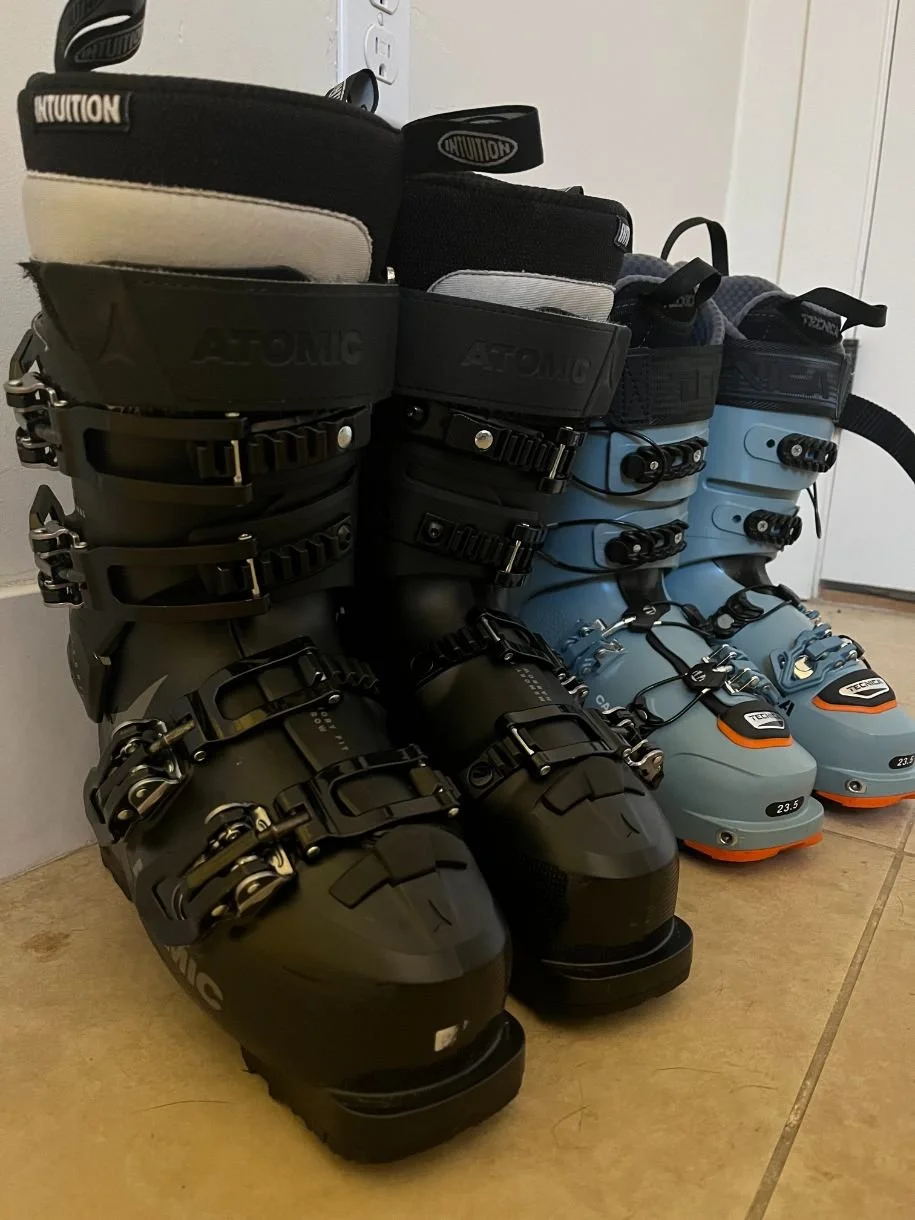
Often, but not always. Many ski boot brands group two neighboring Mondo sizes into one physical shell. For example, a 235 and 240 may share the same shell while using different liner thicknesses or footbeds.
This practice is called a shell-size grouping. It can affect fit because moving from 235 to 240 may not create a completely new outer shell. The liner may provide the main difference in internal space.
Check the specific model’s shell-size chart or ask the manufacturer. Do not assume that every brand groups sizes in the same way.
The shell size also matters when buying replacement liners, installing custom footbeds, or comparing used boots. A liner made for one shell group may not fit another shell correctly.


Common mistakes when choosing a 235 ski boot
Choosing by street-shoe size alone
Street shoes often have extra room in front of the toes. Ski boots need a closer fit for control. Start with your measured foot length and then use your street size only as a rough comparison.
Buying a larger boot for comfort
A boot that feels comfortable and roomy in a store can become difficult to control on snow. Your heel may lift, and you may tighten the buckles too much to hold your foot in place.
Wearing thick socks
Thick socks can create pressure, reduce circulation, and change the way the boot fits. A thin, ski-specific sock usually gives a more consistent fit.
Ignoring foot width
A 235 boot may have enough length but not enough width. If your toes feel compressed at the sides, the problem may be the last shape rather than the Mondo size.
Judging the fit before buckling and flexing
Stand in the boots with the buckles lightly closed. Bend your knees as if skiing. The fit can change when your ankle moves into a forward position.
Assuming heat molding fixes every problem
Heat molding can improve the fit of some liners, but it cannot always correct the wrong shell length, excessive volume, severe pressure, or a poor last match. A boot fitter should assess the shell before modification.
When should you see a ski boot fitter?
See a qualified ski boot fitter if you have persistent pain, numbness, severe pressure, heel lift, or cold toes. Also seek help if you are between sizes or if one foot is much different from the other.
A fitter can assess:
- Shell length
- Forefoot width
- Instep height
- Heel retention
- Cuff alignment
- Footbed support
- Liner fit
- Pressure points
Stop skiing and loosen the boots if you develop numbness, loss of feeling, or unusual pain. Tightening buckles harder is not a safe fix for a poor fit. Cold feet can also result from restricted circulation, wet socks, or boots that are too tight.
Boot fitting is especially useful for children, skiers with past foot injuries, and anyone with a strong difference between left and right foot size.

Key takeaways
- 235 ski boots are Mondopoint 23.5 boots.
- They fit a foot about 23.5 cm long.
- The rough US conversion is women’s 6.5–7 or men’s 5.5–6.
- The conversion is only a starting point because brands vary in width and volume.
- Measure your feet while standing and use the longer foot.
- A snug heel and light toe contact are usually better than a loose, roomy fit.
- Check the exact brand chart and consult a boot fitter if the fit causes pain or numbness.
FAQs
Is a 235 ski boot a women’s size 7?
Usually, a 235 ski boot is close to a US women’s 6.5 or 7. The exact fit depends on the brand, shell shape, liner, and foot width.
Is a 235 ski boot a men’s size 6?
A 235 is often close to a US men’s 5.5 or 6. Use the 23.5-centimeter foot measurement as the more reliable guide.


What foot length fits a 235 ski boot?
A 235 ski boot is intended for a foot about 23.5 centimeters long, or roughly 9.25 inches.
Should my toes touch the front of a 235 ski boot?
Your toes may lightly touch the front when you stand upright. When you bend your knees into a skiing stance, your toes should usually move back slightly. Strong pressure, curled toes, or numbness indicate a problem.
Can I use a 235 boot if my foot measures 24 cm?
It may be possible in some models, but a 240 is usually the more natural starting size for a 24-centimeter foot. A fitter should check the shell before you choose between the two.
What is the difference between a 235 and 240 ski boot?
The main difference is the intended foot length: 23.5 cm versus 24.0 cm. Some brands use the same outer shell for both sizes and change the liner or internal fit.
Conclusion
A 235 ski boot is a Mondopoint 23.5, made for a foot close to 23.5 centimeters long. In US shoe sizing, it is generally around a women’s 6.5–7 or a men’s 5.5–6, but those numbers are only approximate.
Measure both feet while standing, choose the longer measurement, and compare it with the exact brand’s chart. If the boot feels painful, loose at the heel, or causes numbness, size conversion is no longer the main issue—the shell shape and professional fitting need attention.
Sources for further checking
- ISO 9407:1991 Mondopoint shoe sizing standard
- REI Expert Advice: How to Choose Ski Boots
- Salomon ski boot size guide
- Tecnica ski boot size guide

Madison Clark is a footwear expert and the voice behind MyStyleGrid.com. She specializes in honest shoe reviews, style tips, and practical guides to help readers find the perfect pair for any occasion. With years of experience in blogging and content creation, Madison makes footwear knowledge simple, stylish, and easy to follow.