A 17.5 ski boot is a Mondopoint 17.5, which means it is designed for a foot about 17.5 centimeters long—roughly 6.9 inches. In US shoe sizing, that is usually close to a children’s US 11.5, though the exact equivalent can vary by brand and model.
A 17.5 ski boot is generally a junior or youth size, not an adult size. The best way to confirm the fit is to measure the skier’s foot in centimeters and check the specific manufacturer’s size chart.
Introduction
For skiers in the United States, a 17.5 ski boot can be confusing because ski boots do not use the same sizing system as regular US shoes. The number refers to Mondopoint, the ski industry’s measurement based on foot length in centimeters.
A 17.5 boot may fit a child whose foot measures close to 17.5 cm. However, foot width, shell shape, sock thickness, and the skier’s ability level also affect fit. A regular shoe size is only a starting point.

What Does 17.5 Mean in Ski Boot Sizing?
The number 17.5 means the boot is made for a foot about 17.5 cm long. It does not mean the boot is 17.5 inches long, and it does not directly describe the boot’s width.
Mondopoint, often written as Mondo, is based on the length of the foot:
- 17.0 Mondo = about 17.0 cm
- 17.5 Mondo = about 17.5 cm
- 18.0 Mondo = about 18.0 cm
- 18.5 Mondo = about 18.5 cm
A 17.5 cm foot measures about 6.89 inches from heel to the longest toe.
Ski boot sizing is often listed in half sizes, but the shell does not always change between every half size. Some brands use one shell for sizes such as 17.5 and 18.5, then change the liner or footboard to create a different internal fit. This depends on the boot model.
Approximate US conversion
| Ski boot size | Foot length | Approximate US kids’ shoe size |
|---|---|---|
| 17.0 Mondo | 17.0 cm / 6.7 in | US 11 |
| 17.5 Mondo | 17.5 cm / 6.9 in | US 11.5 |
| 18.0 Mondo | 18.0 cm / 7.1 in | US 12 |
| 18.5 Mondo | 18.5 cm / 7.3 in | US 12.5 to 13 |
These are approximate comparisons, not exact conversions. Children’s shoe sizes differ between brands, and ski boots are intentionally fitted more closely than everyday shoes.

What US Shoe Size Is a 17.5 Ski Boot?
A 17.5 ski boot is usually close to a US children’s 11.5 shoe. Some ski boot charts may show it as US kids’ 11 or US kids’ 12 because footwear sizing is not perfectly standardized.
Do not convert the size by using an adult shoe chart. A 17.5 ski boot is normally intended for a young skier with a short foot, so the most useful comparison is to US children’s sizing.
The actual fit can change for three reasons:
- Different brands use different lasts. A last is the internal shape of the boot.
- Ski boots hold the foot more firmly than sneakers. A child may wear a smaller ski boot than their casual shoe size suggests.
- Width matters. Two children with 17.5 cm feet may need different boots if one has a narrow foot and the other has a wide forefoot.
Use the US conversion only to narrow your search. Use the foot measurement and the brand’s chart to make the final choice.


How to Measure a Foot for a 17.5 Ski Boot
Measure both feet while standing, because the foot can lengthen slightly under body weight. Use the larger measurement when choosing the boot size.
What you need
- A sheet of paper
- A pencil
- A ruler or tape measure
- The ski sock the child will wear
Measuring steps
- Place the paper on a hard floor with one edge against a wall.
- Have the skier stand on the paper with the heel lightly touching the wall.
- Keep the skier’s weight evenly distributed on both feet.
- Mark the end of the longest toe. The longest toe may not be the big toe.
- Measure from the wall edge to the toe mark in centimeters.
- Repeat the process for the other foot.
- Use the longer measurement when comparing with the boot chart.
If the larger foot measures close to 17.5 cm, a 17.5 boot may be the correct starting size. If it measures 18.0 cm, a 17.5 boot may be too short, even if the child normally wears a US 11.5 shoe.
Do not add extra room for growth without considering control. A boot that is too large can let the heel lift and make it harder to steer the skis. A small amount of space may be reasonable for a growing child, but a loose shell can reduce comfort and safety.

How Should a 17.5 Ski Boot Fit?
A properly fitted 17.5 ski boot should feel snug but not painful. The toes may lightly touch the front when the skier stands upright. When the skier bends the knees into a skiing position, the toes should pull back slightly from the front.
Check these areas:
- Toes: They should not be curled or crushed.
- Heel: It should stay mostly in place when the skier flexes forward.
- Ankle: The boot should hold the ankle without sharp pressure.
- Instep: The top of the foot should feel secure, not numb.
- Calf: The cuff should not cause pain or block normal flex.
- Width: The forefoot should not feel squeezed along the sides.
A new liner can feel firm. That is normal. However, numbness, tingling, sharp pain, or cold toes are signs that the shell may be too narrow, too short, or fastened too tightly.
The standing and flex tests
Have the skier stand upright in the boot with the buckles lightly closed. The toes may touch the front.
Next, have the skier bend the knees and move into a skiing stance. The heel should settle back, and the toes should have a little more room. If the heel lifts a lot or the foot slides forward, the boot may be too large or too loose.
For children, a ski shop boot fitter can check the shell fit by removing the liner and placing the foot inside the shell. This gives a better view of the space behind the heel than trying to judge the fit through the complete boot.

Is a 17.5 Ski Boot the Same as an 18.5?
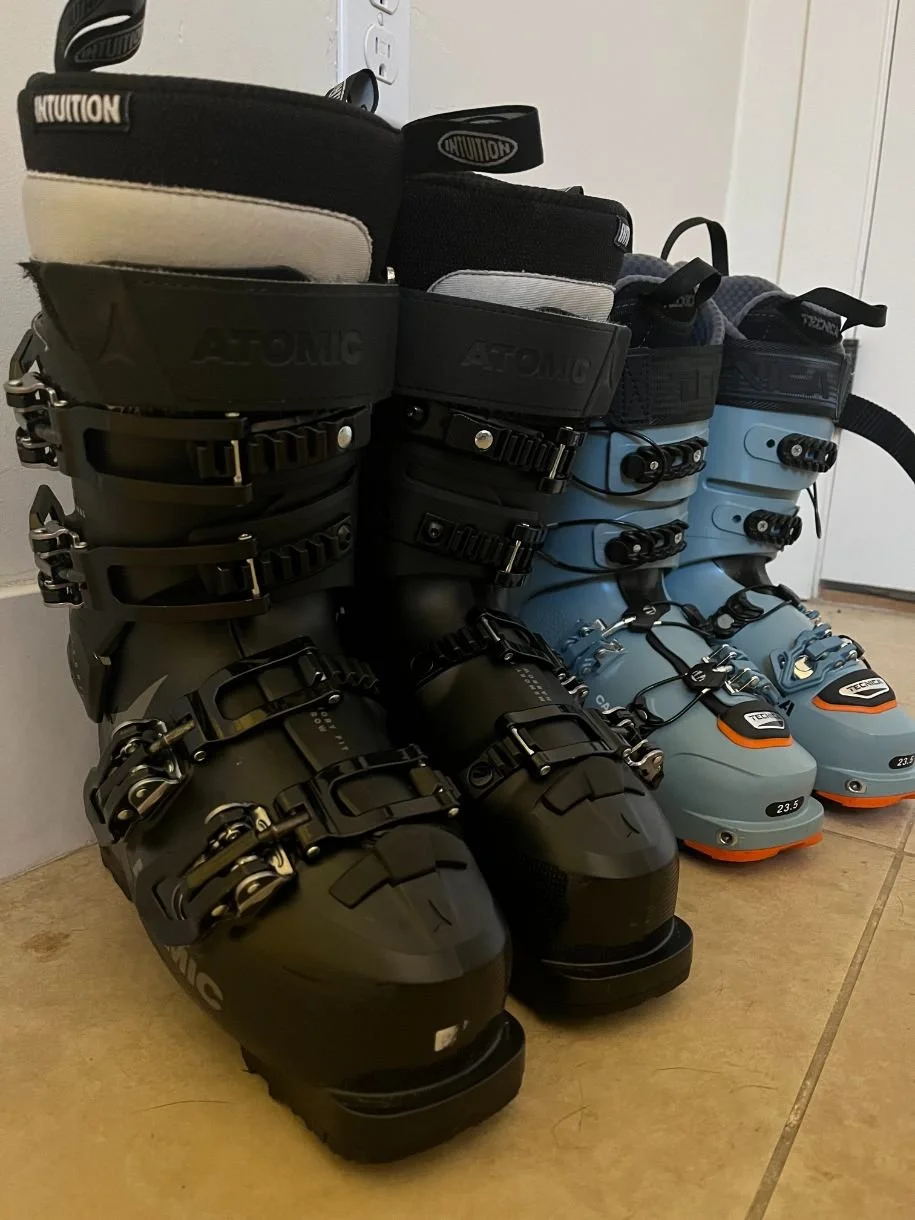
Not always. A 17.5 and an 18.5 boot may use the same outer shell in some junior ski boot models, but they can still have different liners, footbeds, or internal adjustments.
The difference depends on the manufacturer. Some brands group two sizes into one shell. Others use a different shell at each size break.
Check the boot’s:


- Model name
- Year
- Shell-size marking
- Liner size
- Manufacturer chart
- Retailer’s shell-fit information
Do not assume that moving from 17.5 to 18.5 gives exactly 1 cm of extra usable space. The labeled size may change while the outer shell stays the same.
A larger size is not automatically better for a growing child. Extra space can reduce heel hold and make the skis harder to control. If the boot is only slightly tight, a qualified boot fitter may be able to adjust the fit. If the shell is too short, it usually needs to be replaced.
What Is the Difference Between 17.5 and 18.0 Ski Boots?
A 17.5 boot is intended for a foot around 17.5 cm long. An 18.0 boot is intended for a foot around 18.0 cm long, so the nominal difference is 0.5 cm, or 5 millimeters.
That difference can feel noticeable in a small junior boot. It may affect:
- Toe contact
- Heel hold
- Forward flex
- Pressure on the instep
- Overall control
Some models may place 17.5 and 18.0 in the same shell. Others may use separate shells. The size label alone cannot tell you how much internal space changes.
If a child measures between sizes, compare the shell fit and the brand’s chart rather than choosing based only on age or regular shoe size.

Can a Child Wear a 17.5 Ski Boot With Thick Socks?
Thick socks are not a reliable way to correct a boot that is too large. They can create pressure points, reduce circulation, and make the liner fit poorly.
Use one thin ski sock that reaches above the boot cuff. Avoid cotton socks because they hold moisture and can make feet feel cold. If the boot feels loose, a boot fitter may use a suitable footbed or approved fit adjustment rather than extra layers of socks.
If the toes go numb, the skier should stop and check the fit. Cold or numb feet can result from excessive pressure, poor circulation, a tight boot, or wet clothing.

How Much Room Should a Growing Child Have?
A child’s ski boot should not be oversized simply to extend its useful life. A boot that is too large can cause:
- Heel movement
- Delayed edge control
- Difficulty turning
- Extra fatigue
- Blisters
- Reduced confidence
A small amount of growth room may be acceptable, especially for a beginner, but the heel must remain controlled and the child must be able to flex the boot. The correct amount depends on the boot design, the child’s skill, and the advice of a qualified boot fitter.
As a practical check, the child should be able to stand and flex without the foot sliding inside the boot. If the liner feels roomy even with the buckles closed, the boot is likely too large.


Common Mistakes When Buying a 17.5 Ski Boot
The most common mistake is treating ski boot size as an exact US shoe conversion. A US 11.5 shoe does not guarantee a correct 17.5 ski boot fit.
Avoid these errors:
- Choosing by age alone: Children of the same age can have very different foot lengths.
- Using the smaller foot: Always fit the larger foot.
- Measuring while sitting: Standing gives a more realistic length.
- Wearing several pairs of socks: This can cause pressure and poor circulation.
- Buying a boot that is much too large: Extra space reduces control.
- Ignoring width: Length may be correct while the forefoot is too narrow.
- Judging fit by toe contact alone: The heel and ankle matter just as much.
- Skipping a shell check: A liner can hide how much space is inside the shell.
The safest choice is to measure the feet, compare the measurement with the exact boot model’s chart, and have the fit checked before skiing.

17.5 Ski Boot Size: Quick Reference
- Mondopoint: 17.5
- Foot length: About 17.5 cm
- Foot length in inches: About 6.9 inches
- Approximate US shoe equivalent: Children’s US 11.5
- Typical user: Junior or youth skier
- Best sizing method: Measure both feet while standing
- Important fit check: Secure heel with no painful pressure
- Do not rely on: Regular shoe size alone
The 17.5 label describes length, not the entire fit. Width, shell shape, liner design, and boot flex can change how the boot feels.
Frequently Asked Questions
Is a 17.5 ski boot an adult size?
Usually, no. A 17.5 ski boot is generally a junior or youth size. It is intended for a foot around 17.5 cm long and is close to a US children’s 11.5 shoe.
What age child wears a 17.5 ski boot?
There is no reliable age rule. Foot size varies widely among children. The child should be measured instead of choosing a boot based on age.
Is 17.5 the same as US 11.5?
It is approximately similar to a US children’s 11.5 shoe, but the conversion is not exact. Check the ski boot manufacturer’s chart for the specific model.
Should ski boots be one size bigger for growth?
Not usually. A boot that is too large can cause heel lift and poor ski control. A little room may be acceptable, but the boot should still hold the heel and allow the child to flex properly.
Can a 17.5 ski boot fit a 17 cm foot?
It may, depending on the boot’s shell shape and fit system. A 17.5 boot can feel slightly roomy on a 17 cm foot, so check heel hold and shell fit rather than relying only on the label.
Final Answer
A 17.5 ski boot is a Mondopoint 17.5 size, made for a foot about 17.5 cm long. In US terms, it is usually close to a children’s US 11.5 shoe, but the exact match varies by brand.
Measure both feet while standing, use the larger measurement, and check the specific boot’s size chart. The right boot should hold the heel securely, allow normal flex, and feel snug without causing pain or numbness.

Rubel Miah is the Senior Editor at MyStyleGrid.com, where he brings a sharp editorial eye and an unshakable love for fashion to everything he does. A true style addict, Rubel lives and breathes trends, from streetwear to high fashion, and has a knack for turning inspiration into impactful stories. With years of experience in fashion journalism and digital media, he curates content that empowers readers to express themselves through style. When he’s not editing features or forecasting the next big thing, you’ll find him hunting down vintage pieces or capturing street style moments around the city.