Introduction
Men can wear dress boots in most situations that call for dress shoes, especially during fall, winter, and cool spring weather in the United States. They work well with business casual outfits, smart-casual looks, suits, and some formal outfits.
The key is to match the boot’s shape, color, material, and level of shine to the event. A sleek black Chelsea boot can suit a business suit, while a brown cap-toe boot may look better with chinos or a wool blazer. Rugged work boots, hiking boots, and casual moc-toe boots are different. They are not dress boots, even if they are made from leather.

What Are Dress Boots?
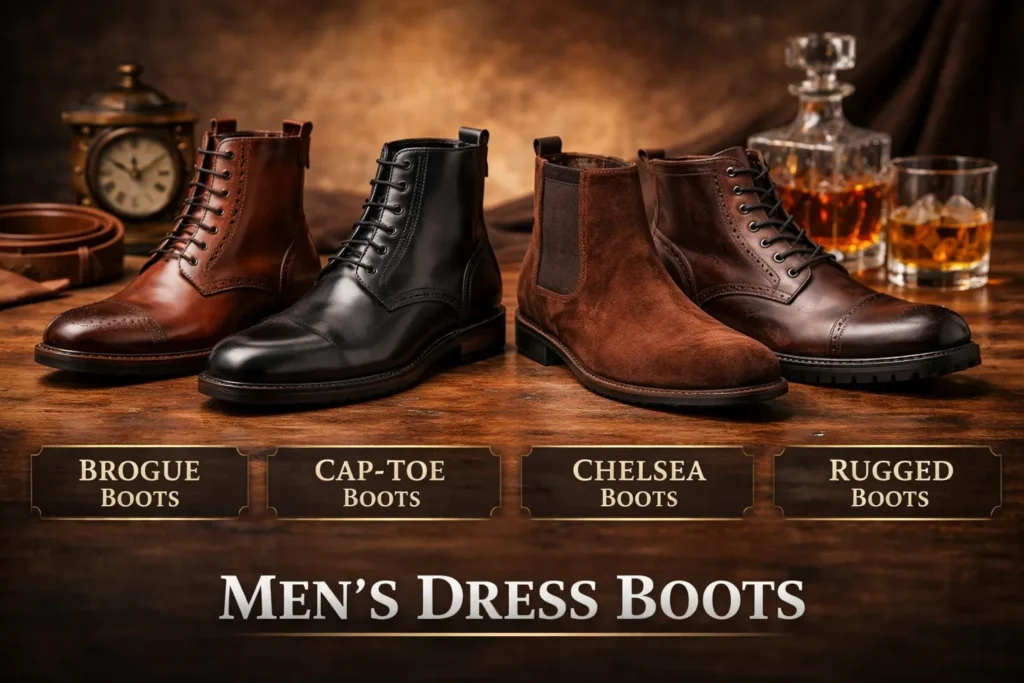
Dress boots are ankle-high boots made for polished outfits. They usually have a slim profile, smooth leather, a neat toe shape, and a refined sole. Common styles include Chelsea boots, chukka boots, lace-up dress boots, and sleek cap-toe boots.
A dress boot should look like a dress shoe that extends above the ankle. It should not look bulky, heavily worn, or built for outdoor work.
Common types of men’s dress boots
- Chelsea boots: Slip-on boots with elastic side panels. They have a clean shape and work well with suits, trousers, and jeans.
- Chukka boots: Low ankle boots with two or three pairs of eyelets. Suede chukkas are casual, while smooth leather versions can look more refined.
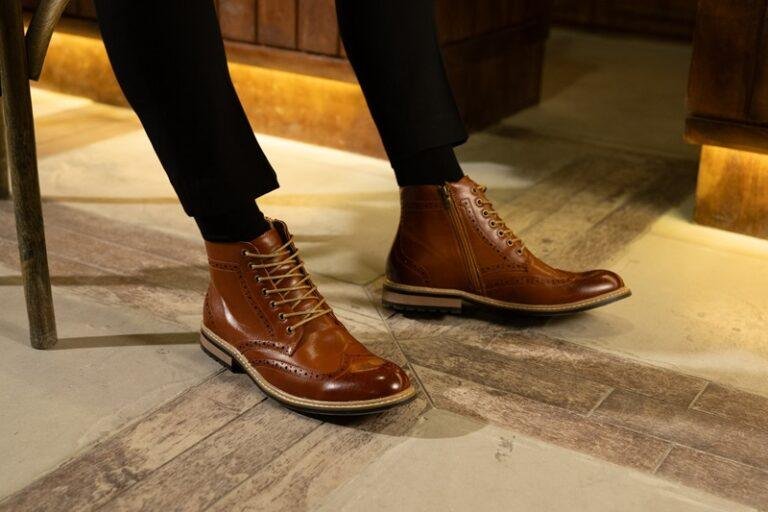
- Lace-up dress boots: Boots with a higher shaft and a structured shape. These may have brogue details, a cap toe, or a plain toe.
- Jodhpur boots: Close-fitting ankle boots with a strap and buckle. They look sharp with tailored trousers.
- Wingtip or brogue boots: Boots with decorative perforations and a wing-shaped toe. They add visual detail and usually feel less formal than plain-toe boots.
- Dress combat-style boots: Sleek lace-up boots with a slim sole and polished leather. These can suit smart-casual outfits but may not fit conservative offices.
The more decoration, contrast, texture, and tread a boot has, the more casual it usually appears.

When Should Men Wear Dress Boots?
Men should wear dress boots when they want the polish of dress shoes with more coverage and seasonal comfort. They are especially useful when the weather is cool, the ground is damp, or the outfit needs a stronger visual line.
Dress boots are suitable for:
- Business-casual offices
- Smart-casual dinners
- Dates and evening events
- Weddings with the right style
- Fall and winter social events
- Business travel
- Casual Fridays
- Restaurants and theater outings
- Tailored jeans and blazer combinations
- Suits, when the boots are sleek and formal enough
A dress boot is not automatically formal. The setting, boot design, and rest of the outfit still matter.
Quick decision table
| Situation | Best boot choice | Avoid |
|---|---|---|
| Conservative business office | Black leather Chelsea or plain-toe boot | Heavy soles, bright stitching |
| Business casual | Brown leather chukka or cap-toe boot | Distressed leather |
| Date night | Chelsea, sleek lace-up, or Jodhpur boot | Muddy or worn boots |
| Fall wedding | Polished leather boots that match the suit | Rugged work boots |
| Outdoor winter event | Weather-resistant dress boot with grip | Smooth leather soles on ice |
| Casual jeans outfit | Brown Chelsea, chukka, or service-style dress boot | Very formal patent leather |
| Black-tie event | traditional black dress shoes | Most boots, unless the invitation allows them |
The deciding factor is not simply whether the boot is black or brown. A black boot with a thick lug sole may look more casual than a brown boot with a slim leather sole.

Can You Wear Dress Boots With a Suit?
You can wear dress boots with a suit if the boots are sleek, clean, and close in formality to the suit. Black leather boots are the safest option for navy, charcoal, or black suits. Dark brown boots can work with navy, medium gray, and brown suits.
Choose boots with:
- A narrow or medium-width shape
- Smooth leather
- A clean toe
- Minimal decoration
- A low-profile sole
- A polished finish
- A shaft that stays hidden under the trouser leg
Chelsea boots often work well with suits because they have a simple shape and no laces. A sleek cap-toe lace-up boot can also work, especially with a heavier wool suit in fall or winter.


Avoid wearing bulky boots with a lightweight suit. The contrast can make the trouser leg look narrow and the foot look too large.
Match the boot to the suit
- Black suit: Black leather boots are the most reliable match.
- Charcoal suit: Black boots create a sharp, formal look. Dark oxblood can work in less strict settings.
- Navy suit: Black, dark brown, and burgundy boots can work.
- Medium gray suit: Black, dark brown, and burgundy are useful choices.
- Brown or tan suit: Brown boots usually create the most natural match.
- Patterned suit: Use a simple boot so the outfit does not become too busy.
The trouser break matters, too. A slight break or no break usually looks best with dress boots. Very long trousers may bunch around the boot, while very short trousers can expose too much of the shaft.
Are Dress Boots Appropriate for Business Casual?
Dress boots are often excellent for business-casual clothing. They add more structure than sneakers but feel less formal than highly polished oxfords.
Good combinations include:
- Brown leather boots with navy chinos
- Black Chelsea boots with gray trousers
- Suede chukkas with dark jeans and an Oxford shirt
- Cap-toe boots with wool trousers and a knit sweater
- Burgundy boots with charcoal trousers and a navy blazer
Workplace rules vary across the United States. A creative office may welcome suede chukkas or refined service boots. A law firm, bank, court, or conservative corporate office may expect traditional dress shoes or very polished black boots.
If you are unsure, start with black or dark brown leather. Keep the sole slim, the leather clean, and the boot free from large logos or outdoor details.
When Should You Wear Dress Boots Casually?
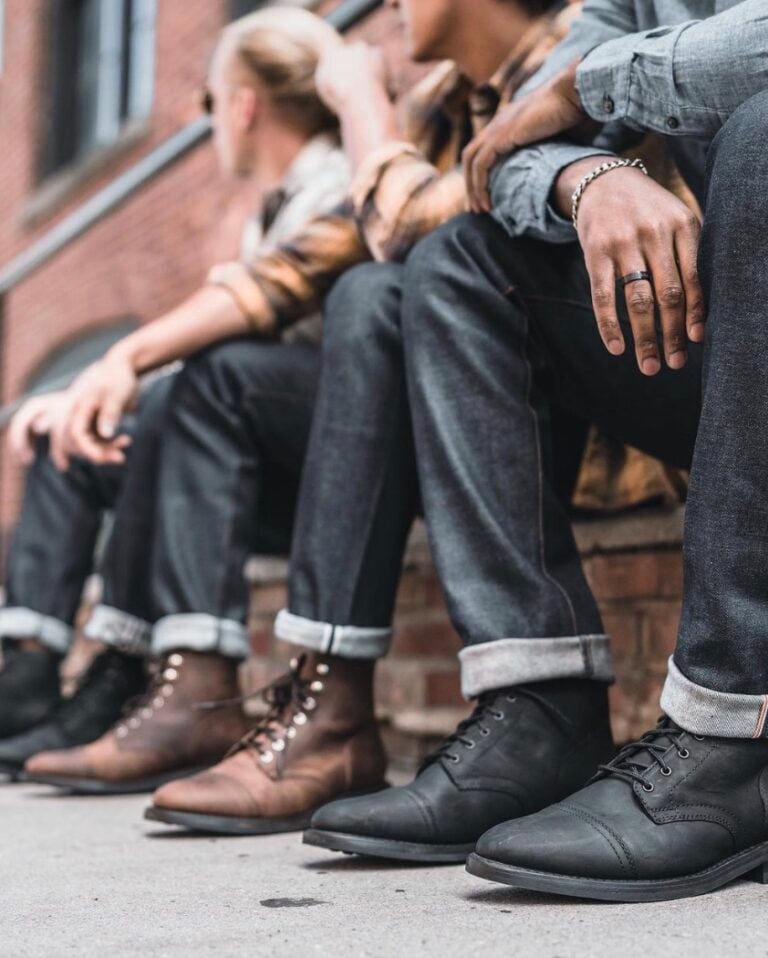
Dress boots work well for casual outfits when the boot has a relaxed shape or a textured finish. Brown leather, suede, pull-up leather, and brogue details often make a boot easier to wear with denim.
Try these combinations:
- Dark blue jeans with brown Chelsea boots
- Black jeans with black leather lace-up boots
- Straight-leg jeans with dark brown chukkas
- Cuffed jeans with suede desert boots
- Olive chinos with burgundy or tan dress boots
- Gray trousers with black Chelsea boots and a wool coat
The fit of the pants matters more than the brand of the boot. Slim or straight trousers usually sit neatly over a dress boot. Very wide pants can hide the boot, while tight jeans may bunch around the shaft.
For a casual look, do not over-polish the rest of the outfit. A crisp shirt, simple sweater, denim jacket, or wool overshirt can balance the sharper boot.

Can You Wear Dress Boots to a Wedding?
You can wear dress boots to many weddings, particularly fall and winter weddings in the United States. The invitation and venue should guide your choice.
For a formal or black-tie wedding, traditional black dress shoes remain the safest option. Boots may be acceptable only when the dress code, season, or setting makes them suitable.


For cocktail, semi-formal, or dressy-casual weddings, choose:
- Black or dark brown smooth leather
- A slim Chelsea or cap-toe boot
- A clean, polished finish
- A low-profile sole
- A color that works with the suit
Avoid hiking boots, work boots, heavily distressed leather, and large lug soles unless the wedding has a clear outdoor or Western theme.
If the ceremony takes place outdoors, check the ground and weather. A polished leather sole may look elegant but can be slippery on wet grass, stone, or uneven ground. In that case, choose a refined rubber sole with useful traction.

How to Choose the Right Dress Boots
The best dress boot depends on the event, climate, wardrobe, and comfort needs. Use the following checks before buying or wearing a pair.
1. Consider the formality
A plain black leather boot is more formal than a tan suede boot. A slim sole is more formal than a deep lug sole. Brogue details, contrast stitching, and rough leather reduce formality.
Use this simple scale:
- Most formal: Black, smooth, plain-toe leather with a slim sole
- Moderately formal: Dark brown leather with a cap toe or light brogue detail
- Smart casual: Brown suede, chukka boots, or textured leather
- Casual: Thick soles, distressed leather, contrast stitching, or outdoor styling
2. Check the toe shape
A moderately narrow or almond-shaped toe usually looks refined. Extremely pointed toes can appear dated or costume-like. Very round or square toes may make a dress boot look casual or bulky.
The toe should also match your foot. A narrow-looking boot is not stylish if it squeezes your toes.
3. Pick the right sole
A leather sole has a formal look and works well indoors or on dry pavement. A rubber sole offers more grip and better weather resistance.
For winter in areas with snow or ice, traction matters more than a perfectly thin sole. Still, choose a rubber sole that remains proportionate to the boot. A massive lug pattern can overpower a tailored outfit.
No dress boot provides guaranteed protection on ice. Walk carefully, and use footwear designed for severe conditions when the surface is hazardous.
4. Match leather and color
Black leather is the most formal and easiest to pair with conservative clothing. Dark brown adds warmth and works well with navy, gray, denim, and earth tones.
Tan and light brown boots are more casual. Burgundy, oxblood, and walnut can add interest, but they need more thought when matched with belts and trousers.
The old rule that shoes and belts must be identical is too strict. They should be in the same general color family and formality level.


5. Assess the fit
A well-fitting boot should hold the heel without painful slipping. Your toes should have room to move, and the widest part of your foot should rest over the widest part of the boot.
Try boots on with the socks you plan to wear. Test them later in the day, when feet may be slightly larger. Do not rely on breaking in a boot that causes sharp pain, numbness, or pressure.

What Socks and Pants Work Best With Dress Boots?
The pants should sit cleanly over the boot, and the socks should support the outfit without drawing unwanted attention.
Wear dark socks with dark boots and trousers for a long, clean line. Patterned socks can work when the rest of the outfit is quiet. Avoid athletic socks with visible logos when wearing dress boots with trousers or a suit.
For pants:
- Use wool trousers with sleek boots for a dressier look.
- Use chinos with chukkas or leather Chelsea boots.
- Use dark denim with brown or black casual dress boots.
- Avoid excessive stacking around the ankle.
- Avoid pants so short that the boot shaft becomes a distraction.
Cropped trousers can work with Chelsea boots, but the look is more modern and casual. It may not suit a conservative office or formal ceremony.

How to Wear Dress Boots in Rain, Snow, and Cold Weather
Dress boots can offer more coverage than low-cut dress shoes, but not every pair is made for wet or icy weather. Smooth leather may handle light moisture when properly conditioned, while suede can stain and darken when soaked.
Before wearing dress boots in poor weather:
- Check whether the sole has useful traction.
- Apply a product made for the boot’s leather type.
- Avoid soaking the boot unless it is designed for wet conditions.
- Let wet boots dry at room temperature.
- Remove the insole if it is wet and the manufacturer allows it.
- Use shoe trees after the leather has dried.
- Do not place leather boots next to a heater or use high heat.
Salt stains are common on winter sidewalks. Brush off dry salt first, then use a leather-safe cleaner suited to the boot. Suede requires a suede brush and products made for suede. When in doubt, follow the care instructions from the boot maker.
For deep snow, slush, or freezing rain, weather-rated footwear may be a better choice than a delicate dress boot.

Common Mistakes Men Make With Dress Boots
The most common mistake is treating every boot as equally formal. A thick, heavily worn boot may be comfortable and attractive, but it will not replace a sleek dress shoe at every event.
Avoid these errors:


- Wearing work boots with a formal suit
- Pairing a very thin suit with bulky boots
- Ignoring salt, mud, or water marks
- Wearing boots with worn-down heels
- Choosing a pointed toe that pinches
- Wearing light suede to a muddy outdoor event
- Matching black boots with a brown belt without a clear reason
- Using athletic socks with a polished outfit
- Wearing boots that are too tight because the leather may stretch
- Selecting a high-shine boot for a relaxed denim outfit
A clean, well-fitted boot will usually look better than an expensive boot that is poorly matched to the outfit.

Dress Boots vs. Dress Shoes
Dress boots and dress shoes serve similar style needs, but each has strengths.
| Feature | Dress boots | Dress shoes |
|---|---|---|
| Ankle coverage | Higher | Low |
| Cold-weather comfort | Usually better | Usually lower |
| Formality range | Casual to formal | Usually formal to business casual |
| Ease with suits | Good with sleek styles | Very reliable |
| Traction options | Often better with rubber soles | Varies |
| Warm-weather comfort | May feel warmer | Usually cooler |
| Packing for travel | Can take more space | Often easier to pack |
Choose dress boots when you want ankle coverage, seasonal comfort, or a stronger fall and winter look. Choose dress shoes when the event is highly formal, the weather is hot, or the dress code clearly calls for traditional footwear.
Neither option is always better. The right choice depends on the outfit and setting.

Key Takeaways
- Wear dress boots with suits when they are sleek, clean, and suitably formal.
- Black leather boots are the safest choice for conservative events.
- Brown leather and suede boots work well with business-casual and casual outfits.
- Chelsea boots are among the easiest dress boots to style.
- Avoid rugged work boots, hiking boots, and heavily distressed boots with formal clothing.
- Match the boot’s sole, color, texture, and shape to the dress code.
- In snow, rain, or ice, choose traction and weather protection over appearance alone.
- Fit matters more than the label. A painful boot will not become comfortable through wishful thinking.
Frequently Asked Questions
Can men wear dress boots year-round?
Yes, but they are most useful in fall, winter, and cool spring weather. In hot and humid conditions, low-cut dress shoes or loafers may feel more comfortable. Lightweight chukkas and unlined Chelsea boots can work in warmer weather if the setting and outfit suit them.
Are Chelsea boots considered dress shoes?
Chelsea boots can function as dress shoes when they have smooth leather, a refined shape, and a slim sole. Casual Chelsea boots with thick lug soles or distressed leather are better for smart-casual outfits than formal suits.
Should dress boots be darker than the pants?
Not always. Dark boots often create a clean, formal line, but medium-brown boots can look excellent with navy or gray trousers. The most important factors are color harmony, formality, and contrast.
Can you wear dress boots with jeans?
Yes. Dark denim works especially well with brown leather, black leather, Chelsea, chukka, and sleek lace-up boots. Keep the jeans neat and choose a boot with a casual or moderately refined finish.
Are dress boots good for standing all day?
They can be, but style alone does not determine comfort. Look for a proper fit, supportive construction, cushioning, and a sole suited to the surface. If you stand for long periods, test the boots at home before wearing them to a full workday or event.
How often should dress boots be polished?
Polish them when the leather looks dry, dull, or lightly scuffed. The exact schedule depends on wear, weather, and leather type. Clean dirt first, use the correct conditioner or polish, and avoid treating suede like smooth leather.
Conclusion
Men should wear dress boots when the boots match the formality, weather, and shape of the outfit. Sleek black boots can work with a suit, while brown leather or suede boots are better for business-casual and casual clothing.
Before leaving home, check three things: Do the boots fit the dress code? Do they match the pants? Are they suitable for the weather? If the answer is yes, dress boots can be a polished and practical alternative to traditional dress shoes.

Rubel Miah is the Senior Editor at MyStyleGrid.com, where he brings a sharp editorial eye and an unshakable love for fashion to everything he does. A true style addict, Rubel lives and breathes trends, from streetwear to high fashion, and has a knack for turning inspiration into impactful stories. With years of experience in fashion journalism and digital media, he curates content that empowers readers to express themselves through style. When he’s not editing features or forecasting the next big thing, you’ll find him hunting down vintage pieces or capturing street style moments around the city.