The best dog boots for dragging paws combine toe protection, secure fit, grip, and gentle support for safer daily walks.
A dog that drags a paw can scrape the nails, skin, and top of the foot on every step. I know how hard it is to watch a once-easy walk turn into a slow, careful trip. The right boot can act like a small shield, while a brace may help lift the toes and reduce scraping. Still, dragging paws can point to nerve, spine, muscle, or joint trouble, so a veterinarian should check the cause. In this guide, I compare the best dog boots for dragging paws, wound care, floor grip, heat, snow, and light corrective support.
WALKABOUT Toe’sUP No-Knuckling Brace

The WALKABOUT Toe’sUP is made for a very specific problem: a dog that knuckles or drags the front of the paw. Its brace-style design aims to lift the toes as the dog moves. That makes it different from a basic winter boot, which mainly covers the paw. I would look at this model first when nail scraping is the main concern.
The brace needs a careful fit and a calm introduction. I would measure the dog as directed, put it on for a short indoor session, and check the skin after removal. It may help protect the toes during controlled walks, but it is not a cure for nerve or spinal disease. A vet-led exercise plan should remain part of the dog’s care.
Pros:
- Designed for toe dragging and knuckling
- Can help lift the toes during movement
- Offers more targeted support than a regular boot
- May reduce nail and paw-top scraping
- Useful for short, controlled walks
- Focuses on a common issue in dogs with weak paw placement
Cons:
- Requires careful sizing and fitting
- May take time for a dog to accept
- Not a replacement for veterinary diagnosis
My Recommendation
I recommend the WALKABOUT Toe’sUP to owners whose main goal is toe lift, not just weather protection. It is a strong candidate for the best dog boots for dragging paws when the dog scrapes the paw top or front nails during a controlled walk. It may suit dogs recovering from weakness, nerve problems, or gait changes, with veterinary approval. Its value comes from its focused design rather than all-purpose outdoor coverage.
Drop Foot Brace With Reel for Dogs

This drop foot brace uses a reel-style support system for dogs that have trouble lifting a foot. The design targets the swing phase of walking, when the toes may catch the ground. That makes it more specialized than a paw sock or standard dog shoe. I see it as a support tool for owners who need to address a clear drop-foot pattern.
Correct placement matters here. The brace should not pinch the leg, rub the paw, or force the limb into an unnatural angle. Start with a few minutes indoors and watch the dog’s step, posture, and comfort. If the dog seems weaker, painful, or stressed, remove it and ask a veterinary professional for guidance.
Pros:
- Made for drop-foot and toe-drag concerns
- Reel system aims to assist toe clearance
- More focused than a normal protective boot
- Can help protect nails from repeated scraping
- Suitable for short practice sessions
- May support dogs with selected gait problems
Cons:
- Needs more fitting skill than a simple boot
- Not ideal for every cause of paw dragging
- May require a slow training period
My Recommendation
This brace is best for an owner whose dog shows a clear drop-foot motion and needs more than paw coverage. I would use it only after a vet has assessed the gait and approved supportive equipment. Among the best dog boots for dragging paws, it stands out for its corrective focus. Buyers should treat it as a walking aid, not as a stand-alone treatment.
QUMY Dog Shoes for Heat, Snow, and Ice
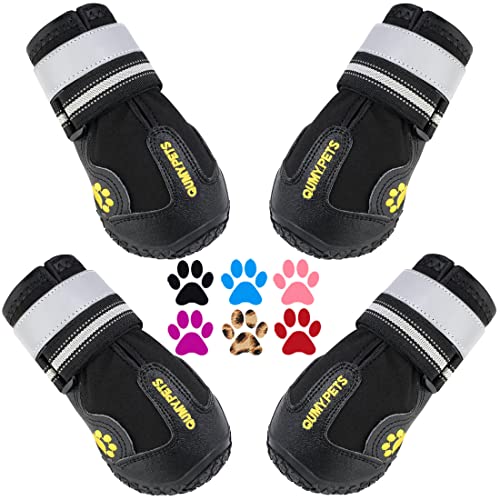
QUMY dog shoes are a general-purpose choice for hot pavement, snow, ice, and rough outdoor ground. They cover the paw and help create a barrier between the pads and harsh surfaces. The sole is also useful when a dog needs extra traction outside. However, these shoes protect the paw more than they correct a dragging gait.
I like this type of boot for seasonal use and long outdoor walks. The challenge is fit, since a loose shoe can twist while a tight one can cause pressure points. Put each shoe on indoors before a walk, then check for redness between the toes and around the straps. For a dog that drags paws, trim nails and inspect the boot often because wear may happen faster.
Pros:
- Useful for hot pavement and winter snow
- Helps shield pads from ice, salt, and rough ground
- Provides outdoor traction
- Works as a general paw protector
- Helpful for hiking and neighborhood walks
- More versatile than a brace made for one gait problem
Cons:
- Does not directly lift dragging toes
- May slip if the size is wrong
- Dogs may need several short practice sessions
My Recommendation
I recommend QUMY for owners who need one pair of dog shoes for weather and ground protection. It can be one of the best dog boots for dragging paws when the main risk is scraped pads or nails during outdoor use. It is not my first pick for true knuckling or drop foot. Its best value is broad coverage for families that walk in heat, snow, or on coarse trails.
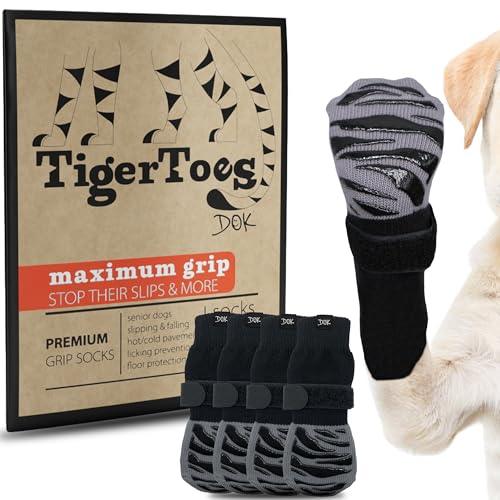
EXPAWLORER Anti-Slip Dog Socks

EXPAWLORER anti-slip socks are aimed at indoor traction and light paw protection. The grip can help dogs walk on hardwood, tile, and other smooth floors. That matters when weak legs or dragging paws make a dog slide and lose confidence. The sock format also gives a softer feel than a firm outdoor shoe.
This product may work well for senior dogs that struggle to stand on slick floors. It can also cover a small area while a paw heals, though owners should follow veterinary wound-care instructions. Socks can collect moisture, so I would remove them often and keep the paw dry. They are not designed to lift the toes or correct the cause of knuckling.
Pros:
- Adds traction on smooth indoor floors
- Soft design may feel less bulky than a hard boot
- Helpful for senior dogs with poor floor grip
- Can protect paws from light contact and licking
- Useful for home recovery areas
- Available for many dog sizes
Cons:
- Less suitable for wet trails or deep snow
- Does not correct toe dragging
- Needs frequent checks for moisture and slipping
My Recommendation
EXPAWLORER is best for indoor traction, especially when a senior or recovering dog slides on hardwood floors. I would include it among the best dog boots for dragging paws only when floor safety is the main goal. It is not a substitute for a corrective brace or durable hiking boot. For the right home setting, its soft feel and grip can offer useful daily support at a modest cost.
Strap-On Drop Foot Brace for Large Dogs
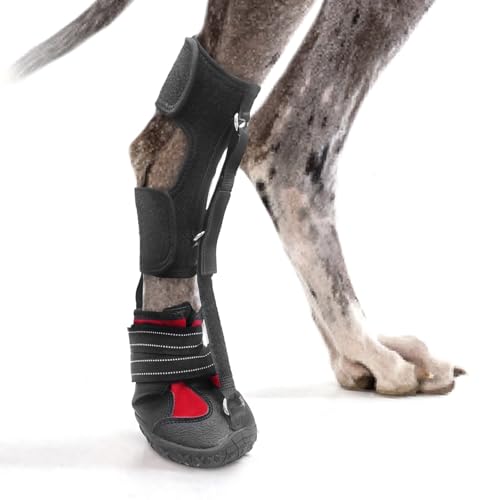
This XL strap-on drop foot brace is built for larger dogs that drag a paw or struggle with toe clearance. Its strap-based design aims to stay in place while giving the paw targeted support. Large dogs can place more force on a weak limb, so a brace must feel stable without restricting natural movement. This model is worth considering when ordinary boots shift or fold under weight.
Large-dog fit is the key issue. Measure the leg and paw carefully, and do not assume that an extra-large label will fit every broad or deep-chested dog. I would test the brace on a flat indoor surface before outdoor use. Watch for chafing, swelling, unusual panting, or a changed gait, and stop if the dog cannot move comfortably.
Pros:
- Designed for larger dogs with drop-foot concerns
- Strap-on format may offer a secure hold
- Targets toe clearance rather than only weather protection
- Can help reduce contact with the ground
- Useful for short, controlled walks
- May work better than a loose boot on some large paws
Cons:
- XL sizing still requires exact measurement
- Not suitable for every large-breed leg shape
- Needs regular checks for rubbing
My Recommendation
I would choose this brace for a large dog with confirmed toe dragging when a standard boot does not stay secure. It has a focused role in the best dog boots for dragging paws category, especially for owners who need a strap-on support design. Use it with professional advice and short sessions at first. Its value is strongest when size, cause, and gait pattern all match the brace.
Dog Boots for Hardwood, Hiking, and Snow

This all-purpose dog boot set covers several everyday needs. It is made for paw protection on hardwood floors, hot pavement, snow, and hiking paths. Reflective strips can improve visibility during low-light walks. The broad use case makes it appealing to owners who want one simple boot for home and outside.
For a dog that drags a paw, the boot can reduce wear on the nails and pad during light walking. It will not provide the same toe-lift action as a no-knuckling brace. I would use it when protection matters more than correction, then pair it with a rehab plan if a vet recommends one. Check each boot after a walk, since a dragging paw may wear through material sooner than a normal step.
Pros:
- Works indoors and outdoors
- Protects paws from hot pavement and snow
- Useful on hiking paths and rough ground
- Can add traction on smooth floors
- Reflective details may improve visibility
- Good general option for multiple seasons
Cons:
- Does not lift a knuckling toe
- May need frequent adjustment during walks
- Material wear can increase when a dog drags hard
My Recommendation
This product is best for owners seeking versatile paw protection rather than medical support. It belongs on a shortlist of the best dog boots for dragging paws when the dog needs help avoiding scrapes on several surfaces. I would pick it for normal walks, winter trips, and light hiking. For clear drop foot, choose a specialized brace instead.
WALKABOUT Toe’sUP Anti-Knuckling Aid

The WALKABOUT Toe’sUP Anti-Knuckling Aid combines a supportive dog boot with a paracord-style solution. It aims to protect the paw while helping address scraping and dragging injuries. This two-part approach is useful for owners who want both a barrier and more focused leg support. It is more specialized than a typical fabric boot.
I would view this aid as a tool for controlled movement, not a device for all-day wear without checks. A dog with a sore paw may need rest, wound care, and a professional plan before walking. Fit the support so it assists movement without pulling too hard on the toes. With a slow introduction, it may help some dogs feel more secure while their owner manages paw wear.
Pros:
- Combines paw protection with anti-knuckling support
- Designed for scraping and dragging injuries
- May help lift or guide the toes
- Offers more support than a basic boot
- Useful for short rehab walks
- Large size suits some bigger dogs
Cons:
- More complex to fit than a simple shoe
- May not suit dogs with severe pain or swelling
- Needs close monitoring during use
My Recommendation
I recommend this model for owners who need a boot-and-support setup for a dragging or scraping paw. It is one of the best dog boots for dragging paws when paw protection and toe guidance must work together. Ask your veterinarian or canine rehab professional to review the fit if the dog has a neurologic or orthopedic condition. Its overall value is strongest for targeted, supervised use.
Dog Paw Wound Recovery Boot

A wound recovery boot serves a different purpose from a corrective brace. It gives an injured paw a breathable cover and may help keep dirt away during outdoor trips. The anti-slip sole can also offer a steadier step on short walks. Its self-adhesive strap is meant to make placement simple for small dogs.
This kind of boot can help prevent licking and contact with the ground, but it should not trap a wet wound. I would follow the veterinarian’s dressing instructions and remove the boot for regular checks. Look for heat, odor, discharge, swelling, or worsening redness. When a dog drags the paw, this boot may protect the injury, yet it does not address the underlying gait problem.
Pros:
- Made for injured paw recovery
- Breathable design may improve comfort
- Anti-slip sole supports careful walking
- Can help block licking during supervised use
- Self-adhesive strap allows quick fitting
- Useful for outdoor bathroom trips after injury
Cons:
- Does not correct toe dragging
- Must be removed for wound and skin checks
- Small size may not fit every small dog
My Recommendation
This recovery boot is best for a dog with a paw wound that needs temporary outdoor protection. It can fit the best dog boots for dragging paws list when dragging has caused a scrape or pad injury, but it is not a gait brace. I would use it for brief, supervised trips and follow the care plan from the vet. The value lies in simple wound shielding, not long-term correction.
BUVUB Adjustable Canine Knuckling Brace, Medium
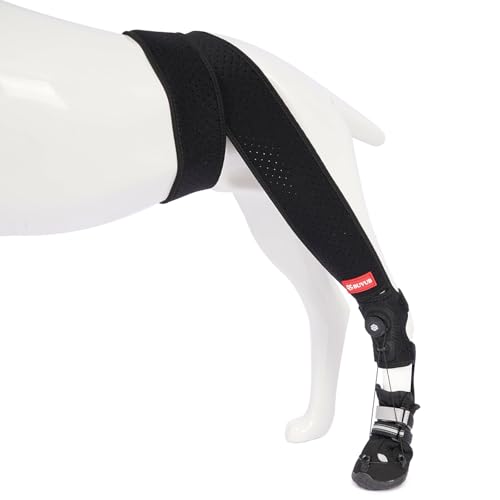
The BUVUB medium brace uses an adjustable dial to support a rear leg affected by toe dragging. Its product design speaks to problems linked with sciatic nerve weakness, myelopathy, or a herniated disc. Those causes can be serious, so I would never use this brace as a substitute for an exam. The adjustable format may help owners fine-tune support when a fixed boot is not enough.
A dial can be helpful, but more adjustment does not always mean better support. Too much tension may cause discomfort or change the dog’s normal step. I would begin with the lightest useful setting and watch the dog closely on a level surface. A canine rehabilitation expert can help decide whether the brace supports the right movement for that dog.
Pros:
- Targets rear-leg knuckling and toe dragging
- Adjustable dial allows fine changes
- Medium size suits selected mid-sized dogs
- May help protect rear toes from scraping
- Designed around several neurologic gait concerns
- Useful for supervised mobility work
Cons:
- Medical conditions require veterinary oversight
- Dial adjustment may take practice
- Incorrect tension can affect comfort and gait
My Recommendation
I would choose the BUVUB medium brace for a medium dog with a vet-assessed rear-leg knuckling issue. It is a strong specialized option among the best dog boots for dragging paws because it offers adjustable support instead of simple coverage. Measure the dog carefully and introduce it in short sessions. This product offers the most value when the owner has a clear fitting plan and regular professional follow-up.
BUVUB Adjustable Canine Knuckling Brace, Large
This large BUVUB brace offers the same adjustable dial concept for a bigger dog. It is intended for rear-leg knuckling and toe dragging tied to issues such as nerve insufficiency or spinal disease. The larger size may provide a better starting point for dogs that cannot use small or medium supports. Like any brace, it should match the dog’s anatomy, gait, and comfort level.