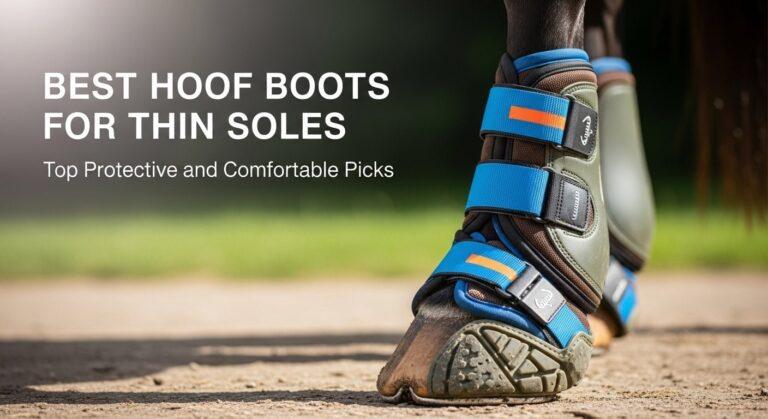
The best hoof boots for thin soles balance soft support, secure fit, comfort, and strong protection on rough ground.
If your horse has thin soles, every rocky trail can feel like a bed of nails. I have seen sensitive horses shorten their stride, avoid stones, or grow sore after only a short ride. Hoof boots can act like a cushion between the hoof and hard ground, but the wrong size or shape can cause rubbing and lost boots. In this guide, I compare popular options for trail rides, turnout, and light work. I focus on fit, sole design, closure systems, durability, and ease of use so you can choose with more confidence.
Cavallo Trek Regular Sole Boot, Size 2

The Cavallo Trek Regular Sole Boot has a simple shape that many horse owners find easy to understand. Its roomy design can suit a hoof with a fairly round outline and regular sole depth. The boot uses a durable outer shell to help shield the hoof from stones, gravel, and hard-packed paths. For a horse with thin soles, that extra barrier may make short rides more comfortable.
I like the broad hook-and-loop closure because it is quick to fasten at the trailhead. The boot does not require a complex cable system or many small parts. Still, correct measurement matters more than the brand name. Measure the freshly trimmed hoof, compare the results with the current size chart, and check the boot after the first few minutes of walking.
Pros:
- Simple design for easier fitting
- Protective sole for rocky and firm ground
- Wide closure helps provide a secure hold
- Good choice for regular-shaped hooves
- Easy to remove after a ride
- Useful for horses needing temporary sole protection
Cons:
- May feel too roomy on narrow hooves
- Regular sole sizing may not suit very flat or slim feet
- Can collect mud if the fit is loose
Easyboot Trail Original, Size 4

The Easyboot Trail Original is built for riders who want practical hoof protection without a long fitting routine. Its polyurethane sole gives the hoof a firm shield against rough ground while keeping the boot fairly light. The hook-and-loop closure makes on-and-off work less frustrating, especially when you tack up in a hurry. That convenience can matter when your horse dislikes standing on three legs for long periods.
This boot is aimed at light to medium riding, so I would not treat it as a cure for a hoof problem. It can help reduce ground impact, but it cannot replace a balanced trim, veterinary care, or advice from a qualified hoof professional. For thin-soled horses, I would start with short walks and inspect the heel, bulbs, and hairline for heat or rub marks.
Pros:
- Fast hook-and-loop closure
- Durable polyurethane sole
- Designed for light to medium riding
- Helpful barrier over gravel and hard paths
- Simple shape for first-time boot users
- Can remain useful through part of a trim cycle
Cons:
- May not suit intense endurance work
- Fit must be checked as the hoof grows
- Loose mud can enter around the opening
Country Pride Easyboot Trail, Size 5
The Country Pride Easyboot Trail Original offers the same useful trail concept in a larger size. It gives a sensitive hoof a layer between the sole and abrasive ground. The flexible rubber-like structure can feel less bulky than a heavy turnout shoe. I see it as a practical option for owners who need easy hoof protection for casual rides.
The size 5 label alone does not tell you whether the boot will fit. Hoof width, length, heel shape, and trim style all affect the result. Take measurements right after a trim and repeat them if the hoof changes. When the boot arrives, walk your horse on a clean surface before attempting a long ride.
Pros:
- Available in a larger size for bigger hooves
- Protects thin soles from rough trails
- Easy on-and-off closure
- Light enough for casual riding
- Useful for riders who prefer a basic boot system
- Good option for gradual conditioning work
Cons:
- May shift if the hoof shape does not match
- Not intended for every speed or terrain type
- Requires regular cleaning after muddy rides
Intrepid Natural Hoof Shoe, Large

The Intrepid International Natural Hoof Shoe takes a flexible approach to hoof protection. Its rubber sole bends more readily than a rigid shoe, which can help the boot feel natural during slow movement. The lightweight build is appealing for horses that dislike heavy gear around the foot. A touch-tape closure also keeps the fitting process familiar and simple.
The listed large size fits hoof measurements around 5.5 to 6 inches, but you should still check the current seller information before buying. I would use this style for short rides, hand walking, or temporary protection rather than assume it suits every job. Thin soles benefit from protection, yet moisture and trapped dirt can still cause trouble if the boot stays on too long.
Pros:
- Flexible sole supports natural hoof movement
- Lightweight feel for sensitive horses
- Touch-tape closure is quick to use
- Useful for short rides and hand walking
- Large size suits some wider hooves
- Simple design with few parts to maintain
Cons:
- Large size may not fit narrow feet
- Flexible rubber may wear faster on sharp rock
- Needs close inspection for trapped moisture
Cavallo Trek Slim Sole Boot, Size 3
The Cavallo Trek Slim Sole Boot is one of the more direct choices for a horse with a narrow or slim hoof profile. The shell gives the sole a protective layer without relying on a complex fastening system. Its design can work well for riders who want to avoid an overly wide boot. For thin soles, a closer shape often helps reduce unwanted movement inside the boot.
I would pay special attention to heel width and toe shape when fitting this model. A boot that feels tight at the quarters can rub, while one that is too long may twist. Always test it at a walk before faster work. If the horse becomes short-strided or stops freely placing the foot, remove the boot and reassess the fit.
Pros:
- Slim sole design suits some narrower hooves
- Strong shell helps block sharp ground
- Good choice for sensitive feet needing coverage
- Simple closure reduces fitting steps
- Easy to inspect after each ride
- Available in a useful mid-range size
Cons:
- Not ideal for broad, round hooves
- May need careful heel fitting
- Rigid shell can feel bulky on very small feet
Cavallo Trek Regular Sole Boot, Size 3

The regular sole version in size 3 gives owners another fit choice when the slim model does not provide enough room. It uses a protective outer shell and a straightforward fastening system. This can suit a horse with a medium, rounder foot that needs relief from hard trails. The boot also works for riders who want one familiar design in several sizes.
In my view, this is a sensible all-around model for light riding when the measurements match. It does not remove the need for a proper trim or a gradual return to work. Thin soles may be painful because of bruising, abscesses, laminitis, or other conditions, so I would ask a veterinarian or hoof-care professional to assess ongoing soreness.
Pros:
- Regular shape gives more room than the slim version
- Protects the sole from stones and gravel
- Easy closure for daily use
- Useful for horses with medium-width hooves
- Durable design for light trail work
- Simple to clean and inspect
Cons:
- May move on a narrow hoof
- Can feel large if the horse has a small heel area
- Requires correct trim-cycle measurements
Cavallo Trek Slim Sole Boot, Size 1
Small hooves can be difficult to fit because a boot that is only slightly too large may rotate or pull off. The Cavallo Trek Slim Sole Boot in size 1 targets that smaller, narrower fit. Its protective shell helps keep the sole away from abrasive footing. The slim profile may also reduce excess space around the sides.
I recommend this option for owners who already know their horse needs a narrow boot shape. Measure both front feet, since they may not match exactly. Use the boot for a short trial first, and look for hair loss, redness, or damp packing around the hoof. A good boot should support movement, not make the horse walk as if a pebble sits inside the foot.
Pros:
- Small size for smaller hooves
- Slim shape can reduce side-to-side movement
- Protective sole helps limit ground impact
- Useful for sensitive front feet
- Simple design is easy to learn
- Fast removal after exercise
Cons:
- Limited fit range for larger horses
- Small errors in measurement can matter greatly
- May not suit wide or flared hooves
Cavallo Trek Regular Sole Boot, Size 4

The size 4 regular sole Trek boot is intended for a larger regular-shaped hoof. It offers the same basic benefits that make the Trek line popular with practical trail riders. The sole creates a buffer against rough ground, while the wide closure helps keep the boot in place. This can be useful for a larger horse that needs temporary protection from thin soles.
Large feet often create more leverage on a boot, so fit and movement checks become even more important. I would not rely on a snug strap alone to correct a boot that is too large. The heel should sit in the correct area, and the boot should stay centered during turns. For best results, introduce it on level ground before taking the horse over uneven terrain.
Pros:
- Fits some larger regular-shaped hooves
- Strong sole for daily trail protection
- Wide closure supports a secure fit
- Helpful for horses with thin, tender soles
- Easy to put on without special tools
- Works well for short and moderate rides
Cons:
- Too broad for slim or narrow hooves
- Larger boots may collect more mud
- Not a substitute for treatment of serious lameness
Cavallo Trek Slim Sole Boot, Size 4
The size 4 slim sole Trek boot combines a larger footprint with a narrower profile. That combination may help a big horse with a long, slim, or more oval hoof. The hard outer sole protects against stones while the upper holds the boot around the hoof. It is a useful alternative when a regular size 4 feels too wide.
Before buying, compare the hoof length and width rather than choosing by horse height or breed. I also suggest checking the boot after turns, backing, and a few steps over uneven ground. Thin-soled horses can change their gait when a boot presses in the wrong place. A careful trial can prevent a small fit issue from becoming a sore heel or lost boot.
Pros:
- Slim profile in a larger size
- Good option for larger narrow hooves
- Solid sole protects against sharp footing
- Simple closure saves time at the barn
- Useful during hoof recovery and conditioning
- Easy to pair with a careful inspection routine
Cons:
- Not suited to wide, round feet
- Large size can feel heavy on smaller horses
- Fit may change as the hoof grows
Cavallo Simple Regular Sole Boot, Size 4

The Cavallo Simple Regular Sole Boot focuses on ease of use. Its regular sole shape gives a broad base for horses that do not need a slim fit. The black shell offers a clean look and a physical layer between the hoof and the trail. For owners new to hoof boots, a simple model can feel less intimidating than a design with many straps and adjustments.
This boot is most useful when the hoof has enough room for its regular shape. I would use it for controlled riding, hand walking, and short periods of protection while monitoring comfort. Clean the inside after use and let the boot dry fully before storing it. A dry boot is kinder to the hoof and easier to inspect for wear.
Pros:
- Simple design for new users
- Regular sole suits some broader hooves
- Protective shell helps reduce sole bruising from ground
- Easy to clean and store
- Useful for light riding and walking
- Black finish hides normal trail marks
Cons:
- May not fit narrow or sharply tapered feet
- Regular shape can rotate when oversized
- Should not remain wet against the hoof
My Recommendation
After comparing these options, I would start with the Cavallo Trek Slim Sole when the horse has a narrow foot and the Cavallo Trek Regular Sole when the hoof is wider or more round. The Easyboot Trail Original stands out for riders who want a practical closure and a boot aimed at light to medium trail use. The Intrepid model is worth considering for short walks when flexibility and low weight matter most.
The best hoof boots for thin soles are not always the most expensive or most technical. They are the boots that match the trimmed hoof, stay centered, and protect without rubbing. Measure both feet, follow the maker’s size guide, and introduce boots slowly. If your horse remains sore, stop riding and seek veterinary or hoof-care advice.
| Best for | Why |
|---|---|
| Narrow or slim hooves | Cavallo Trek Slim Sole models offer a closer shape and several size choices. |
| Simple trail use | Easyboot Trail Original provides quick fitting and a protective polyurethane sole. |
| Short walks and flexible support | Intrepid Natural Hoof Shoe keeps the design light and flexible. |
How I Chose the Best Hoof Boots for Thin Soles
Thin soles need support, but every horse has a different foot. I looked first at the sole material and the way each boot handles hard ground. A useful hoof boot should create a firm shield without blocking normal movement. It should also avoid sharp edges that can press into the heel or quarters.
I then considered fit. A boot that is too loose can twist, rub, or come off in mud. A boot that is too tight can create pressure in places that already feel tender. The best hoof boots for thin soles must match the hoof after trimming, not the hoof from several weeks ago.
Ease of use also matters in real life. Many owners fit boots beside a trailer, in a field, or before a dawn ride. A simple closure saves time and reduces stress for both horse and handler. I also favor models that are easy to rinse, dry, and inspect.
Why Thin-Sole Horses May Need Hoof Boots
The sole is the underside of the hoof. It helps protect sensitive structures inside the foot, but a thin sole gives less natural distance from the ground. Hard, rocky, or frozen surfaces can then cause bruising and discomfort. Some horses show only a shorter stride, while others become clearly lame.
Hoof boots can help by spreading pressure and adding a shock-absorbing layer. They may support a horse during a transition from shoes to barefoot work. They may also help during a controlled recovery plan. However, a boot cannot diagnose the reason for soreness.
Common causes of foot pain include bruising, abscesses, poor balance, laminitis, infection, and unsuitable terrain. If your horse suddenly becomes lame, do not cover the problem and continue riding. Ask a veterinarian or qualified hoof professional to examine the foot first.
How to Measure for Hoof Boots
Start with a freshly trimmed hoof. Use a ruler or tape measure to record the widest part of the hoof and the distance from the toe to the back of the heel. Follow the product maker’s instructions, since measuring points can vary between brands. Write down the measurements for each foot.
Do not assume the left and right feet match. Many horses have small differences between feet. If one foot falls between sizes, check the fit guide and return policy before ordering. An exchange is far easier than dealing with a boot that twists on every step.
After fitting, ask the horse to stand square. Look at the boot from the front, side, and back. It should sit evenly and should not pinch the hairline. Walk for a few minutes on a clean, firm surface, then remove the boot and inspect the skin.
What Features Matter Most?
Correct Shape
Shape matters as much as size. A regular sole boot may work for a broad, round hoof. A slim sole model may suit a narrower hoof with less room at the sides. The heel area should match the boot opening without forcing the horse’s heel bulbs together.
Sole Protection
Look for a sole that feels tough enough for your usual ground. Smooth pasture and a sharp gravel road place different demands on a boot. A flexible sole may feel pleasant for walking, while a firmer sole may offer more protection on rough trails. Think of the sole as a trail tire: the best choice depends on the road.
Secure Closure
A closure should hold the boot without excessive pressure. Hook-and-loop systems are quick and easy to adjust. More complex systems may offer extra retention but can take longer to learn. If you ride alone, simple fitting can be a major advantage.
Weight and Flexibility
A heavy boot can change how a horse lifts the foot. A flexible boot may feel more natural, but very soft material may wear sooner on rough ground. Thin-soled horses often need protection, yet comfort still comes first. Start with slow work and watch the horse’s steps.
How to Introduce New Hoof Boots
Do not put new boots on for a long trail ride on day one. Let your horse stand in them for a few minutes while you watch the gait. Then walk on level ground. Remove the boots and check for rubs, heat, or damp debris.
Increase use in small steps. A short hand walk can come before a brief ridden session. Avoid deep mud, steep hills, and fast turns until you know the boots stay secure. This slow approach protects the horse and helps you find fit problems early.
Watch for changes in stride. A horse may nod, stumble, shorten the step, or resist moving forward when a boot feels wrong. Do not dismiss those signs as stubbornness. Remove the boot, check the hoof, and seek help if the issue continues.
Care and Maintenance Tips
Rinse boots after muddy or sandy work. Dirt can act like sandpaper inside the boot and irritate the skin. Let the boot dry in a shaded, airy place. Avoid strong heat, which may affect some materials or closures.
Check the sole for deep cuts and the upper for cracks. Inspect the closure before every ride. A worn strap can turn a secure boot into a lost boot halfway down the trail. Keep a spare closure or spare boot available if you ride far from home.
Clean the hoof before fitting. Pick out packed mud and make sure the sole is dry. Do not trap poultice, manure, or excess moisture under a boot unless a veterinarian has advised a specific treatment plan.
Common Buying Mistakes to Avoid
The first mistake is buying by shoe size, horse breed, or weight alone. These details do not replace hoof measurements. The second mistake is choosing a larger boot because it looks more comfortable. Extra room often means movement, rubs, and lost boots.
Another mistake is using one pair for every task. A boot that works for a slow walk may not stay secure during sharp turns or fast trail work. Match the boot to the horse, trim, terrain, and activity. Replace it when wear changes the fit or protection.
Finally, do not use hoof boots to hide serious pain. They can reduce ground contact, but they cannot fix infection or internal injury. Persistent soreness needs a proper assessment.
FAQs Of Best Hoof Boots for Thin Soles
Can hoof boots help a horse with thin soles?
Yes. Hoof boots can add protection between the sole and hard ground. They may reduce discomfort during controlled exercise, but they do not treat every cause of hoof pain.
Should I choose a slim sole or regular sole boot?
Choose based on the hoof shape and measurements. Slim sole boots may suit narrower feet, while regular sole boots may fit broader or rounder hooves. Always compare measurements with the maker’s chart.
Can my horse wear hoof boots all day?
That depends on the boot, hoof condition, and professional advice. Remove boots regularly to inspect the hoof and skin. Never leave a wet, dirty boot on for long periods.
How long do hoof boots last?
Life varies with terrain, riding time, horse movement, and care. Sharp rock wears soles faster than soft ground. Inspect the boot often and replace it when the sole, upper, or closure no longer works safely.
Can I ride on rocky trails with these boots?
Many of these models can help with light trail protection, but use depends on fit and product limits. Test the boot first at a walk. Stop if the horse shows pain, rubs, stumbling, or a changed stride.
Final Verdict: Which Should You Buy?
For most narrow-footed horses, I would choose the Cavallo Trek Slim Sole. For broader feet, the Cavallo Trek Regular Sole is a strong choice. The Easyboot Trail Original is a good pick for simple light trail use.
The best hoof boots for thin soles should fit like a glove and protect like a shield. Measure after trimming, start slowly, and inspect after every ride.

Madison Clark is a footwear expert and the voice behind MyStyleGrid.com. She specializes in honest shoe reviews, style tips, and practical guides to help readers find the perfect pair for any occasion. With years of experience in blogging and content creation, Madison makes footwear knowledge simple, stylish, and easy to follow.