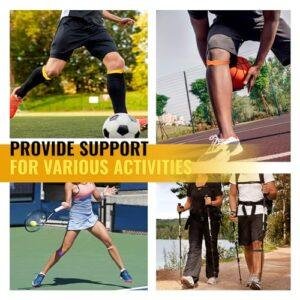
The best shoes for patellar tendonitis pair stable cushioning with a good fit and support that reduces knee stress.
If knee pain flares when you walk, run, climb stairs, or play sports, your shoes may not give your patellar tendon enough help. The products below are knee straps and sleeves, not shoes, but they can work with supportive footwear to improve comfort. I focus on fit, adjustability, pressure control, daily comfort, and value. Always check with a medical professional if pain lasts, worsens, or limits normal movement.
See the differences between my top picks at a glance.
Fit Geno Knee Strap
The Fit Geno Knee Strap is a simple choice for people who want focused support below the kneecap. Its narrow strap format can feel less bulky than a full sleeve. That matters when you wear it under workout clothes or use it with running shoes. The product listing presents it as a two-pack for sports, running, basketball, and jumper’s knee.
I like this style for activity because it targets the area around the patellar tendon without covering the whole knee. The adjustable band lets you fine-tune the pressure. Still, it must sit in the right place and should feel snug, not tight. A strap can add comfort, but it cannot replace rest, strength work, or advice from a qualified clinician.
Pros:
- Two-strap pack gives useful backup or matching support for both knees
- Focused design may feel lighter than a full knee sleeve
- Adjustable fit helps users control pressure
- Useful for running, basketball, and other active sports
- Easy to combine with supportive shoes
- Compact shape is simple to put on and remove
Cons:
- A narrow strap does not provide full-knee compression
- Incorrect placement can reduce comfort and usefulness
- Users who need strong support may prefer a sleeve or brace
What Amazon Buyers Are Saying
Buyer feedback for this type of Fit Geno strap commonly centers on easy adjustment, light weight, and use during sports. Shoppers often value receiving two straps because they can keep a spare or support both knees. As with most patellar bands, fit opinions can vary. Some users may find the strap comfortable, while others may need to adjust the position several times to prevent slipping or pressure.
My Recommendation
I recommend the Fit Geno strap for active users who want a compact support option. It is not a shoe and does not correct poor footwear, but it can complement stable, cushioned shoes. I would choose it for mild activity-related discomfort when a focused band feels better than a full sleeve.
IPOW Thickened Pad Knee Strap
The IPOW Thickened Pad and Wide Patella Knee Strap takes a broader approach than a slim tendon band. Its listing highlights a thickened pad and wide shape for activities such as hiking, basketball, running, volleyball, and jumping. The two-pack format also gives you a second strap for the other knee or for replacement use. This design may suit people who want more contact around the front of the knee.
A wider strap can spread pressure across more skin than a very narrow band. That may feel more stable during repeated movement. However, wider does not always mean better for every body shape. I suggest checking the fit carefully and stopping use if you notice numbness, tingling, swelling, or increased pain.
Pros:
- Wide pad design offers more contact than a thin strap
- Two-pack supports both knees or provides a spare
- Suitable for several high-movement activities
- Adjustable band can help create a personalized fit
- May suit users who dislike very narrow pressure points
- Works alongside supportive athletic footwear
Cons:
- Wider construction may feel warmer under clothing
- Extra material may be noticeable during long workouts
- It does not provide the all-around support of a full sleeve
What Amazon Buyers Are Saying
Common buyer discussion around the IPOW strap focuses on the broad pad, adjustable feel, and two-pack value. Many shoppers looking at this style want support for walking, sports, or exercise without wearing a full brace. Fit remains the main variable. Some users may like the wider contact area, while others may need to experiment with placement to keep the band comfortable.
My Recommendation
The IPOW strap is a good option if a slim band feels too focused or digs into your skin. I would consider it for hiking and court sports, especially when you want two straps at a reasonable value. It earns a strong score for coverage, but it may not be the best choice for people who prefer the least noticeable support.
BraceAbility Patellar Tendon Strap
The BraceAbility Patellar Tendon Support Strap is aimed at users who want targeted support for the tendon below the kneecap. Its listing mentions running, soccer, basketball, tennis, volleyball, and jumper’s knee. The small size shown in the product title makes sizing especially important. A strap that fits well can stay more comfortable during movement than a loose or oversized brace.
This product has a focused design rather than a hinged structure. That makes it easier to wear for sports, but it also means it does not control every knee movement. I see it as a practical aid for people who want a simple stabilizer band. It should form part of a wider plan that may include load control, gradual exercise, and suitable shoes.
Pros:
- Designed specifically around patellar tendon support
- Compact format suits running and court sports
- Adjustable band helps users fine-tune the fit
- May feel less restrictive than a full knee brace
- Useful for athletes who need focused support below the kneecap
- Easy to wear with most athletic clothing
Cons:
- The listed small size may not fit every user
- It offers less coverage than a compression sleeve
- Incorrect sizing can lead to slipping or discomfort
What Amazon Buyers Are Saying
Buyer comments for this type of BraceAbility strap tend to focus on its small profile and use during sports. Shoppers often look for a support band that does not feel like a large medical brace. Reviews may differ based on leg size, placement, and activity level. I recommend reading the current size chart and recent buyer comments before ordering, since fit is central to the experience.
My Recommendation
I would choose the BraceAbility strap when a user wants a dedicated tendon band for active use and can match the available size. It is less versatile than a full sleeve, but its focused design can be a benefit. For a well-matched fit, I rate it as a strong sports support option.
CAMBIVO Adjustable Knee Strap
The CAMBIVO Knee Strap is another two-pack built for users who need a simple patellar support band. The product listing names running, basketball, hiking, volleyball, tennis, and squats. That broad activity range makes it appealing for people who move between training and daily exercise. Its strap format keeps the design focused on the area below the kneecap.
I find two-packs useful when knee symptoms affect both sides or when you want a backup in your gym bag. The adjustable design also helps different users find a more personal fit. Yet no strap can make a painful exercise safe by itself. Use it as a comfort aid, and reduce activity if your pain increases during or after movement.
Pros:
- Two-pack adds convenience for bilateral knee support
- Adjustable design allows pressure changes during use
- Fits a wide range of listed activities
- Compact band works well with athletic clothing
- Can be used during training, hiking, or daily walks
- Good choice for people who prefer targeted support
Cons:
- Does not cover the full knee joint
- May move if placed too loosely or over slick fabric
- Users with swelling may prefer a sleeve with wider coverage
What Amazon Buyers Are Saying
Customer discussion around CAMBIVO knee straps often includes the value of a two-pack and the ease of adjusting the band. Buyers who want support during exercise tend to compare this compact style with larger braces. Experiences can vary because leg shape, clothing, and strap tension affect stability. Check current reviews for your activity and body measurements before making a final choice.
My Recommendation
The CAMBIVO strap is a sensible middle-ground pick. It offers the convenience of two bands without the bulk of a full sleeve. I would recommend it for users who want support for several activities and understand that it provides comfort support rather than medical treatment.
Compression Knee Sleeve Brace
This Compression Knee Sleeve Brace differs from the strap products above because it covers more of the knee. The listing presents it for aching knees, mild instability, swelling, muscle fatigue, tendonitis, exercise, walking, running, and recovery. A sleeve can appeal to users who want even contact around the joint. It may also feel more natural for daily wear than a small band that needs exact placement.
The key trade-off is coverage versus focused pressure. A sleeve may give a general sense of support, but it does not target the patellar tendon in the same direct way as a strap. It also needs the right size to avoid rolling, bunching, or feeling too tight. I would check the measurement guide and avoid wearing it if circulation feels restricted.
Pros:
- Fuller coverage than a narrow patellar strap
- Useful for walking, workouts, running, and everyday wear
- May suit users who want general knee compression
- Can provide a smooth layer under loose clothing
- Useful during recovery when a strap feels too focused
- Supports the knee area without a bulky hinged brace
Cons:
- May feel warmer than a small tendon band
- Less targeted for patellar tendon pressure
- Fit problems can cause rolling or uncomfortable tightness
What Amazon Buyers Are Saying
Buyers who choose compression sleeves often mention their broad coverage and use during walks, workouts, and daily tasks. Some shoppers prefer the steady feel of a sleeve over a strap. Others report that sizing and material comfort decide whether they keep using it. Since those experiences vary, read the current listing details and review photos carefully before ordering.
My Recommendation
I recommend this sleeve for users who want general knee support along with a stable pair of shoes. It is a better fit for daily wear and mild knee weakness than for highly focused tendon loading. For patellar tendonitis, I would select it when comfort and coverage matter more than a low-profile strap.
FVVWVV Silicone Patellar Strap
The FVVWVV Patellar Tendon Support Strap uses an adjustable band format with a silicone feature intended to help the strap stay in place. The listing names basketball, running, tennis, jumping, and squats. It comes as a two-pack, which makes it useful for both knees or as a spare. The gray color also gives it a low-key look for gym use.
Grip is important with a patellar band. A strap that shifts can distract you and may create uneven pressure. The silicone feature may help some users, but skin sensitivity and perspiration can change the result. I would wear it for a short test first, then check your skin and comfort before using it for a long workout.
Pros:
- Silicone feature may help limit unwanted movement
- Two-pack offers practical value
- Adjustable strap supports a more personal fit
- Designed for running, jumping, tennis, and squats
- Compact shape fits well with athletic clothing
- Focused support keeps the design simple
Cons:
- Silicone contact may not suit sensitive skin
- Grip can feel different in hot or sweaty conditions
- It does not provide full-knee compression
What Amazon Buyers Are Saying
Buyer interest in the FVVWVV strap centers on its two-pack, adjustable design, and added grip feature. People who dislike straps that move during exercise may find this detail appealing. However, grip and comfort are personal. Some users may prefer the feel of smooth fabric, while others may value a strap that stays in place. Current reviews are worth checking for your planned activity.
My Recommendation
I would pick the FVVWVV strap for active users who care about staying in place during movement. It has a useful design focus, but the silicone contact may not work for everyone. It is worth considering if you want a two-pack and often perform running, jumping, or squat-based exercise.
Knee Support Compression Sleeve
This Knee Support Compression Sleeve is made for users who want flexible support across the knee area. The product listing mentions swelling, stiffness, soreness, weak knees, arthritis, kneecap discomfort, patella tracking, runner’s knee, and patellar tendonitis. It also lists walking, hiking, jogging, exercise, work, and daily activities. That makes it one of the broader-use options in this guide.
A sleeve can be a good choice when discomfort is not limited to one small point. It may also feel more secure during long periods of standing or walking. Still, broad support does not mean it will solve a tendon problem. Use it with shoes that fit well, avoid sudden increases in training, and seek professional advice when symptoms do not improve.
Pros:
- Broad use range for work, walking, hiking, and exercise
- Fuller coverage than a patellar tendon strap
- May suit users with general soreness or stiffness
- Flexible design can fit daily routines
- Useful when a user wants support around the kneecap
- Can pair well with cushioned, stable footwear
Cons:
- May not offer focused tendon pressure like a strap
- Full coverage can feel warm during hard exercise
- Correct sizing remains vital for comfort and support
What Amazon Buyers Are Saying
Shoppers looking at this style often value the sleeve’s wide range of listed uses. Buyer experiences usually depend on how the material feels, how well the sleeve stays up, and whether the size matches the leg. Some people prefer full coverage for daily activities, while others want a lighter strap. Review patterns can change, so confirm the latest customer feedback and size details on Amazon.
My Recommendation
This sleeve is a practical choice for daily knee support. I would select it over a narrow strap when the user wants coverage for walking, work, or general exercise. It is less specific for patellar tendonitis, but it offers useful versatility and may be more comfortable for all-day routines.
How to Choose the Best Shoes for Patellar Tendonitis
Choosing the best shoes for patellar tendonitis takes more than picking the softest foam or the most popular running shoe. The right pair should fit your foot, match your activity, and help you move without extra knee strain. Since the products in this guide are knee supports, use them as part of a wider comfort plan. Good footwear, sensible training, and proper recovery matter just as much.
1. Look for Stable Cushioning, Not Just Soft Foam
Cushioning can reduce the harsh feel of each step, but very soft shoes may feel unstable. I look for a balanced midsole that feels comfortable without letting the foot wobble. A stable base can help you feel more secure during walking, light jogging, and gym work.
There is no single shoe type that suits every person with patellar tendon pain. Your foot shape, stride, body size, and activity all matter. Try shoes late in the day, when feet may be slightly larger. Walk, bend, and take a few steps before buying. Your heel should stay in place, while your toes should have room to move.
2. Match the Shoe to Your Activity
The best shoes for patellar tendonitis during walking may not be the best shoes for basketball or weight training. Walking shoes often focus on comfort and smooth steps. Running shoes need a secure fit and a sole that matches your running surface. Court shoes need side-to-side stability, which many running shoes do not provide.
For gym work, avoid using worn-out running shoes for lifting or fast side movements. For hiking, look for a firm base and enough traction for the path. If you play jumping sports, combine suitable court footwear with a gradual return to activity. A knee strap may add comfort, but it should not hide pain that signals you need to stop.
3. Check Fit, Wear, and Overall Value
A good fit is one of the most important features in any shoe for knee comfort. Avoid shoes that pinch the toes, slip at the heel, or force your foot into an odd position. Check the outsole for uneven wear. If one side wears down much faster, the shoe may no longer give you a balanced base.
Replace athletic shoes when the cushioning feels flat or the sole loses its grip. You do not need the most expensive model. A well-fitting pair with useful stability can offer more value than a costly shoe that does not match your foot. If you use a knee sleeve or patellar strap, make sure the combination does not feel too tight or change your natural stride.
Medical guidance also matters. The American Academy of Orthopaedic Surgeons and physical therapy guidance commonly emphasize activity changes, gradual strengthening, and assessment when symptoms persist. Patellar tendonitis can have several causes. Shoes and supports may help comfort, but they do not diagnose or cure the condition.
Final Verdict: Which Should You Buy?
For targeted support, I would choose the IPOW Thickened Pad Strap or CAMBIVO Knee Strap. For daily coverage, the Compression Knee Sleeve is the better fit. Pair your choice with stable, well-fitting footwear rather than relying on a brace alone.
The best shoes for patellar tendonitis should feel stable, cushioned, and secure. Use the support that matches your activity, build back slowly, and seek care if pain continues.
FAQs Of best shoes for patellar tendonitis
What are the best shoes for patellar tendonitis?
The best shoes for patellar tendonitis usually offer balanced cushioning, a stable base, a secure heel, and enough toe room. The right choice depends on your foot shape and activity.
Can shoes help relieve patellar tendon pain?
Supportive shoes may reduce comfort problems linked to poor fit, worn cushioning, or instability. They cannot treat every cause of patellar tendon pain.
Are running shoes good for patellar tendonitis?
Running shoes can work well for running and walking when they fit properly and provide suitable cushioning and stability. Do not use them for sports that need strong side-to-side support.
Should I wear a knee strap with supportive shoes?
You can use a patellar strap with supportive shoes if it feels comfortable and does not restrict circulation. Stop if it causes numbness, skin irritation, or more pain.
How do I know when to replace shoes for knee pain?
Replace shoes when the sole wears unevenly, the cushioning feels flat, the heel slips, or the shoe no longer feels stable. Worn shoes may offer less support.
When should I see a doctor for patellar tendonitis?
See a medical professional if pain lasts, worsens, causes swelling or weakness, or stops you from walking and doing normal tasks.

Rubel Miah is the Senior Editor at MyStyleGrid.com, where he brings a sharp editorial eye and an unshakable love for fashion to everything he does. A true style addict, Rubel lives and breathes trends, from streetwear to high fashion, and has a knack for turning inspiration into impactful stories. With years of experience in fashion journalism and digital media, he curates content that empowers readers to express themselves through style. When he’s not editing features or forecasting the next big thing, you’ll find him hunting down vintage pieces or capturing street style moments around the city.