The best ski boot for wide feet combines a roomy shell, firm heel hold, warmth, and easy all-day comfort.
If your ski boots leave red marks across your forefoot, numb your toes, or feel impossible to buckle, you are not alone. Wide feet need more than a larger size. They need the right last, shell shape, liner, and footbed. I reviewed the listed boots and fit accessories with that in mind. Some choices are complete ski boots, while others solve common fit problems such as cold toes, arch fatigue, heel lift, and tight pressure points. Together, they can help you build a warmer, more comfortable setup for the 2026 ski season.
Rossignol EVO 70 HV+ Ski Boots

The Rossignol EVO 70 HV+ is one of the most natural choices for skiers who need a high-volume fit. The “HV” design points to a roomier shell than a narrow, race-style boot. That extra space can reduce pressure over the toes and the widest part of the foot. Its moderate flex also suits many beginners and casual resort skiers who want control without a harsh, unforgiving feel.
I like this boot for skiers who want a complete solution instead of piecing together several fit parts. The step-in design should appeal to new skiers who find stiff boots hard to enter. Still, a wide shell should not feel loose around the heel. A professional boot shop can heat-mold the liner or adjust the shell if you need a more exact fit.
Pros:
- High-volume shape gives wide feet more room
- Moderate flex feels friendly for new skiers
- Good choice for relaxed resort skiing
- Easy-to-use design suits many first-time buyers
- Room for a supportive aftermarket footbed
Cons:
- May feel too soft for aggressive, high-speed skiing
- A roomy heel may need professional adjustment
- Exact fit depends on the selected size and foot shape
My Recommendation
I recommend the Rossignol EVO 70 HV+ as the best ski boot for wide feet for beginners, vacation skiers, and anyone who values comfort over race-level power. It gives the forefoot useful space without forcing you into an oversized length. If you want one affordable boot to start with, this is the strongest complete-boot option in this group. Availability and size selection can change during the busy winter season.
SIDAS 3Feet Medium Arch Ski Insoles

The SIDAS 3Feet Warm Medium Arch insole targets a problem that many wide-foot skiers miss: poor support can make a boot feel narrow. When the arch drops under pressure, the foot can spread and push harder against the shell. This insole uses a shaped support platform and an EVA shell to help hold the foot in a steadier position. The warm construction also adds a useful layer between your foot and the cold boot board.
This model is designed for medium arches, so I would not choose it blindly. Stand barefoot and check whether your arch looks low, medium, or high before ordering. The insole may improve balance and reduce foot fatigue, but it cannot turn a narrow ski boot into a true wide boot. It works best inside a properly sized high-volume shell.
Pros:
- Supports medium arches inside ski boots
- Warm materials suit cold resort days
- Can reduce arch fatigue during long sessions
- Helps limit foot spreading under load
- Useful upgrade for an existing boot
Cons:
- Not the right match for very low or very high arches
- May take time to feel natural
- Does not replace a properly fitted boot shell
My Recommendation
I recommend these SIDAS insoles for wide-foot skiers with medium arches who already own boots that are close to fitting well. They can add warmth and steadier support without changing boot size. For the best ski boot for wide feet, pair them with a genuine high-volume shell rather than using them to mask severe tightness. They offer strong value when foot fatigue, not shell width, causes the main discomfort.
Bootaclava Neoprene Ski Boot Covers

The Bootaclava neoprene cover is not a ski boot, but it can make a wide-foot setup feel much better in bitter weather. It wraps around the outside of the boot and helps block wind, snow, and cold air. The handwarmer pouch gives you a place to add a disposable warmer when your toes struggle on long lift rides. Neoprene also adds a little insulation without requiring a thicker sock.
I see this as a practical add-on for people who already have a good shell fit but still suffer from cold feet. Do not use it as an excuse to wear bulky socks inside a tight boot. Thick socks can restrict circulation and create more pressure. Check the size carefully, and make sure the cover does not interfere with bindings, buckles, or walking.
Pros:
- Blocks wind and light snow around the boot
- Adds warmth without filling the liner
- Handwarmer pouch helps on very cold days
- Neoprene construction bends as you move
- Useful for resort skiing and lift rides
Cons:
- Does not improve shell width or foot shape
- May be awkward during walking
- Requires careful sizing over the ski boot
My Recommendation
I recommend the Bootaclava for wide-foot skiers whose main issue is cold, not pressure. It is especially helpful for beginners who spend more time on lifts and slow slopes. It will not become the best ski boot for wide feet by itself, but it can make a correctly fitted boot warmer and more pleasant. Consider it a seasonal comfort upgrade with good practical value.
Atomic HAWX Prime 100 Ski Boots
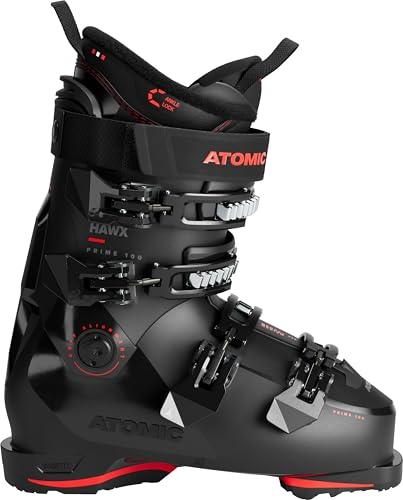
The Atomic HAWX Prime 100 is a performance-focused men’s boot for skiers who want strong energy transfer. The Prime fit is generally more forgiving than Atomic’s narrow race shapes, though it is not the widest option in the HAWX family. Its 100 flex rating gives intermediate skiers a useful mix of support and movement. The boot should feel more precise than a soft beginner model when you carve or ski steeper terrain.
Wide feet may fit this model well if your foot is medium-wide and the shell matches your instep. If your forefoot is very broad, compare the shell measurements and seek a boot fitter before buying. A firm boot should hold the heel while allowing the toes to relax. I would not size up just to gain width because excess length can create heel lift and poor control.
Pros:
- Firm flex supports faster intermediate skiing
- Prime shape offers useful all-around volume
- Good power transfer for carving
- Strong choice for resort progression
- Can work well with custom fitting
Cons:
- May feel too stiff for a first-time skier
- Not as roomy as an extra-wide shell
- Needs accurate sizing and shell assessment
My Recommendation
I recommend the Atomic HAWX Prime 100 for an intermediate skier with a moderately wide foot and a need for more control. It is the best ski boot for wide feet in this list for a stronger skier who does not want a very soft shell. It becomes a better fit candidate after heat molding or minor shop work. Choose it for performance, not simply because the listed size looks correct.
Superfeet Winter Support Ski Insoles

Superfeet Winter Support insoles are made for skiers and snowboarders who need a stable base inside the boot. The thermal cover helps add warmth, while the shaped footbed supports the arch and heel area. This version supports a range of arch heights, which makes it easier to match than a footbed made for one arch type. A stable insole can also help reduce small foot movements that lead to rubbing.
The main benefit is not extra width. It is better foot alignment and support. When the foot stays stable, you may avoid tightening the buckles too much, which can improve comfort over the forefoot. Trim the insole carefully to match the original footbed, and check that it does not raise your heel too much.
Pros:
- Supports skiers with different arch heights
- Thermal cover adds winter comfort
- Helps create a stable platform
- May reduce foot movement and rubbing
- Works in many ski and snowboard boots
Cons:
- Requires careful trimming in some boots
- Can feel firm to users who prefer soft foam
- May reduce vertical space in a low-volume shell
My Recommendation
I recommend Superfeet Winter Support for wide-foot skiers who need better support across long days. It is a smart upgrade when your boot width is acceptable but your feet still ache or slide. For the best ski boot for wide feet, use this footbed only after checking shell volume and liner space. Its broad arch-height range makes it one of the safer insole choices for shared households.
Sidas 3Feet High Arch Ski Insoles

The Sidas 3Feet High Arch insole targets skiers with a pronounced arch. Its EVA shell supports the foot from below, while the insulated upper layer adds warmth in a cold liner. High-arch skiers often need this kind of shape because a flat footbed can leave the middle of the foot unsupported. Better support may help reduce strain as you stand and turn for hours.
This is a specialized product, and that is both its strength and its limit. A high arch insole can feel excellent when it matches your foot, but it can create pressure when it does not. Test it with your normal ski socks and boot liner. If you feel a sharp ridge under the arch, stop and reassess instead of hoping it will soften.
Pros:
- Designed for high-arched feet
- Insulated upper helps retain warmth
- Supports a steady stance in the boot
- May reduce arch fatigue on long days
- Useful for upgrading an existing boot
Cons:
- Not suitable for low or medium arches
- May feel too aggressive for some users
- Can take up valuable boot volume
My Recommendation
I recommend these Sidas insoles for high-arched wide-foot skiers who often feel unsupported in standard liners. They can make the foot feel more secure without tightening the shell across the toes. They are not a universal best ski boot for wide feet solution, but they can improve the fit of the right high-volume boot. Confirm your arch type before spending money.
Babe’s Boot Butter Ski Boot Lubricant

Babe’s Boot Butter is a water-based lubricant designed to make boots easier to enter and remove. That small task matters when you have wide feet and a stiff shell that pinches during step-in. A light application can help the foot slide past a tight tongue or shell edge. The water-based formula is also intended to avoid the drying effect linked with some harsh products.
This product does not change the fit once you are skiing. It simply reduces friction during entry and removal. Apply only a small amount to the contact area, and avoid putting lubricant on the sole or binding interface. I would treat it as a convenience item, not a substitute for shell stretching or a proper boot adjustment.
Pros:
- Makes stiff boots easier to enter
- Helpful for broad forefeet during step-in
- Water-based formula is easy to spread
- Can reduce pulling and strain on the liner
- Large pint size offers many applications
Cons:
- Does not make a boot wider while skiing
- Must stay away from soles and bindings
- Extra product may be unnecessary for soft boots
My Recommendation
I recommend Babe’s Boot Butter for skiers who struggle to get into a firm boot at the car or lodge. It is especially useful for a wide foot paired with a snug performance shell. It cannot make a narrow boot the best ski boot for wide feet, but it can make daily use less frustrating. The low-effort application makes it a handy item to keep in a gear bag.
Hotronic Foot Warmer XLP 2C Bluetooth
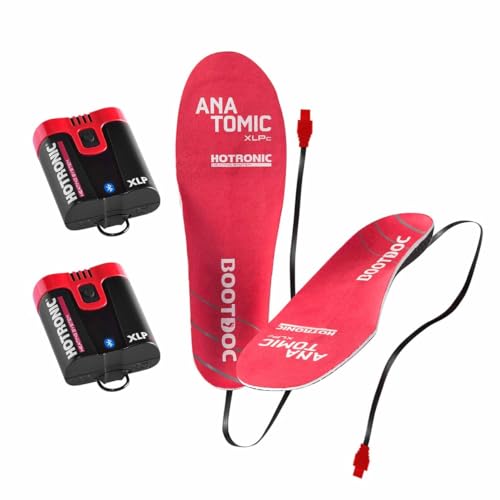
The Hotronic Foot Warmer XLP 2C Bluetooth BDI set is built for skiers whose feet turn cold before the rest of the body. A heating element sits under the footbed area and connects to a rechargeable control system. Bluetooth control can let you adjust heat without repeatedly opening your boots. This approach adds warmth without forcing you to wear thick socks that crowd the shell.
For wide feet, that last point is important. Good circulation needs space, and too many layers can create pressure over the toes. You must confirm compatibility with your footbeds, liners, and boot volume before installation. Heat should feel gentle, not hot, and users with reduced heat sensation should follow medical and product safety guidance.
Pros:
- Adds adjustable warmth on cold ski days
- Bluetooth control improves convenience
- Helps avoid bulky thermal socks
- Useful for long lift rides and low temperatures
- Can extend the comfort of an existing boot
Cons:
- Costs more than passive insulation
- Needs charging before use
- Installation and compatibility require attention
My Recommendation
I recommend Hotronic for serious cold-foot sufferers who already have a well-fitted boot. It is a strong match for wide-foot skiers because it adds heat without stealing much room from the forefoot. It does not solve a narrow shell, so start with fit before adding electronics. If warmth keeps ending your ski day early, this system may provide excellent long-term value.
Ski Boot Fitting Pads and J Bars

This 50-piece fitting pad kit helps solve the opposite problem: a boot that feels too loose in selected areas. The kit includes J bars, heel lift pads, and ankle pads in several sizes. These pieces can reduce unwanted heel movement and protect spots that rub against the liner. That matters because a wide boot should feel roomy in the forefoot but secure around the heel.
I like kits such as this for small adjustments after you understand the source of the problem. Place pads carefully, one at a time, and test the boot indoors before skiing. Too much padding can create new pressure and may reduce circulation. If you need several thick pads to keep your foot still, the boot probably has the wrong shell shape or size.
Pros:
- Multiple pad sizes support fine adjustments
- J bars can reduce heel lift
- Ankle pads may limit rubbing
- Useful for home testing and quick fixes
- Can extend the usefulness of a slightly loose boot
Cons:
- Adhesive placement requires trial and care
- Too many pads can create pressure
- Cannot correct a fundamentally wrong boot size
My Recommendation
I recommend this fitting kit for skiers with a wide forefoot and a loose heel. It can help create the balanced fit that defines the best ski boot for wide feet: space where you need it and control where you need it. Use small changes and test often. The kit offers good value for experienced users, but a boot fitter remains the better choice for major problems.
CURREX EdgePro Ski Boot Insoles

The CURREX EdgePro insole combines arch support, shock absorption, and temperature management for winter sports. This listed version is made for high or medium arches, so it can suit skiers who want more structure than a flat factory footbed. The cushioning may soften the feel of hard landings and long days on firm snow. Its thermo-regulating design also aims to manage comfort as conditions change.
Wide-foot skiers often focus only on the shell, but the footbed deserves equal attention. A supportive base can help stop the foot from rolling and spreading under pressure. Make sure the insole matches your arch and does not crowd the top of the boot. Trim it carefully, then walk and flex the boot before taking it to the mountain.
Pros:
- Available for medium and high arch needs
- Offers shock-absorbing cushioning
- Supports better foot stability
- Thermo-regulating design suits winter sports
- Useful for skiing and snowboarding
Cons:
- Arch profile may not suit flat feet
- Can feel bulky in a tight liner
- Needs trimming for some boot shapes
My Recommendation
I recommend CURREX EdgePro for wide-foot skiers who want a supportive, cushioned footbed and have medium or high arches. It is a strong option for reducing fatigue when the boot shell already fits. It should not be your first fix for severe forefoot pressure. Used in a high-volume boot, it can help you get closer to the best ski boot for wide feet setup.
How to Choose the Best Ski Boot for Wide Feet
Finding the best ski boot for wide feet starts with shape, not length. Ski boots use a last, which is the internal mold that controls width, heel shape, instep height, and overall volume. A boot can show a large size on the label and still feel narrow across the toes. Look for high-volume or wide-fit models, then compare the manufacturer’s last width when that measurement is available.
Measure both feet at the end of the day. Feet often swell slightly after standing and walking, so an evening measurement gives a more useful result. Wear one thin ski sock, not two thick socks. Record foot length, forefoot width, and instep height, because width alone does not explain every fit issue.
Your toes should lightly touch the front when you stand straight. When you bend your knees into a skiing stance, your toes should pull back slightly. The heel should stay planted when you flex forward. If the toes feel crushed, numb, or sharply pressed after several minutes, the boot is not right, even if the shell seems powerful.
Do not solve width by buying a boot that is too long. Extra length lets the heel slide, weakens edge control, and can cause blisters. A skilled boot fitter can often stretch a small pressure zone, grind the shell, shape the liner, or adjust the footbed. Those changes usually work better than forcing an oversized boot to behave.
Wide Ski Boot Fit Problems I Watch For
Forefoot pressure is the most common complaint. It often appears over the little-toe joint or across the top of the toes. A wider last can help, but a liner that is too thick may still create pressure. A fitter can check whether the shell or liner causes the problem.
Heel lift is another warning sign. Some wide boots feel comfortable in front but leave too much room behind the ankle. Your foot then moves inside the shell, and you may over-tighten the buckles to gain control. A correct footbed, liner adjustment, or small J bar can help, but thick socks usually make matters worse.
Cold toes can come from poor fit, not just low temperature. A boot that is too tight can reduce circulation. A boot that is too loose can also let cold air move around the foot. Start with the right shell, use a thin wool or synthetic ski sock, and add a cover or foot warmer only when needed.
Numbness deserves attention. Do not ski through severe pain or loss of feeling. Loosen the buckles, warm the feet, and have the boot checked. Comfort should support performance, not compete with it.
Best Features at a Glance
| Best for | Why |
|---|---|
| Beginners with broad feet | Rossignol EVO 70 HV+ offers a roomy, forgiving complete boot. |
| Cold-foot skiers | Hotronic adds adjustable heat without bulky socks. |
| Existing boots with fit issues | SIDAS, Superfeet, CURREX, and fitting pads allow targeted changes. |
How I Evaluated These Wide-Foot Ski Options
I looked first at the job each item can realistically do. A ski boot must provide shell space, heel hold, forward support, and useful control. An insole can improve support and comfort, but it cannot create missing shell width. A warmer can fight cold, while a pad kit can reduce movement in one small area.
I also considered the needs of different skiers. A beginner may value easy entry and a forgiving flex. An intermediate skier may need more edge control. Someone with high arches needs a different footbed from someone with low arches. This is why I did not treat every item as a direct replacement for a ski boot.
For safety, I kept the advice aligned with standard boot-fitting practice. The shell must match the foot, the heel must remain controlled, and the skier must retain normal circulation. Product pages can change, so check current sizing, included parts, and return terms before ordering. Availability can also shift during the 2026 ski season.
Tips for a Comfortable First Day
Wear your ski boots at home before visiting the mountain. Buckle them lightly and stand in a skiing stance for 15 to 20 minutes. Walk carefully on a clean floor, and note pressure points before you make any changes. This simple test can prevent a painful first run.
Keep the lower buckles firm but not crushing. The top buckles should support your shin without cutting into it. Use the power strap to improve upper-shell contact rather than over-tightening every buckle. Small changes often work better than one large adjustment.
Choose one thin ski sock made from wool or a technical synthetic blend. Avoid cotton because it holds moisture and loses warmth when damp. Keep spare socks dry in your bag, but do not layer both pairs inside the boot. More fabric does not always mean more warmth.
Let the boots dry fully after each trip. Remove the liners if the manufacturer permits it, and use a boot dryer that does not overheat the materials. Never place ski boots against a hot heater. Slow, gentle drying protects the liner and reduces odor.
FAQs Of Best Ski Boot for Wide Feet
What width is considered wide for a ski boot?
Many adult ski boots fall near a medium last, often around 98 to 100 millimeters, though sizing systems vary. Wide or high-volume boots may measure about 102 millimeters or more. Always compare the brand’s measurement because width changes with shell size.
Should I size up for wide feet?
Usually, no. Sizing up adds length and can cause heel lift and weak control. Choose the correct length first, then select a wider last or ask a boot fitter about shell work.
Can insoles make ski boots wider?
Insoles do not widen the shell. They can support the arch and reduce foot spreading, which may make the boot feel less cramped. They work best when the shell already has enough volume.
Are high-volume ski boots better for wide feet?
Often, yes, but not for every foot. High-volume boots give more room across the forefoot and instep. You still need a secure heel and a suitable arch shape.
How can I keep wide feet warm in ski boots?
Start with the correct fit and one thin, dry ski sock. Avoid over-tightening the buckles. A boot cover or heated footbed can add warmth without taking away toe space.
Final Verdict: Which Should You Buy?
The Rossignol EVO 70 HV+ is my top complete pick and the best ski boot for wide feet for most beginners and relaxed resort skiers. Choose Atomic HAWX Prime 100 for stronger performance, or add SIDAS, Superfeet, or CURREX support to a well-fitted shell.
Prioritize width, heel hold, arch support, and warmth in that order. With the right fit, wide-foot skiers can enjoy better comfort, control, and longer days on snow in 2026.

Madison Clark is a footwear expert and the voice behind MyStyleGrid.com. She specializes in honest shoe reviews, style tips, and practical guides to help readers find the perfect pair for any occasion. With years of experience in blogging and content creation, Madison makes footwear knowledge simple, stylish, and easy to follow.